
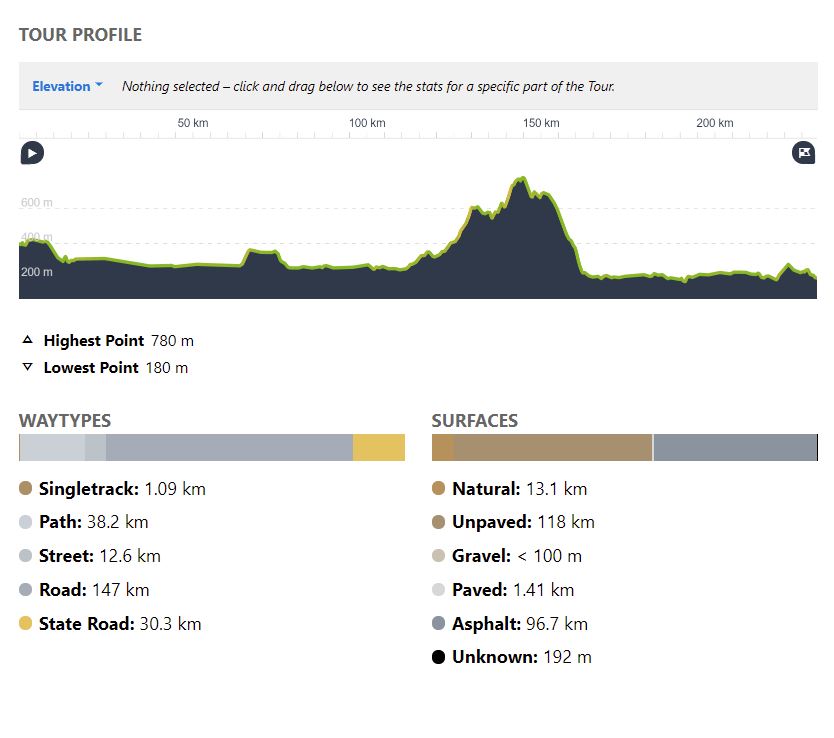
Whilst we are still a month behind on our posts, we thought it worthwhile to post a special update on the last week (up to 21st March) given recent events. Everything changed very quickly indeed in Argentina and certainly caught us by surprise. We have been very lucky in where we ended up and have heard stories of people far less fortunate than ourselves. We are a long way from home and under strict curfew for the first time in our lives, which has been unsettling. It is an odd feeling not being able to get home easily now for a few weeks. Materially however, we are far more comfortable than at any time since mid January, Argentina’s response to the virus has been very impressive so far, and the almost ubiquitous kindness and hospitality we have experienced in South America is continuing. Our primary worry is for friends and family back home, and not knowing whether we can easily get back at short notice if needed. Please look after yourselves! It has also been so lovely to hear from our friends back home wondering how we are. For us, how different things were a week ago.
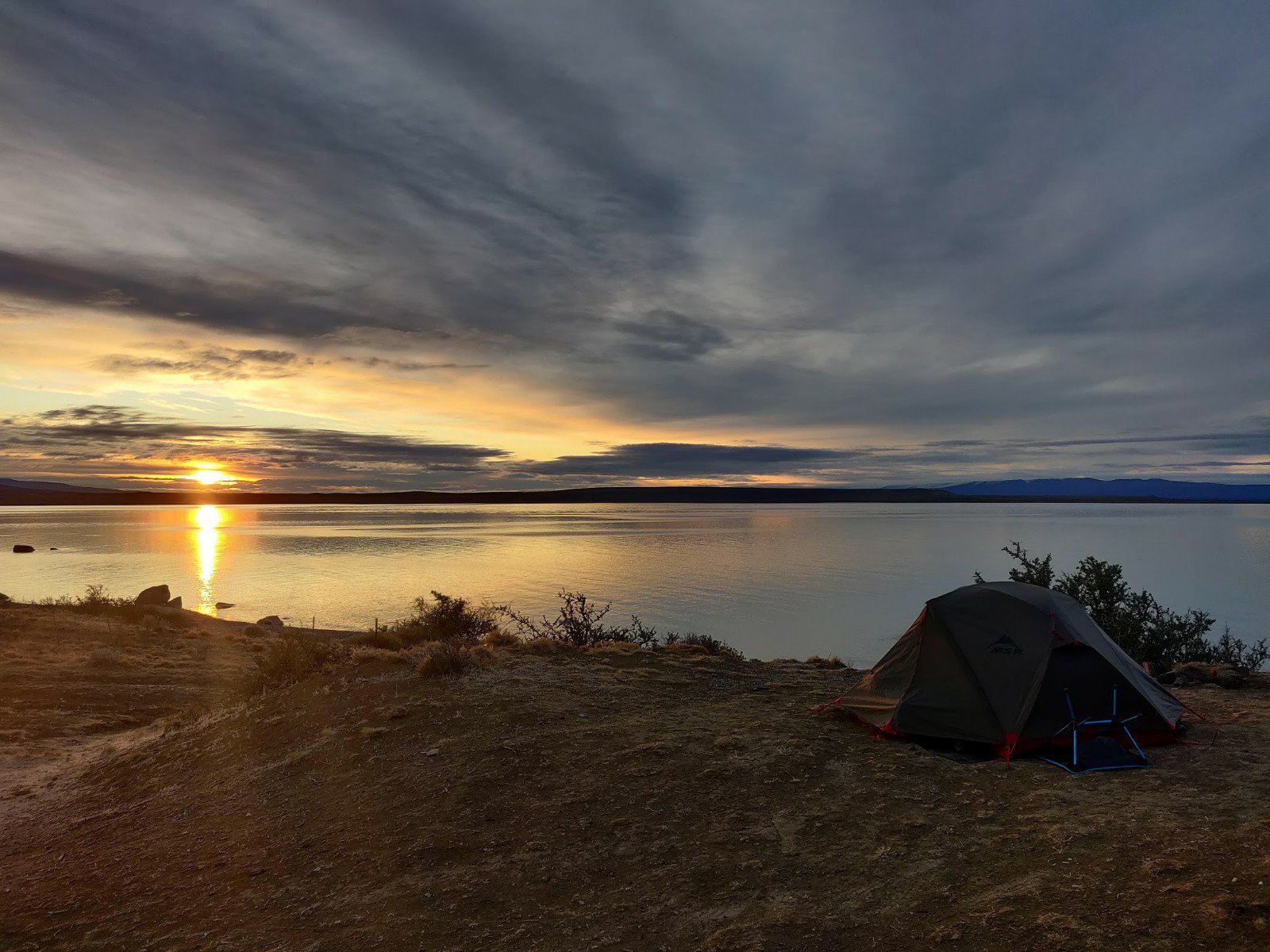
On Friday 13th March 2020 we sailed through the unmanned El Calafate police checkpoint and into the city after a tough leg from El Chalten. It had been our first real experience of the dry Argentinian pampas, and we quickly learnt lessons about carrying extra water on the first day. Our C-shaped route had provided incredible westerly tail winds leaving El Chalten, cruising at >30km/h without pedalling and covering 110km in an afternoon. The second day was back to normal with lighter winds and a shorter day, topped off by a beautiful wild camp on the northern banks of the aquamarine Lago Argentina, with distant views across to El Calafate on the opposite shore. Day 3 (Friday), we enjoyed(!) our first proper headwind for 30 km and arrived in the city with great relief and aching legs. We stopped at the closest campsite to town, with dusty ground but lots of trees for shelter, hot showers and two of the largest dogs seen so far, both very docile. The town was bustling with tourists arranging national park tours, shopping in Alfajore “factories” and souvernir shops and frequenting the numerous bars and restaurants. We went out to eat in a small restaurant nearby for an awesome cheese-covered beef steak, grilled fish, crepes suzettes and calafate liqueur.


In response to Covid 19, we learnt Argentina had banned all incoming flights from Europe, the United States, China, Japan, South Korea and Iran the day before (Thursday 12th) from Monday for the next 30 days, and was imposing 14 day quarantine for any pasengers arriving before Monday. With our flights home not for another 6 weeks, we were concerned but not overly worried. We didn’t consider cutting our trip short but had already been debating whether to continue south towards Tierra del Fuego for some time. Our experience of the barren dry pampas from El Chalten had been beautiful but tough and we knew the zigzag route south would entail plenty of headwind, some heavy traffic in places, limited water sources and flatter landscape still, that didn’t particularly appeal. The route to Ushuaia also required crossing in and out of Chile more than once and with the anouncement on border controls we now could add the possibility of being stuck in the far south to the list of concerns.
After much debate we therefore decided not to continue south any further on bicycle. We really wanted to see Torres del Paine national park nearby in Chile, but decided to do that by bus if possible. Top of our list right now was to visit the Perito Moreno glacier, a UNESCO world heritage site 80 km to the west of El Calafate. We had thought about getting a bus tour there on Saturday but feeling stronger after dinner/wine(!) and with lighter wind forecast in the morning we decided to cycle there and make a weekend of it, staying at an estancia campsite shown halfway on ioverlander. It would make a superb end to the cycle tour, and we could leave time over the weekend for any further border developments before deciding whether to venture south into Chile by bus.
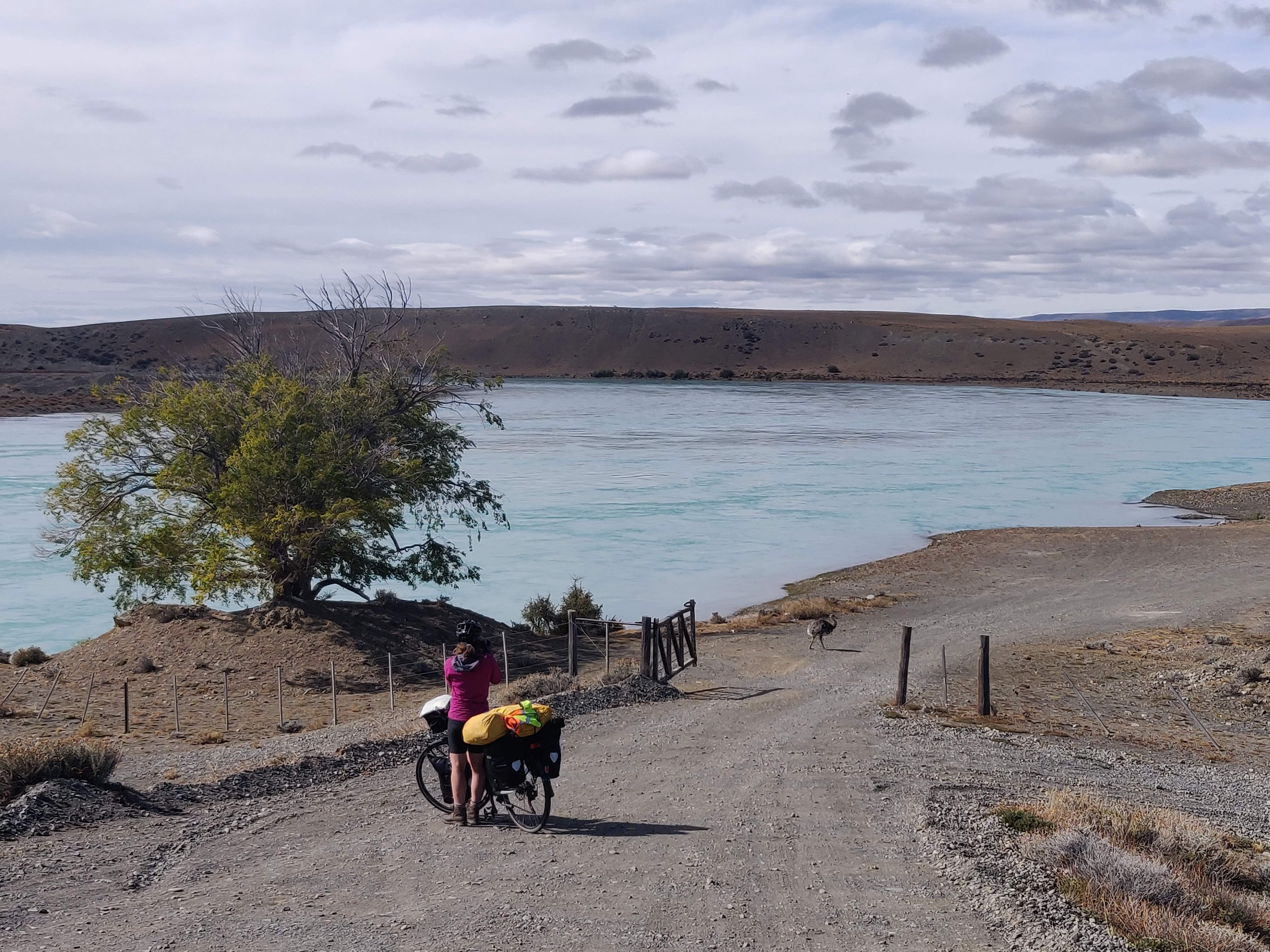
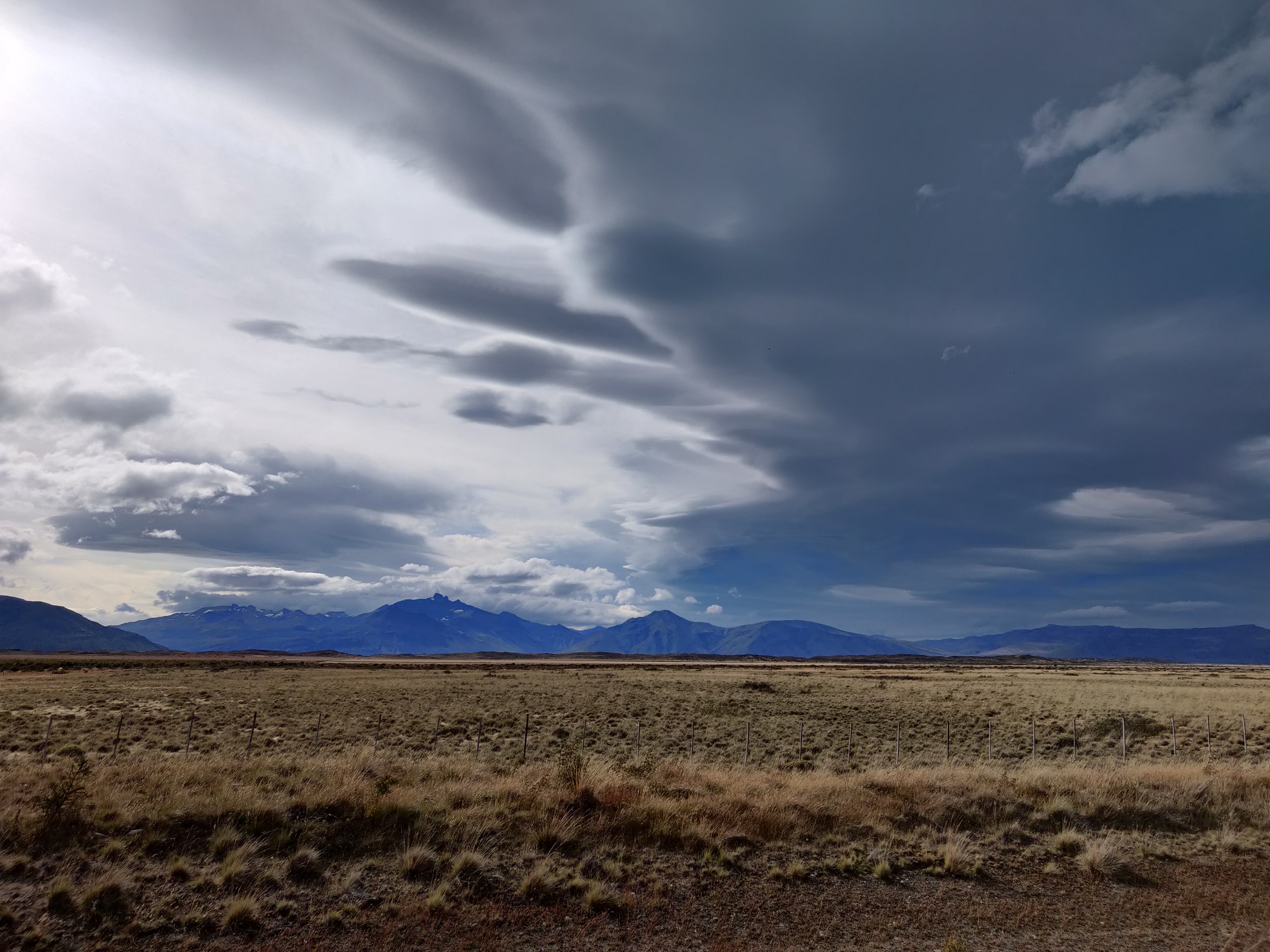
After a leisurely start on Saturday we set off west out of town, cycling along a pleasant promenade on the south shore of Lago Argentina, passing groups of black-headed swans ducking their necks into the water for food. We climbed away from the lake on RP 11 past the Glaciarium museum (worth a visit on the way back we thought), and through scrubland with views ahead to Los Glaciares mountains shrouded in cloud. After 30km we were hungry for lunch and turned off at a small river (Rio Centinela) for some oaty soup and crackers, trying to shelter out of the freshening breeze behind a small bush. Turning northwest, we rejoined the lake briefly soon after lunch before climbing gently away from it southwest on a long straight which seemed to go on and on. We descended down onto a large open flat plain where the road became bordered by tree hedges growing in the road ditches. We wondered if the ditches were just close enough to the water table to enable the trees to flourish, or perhaps it was just a lack of grazing (not that we could see any livestock). In any case, we were grateful for the good shelter they provided from the cross/headwind. Cycling along here we were passed in both directions by numerous cars, minibuses and coaches delivering their passengers to/from the glacier viewpoint. Many of the buses were nearly empty and we weren’t sure if that was a normal result of too many tour operators and cheap fuel, or a response to the flight restrictions/arrivals quarantine.

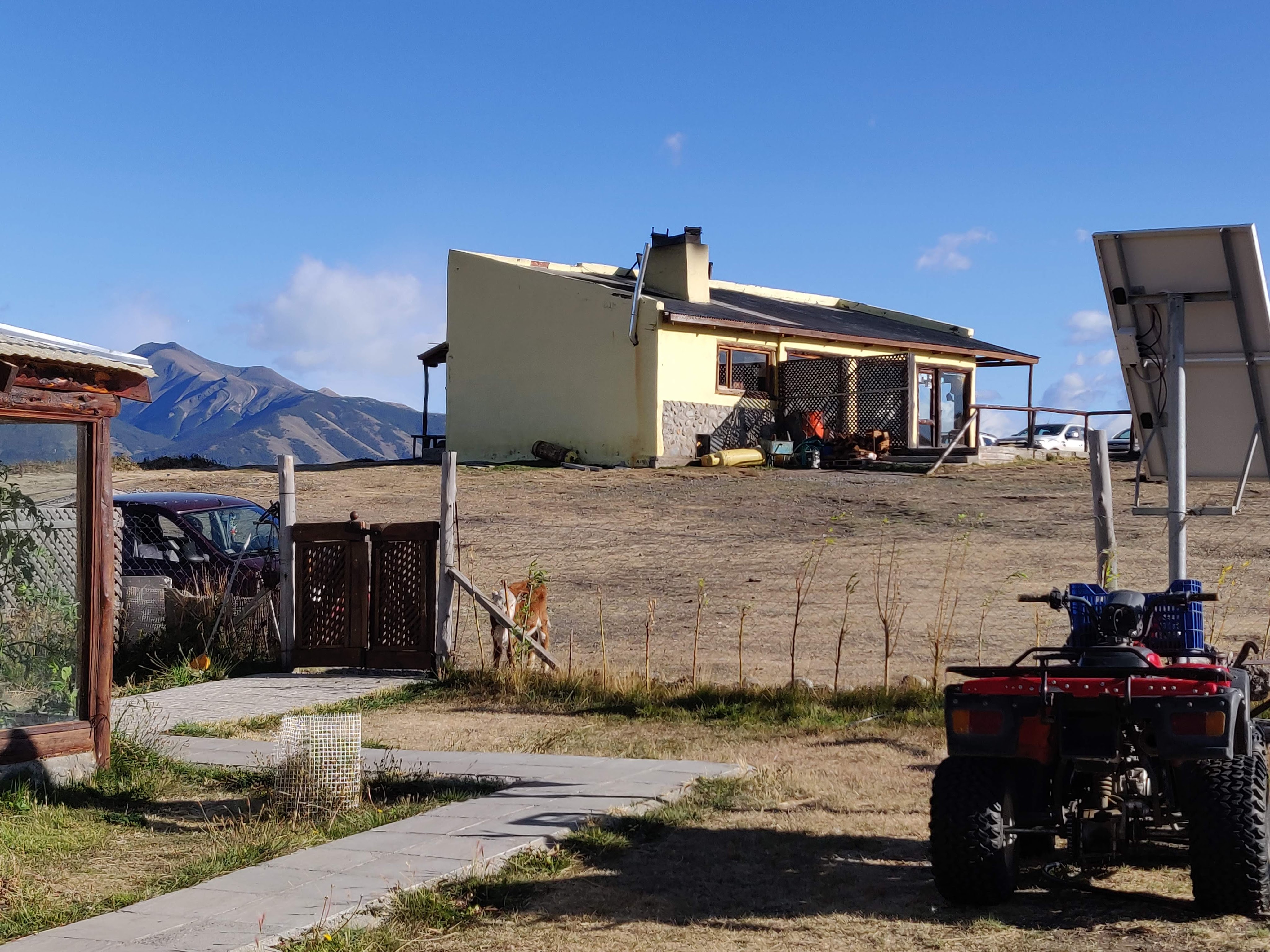
The traffic died down as we neared the T junction for Puerto Bandera, and a group of six condors were circling quite low down to our right, climbing steadily on some invisible thermal. We turned 90 degrees left and finally gathered pace with some wind behind us. We arrived at the estancia turn-off around 5pm and it was a return to ripio gravel for the final 6 km to the farm. The crashing and banging along washboarded sand and rocks was more than made up for by beautiful golden wild pasture scenery all around us, very reminiscent of Patagonia National Park. A few cows grazed in the distance, with mountain backdrops behind in every direction, and our offroad cycling disturbed numerous birds, including what looked to be several South American kestrels hovering for prey. After half an hour, we arrived at the Rio Mitre estancia and cabalgata (horse riding operator). We were met by raucous laughter coming from the veranda outside the restaurant and hearty singing from within, and learnt they were celebrating the opening of a new museum on site. A young French volunteer showed us where we could pitch our tent inside a fenced off area behind a two-storey wooden building comprising four or five guest rooms and an upstairs bathroom. Tent up, we met a young Californian who was travelling by camper van with his wife and were asked by another French volunteer if we wanted dinner in the restaurant. We confirmed two orders of beef (Hannah’s first for a couple of years), and wandered inside for a beer.
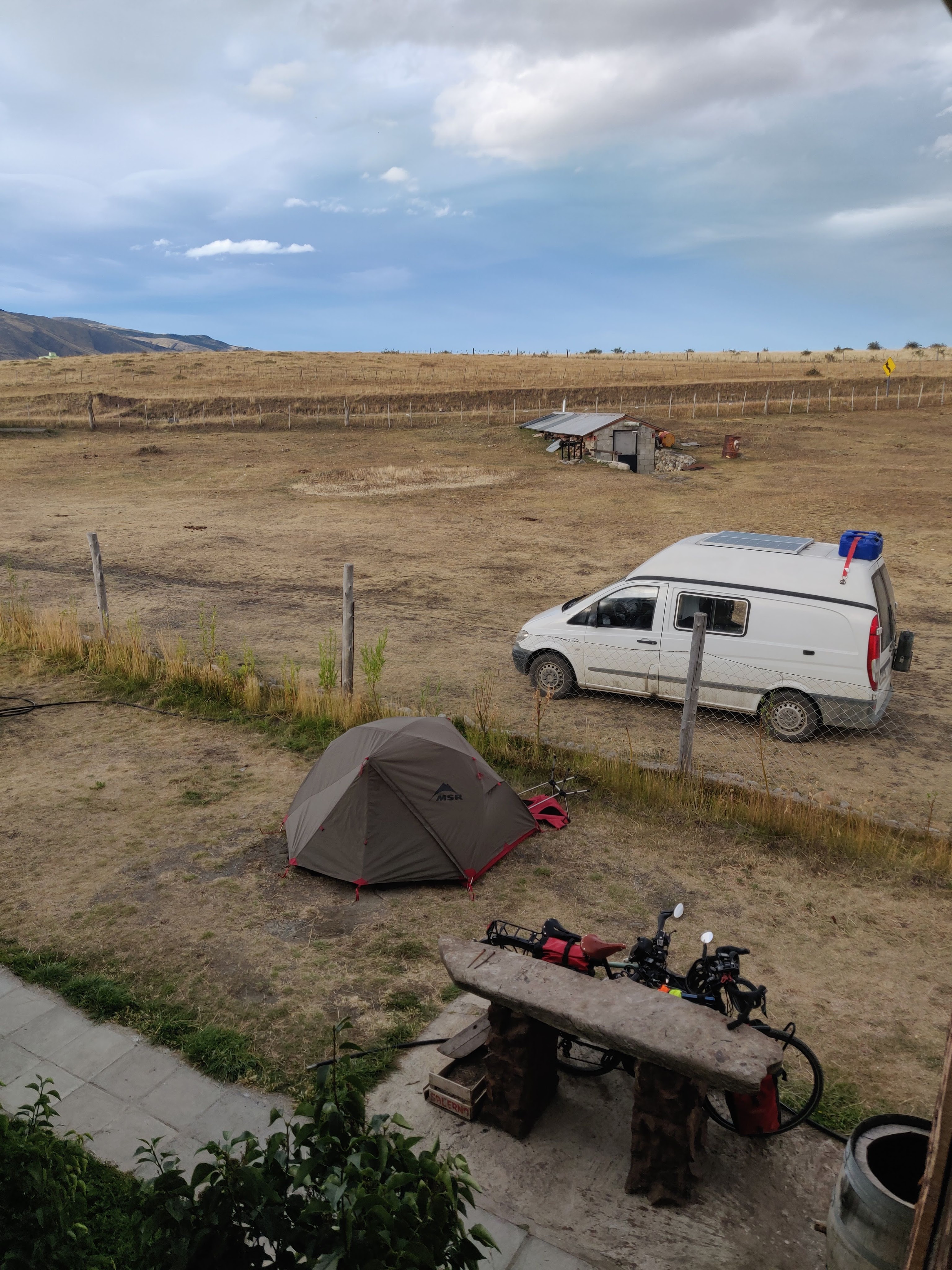
Unfortunately the singing had finished and the gathering was breaking up, clearly after a very sociable long lunch. But we sat down inside on a table by floor-to-ceiling glass windows with the most spectacular views across the plains and sipped a cool can of lager. When the beef, bread and salad arrived we ordered a bottle of red wine and tucked in, mesmerised by the panorama. The Californians had decided against dinner but we were joined by a French couple and American individual all on the same glacier tour tomorrow. Before dinner we had noticed a selection of tarts on the bar, and after the last morcel of bread we ordered a slice of calafate berry and one of apple for desert. One of the estancia family lit a fire in a big hanging barrel stove in the centre of the room which gave off wonderful heat as it grew dark. Just as we were about to head towards the tent, he came back in and announced in Spanish to the tour group that tomorrow’s tour was off. All national parks in Argentina were closed with immediate effect. The French/American helped translate his description fully to us and, all bitterly disappointed, we chatted briefly before the tour group departed, now being driven back to El Calafate right away this evening.
As they left, the Californian camper van couple arrived in the bar to fill their water barrels. We told them about the bad news and then proceeded to chat for a while around our table. We learnt about their travels and experiences, and that they had quit their jobs in California before getting married and embarking on a year-long honeymoon prior to starting a new life in Colorado. They had been in Chile until the day before (visiting Torres del Paine) and had passed through the border into Argentina on Thursday night with difficulty. Whilst Chile was not on the list of at-risk countries yet, because of the number of European tourists trying to cross within 14 days of arrival in South America, they had seen long queues earlier in the day, and had waited until the early hours of Friday morning in the hope there would be no queue and they would have a better chance of getting across. They did, but only after a lengthy explanation of where they had been and some medical testing. This was worrying but confirmed our decision not to move south into Chile unless we wanted to remain there (not ideal with our flights booked from Buenos Aires).


We moved on to talk about other things, sharing many of the same thoughts on “slow travel” and our developing views on simpler living when we get back. After an hour, we put a cork in the last of our bottle of wine and took it back to the tent, bidding the couple goodnight. To our ongoing annoyance we didn’t share names or any contact details. The next morning they left us a note with some money to pay the estancia as they set off early to check the entrance to the glacier park, but again no names or details. We think we know where they may now be staying but don’t want to break the curfew to look. Wherever you are, we hope you are doing OK!
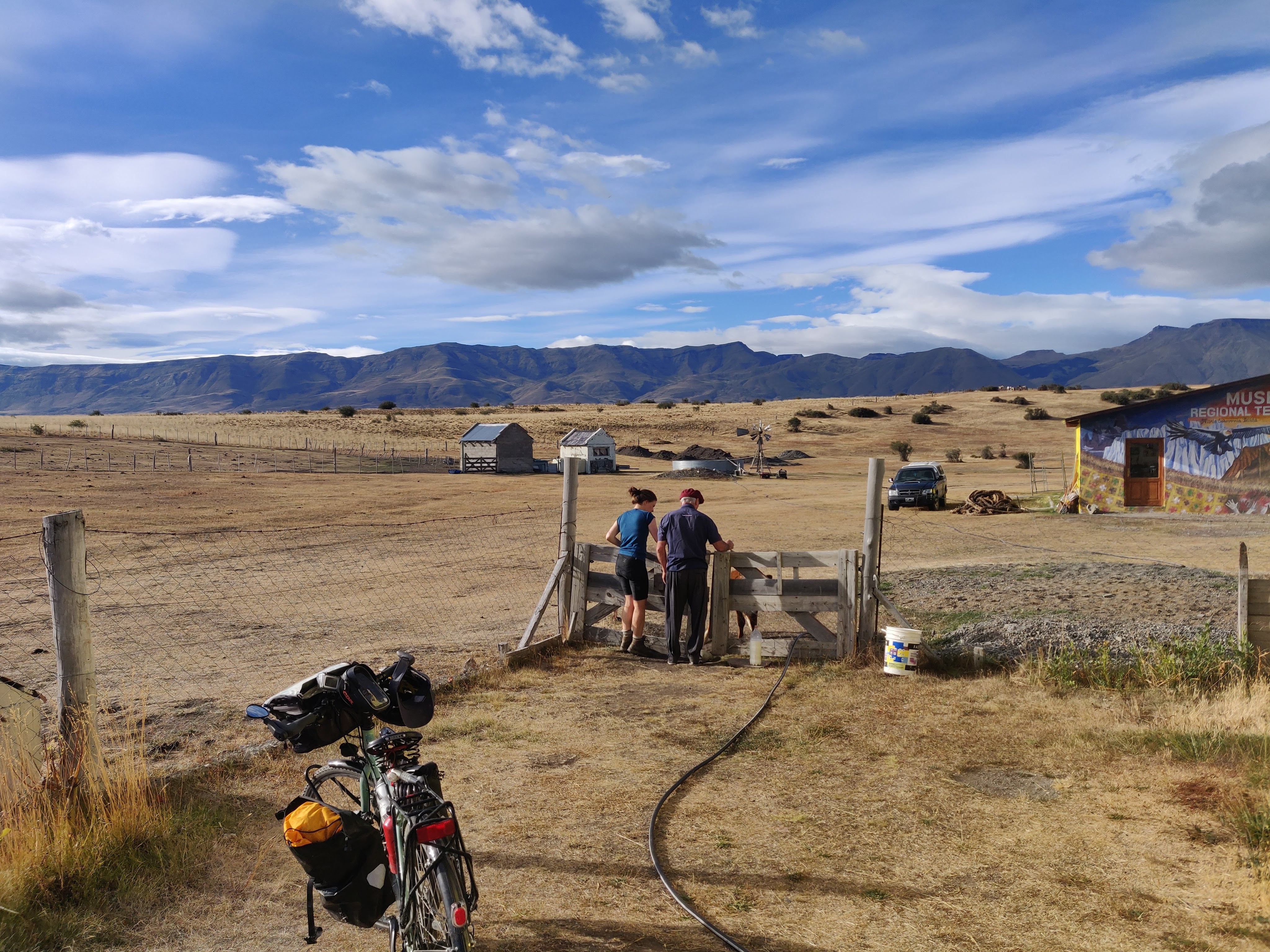
On Sunday 15th March, we awoke to glorious sunshine on our tent and no camper van in sight. We breakfasted quickly on a stone anvil-shaped table next to the tent and packed light day-bikes to go check the national park entrance just in case there was some miscommunication or change in policy. There was no phone signal or wifi anywhere on the estancia so we were, for better or worse, completely cut off from the outside world for now. As we were packing an elderly gent appeared by our tent with a 2 litre bottle of milk and a feeding bottle, calling out “Pancho! Pancho!”. A small brown and white calf came running towards us, stopped by the fence, and began pacing up and down along it with excitement. The old man proceeded to feed Pancho from his bottle. Pancho devoured a 300 ml bottle in about 10 seconds after which the man refilled it from his 2 litres and repeated. We went for a closer look and spying a source of labour he invited Hannah to take over feeding, which for some reason she was more than happy to do.


Pancho fed, we cycled our strangely light bicycles back down the ripio past a few dozing dogs next door and another multitude of birds and then turned left on the main road west towards the park. 10km of smooth tarmac with a few hills passed quickly and we arrived at the large park gates to see two parked cars, their owners talking to a serious-looking park guard. As they left disappointed, we went up to the guard to ask if there was any chance bicycles could pass through, especially ones coming all the way from Bariloche. He sadly said it was not possible and we left him be to decide what to do next. We knew Puerto Banderas was the departure point for boat trips of some other glaciers and wondered if that was worth a look so we set off back down the road, stopping to chat briefly to an Argentinian motorbiker who had also tried his luck. After 20 minutes of Spanish practice sharing experiences and thoughts, we headed back to the estancia junction. By the time we arrived the wind had picked up and we faced another exhausting headwind battle to get there. Deciding it was very unlikely to yield any success we returned to the estancia instead, consoling ourselves with the visit to Glacier o’Higgins we had already been fortunate enough to complete and our hikes around Mt Fitzroy from El Chalten which so easily might not have happened. Arriving back at the farm with glorious weather we felt even more lucky to be there.


After soup lunch we headed into the restaurant for tea and tart to relax. Hannah asked about a sign saying “yoga today” by the bar and a Spanish woman was called over to ask if we wanted to do a lesson outside this afternoon for 1000 pesos each. We agreed enthusiastically and at 4pm we were led out across the pasture towards a hut 500 metres away with another Spanish woman and two children. Pancho appeared out of nowhere and sensing some adventure, trotted along behind us.We were delighted at the prospect of doing yoga with a cow but alas our instructor thought otherwise and attempted to send him away. This proved impossible and she attempted to walk him away instead, which Pancho was having none of. After 5 minutes of trying, she called one of the children to help and between the two of them, slowly coaxed Pancho away. We watched the bovine entertainment with enjoyment and tried to chat to the other lady in Spanish. At last our instructor returned and led us not to the hut but to an area of rough grass and weeds nearby surrounded by cowpats, and unrolled her mat. We followed suit, dodging the pats and prickles and were then sprayed with tea tree oil as we lay down.


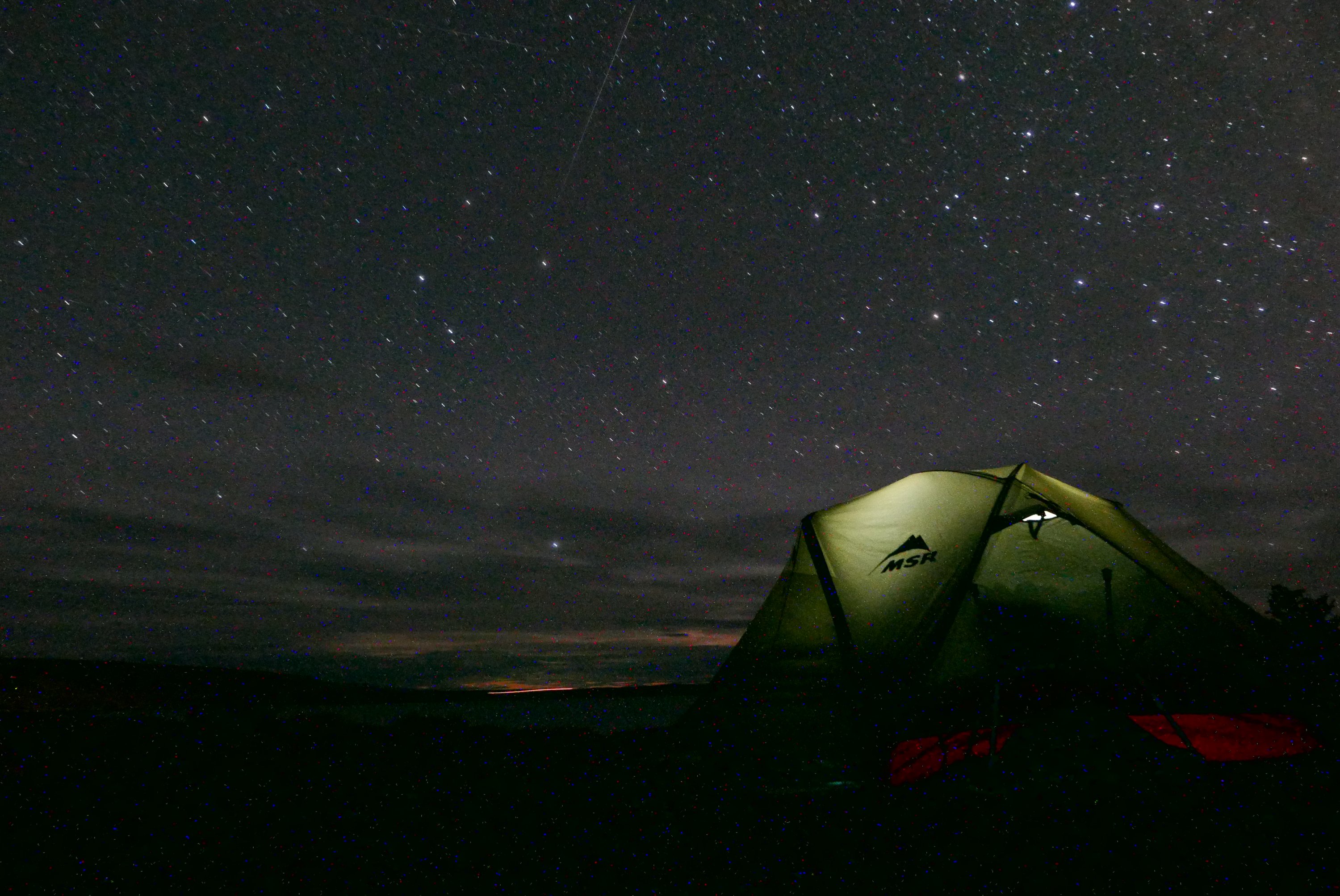
Our first yoga lesson in Spanish went remarkably well and was wonderfully relaxed, out in the warm sun with a gentle breeze blowing through the grass. At one point we were joined by one of the farm dogs who sat himself on the mat of one of the girls, keen to join in. He too was moved on as we progressed through sun salutations. After an hour we felt more relaxed than ever and ended the class with a hug from our excellent teacher.Back at the estancia we had a glass of wine in the restaurant before cooking up mushroom soup pasta (not our greatest meal) followed by today’s sweet potato tart. What could have been a very disappointing day had turned out pretty perfectly, and ignorant of events elsewhere we slept like logs under a star speckled sky.In the knowledge that venturing south to Chile was no longer an easy option, we decided on Monday 16th to spend one more day on the estancia to enjoy the surroundings and allow Robbie’s stomach to recover from the undercooked mushrooms of last night. We washed some clothes by hand in the morning, fed Pancho, and went for a good walk in the afternoon. Simpler tomato pasta for dinner, followed by the last of our wine (and just a bit more fruit tart) as we watched a large group of horses rounded up on the plains and cantering into their enclosure.
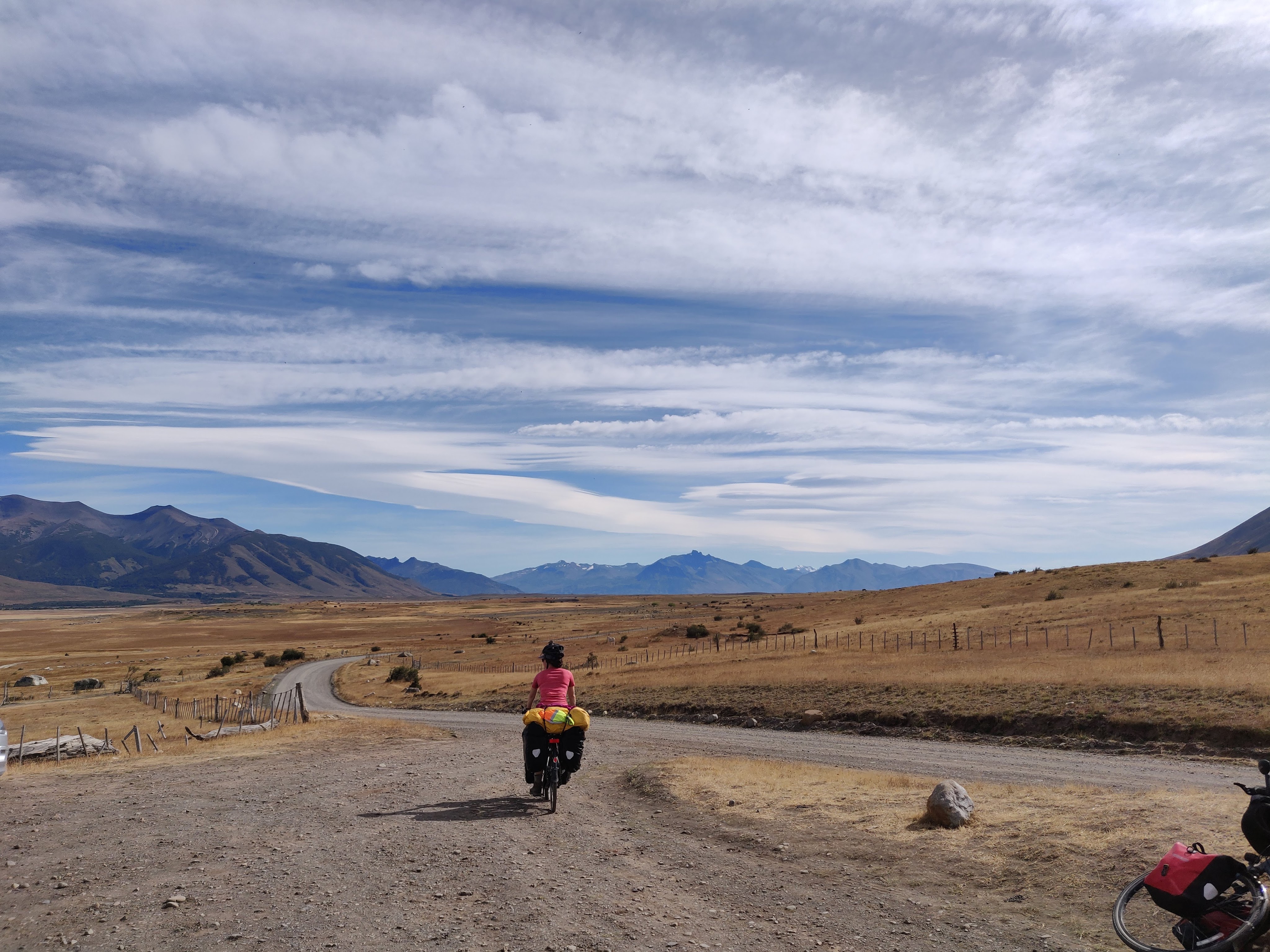
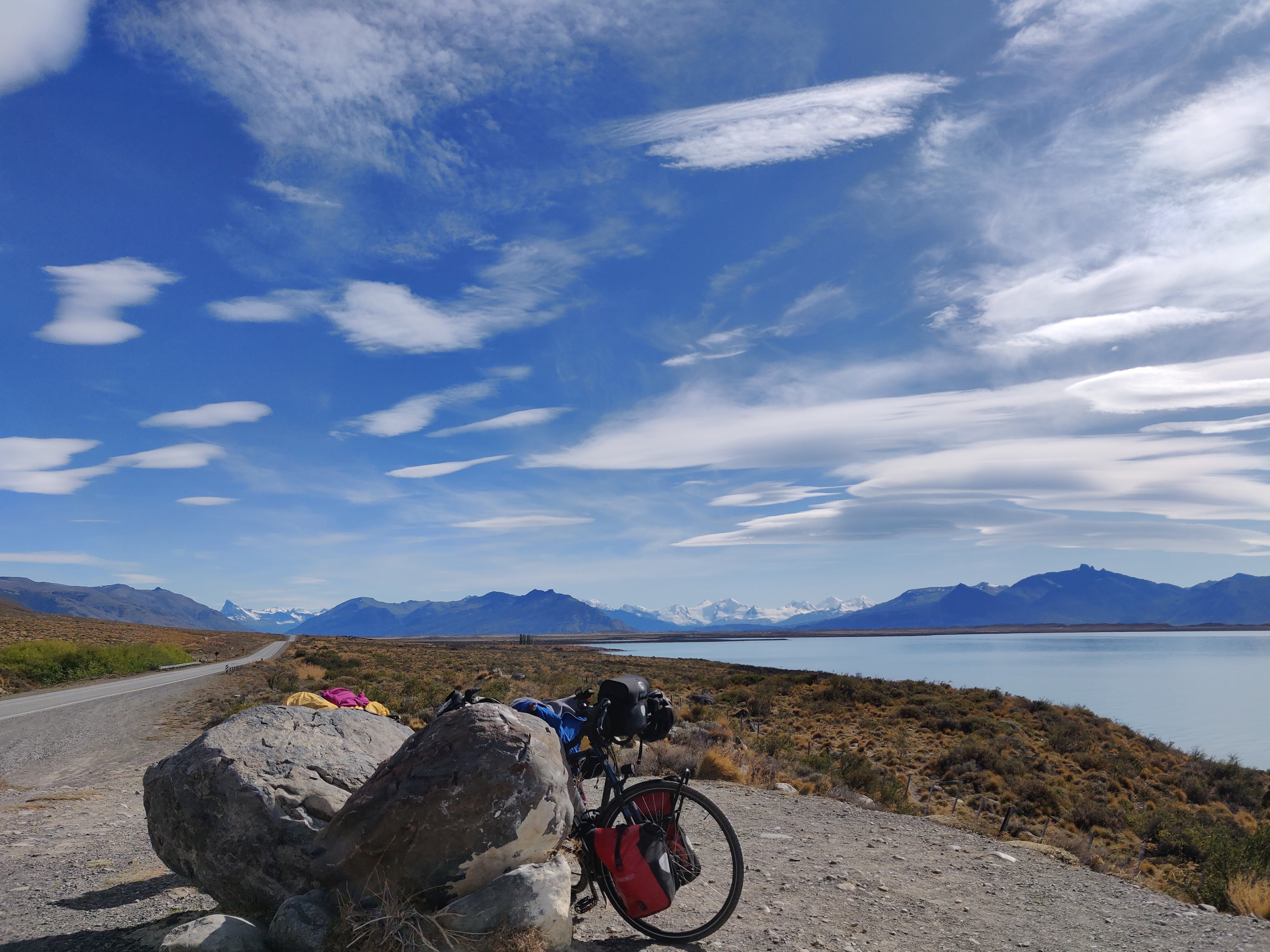
On Tuesday morning we packed up somewhat regretfully, nervous of what the outside world would bring, but knowing a return to the city was needed for food and communication. Bidding Pancho and the family goodbye we set off east in light winds and almost no traffic. Shortly before lunch we passed a solo cyclist heading west to try to find a way to the glacier, warned him of the strict closure and suggested the estancia instead. As we approached the city, our 4G signal started to work and we were bombarded with BBC news alerts of the developing coronavirus situation. We stopped for lunch on a rock above the lake shore with views back to the south Patagonian ice sheet in stunningly clear skies.
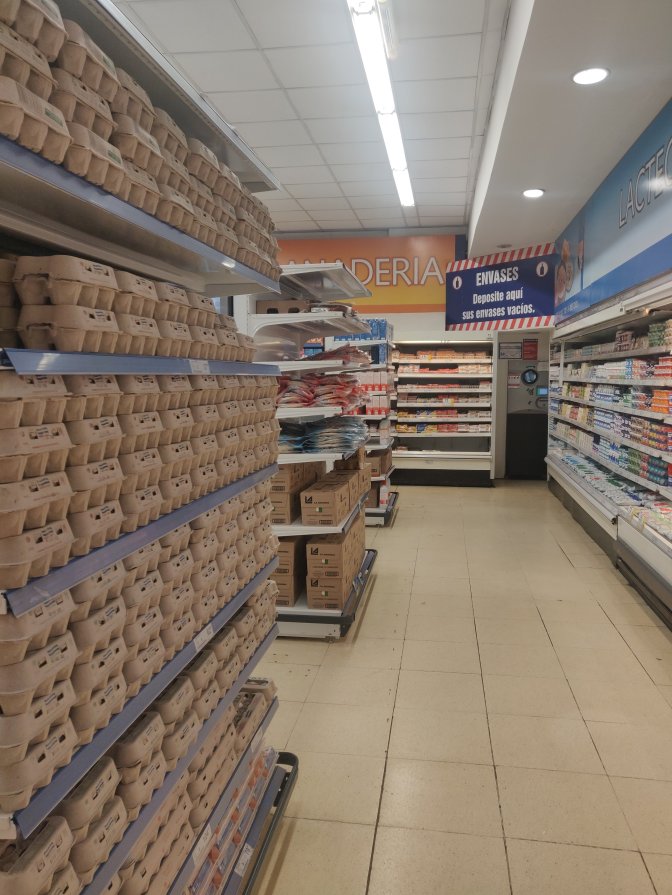
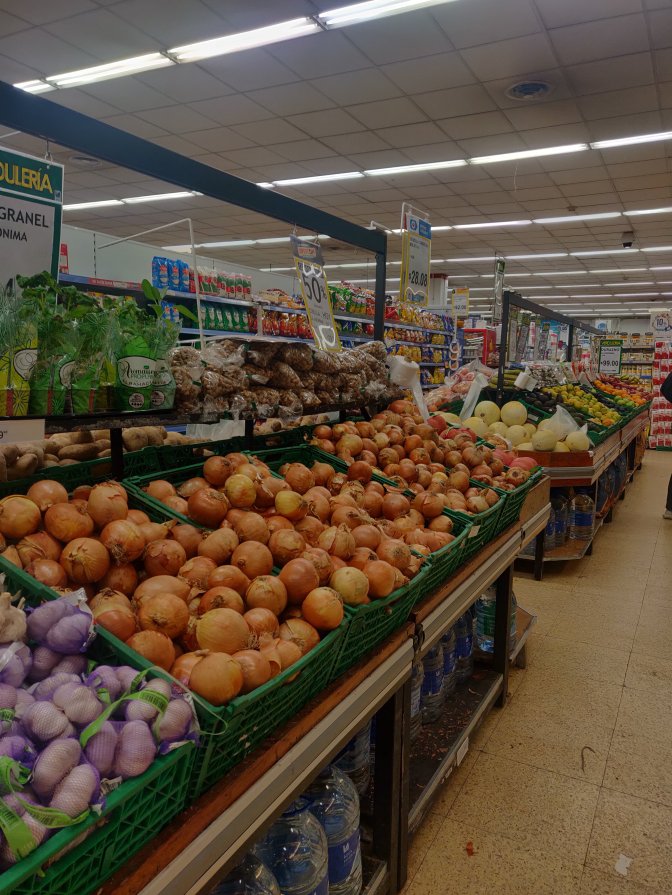
Post lunch, a tail wind blew us into el Calafate with ease and we headed to a hostel on the west side of town that suggested camping as an option on ioverlander, to be told that it was closed to all new entrants. We went to our second option, that was eerily quiet but with open gates and two other tents already pitched, and erected our own quietly. We phoned both our parents on whatsapp to fill them in on developments. A German couple returned to the tent next to ours and asked if we had heard the news? A covid case was confirmed in El Calafate and the whole city was now in quarantine, food buying the only excuse for going outside. We went straight to an Anonima supermarket a 5 minute walk away to stock up for dinner and cooked vegetable soup. Checking the foreign office website we learnt the last direct flight to the UK had left yesterday and the FCO now advised against all but essential travel to Argentina, and for all tourists to leave if possible. Unable to do much this evening we planned to speak to our insurance company tomorrow and contact the embassy.
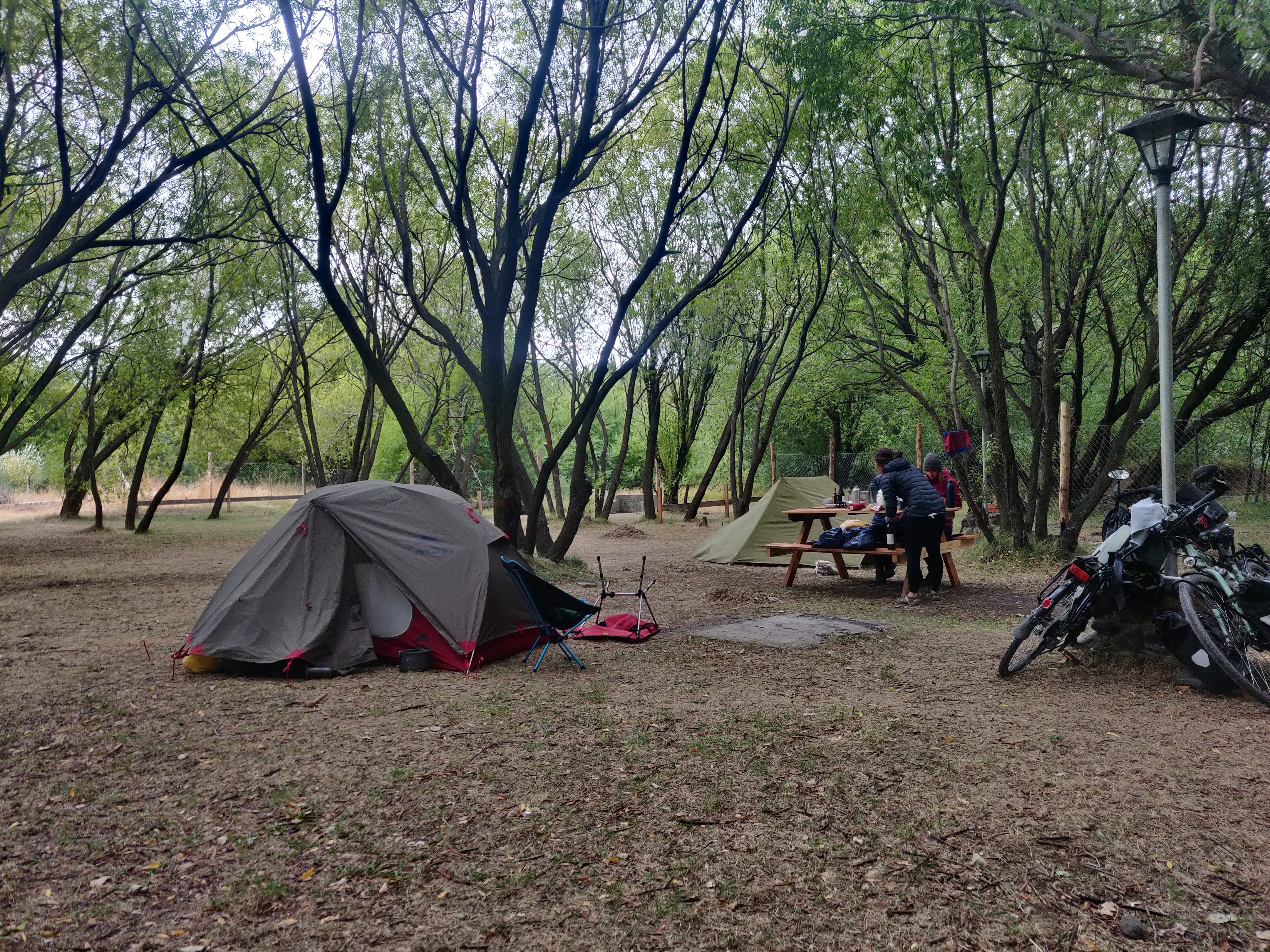
On Wednesday morning we emailed our travel insurers to ask if we needed to leave right now and were relieved to hear they would still provide ongoing cover but would only repatriate us early if FCO advised against all travel, rather than essential. We spent most of the day considering options and planning scenarios. We also met our other camping companions, a Ukrainian couple, and an Argentinian Brazilian lady travelling by LandRover Defender and staying in one of the cabanas on site. The night before had been cold in our tent and we asked the site manager about cabana options. He offered us a special rate for us to move in tomorrow and we were delighted to accept.
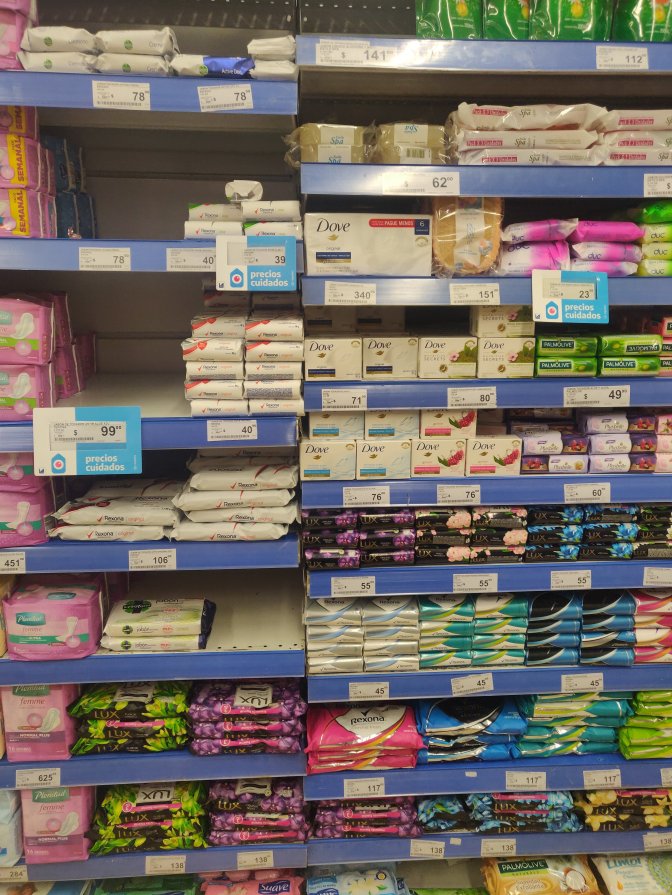
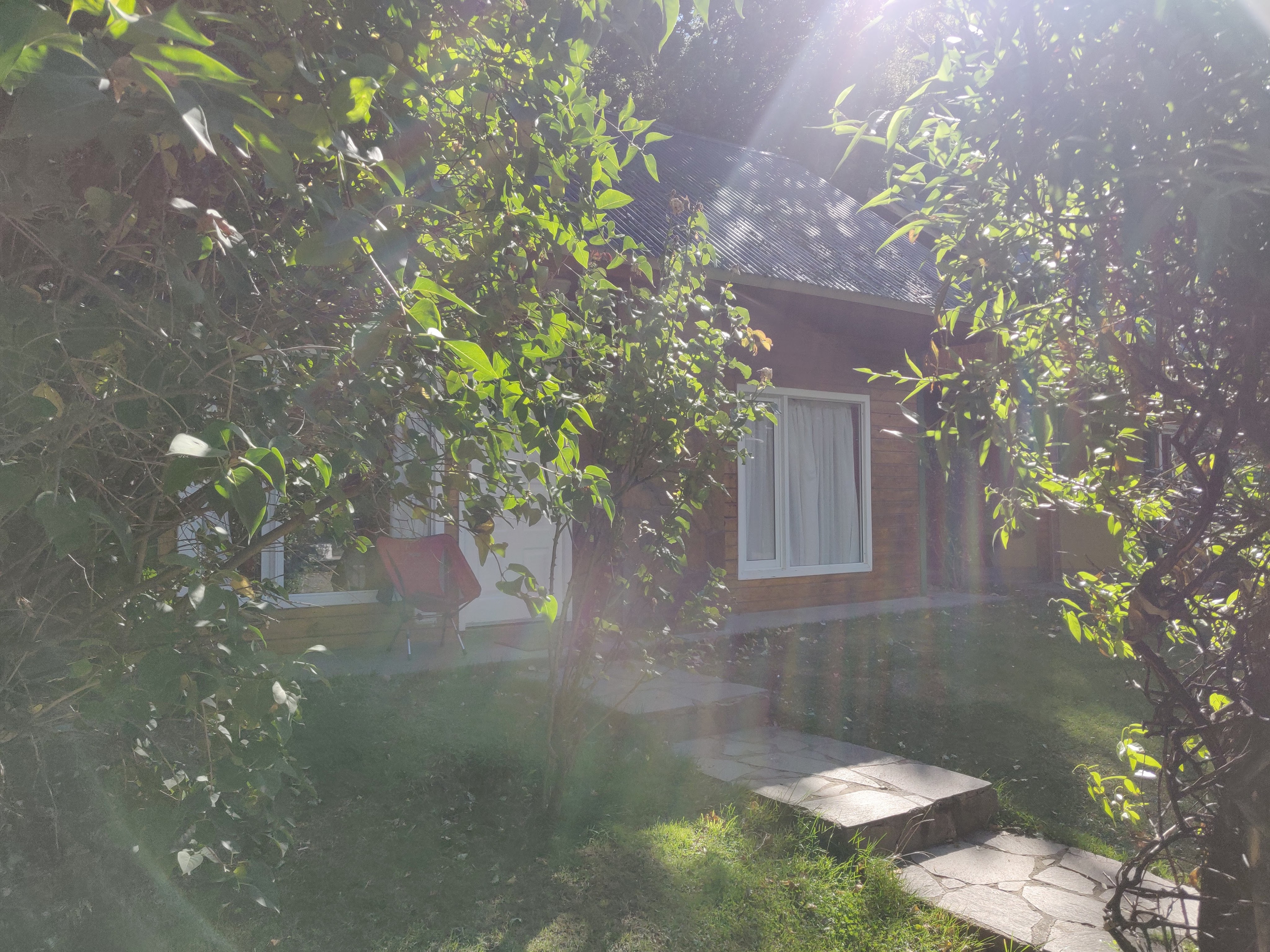
On Thursday we awoke from a better night’s sleep and went in to buy more groceries in town, were able to take out more cash and pop to a pharmacy whilst our cabana was cleaned. We paid the owner for a week’s accommodation and moved in to a very pleasant 1 bed bungalow with great relief, our most luxurious home since leaving the UK. We spent all afternoon debating about whether to return home early, but the flight options were limited and expensive, and we were hearing stories of people being stranded all over the world. We also thought the chances of our bicycles making it through 3 airport changes were slim, and probability of infection high. So we decided to sit tight for now. Things could be much worse.
On Friday 20th, we heard rumours of a nationwide lockdown being imposed from this evening. We consoled ourselves with trying out some new recipes, and contacting as many people as possible to get views on the situation. We were reassured to hear the local German consul recommended staying put to the Germans on site and was very complementary of the local people. That evening we turned on the Argentinian TV channel and saw the president announce that yes indeed, the whole country was locking down, with a 10 day quarantine under the same conditions as now underway in El Calafate. Travel was allowed to airports for international departures only. Again we were amazed and frankly impressed at the speed with which the Argentinian government had acted and resigned ourselves to spending a little while longer in situ. That evening we turned on the TV to see state TV reporting on the quarantine and trying to keep the nation’s spirits up with some intriguing folk music played by a band all seemingly locked in a bedroom somewhere.
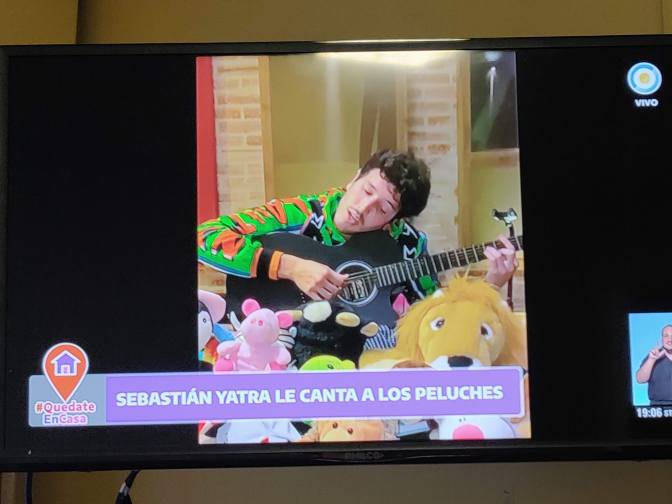
The terrible lockdown tv 
Trying to retain fitness
Saturday morning dawned bright and Robbie decided it would be good to try out some exercise routines to maintain fitness. Our garden being 50m long he started with a 20m beep test, followed by some indoor exercises. Hannah found some pilates videos online, which appeared to be significantly more dangerous than either cycle touring or coronavirus, so we decided to stick with running and yoga for now.
It’s not been easy sitting tight in one place whilst chaos seems to be unfolding elsewhere but we have little choice until at least the end of quarantine, and until either Argentinian airspace is closed completely (in which case we can start to investigate plane charters), or they begin to allow direct commercial flights to resume to Europe. With all these options, alternatives, decision tree creation and the continuously developing situation nationally and internationally, our little grey cells have had more exercise in the last few days than they have had in the last few months! Our simple daily routine of packing/unpacking tent, cycle, eat, repeat seems almost a lifetime ago, rather than a few days.
Given the non-existent flight options we are likely to be here for at least a few weeks and will probably be updating our blog during that time. Still plenty of food in the shops here – so we are better off than the UK in many ways!

 Pedalling_Patagonia
From magical starlit camp to lockdown: the world change moments at ‘the end of the world’ Patagonia. Quite shocking but the continued delighted discovery of delicious fruit tarts where ever you find yourselves shows the upbeat spirits are undaunted.
LikeLike