Another of our catch up posts whilst holed up in Buenos Aires!
The end of the Carretera Austral is truly the end of the road. Once you have reached Villa O’Higgins there is no road left until you are on the banks of Lago del Desierto, 40km from El Chalten, Argentina. Before then, you have to cross two lakes, leave Chile, cross no-man’s land and officially arrive in Argentina. This means two boat crossings and traversing what can best be called pony track. The only alternative is a minor detour between 800-1500km as shown in the google maps below. The pony track was our preferred option.
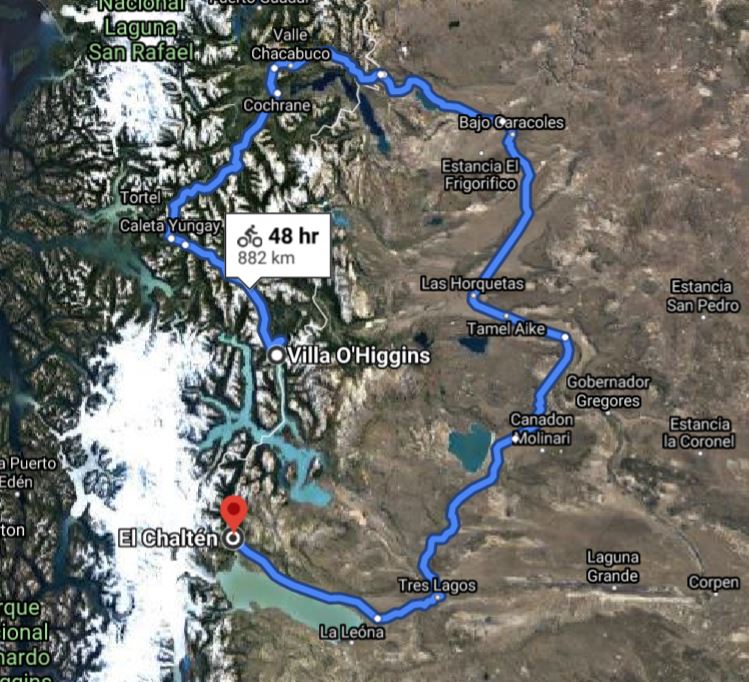
However, this route was entirely dependent on the operation of a ferry boat across Lago O’Higgins. As you might be able to see from the map, Lago O’Higgins (or in Argentina, Lago San Martin), is named after the countries’ respective liberators, Bernado O’Higgins and José de San Martin. The lago is a multi armed waterbody fed by glaciers off the South Patagonian ice field. There are only two boats that are prepared to make the crossing, generally up to twice a week and it is entirely weather-dependent. We had heard various stories of cyclists trapped on the Argentinian side of the crossing for up to 10 days waiting for a weather window with quickly diminishing food supplies. As it was likely to start snowing in Chile by Saturday, we were keen to get the Wednesday ferry as we were sure there would be no further boats until at least Monday the following week.
Our focus therefore on arrival in Villa O’Higgins, rather than kicking back with a beer and relishing the end of the epic journey, was a dash to the ferry office to see if there were any tickets left. Although it will always be a regret we didn’t stay longer in Villa O’Higgins, if we hadn’t got the ferry it (as in fact it turned out with other cyclists we met in El Chalten) would have been a cold and wet 5 days wait, compared to the warmer climes of Argentina. In fact it was lucky we did go straight to the ticket office, as we arrived just as it opened after the lunchtime siesta and were first in the queue. As it turned out there were only three remaining tickets for the ferry crossing tomorrow: the sprint to the finish was just about worth it.
There were, however, several downsides of our ferry ticket success. First, the ferry was going to leave next morning so giving us no chance to rest up after our marathon cycle mission and the border crossing trek. Second, as the wind was picking up, rather than the usual 8am ferry departure time, it was going to leave at 7am. As the ferry departure point was 14km from the town, this meant either a 5am wake up call and a cycle in the dark, or having another night sleeping in a ferry terminal. Third, as the wind was going to pick up it was obligatory that we had to visit the Villa O’Higgins glacier rather than the shorter crossing just to Puerto Candelario Mancilla, adding to the price of a ticket.
Given that we are (although now very rusty) geographers and geologists, you might be surprised about the third point being put in a negative light. In fact, the ability to go and see the water terminating Villa O’Higgins glacier or not had been one of the many chats on the last few days of the CA. The only reason for deciding against it was that it would have added at least 4 hours onto our crossing time and the ability to try and get over to Argentina before the weather deteriorated. Now with no other option but to see a glacier (and despite the extra cost) we were very glad that we were now forced to go!
Clutching our tickets, we went in search of a shower and food. After five heavy cycling days and four wild camps, both were very much needed. Not getting much success asking at hostels to pay for shower access, we met a lovely campsite manager (and secret cycle tourer) who let us shower and wash our clothes in the hours of daylight left. Despite our offer to pay him he let us use them for free. Despite the hose like quality, it was one of the best showers either of us had ever had. If we had had more time, we would have loved to have sat down with a beer with him; luckily he accepted our offer of beer money instead.
Now clean and with drying clothes, Hannah went to explore restocking options and potential restaurants. Villa O’Higgins is a pretty small town seemingly at the end of the world so it looked like most of the inhabitants were focused on the tourist industry and gaucho culture. Given that there had been very little traffic since the ferry from Puerto Yungay, gauchos outnumbered tourists. The little supermarket offered up enough in the way of food until we reached Argentina (luckily we were packing light as the vegetables were pretty old!) and Hannah also found a little front room restaurant run by a french couple.
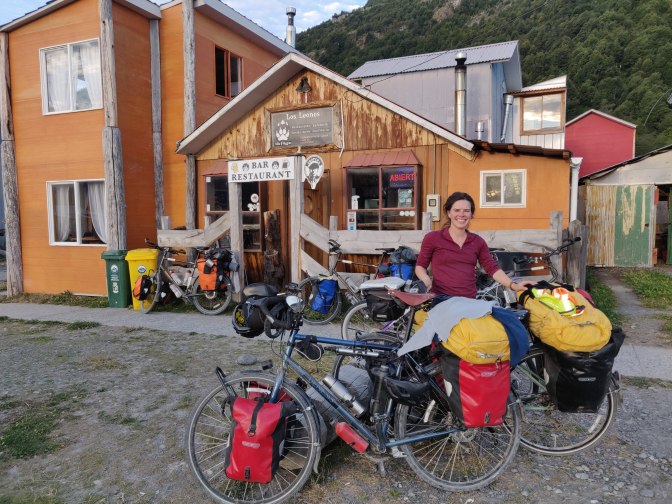
With Robbie now in tow, we enjoyed a lovely meal at La Leona restaurant with views out to our packed up bikes outside ready for the final 8km cycle to the ferry terminal. We still managed to drink our congratulatory pint, ratatouille and steak (plus brownie pudding!) before persuading our bloated and aching bodies to cycle that little bit further. Despite indigestion complaints, the sunset cycle along the banks of lago O’Higgins was a fitting end to our achievement. Cycling in the dusk silence along the dirt road reflecting in the pink waters was a memory that will stay with us forever.
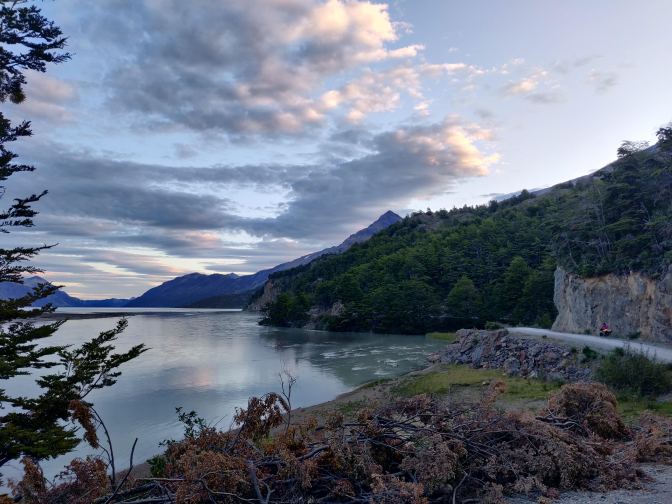
On arrival at the ferry terminal we hunted out the instagram fodder (“fin de caraterra austral” sign) and went to the ferry terminal building (unfortunately locked) to set up camp. Up above us on the hill was the armada building (the Chilean navy), an ongoing relic of border tensions between the two countries. We were initially slightly worried that we would be sent back to Villa O’Higgins, but when the solo navy recruit came to check on us with his flash torch he just wanted our names and offered us use of his (very!) clean bathroom. Hannah took him up on the offer of a toilet but we declined the shower, expecting a porta-cabin trickle affair. In fact it turned out to comprise multiple shower head options and by morning we were sad we didn’t take him up on his earlier offer! Although we were able to chat to him in our limited spanish, we felt sorry for this relatively young guy, who appeared to be alone and living far from home. We were luckily able to say bye to him when he came to wave off the ferry at 7am the next morning.
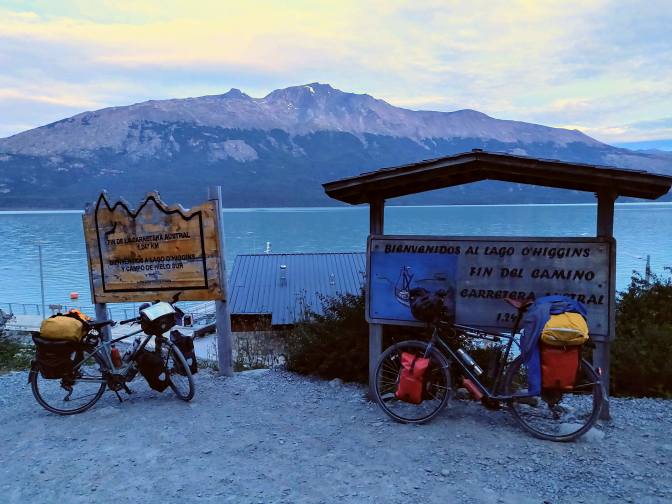
The finish line. 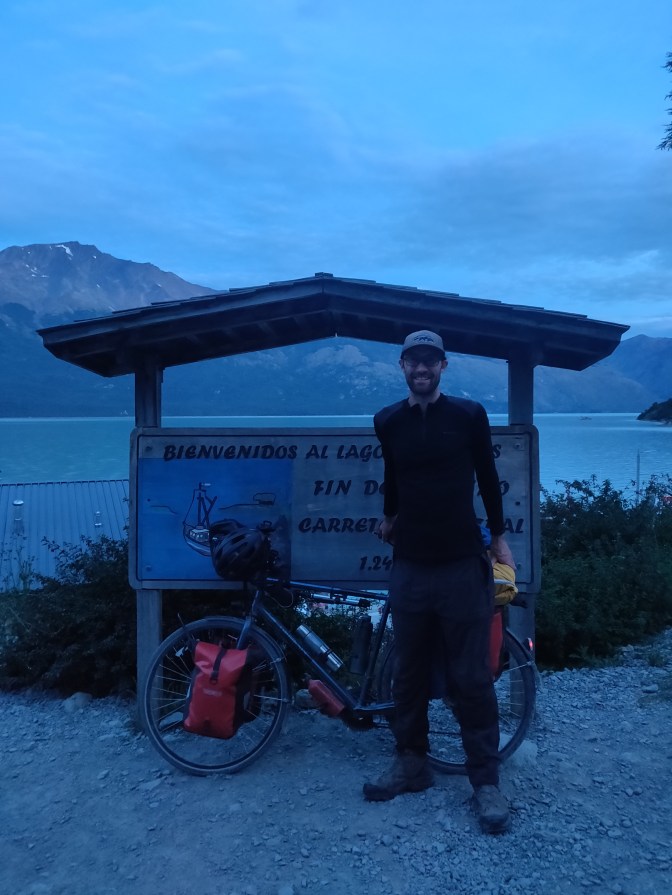
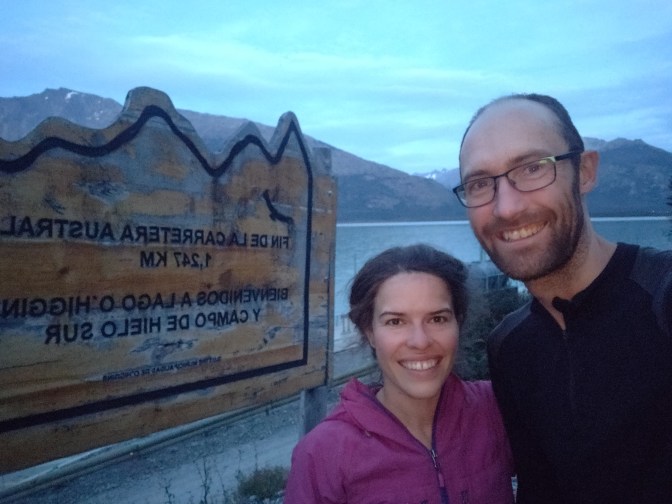
At the end of the road!
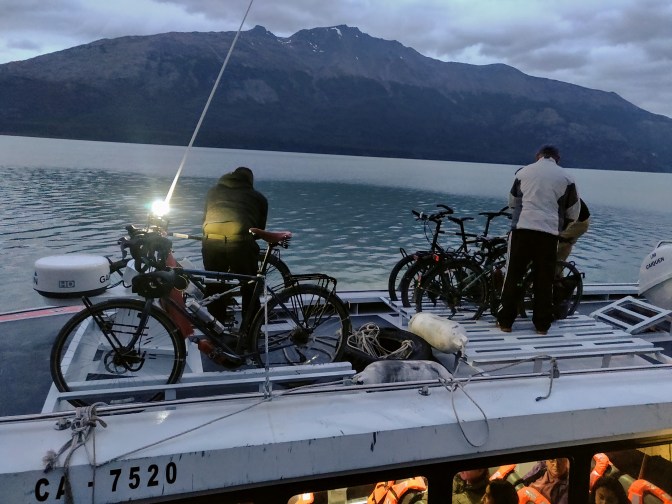
When we had booked the ferry, we imagined a double decked affair (that was shown on the website and posters) so we were surprised when at 7am what turned up was effectively an enclosed speed boat. As there were now three other cyclists (a group of French friends) it was initially unclear in the early morning light where we would be able to put our bikes. With an order to remove our pannier bags, our bikes were grabbed by the crew and slotted and tied in place on the roof. With a quickly organised line of pannier delivery, our bags were all, somehow, stored in the bow. With five bikes, hopefully securely, strapped on top and looking very odd, we stepped aboard.
Despite our early start, the wind was certainly stronger than it had been the last few days, not helped that we were going upwind at pace. With each boat slam, all the cyclists universally looked up nervously towards the roof, hoping that the knots were tight enough and we would not see our steeds plopping off the boat into the fjord. As sun began to come up, we started to see what looked like numerous powder blue boats in the distance. Reaching for our glasses, these, unsurprisingly, turned out to be icebergs calved from the O’Higgins glacier. Although we had expected to see icebergs, we hadn’t quite anticipated the size of these floating bungalows. The sight also roused the other members of the boat who were still sleepy halfway into the excursion. Our quick tent dismantle had kept us very much awake.
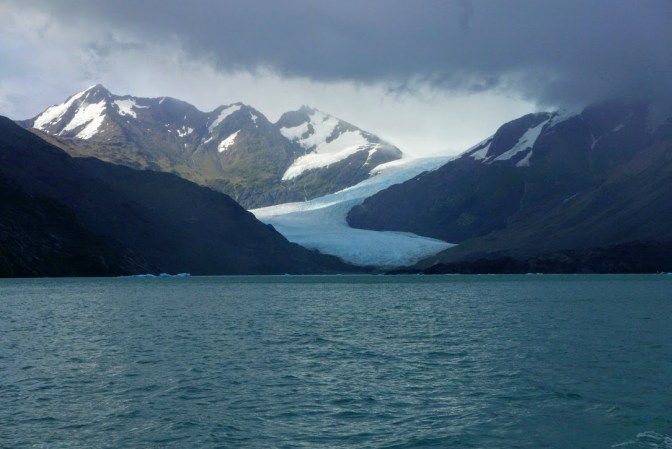
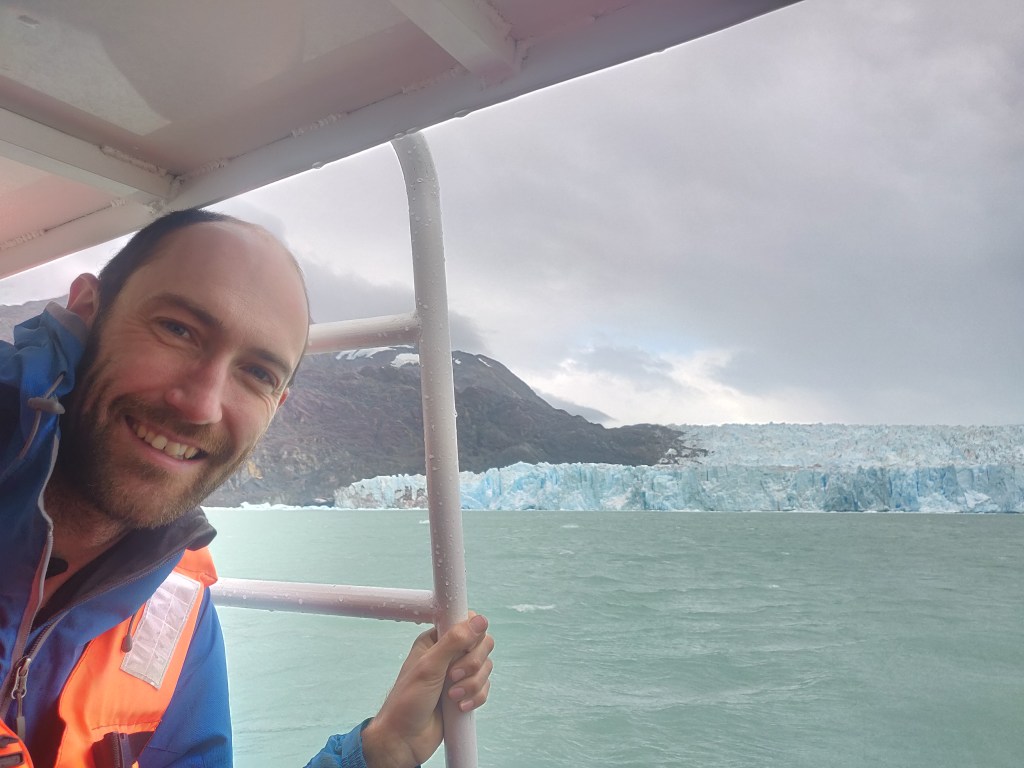
Soon we were within sight of the glacier. Although we had both been lucky enough to see (& study) glaciers before, neither of us had seen the deep blue of the compressed ice contrasted against the black of the moraines. The colours were such it looked like a badly photoshopped holiday snap rather than natural colours. Whilst we stood and watched trying to avoid the rush of the tour guests after they had woken up to take, repeated and extremely shaky, panoramic photos we were able to take a couple of snaps whilst enjoying the cool breeze off the ice. As we were only there less than half an hour, we were fortunate enough to hear the deep bass boom of a calving event and the tidal surge as the ice plummeted into the water. Although a natural occurrence, it did feel that we were watching the forefront of climate change and its devastating beauty. The pale colour of the rock face above the ice showed where the ice used to be and, although still huge, the glaciers diminished size was evident. Quoting Nan Shepherd, we are ‘losing antiquity in our snow, our ice and our natural world.’

We were, sooner than expected, deposited on the banks of Puerto Candelario Mancilla, the boat picking up hikers from the Argentinan crossing and the repeat process of removing our bikes and chain passing of bags ensued. In doing so it was noticeable, again, the difference in weight between what we were carrying and our fellow cyclists. With a wave, the boat disappeared back to Villa O’Higgins and we were off towards the Border post and no-man’s land.
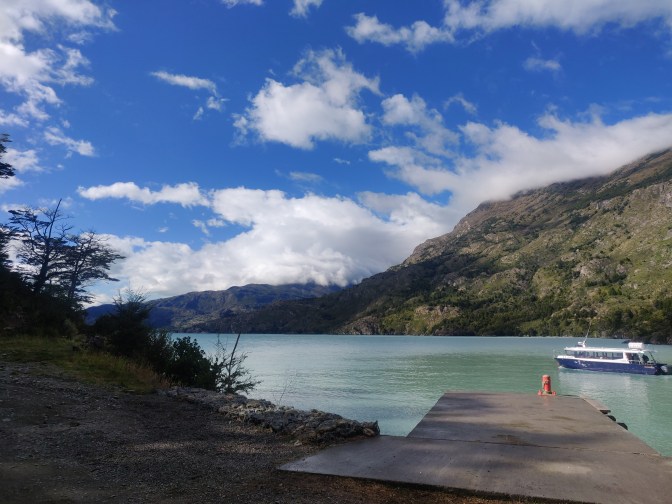
As the only method of crossing at this border is by foot, there was still a number of guards at the outpost and we both had to be individually interviewed before departure. Despite its remoteness, the presence of a football field (frequently used to challenge stranded hikers awaiting the ferry) and views over the lake on a sunny day made it a rather nice place to be on duty. Whilst waiting for our exit stamp we met a nice cycling couple from Switzerland who had travelled to South America via cargo ship. It had taken 3 weeks from Germany and it sounded a great trip. They had lucked out in that the chef was the best in the fleet so the only downside was the amount of weight they had put on during the voyage and prior to the cycling adventure! Their laudable aim was to try and travel adventurously for the next few years without requiring plane travel. We wished we had known about the cargo ship option before setting off.
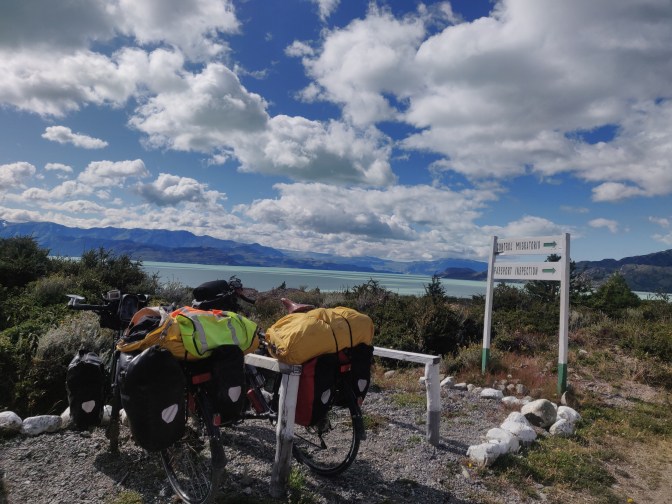

Chilean border control. 
The ‘paved’ section of the crossing. 
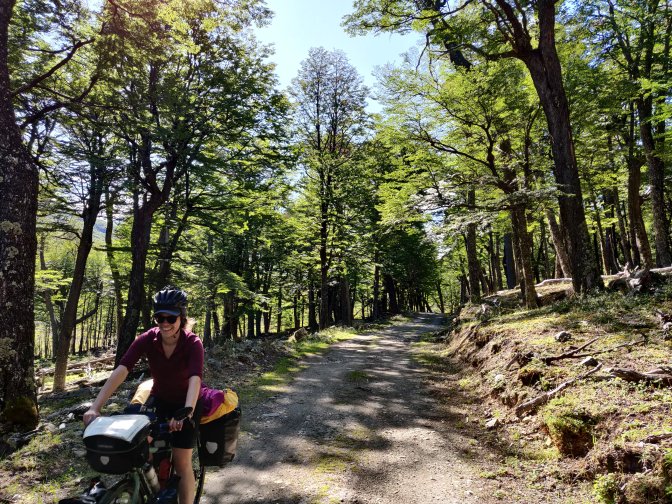
Finally it leveled out and was rideable.
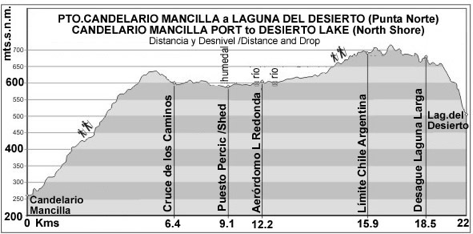
Signed out of Chile, we started on our no man’s land trek. We had hoped that the 6.4km of uphill was going to be ride-able. Although the width of a road, it certainly was not bike friendly (or at least loaded touring bike friendly). In the morning heat we had the unenviable task of pushing our steeds up a rocky track. Even when we tried to ride, the wheels had no purchase so we had to return to walking and pushing. Given this unexpected push, by the time we reached the top we were tired and it was late in the day to press on with the flatter, but harder, pony track path to the Argentine border post with little in the way of good camping options.
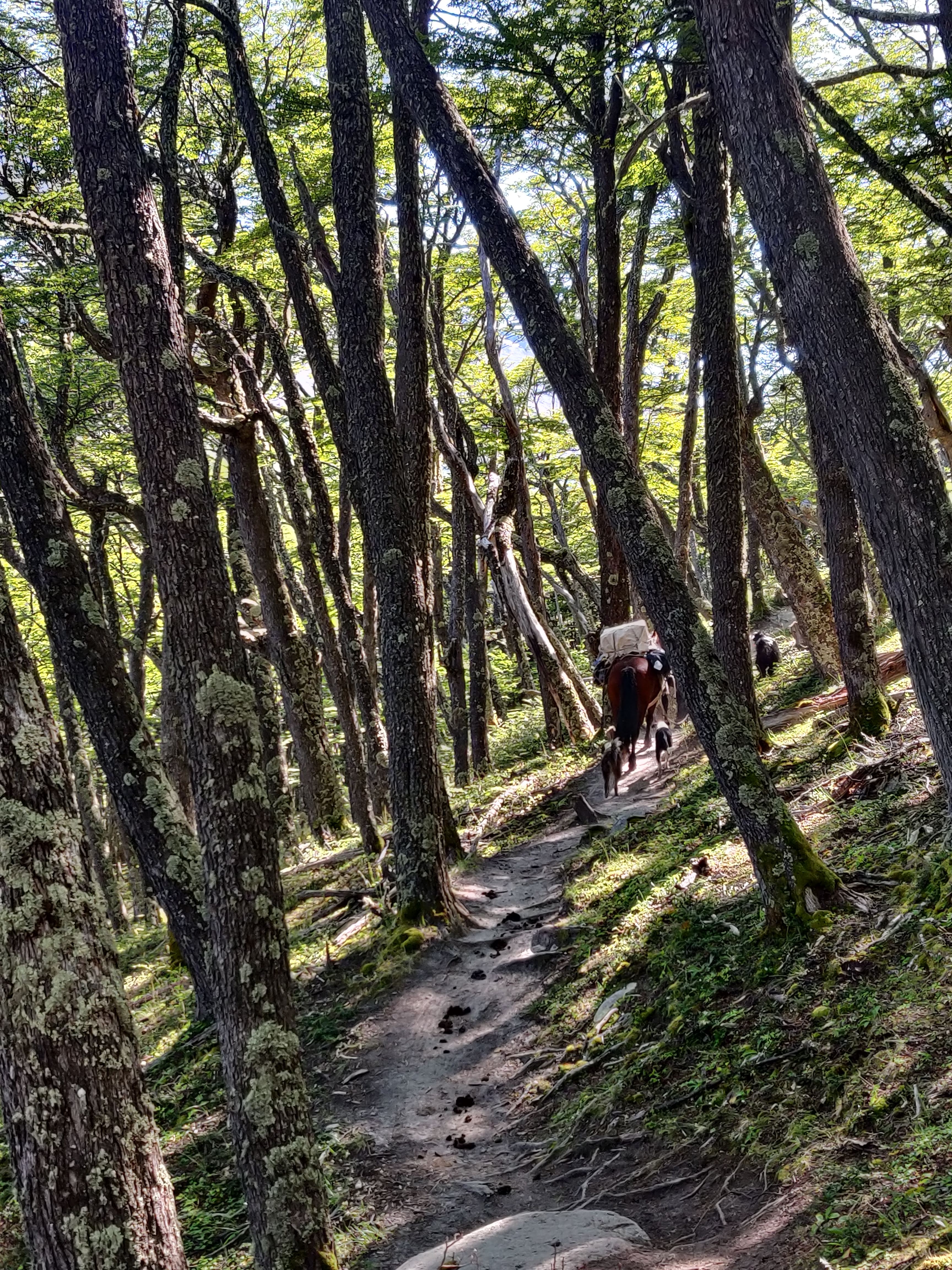
IOverlander recommended a wild camping spot by an old air strip so we pushed on until there. Although squeezed between two peaks with no sign of previous campsites, it had a good stream nearby so seemed a perfect place to spend the night in no-man’s land. With tent up by 4pm we managed to rest for the first time in days. As dusk was about to fall, we heard a stampede of horses and saw at least 6 horses all cantering merrily towards our tent, which we now realised, we’d happily pitched in what was a daily horses migratory route. Worried not to startle the horses, we slowly stood up as a gaucho appeared in the distance. Despite our best efforts and our dismay, his horse was slightly spooked and once having gained control said we couldn’t camp here. Seeing our crestfallen faces at the thought of doing the hardest part of the entire trip in the nearing dark, he let us stay as long as we didn’t make a fire. As that obviously wasn’t our intention, we thanked him profusely and went straight to sleep.


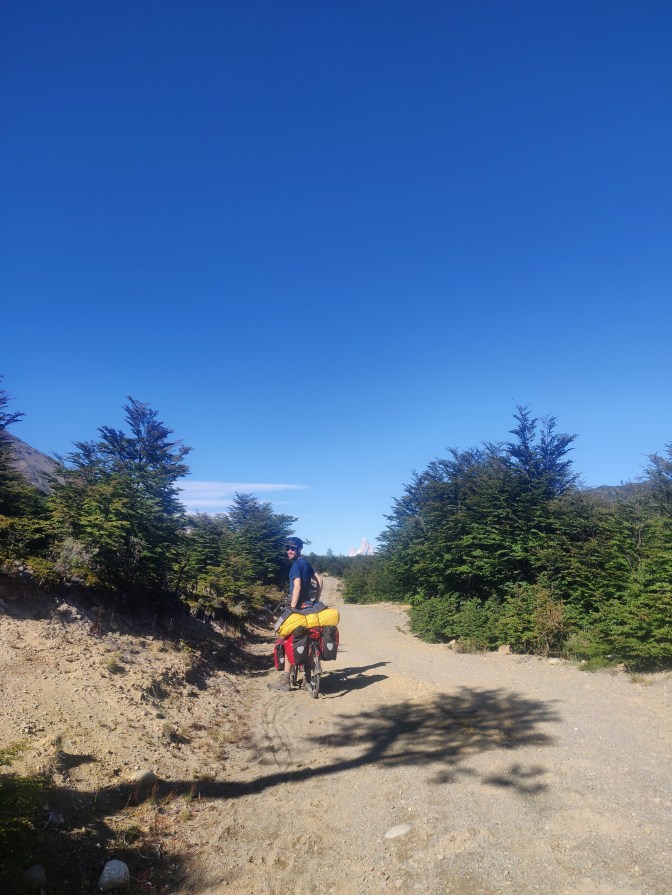
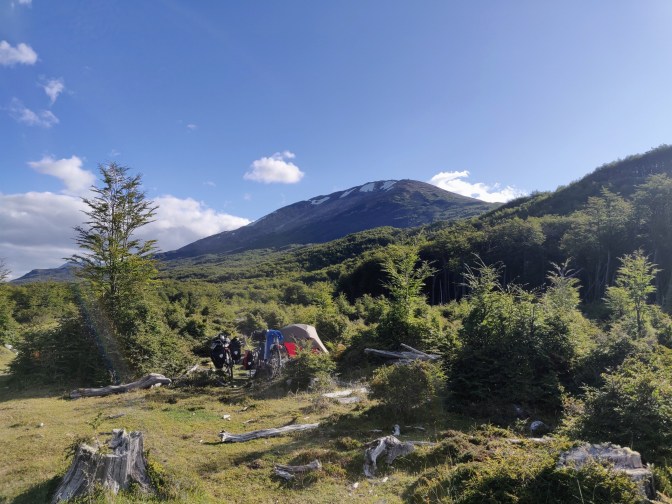
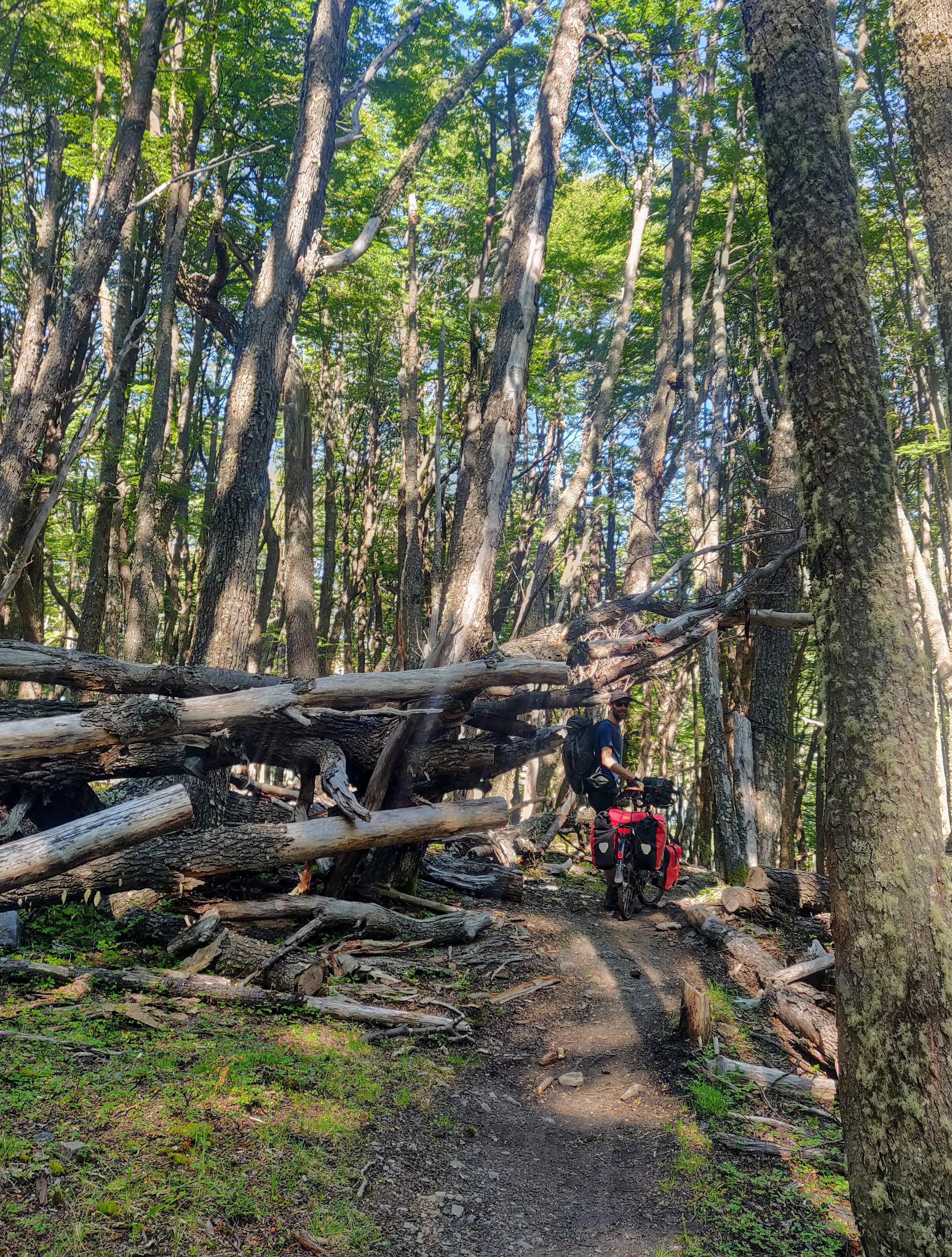
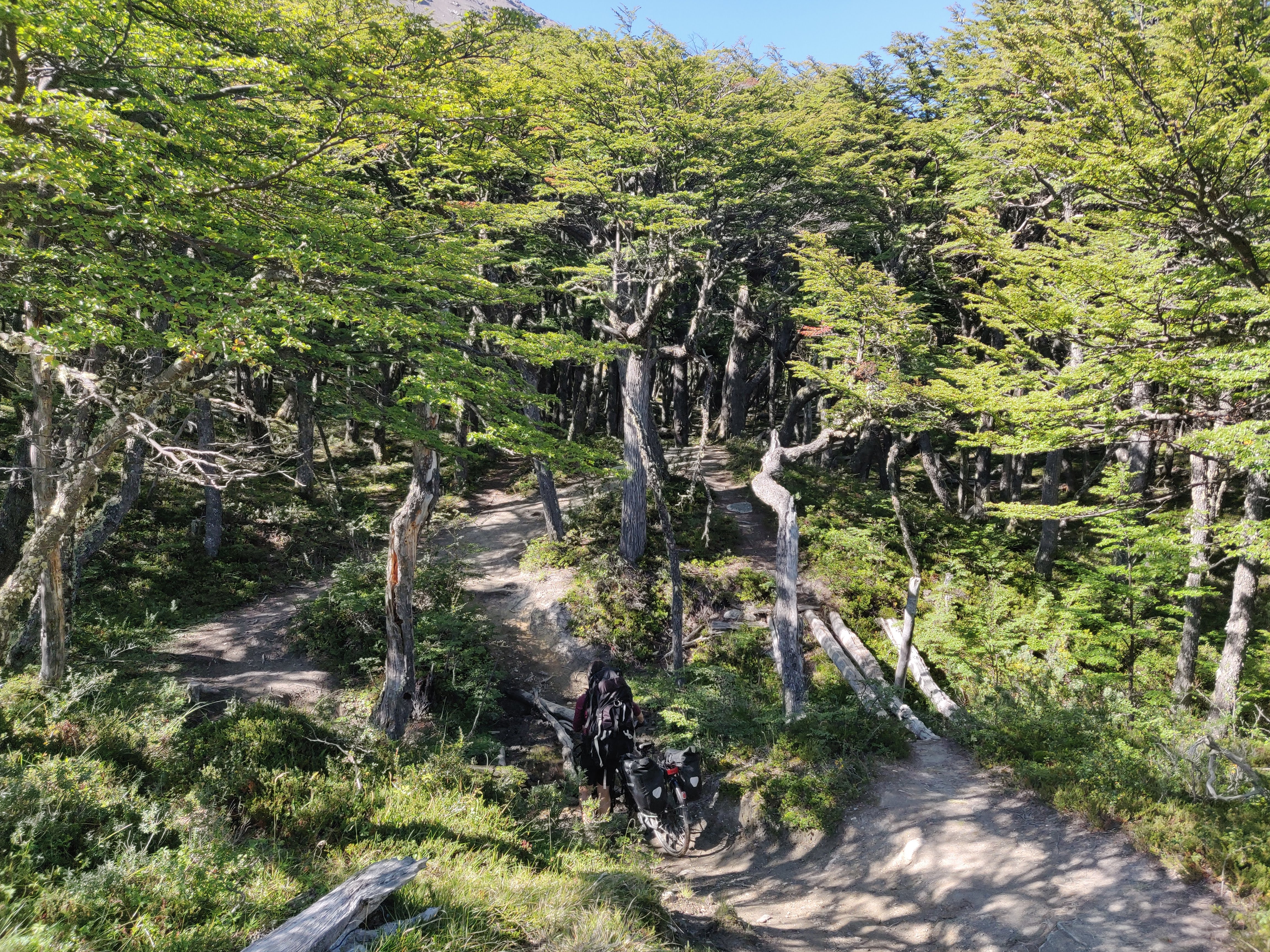
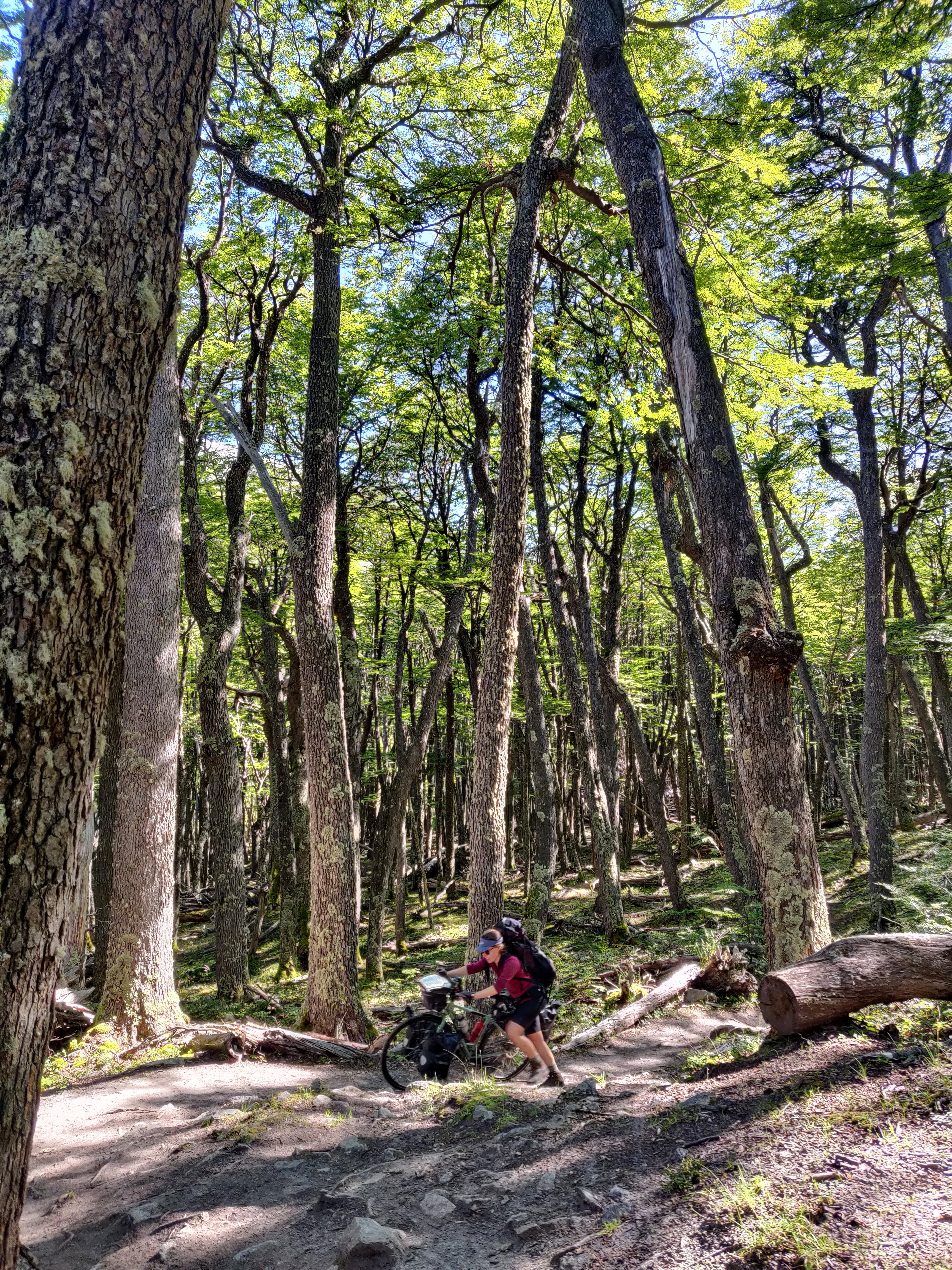
The next day we were up and early ready for our pony trail walk, including a formidable section simply called ‘trenches’. The path soon narrowed to a sheep’s trail path seemingly going through bushes and round fallen trees. The only clear marker that we were in fact going the correct way was the bike tire tracks in the soft mud. This was very much a team effort, and although it was no longer ‘uphill’ there were significant undulations that meant for us with bikes we had to shout out repeatedly for necessary pushes. With cycling again impossible, it was soon easier to unpack most of our heaviest stuff and put into our hiking rucksacks and remove pedals to ease shin damage from pedal smacks.
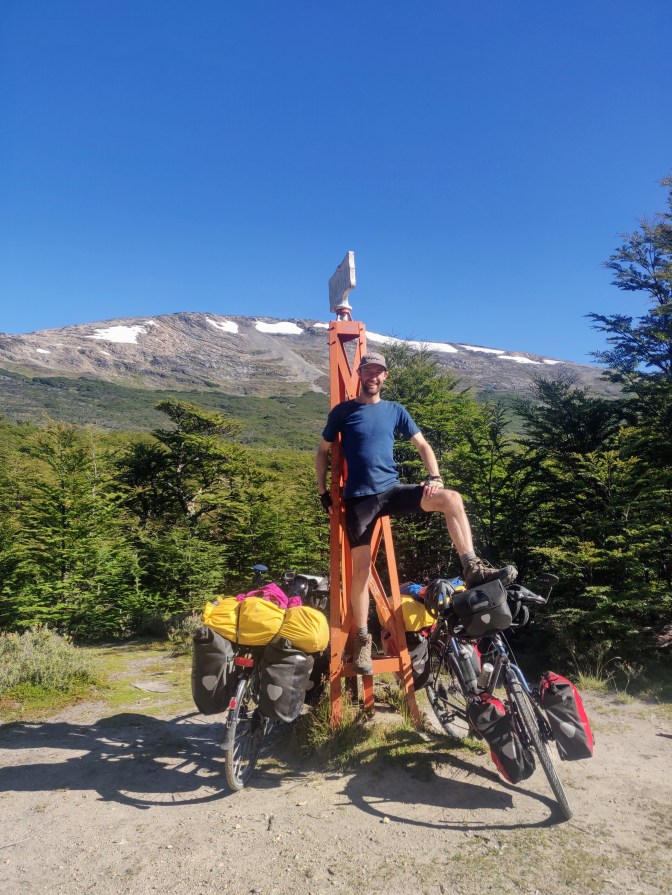

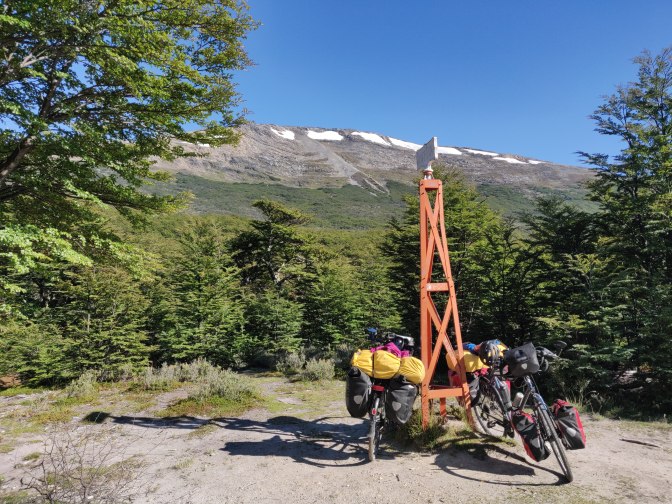
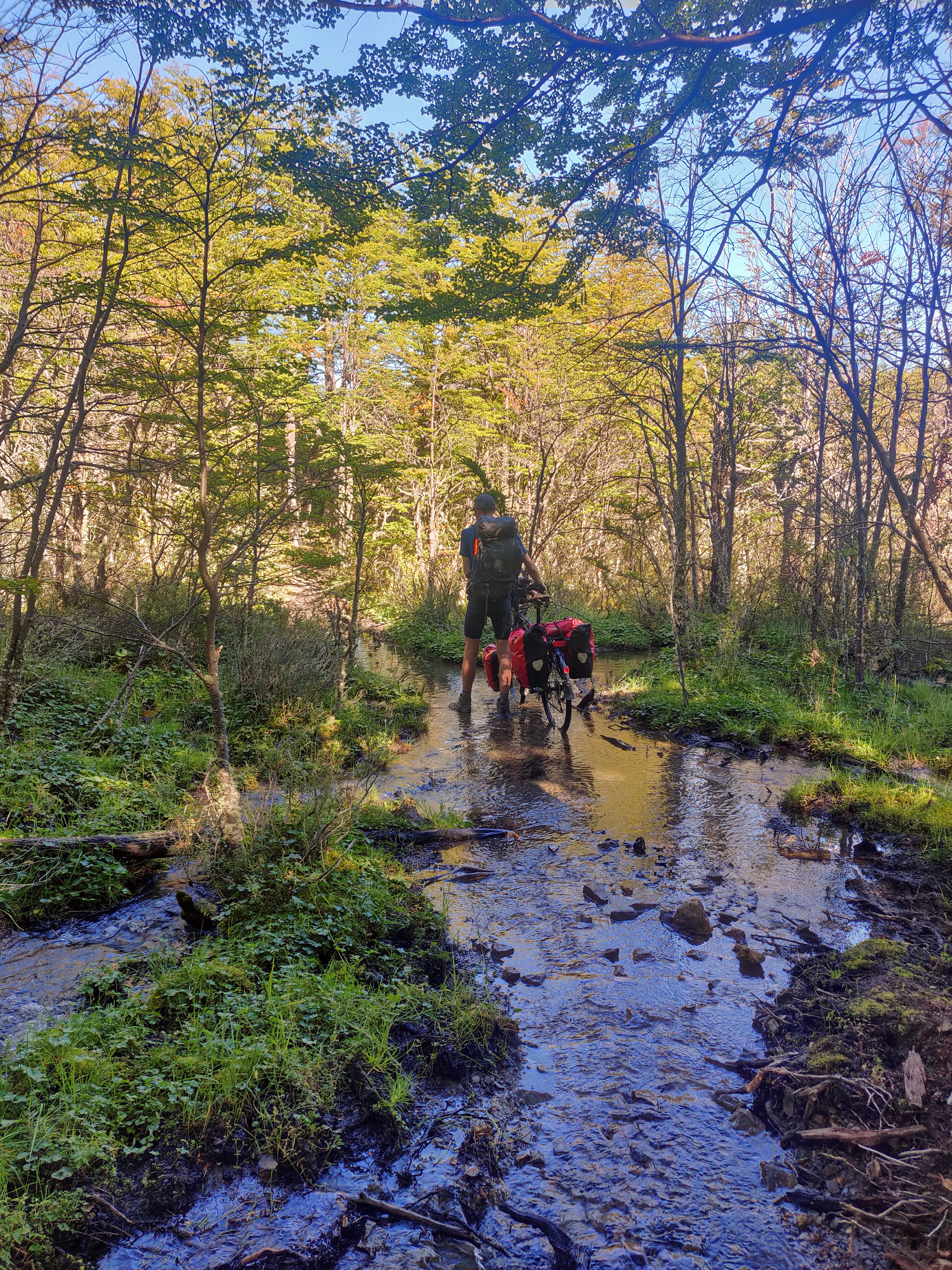
Along with the fallen trees, muddy paths and undulations, there were also 4 significant streams to cross which were easier in sandals than walking boots. We did have time to celebrate stepping across the border line by foot and having a good break. As we neared the end, we just had to pass the infamous ‘trenches’ which resulted in us walking along the edges pushing our bikes a foot below us; difficult on the flat, hilarious on the downhill. Although a challenge, it was just about enjoyable. Had we had to do this along with the hill push yesterday, I think we would have been in tears by the first km.
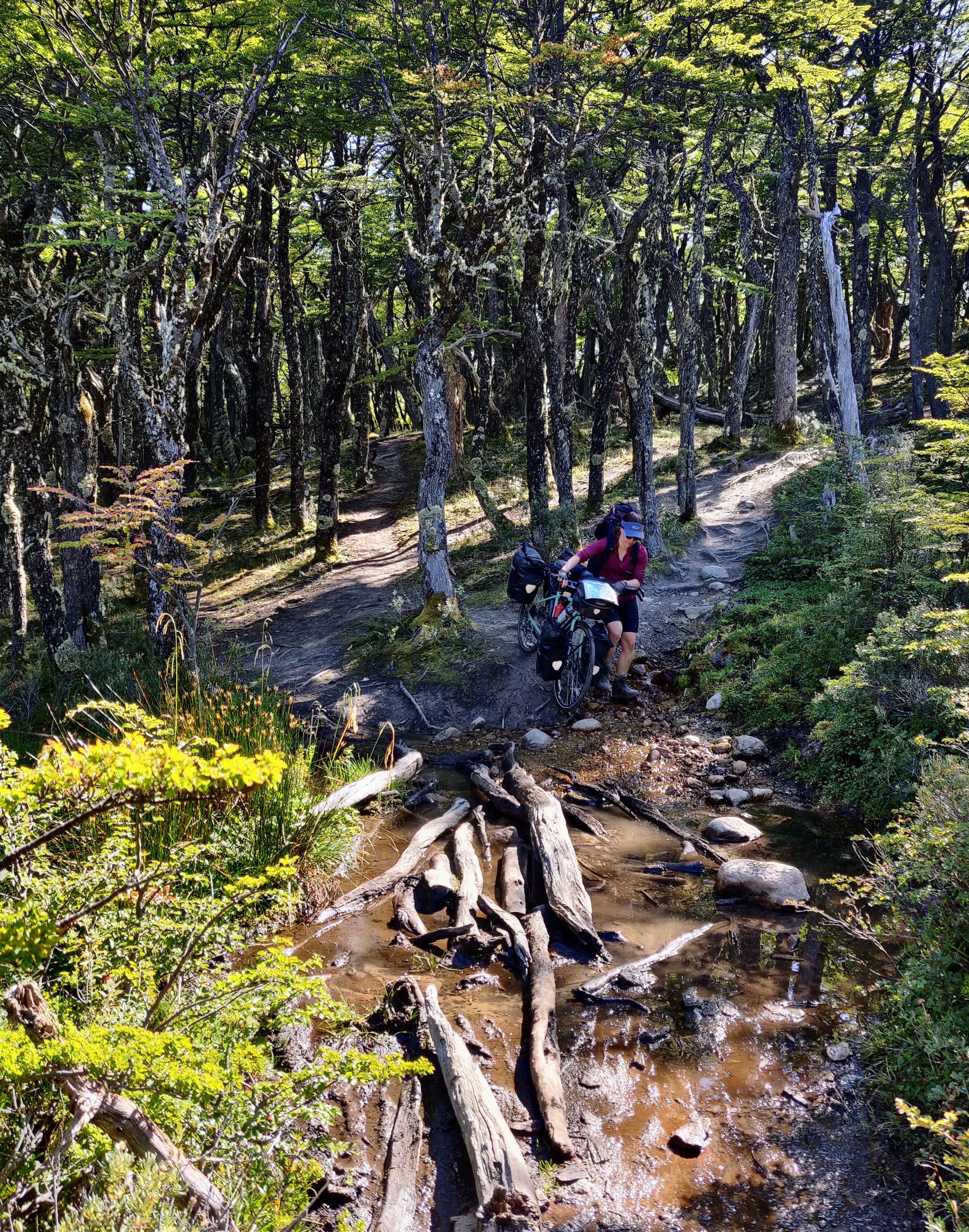
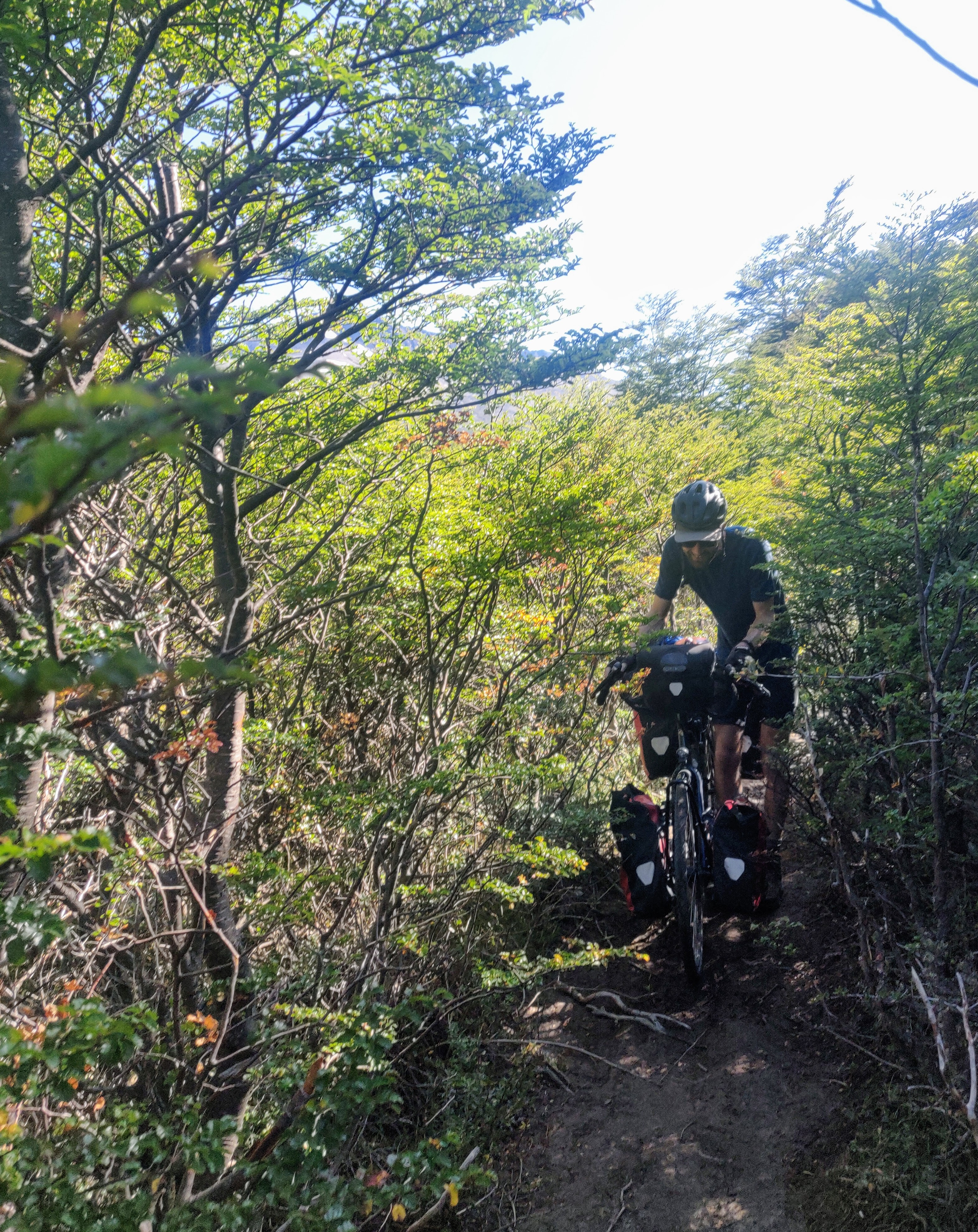

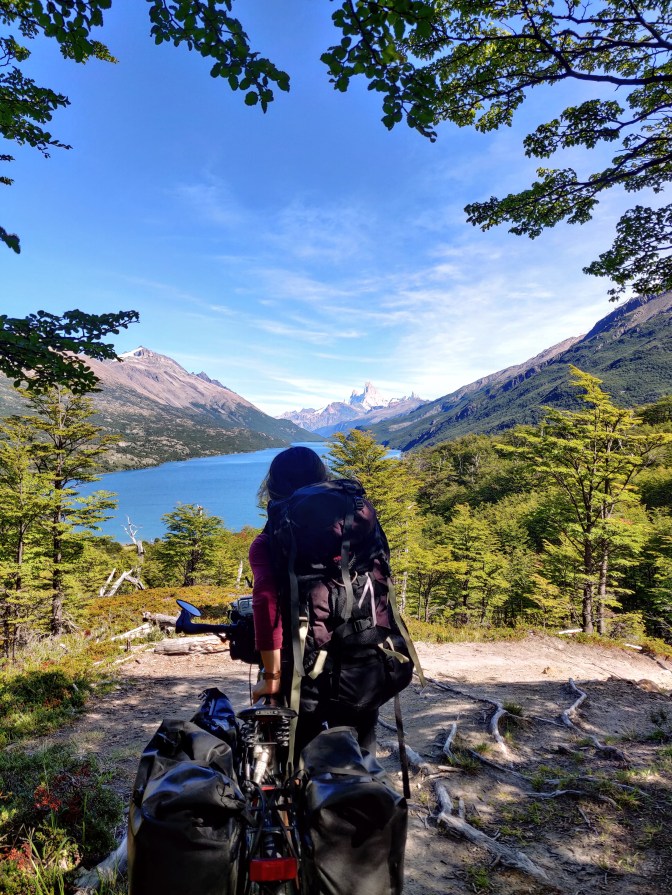
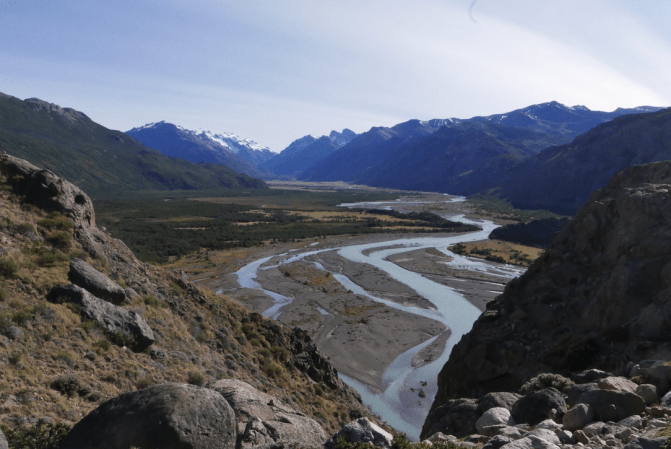
By mid afternoon we were on our steep descent, and into a clearing, we had our first glance of the infamous Mount Fitzroy across the lago. The Argentine guardpost on the shores of Lago Desierto was manned by a lone guard nearing retirement who meticulously entered our names into his handwritten ledger, his office only consisting of a desk, chair, maté mug and Argentine flag. Thankfully he had lots of ink in his pad to stamp our passports – our entry on 5 March being so critical for our residence in Argentina in covid-19 world.
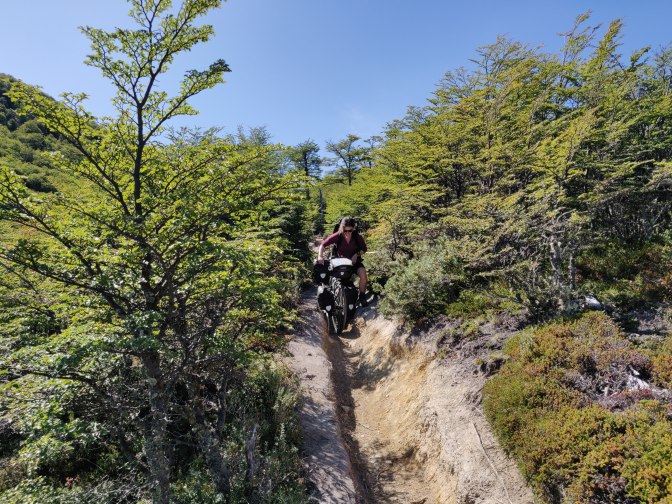
The ‘trench’. 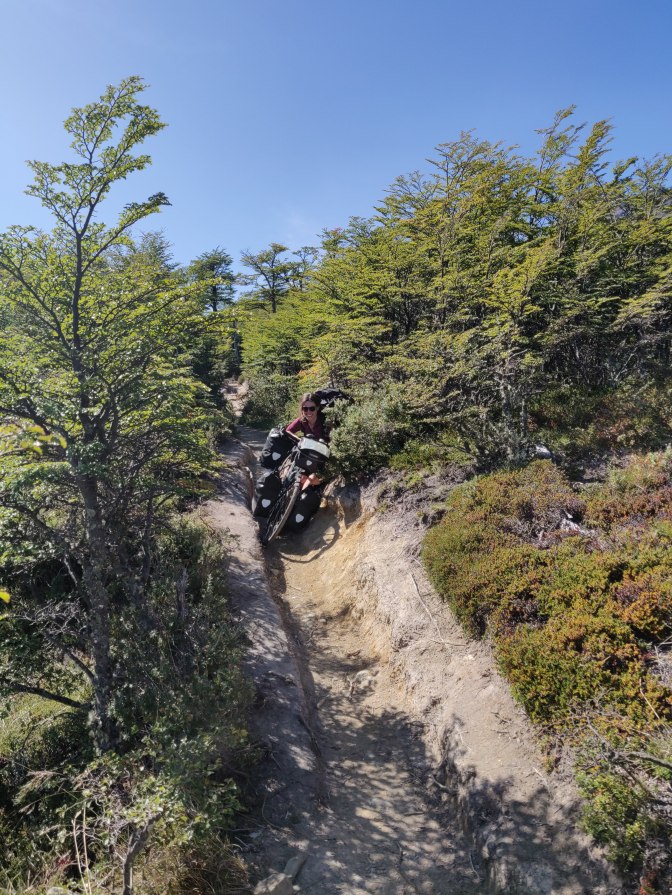
Unsuccessfully navigating the trench
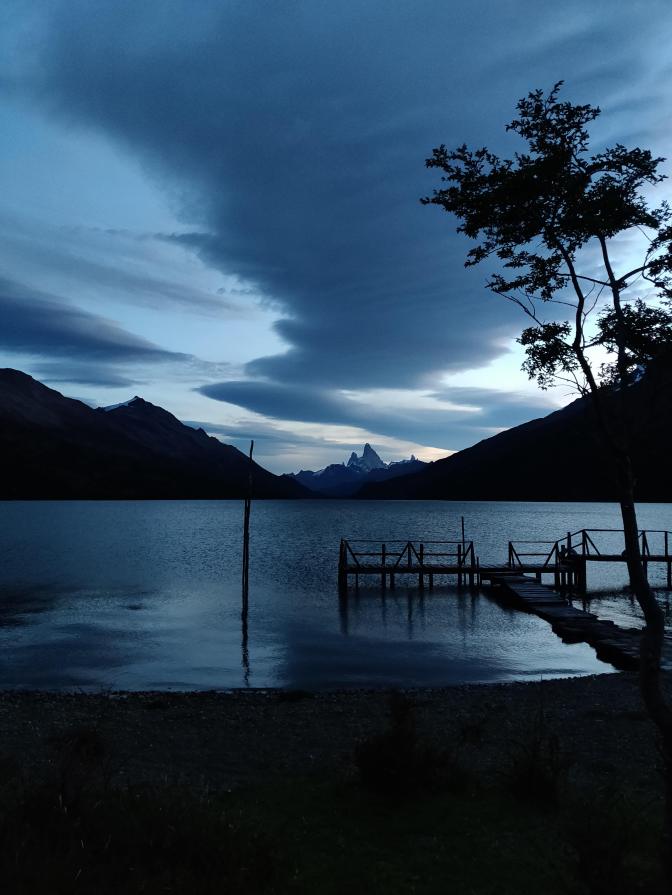
We had arrived in time to catch the evening ferry; however we decided to stay on the lake shore to watch the sunset rather than tackle the 40km of ripio to El Chalten. While Robbie successfully blocked the one working toilet, Hannah started cleaning her bike and giving it some much needed TLC after the trauma it had been through the past few days. Miraculously nothing seemed broken once the pedals were back on. Exhausted, we went to bed early, but were awakened at 10pm by the arrival of one cyclist (travelling North) who had decided to walk round the lake rather than take the ferry ‘for a challenge’. Given that he was going to spend the next day battling along the route that had taken us two days, with a high likelihood of snow we thought it was nearing insane rather than adventure. Given the time and exhaustion levels on arrival he thought so too!
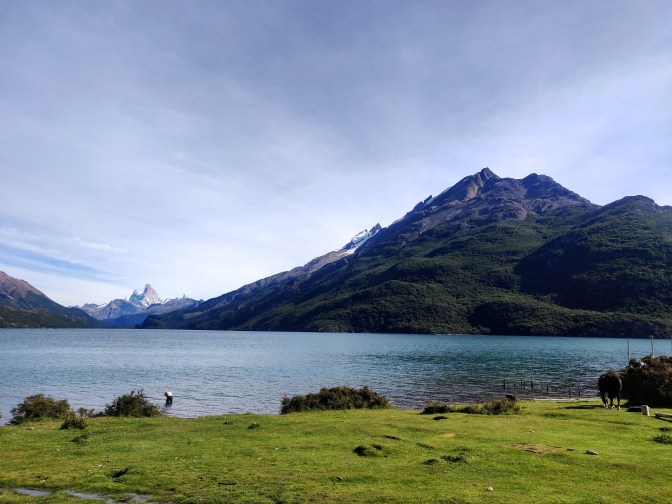
Swims in the lake looking out on Fitzroy. 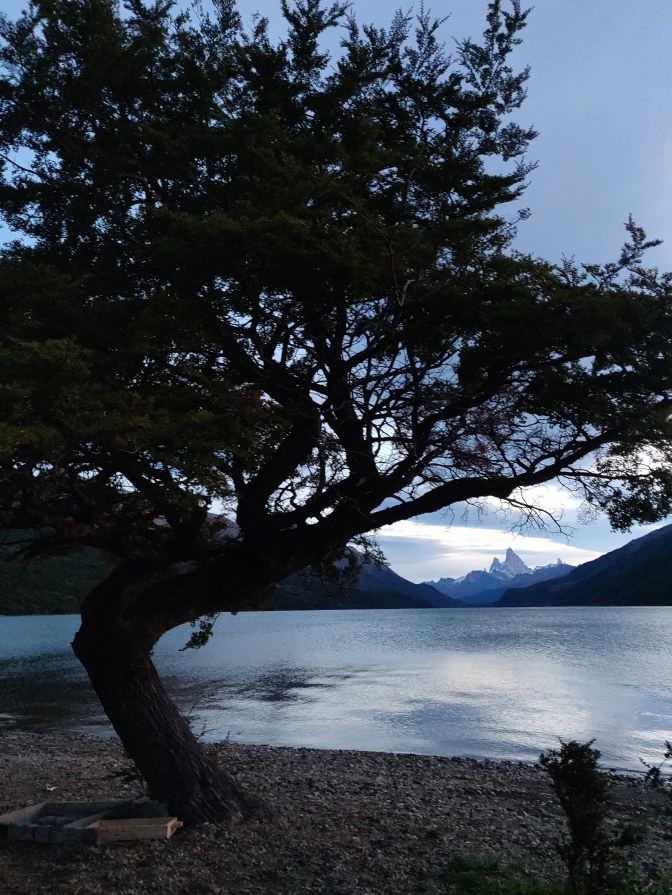
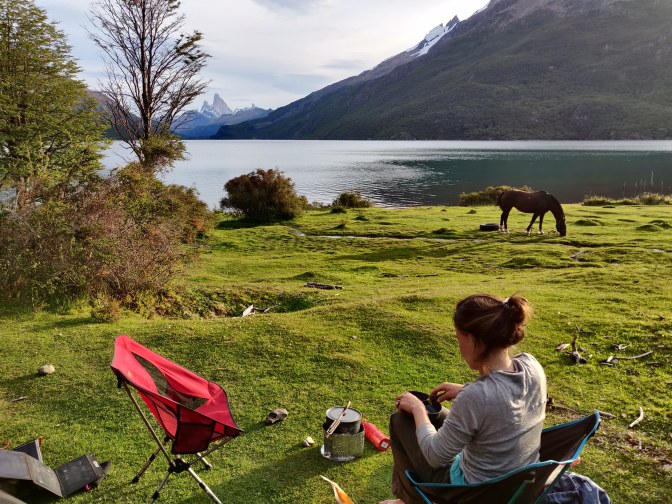
The unsuccessfuly tethered pony.
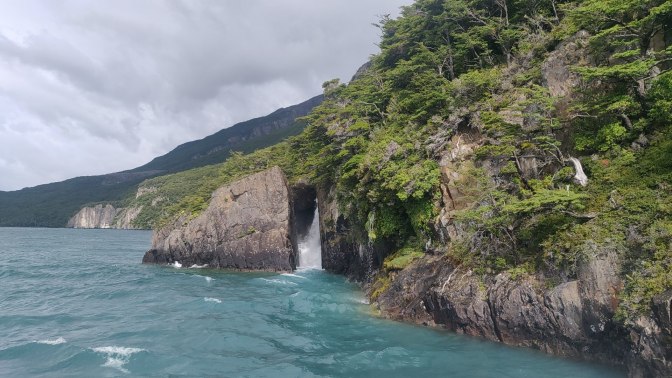
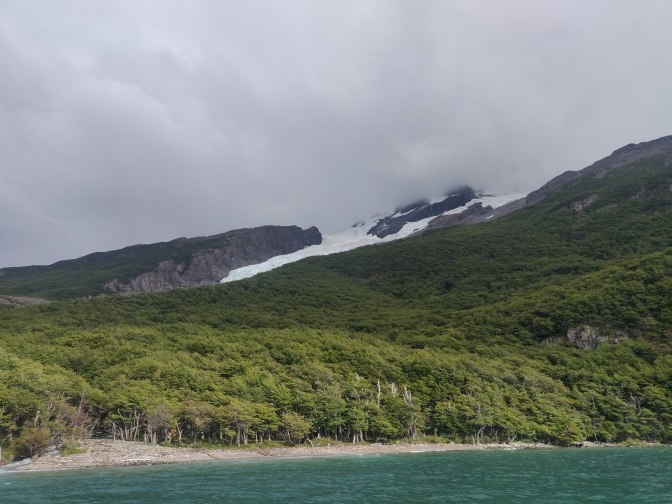
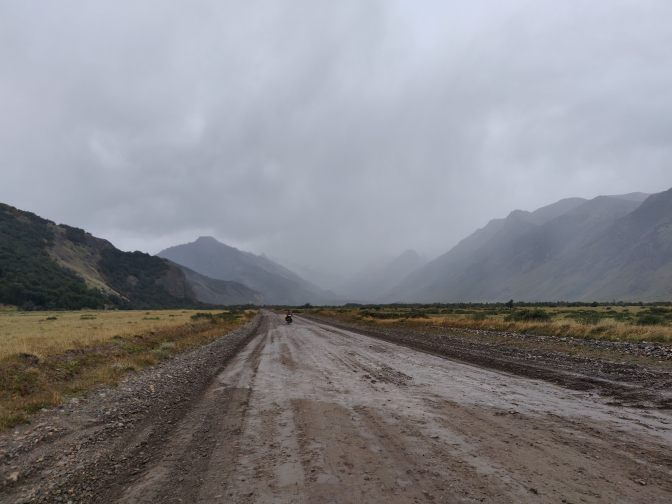
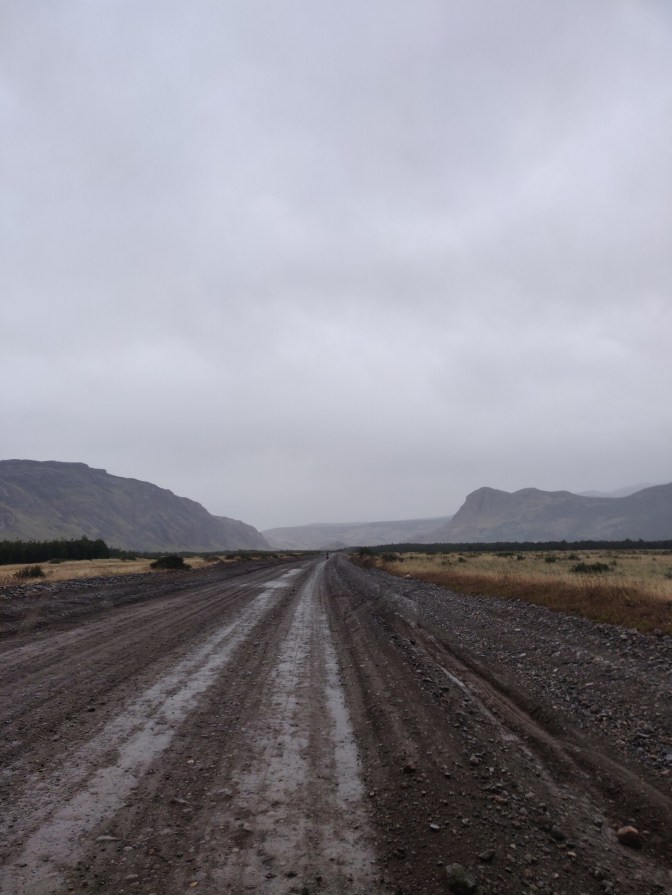
The ferry crossing was rather beautiful the next day, with the boat getting scarily close to some of the many waterfalls. The 40km of track to El Chalten was less relaxing. We had mentally thought we’d ‘done it’ once we arrived at the Argentine post, so the last stretch to El Chalten was exhausting and cold in the rain. However, arriving into the town, only really founded in 1985 by climbers, we felt rather like celebrities on our bicycles. With rain forecast the next day we decided that our aim for at least the next 24 hours was to move as little as possible. The last week had been the hardest thing certainly I had ever done, but what an achievement!



 Pedalling_Patagonia

The sheer physicality of this stretch emphasises the achievement BUT the photos make a permanent celebration. what memories!
LikeLike
Well done. what an achievement!
LikeLike