11-17 August 2021
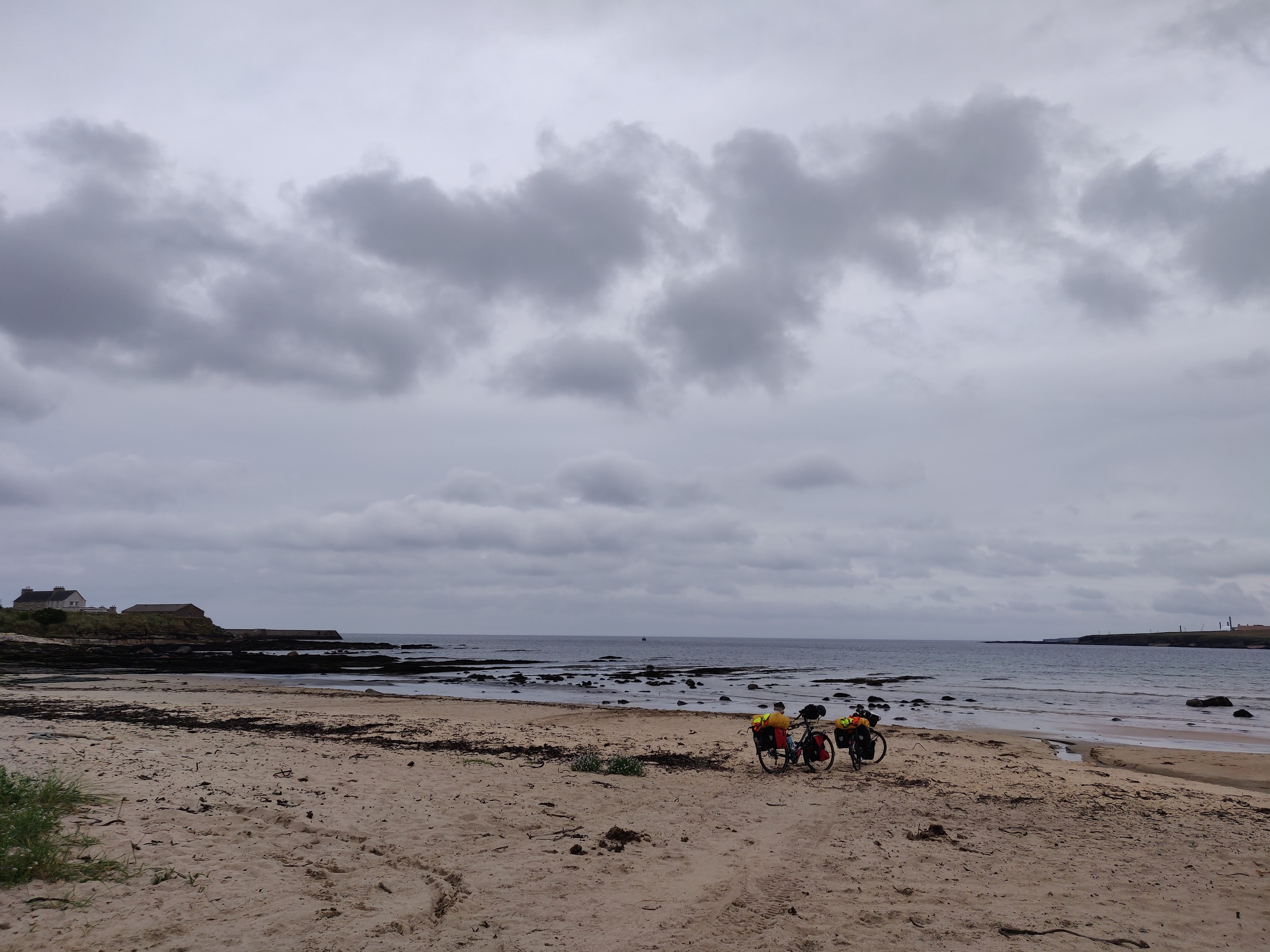
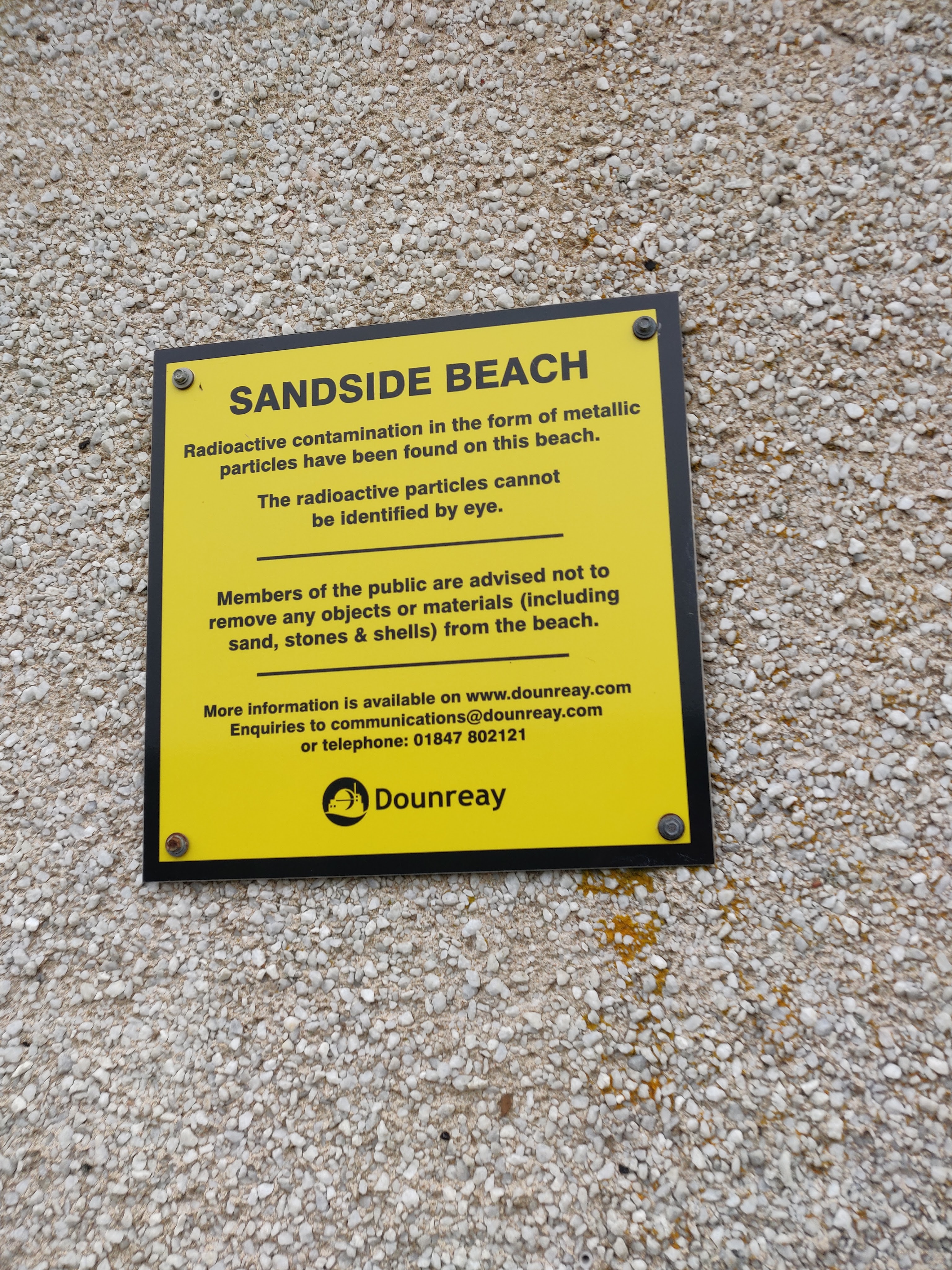
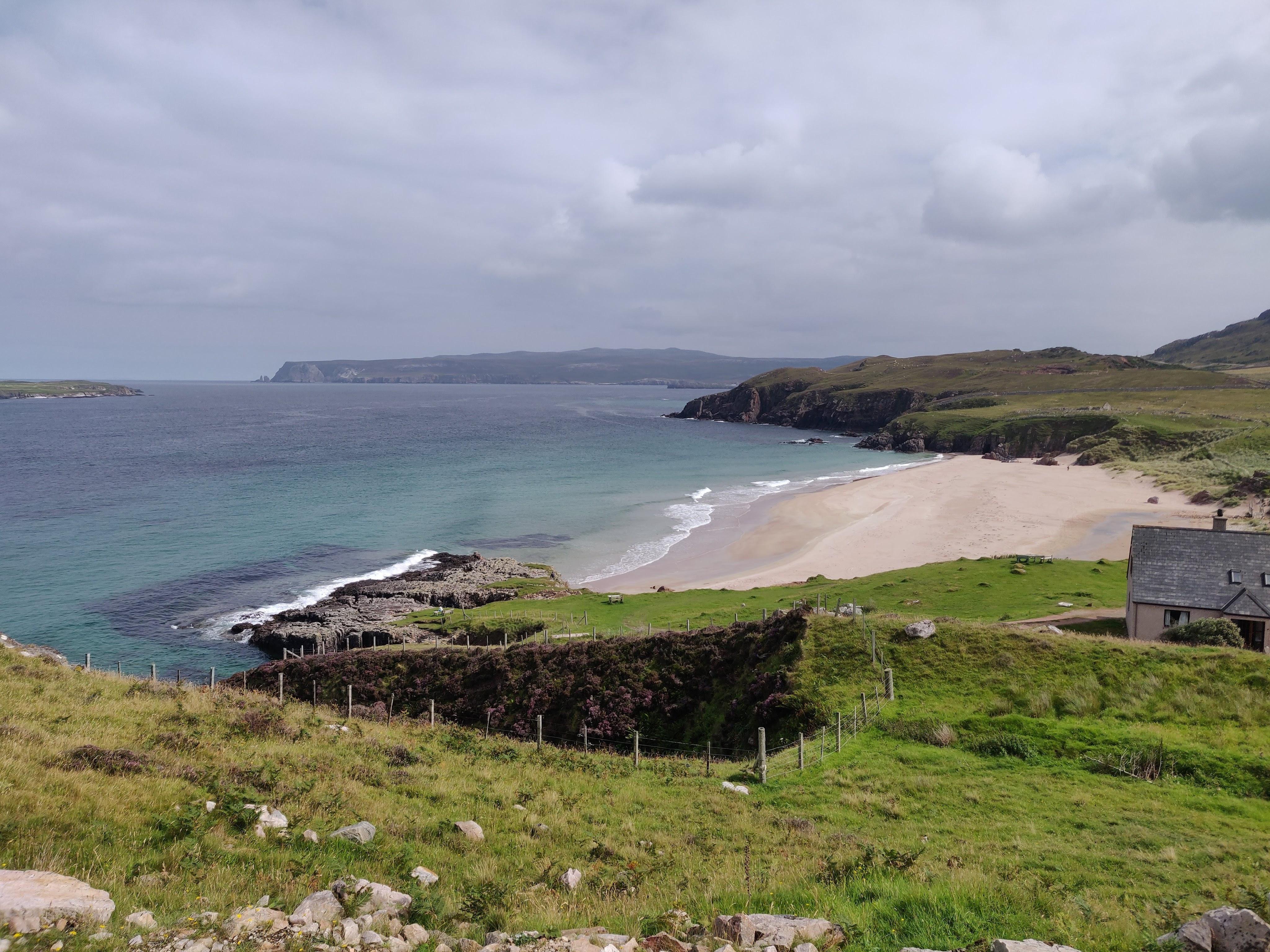
Our lunch stop following departure from Durness was a very beautiful Sandside bay, with some campers that looked to have stayed the night previously, but the proximity of the nuclear reactor (and the rather interesting warning signs) put us off slightly..! This also timed well with another puncture (changing a tyre on your rear wheel is not ideal in fine sand!) we hobbled back up the dunes, hopefully without any unwelcome particles.
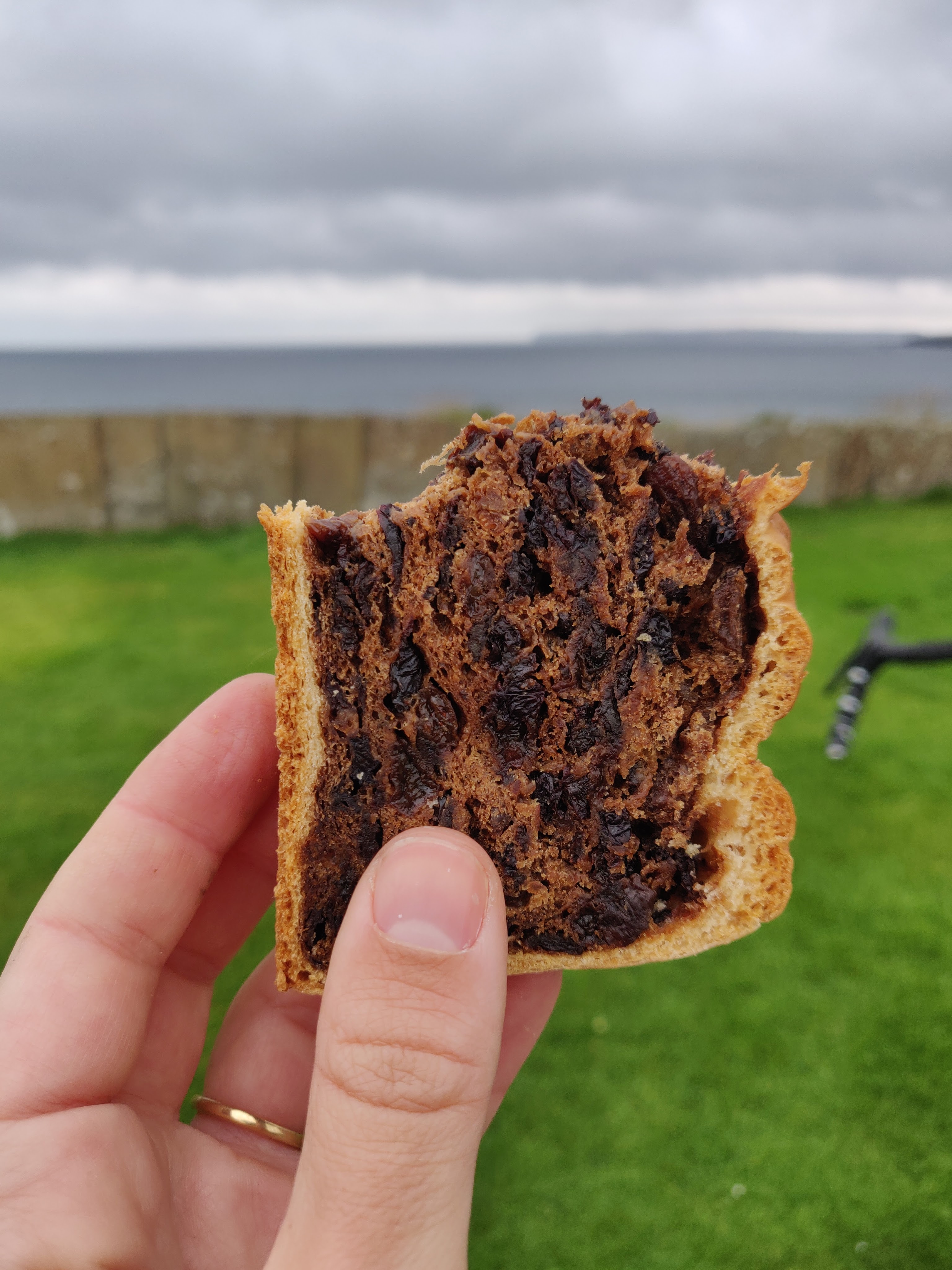
Robbie had his eye on the weather and saw that there was a rather unpleasant looking band of heavy rain which would be nice to avoid. We pedalled as quickly as our heavy loads would allow, but not quick enough, so we truly resembled drowned rats on arrival, to be told by a rather flustered landlady that there was certainly no space, priority given to the mass of campervans – not sure about the priority given to cars over bikes and walkers! Luckily with a pub onsite, we sheltered there working our way through, tea -cake-beer as the rain passed.
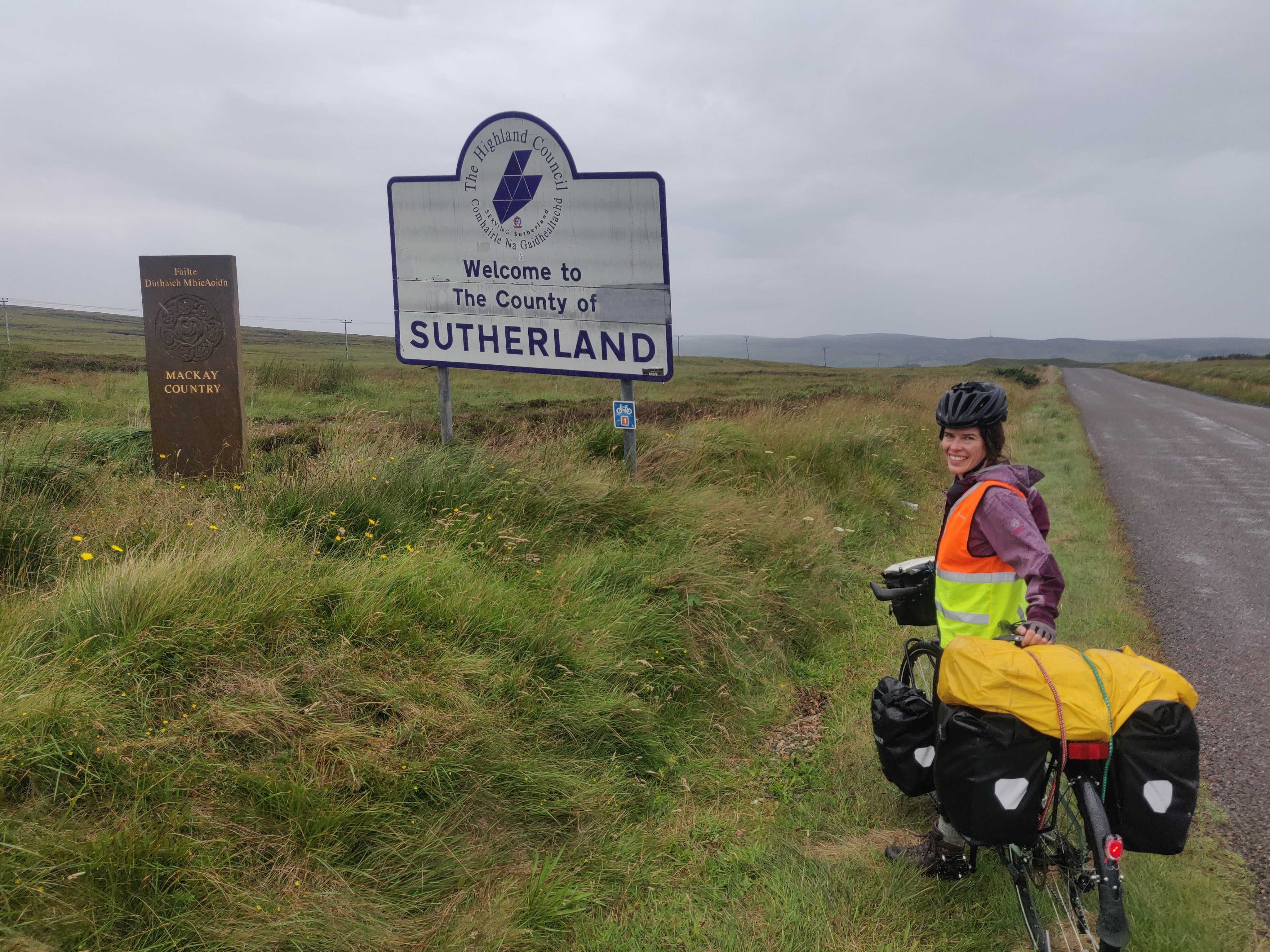
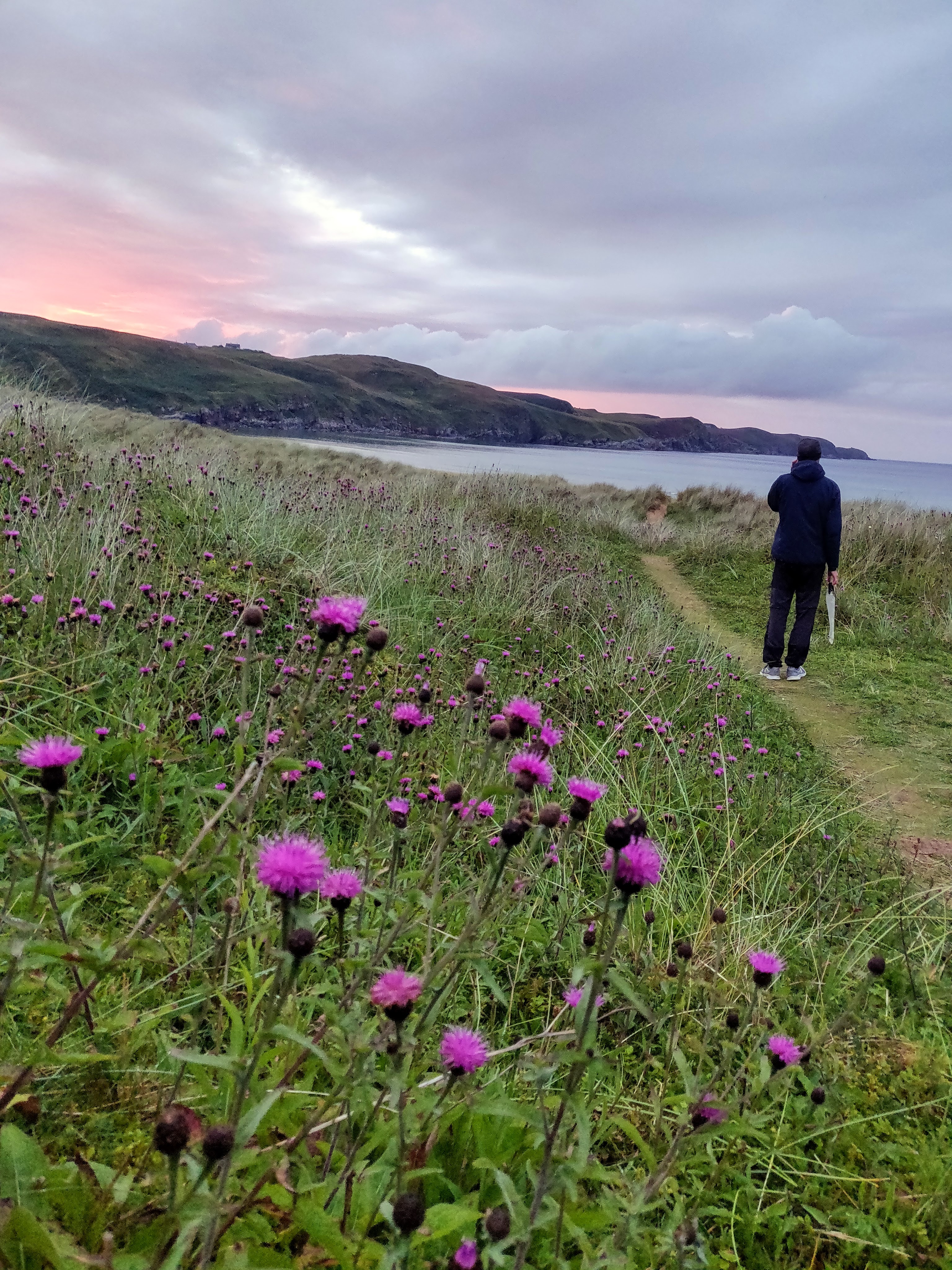
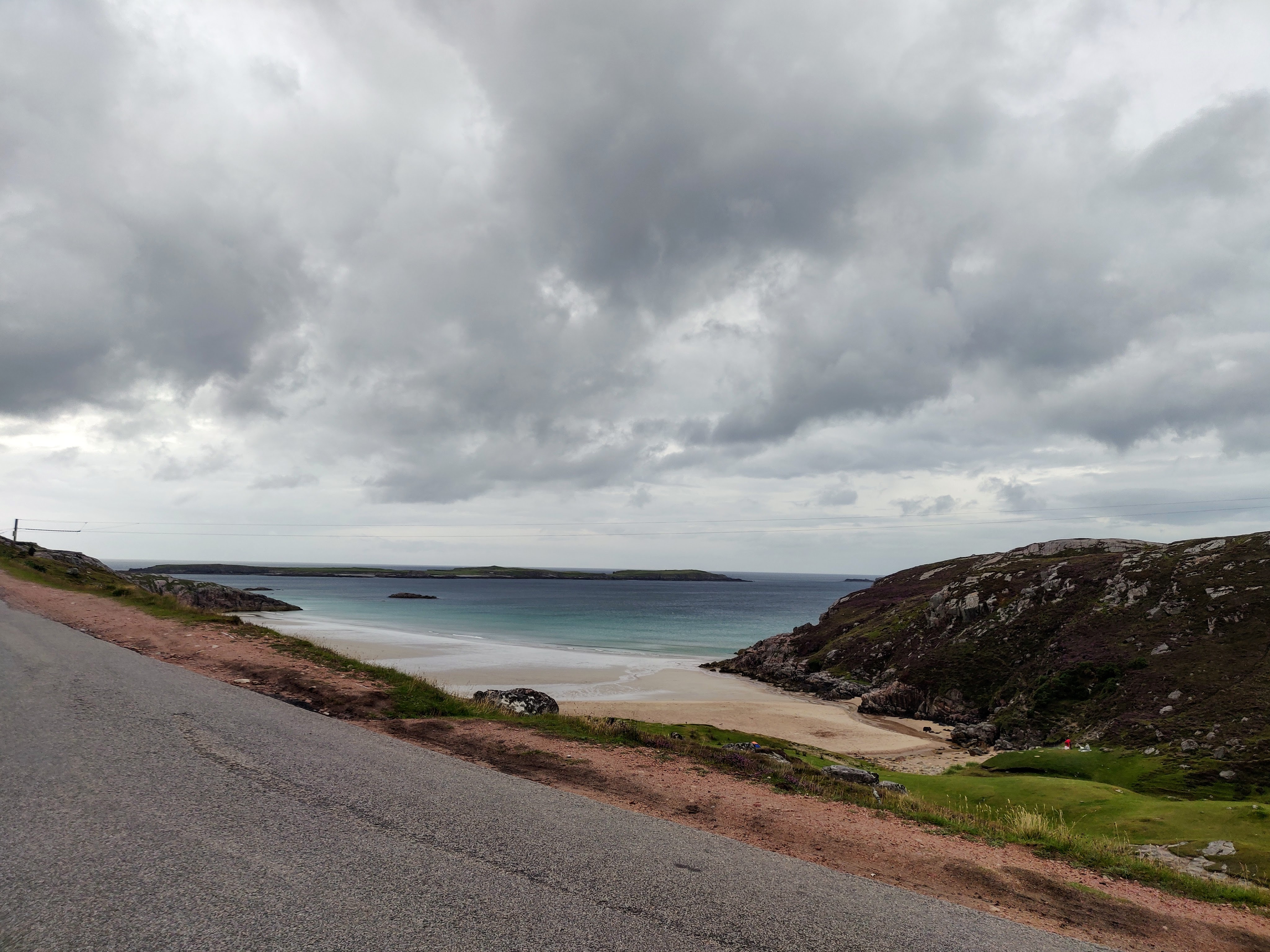
With the rain just about stopping, the landlady informed us that the table for two in the pub was definitely booked in the next ten minutes(!) so off we went into the rain. Luckily this was now almost over and a short distance down the road, we found the most perfect dune ensconced beach. Overcoming our slightly undignified arrival as Robbie had left his top bag open and various items of our belongings had scattered along our path (and were being picked up by a rather nice man who was trying to get our attention!). Items retrieved, we located our camp s[py/ Nestled amongst the dunes, we cooked up and had a beautiful stroll along the beach. We also knew it was the best night to see the persioid meteor shower so we were able to stick our heads out the tent and watch the meteors in the night sky. We were very pleased that the harassed landlady had not had space!
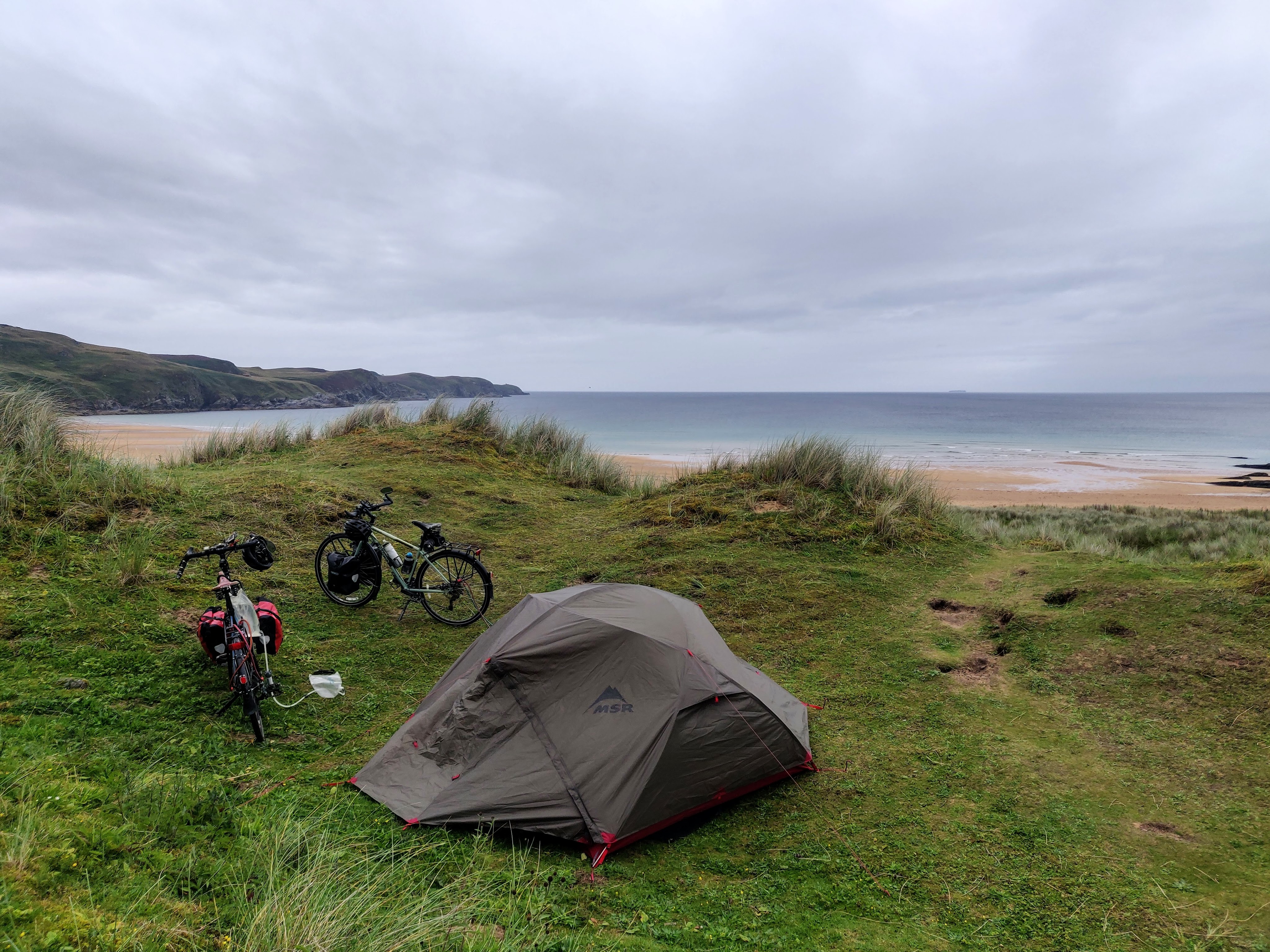
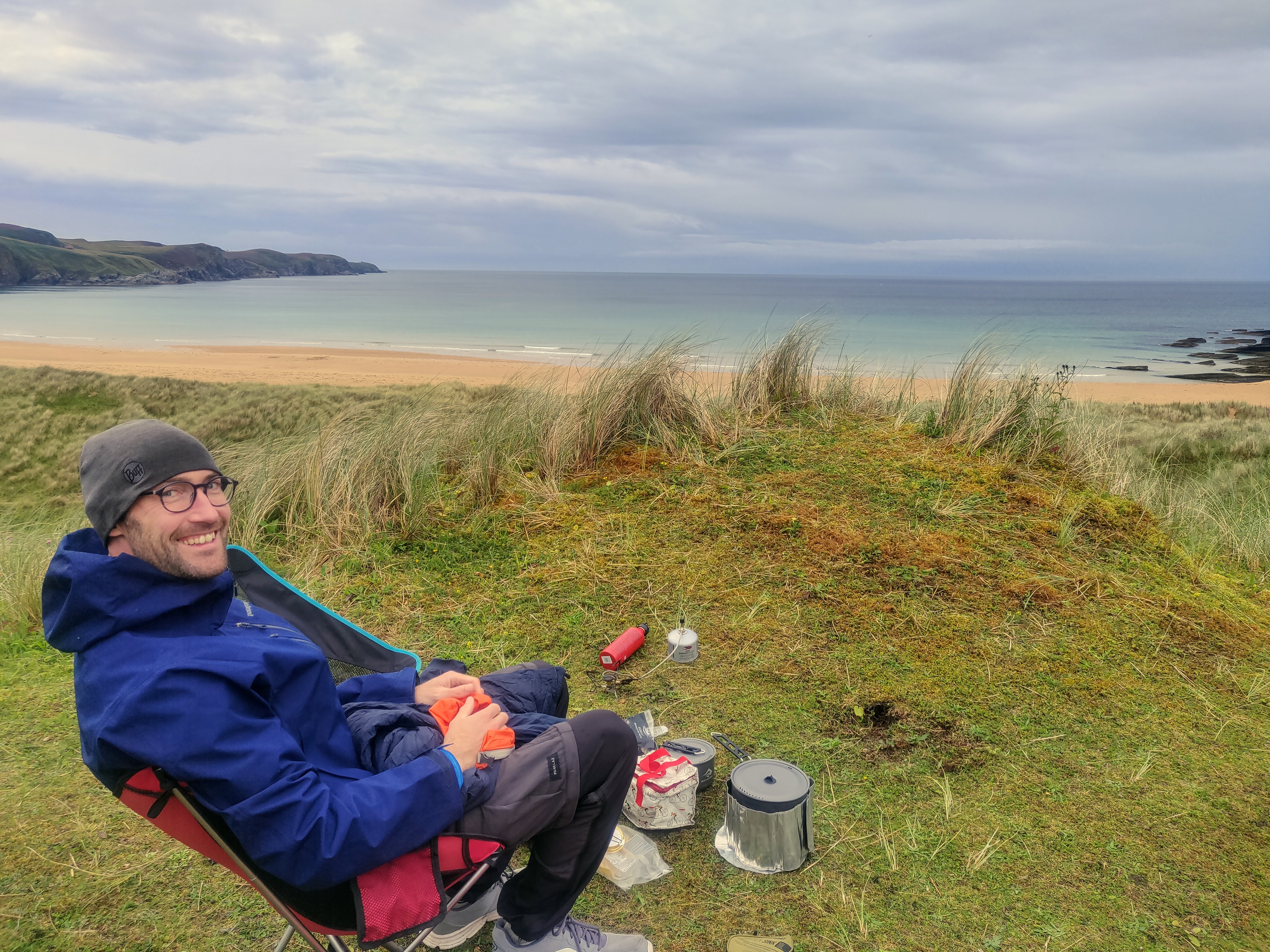
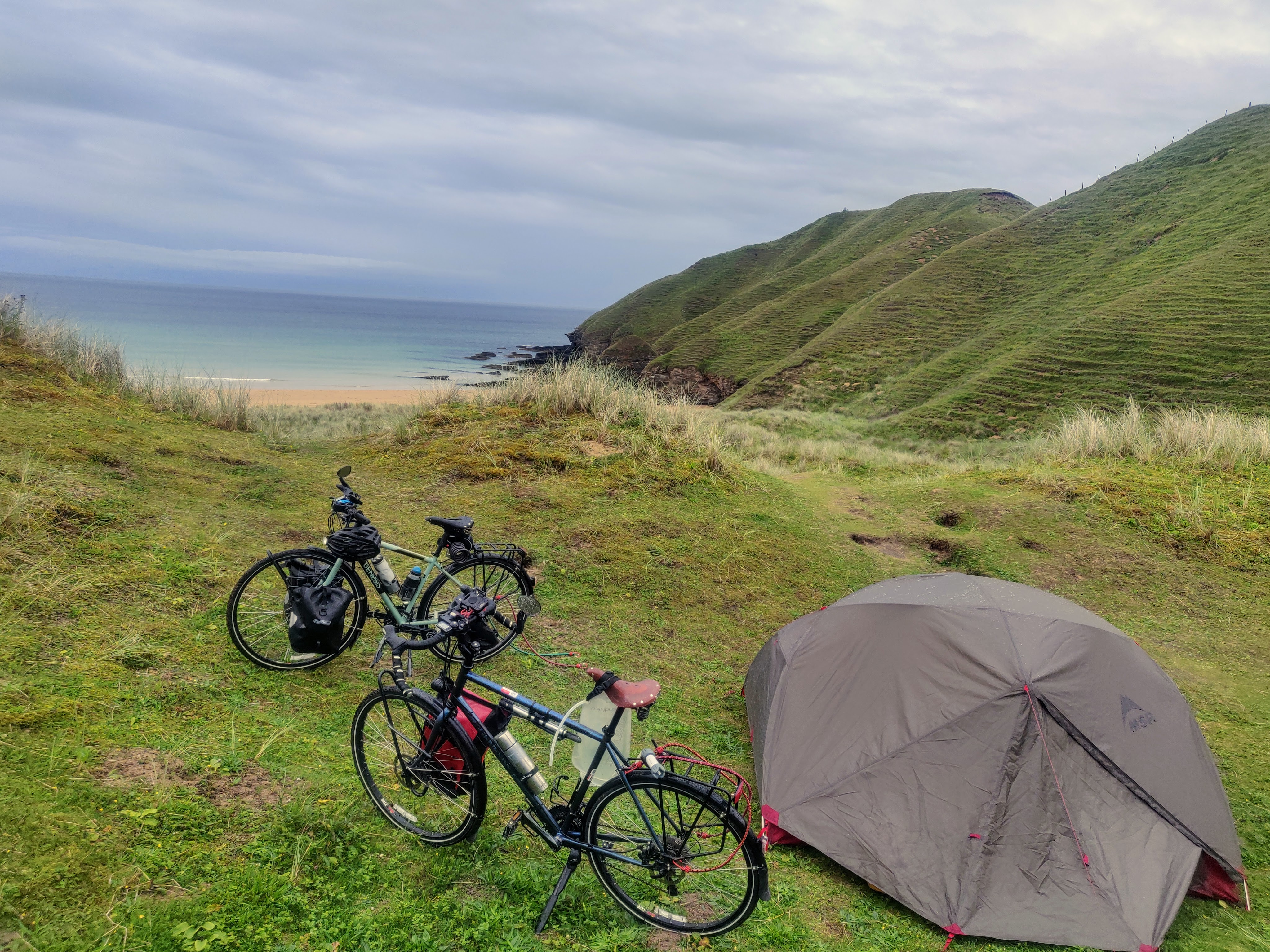
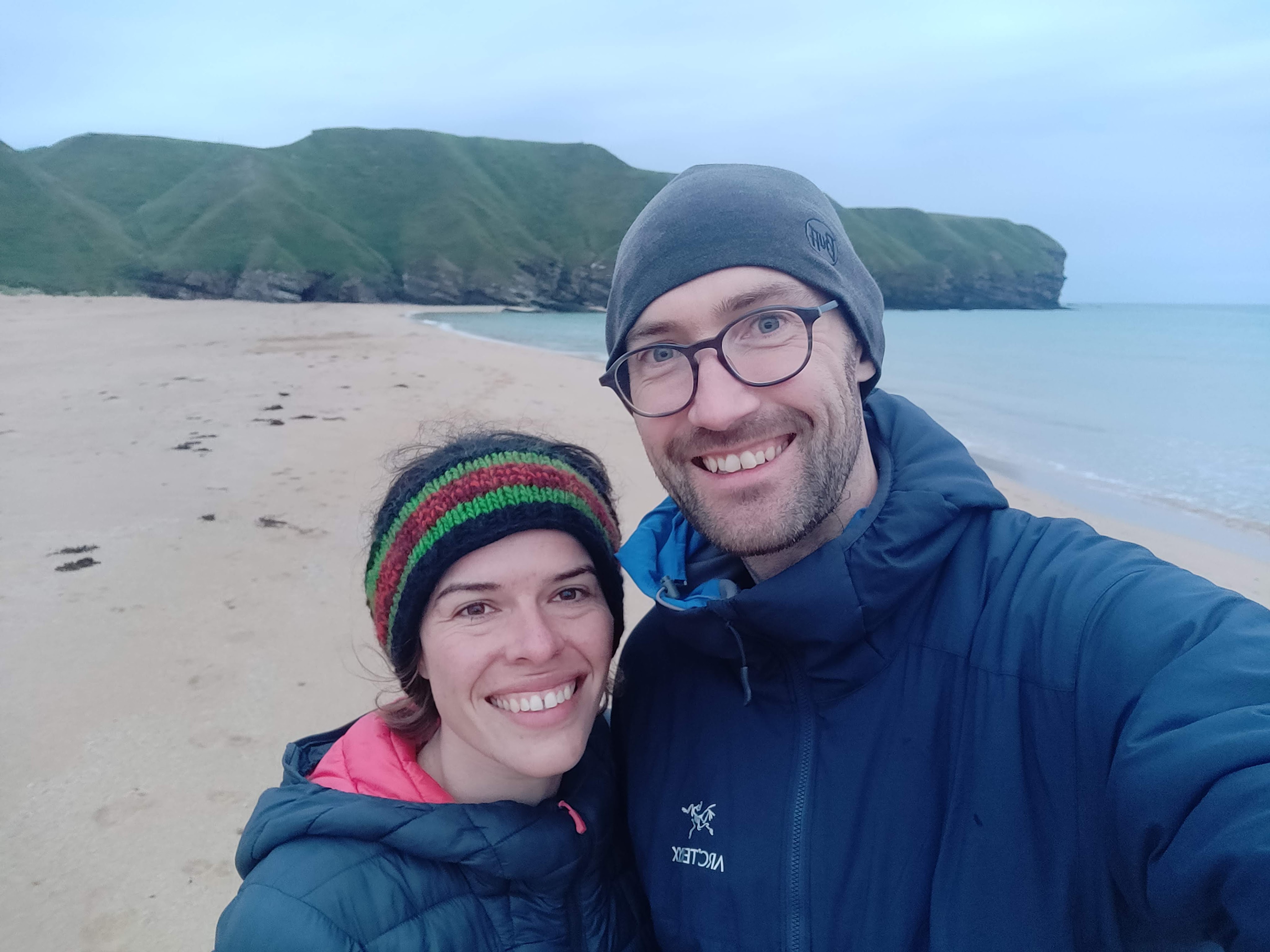
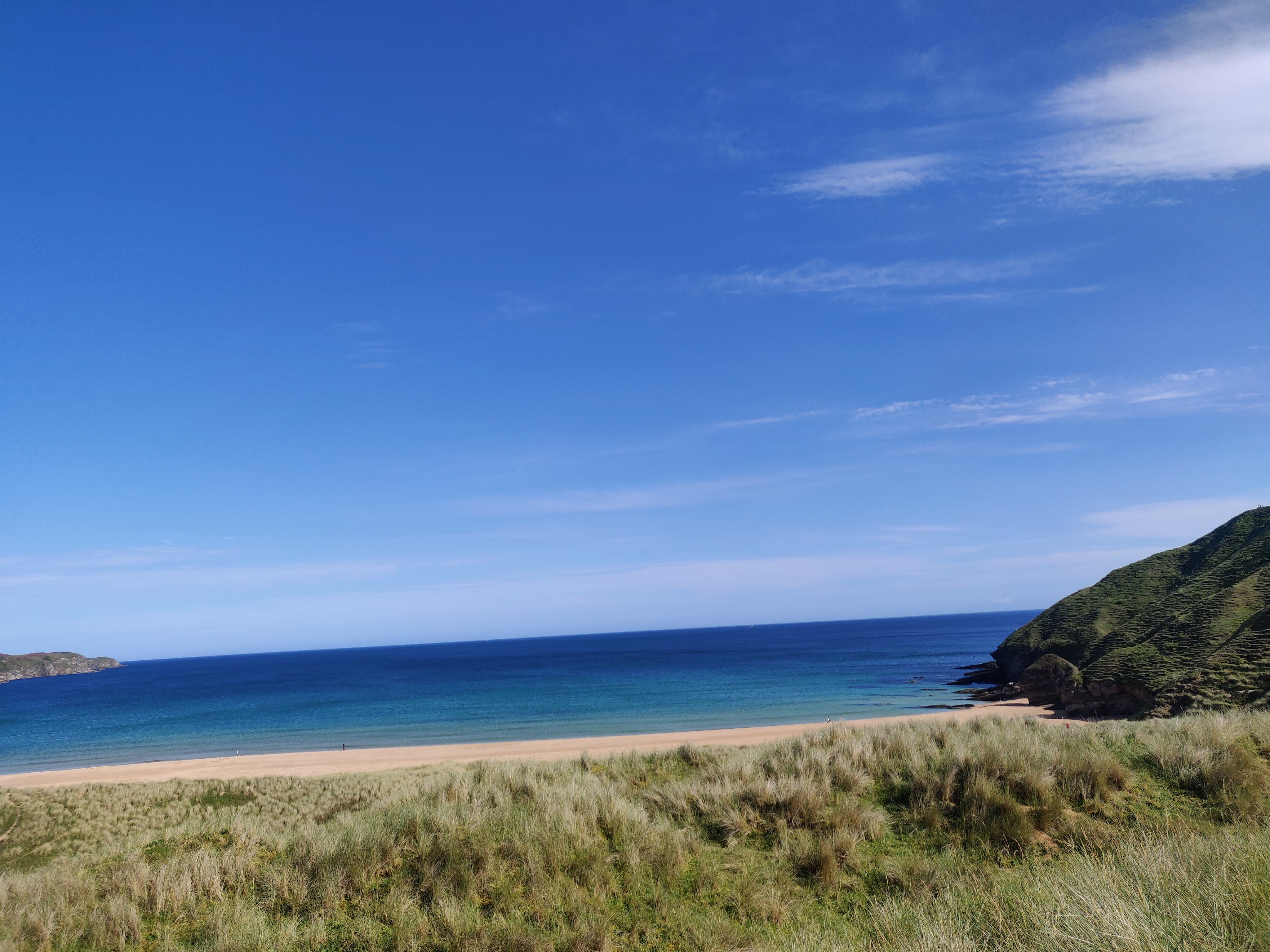
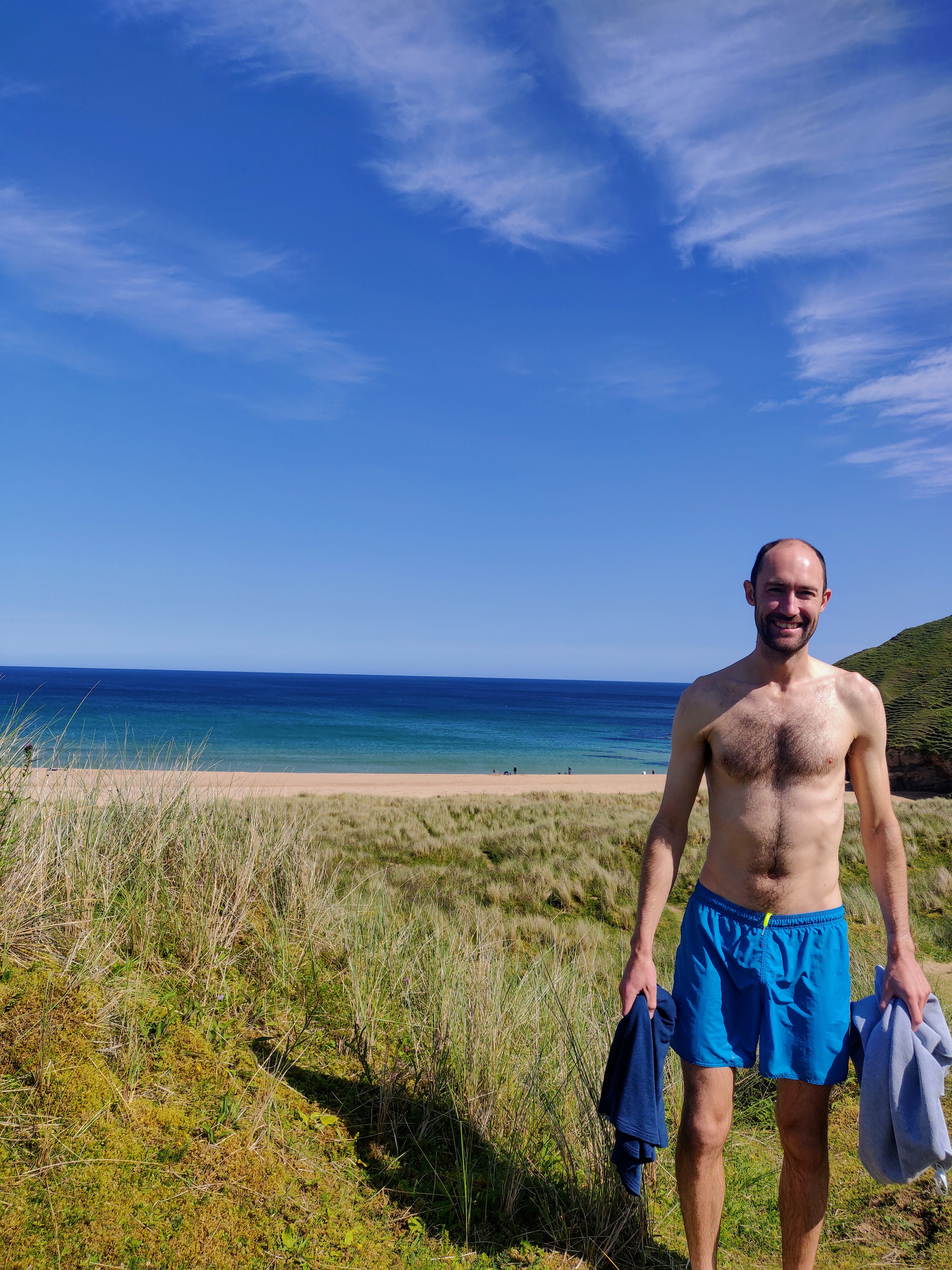
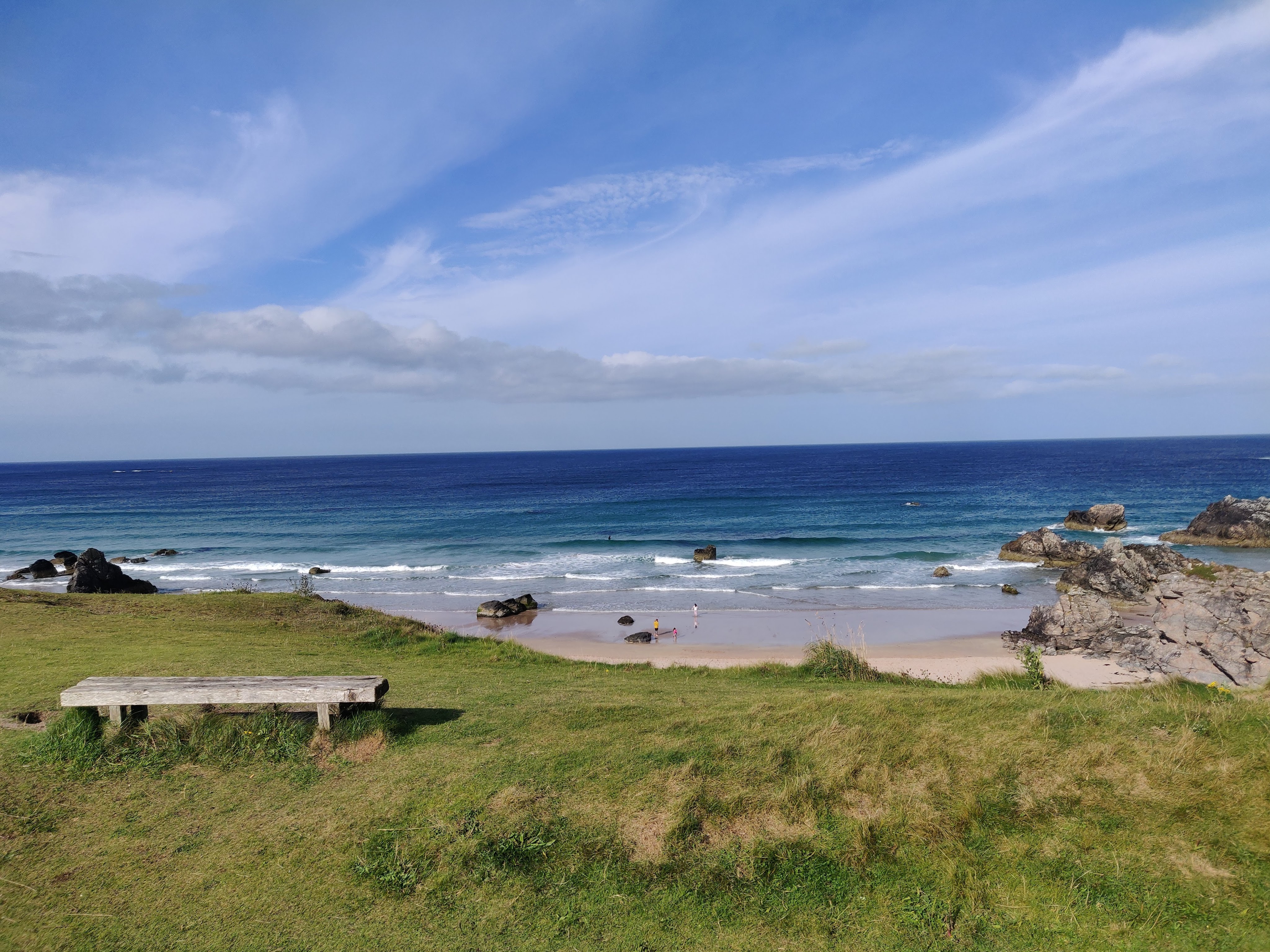
Sunny (but not warm) morning meant that our first dip in the sea was a necessity! Robbie was the first to brave the water, which meant that I had to do it too! With the aim of doing at least as many breaststroke arm-strokes as our respective ages we splashed about in the clear blue sea.
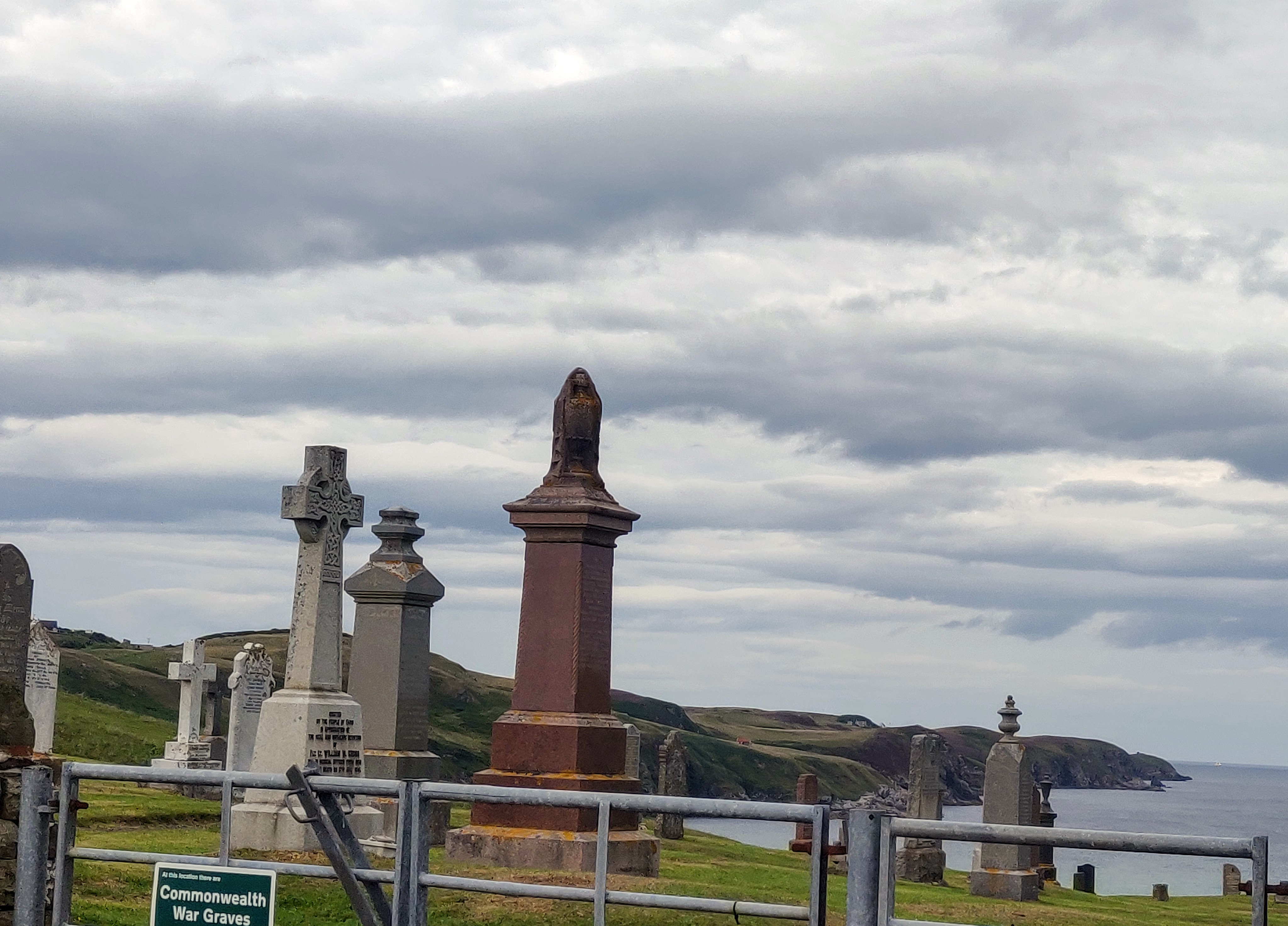
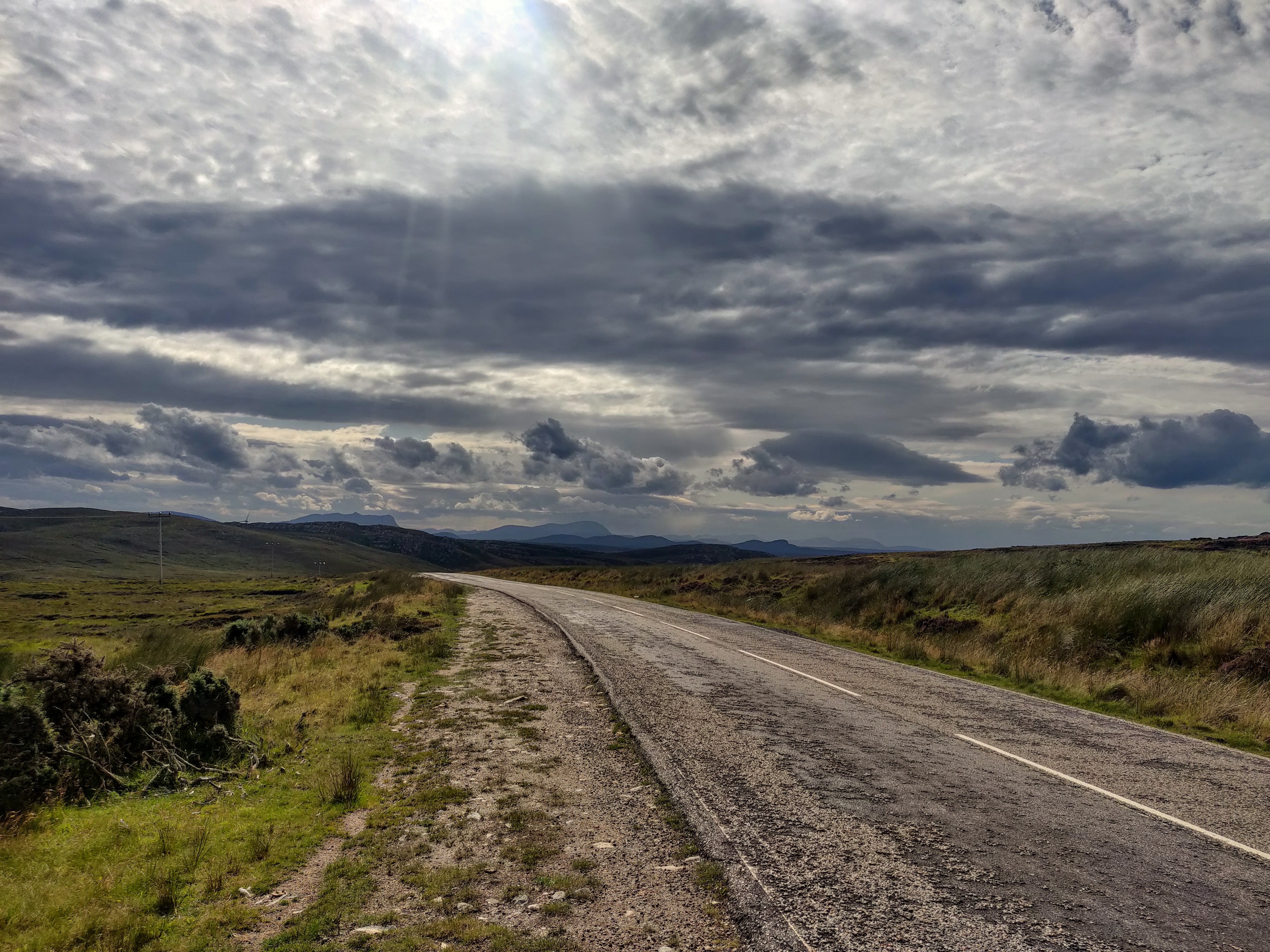
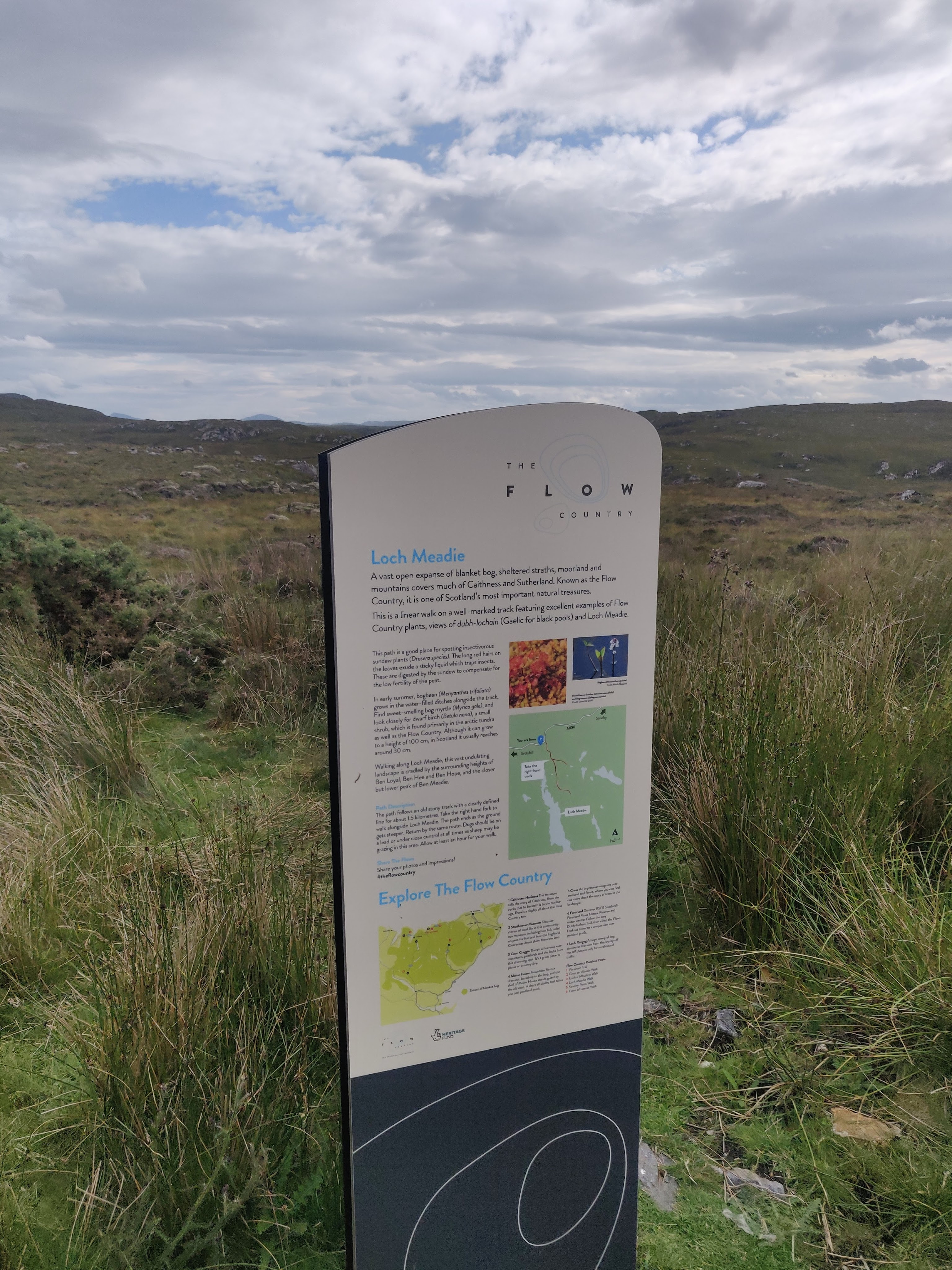
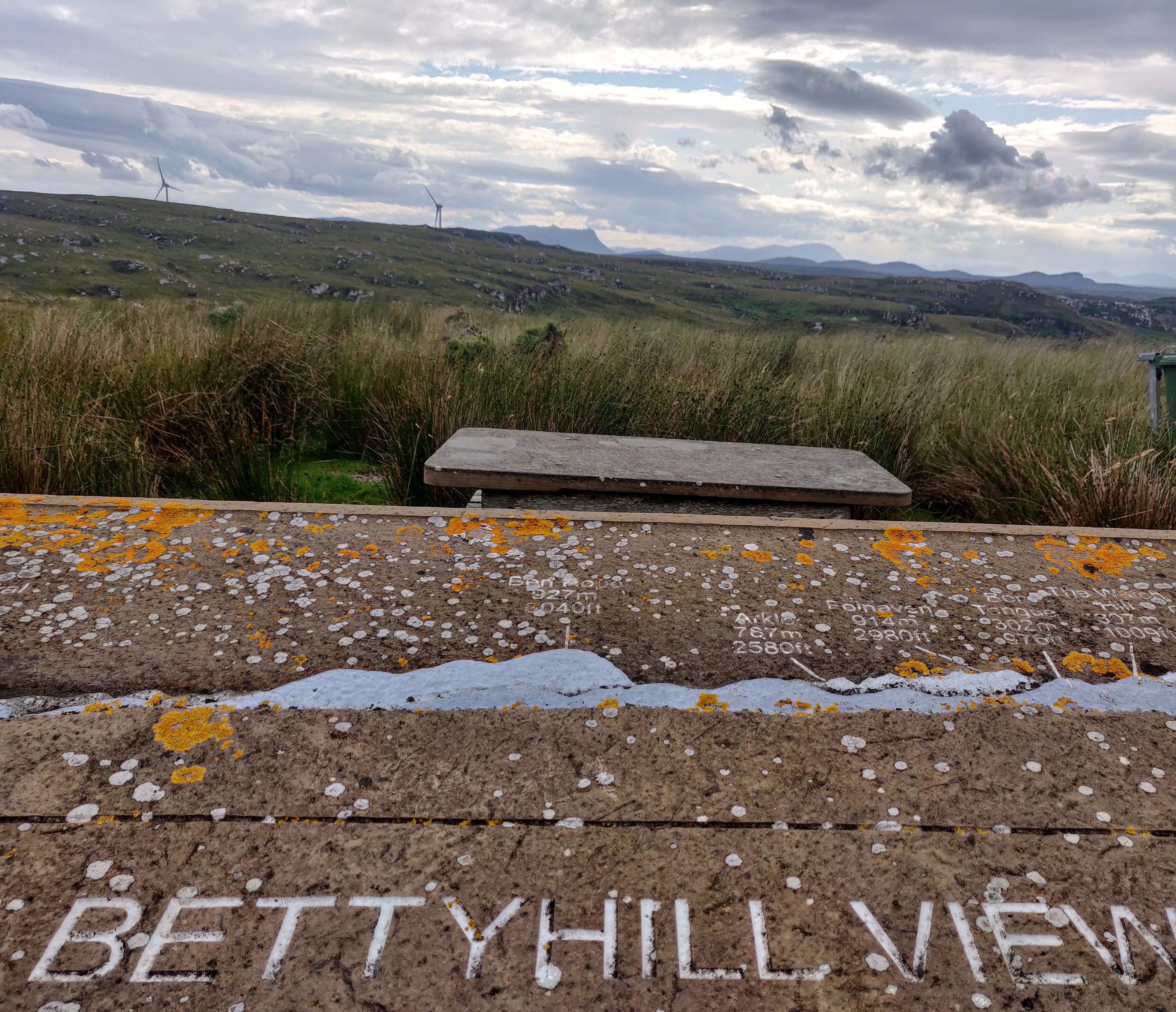
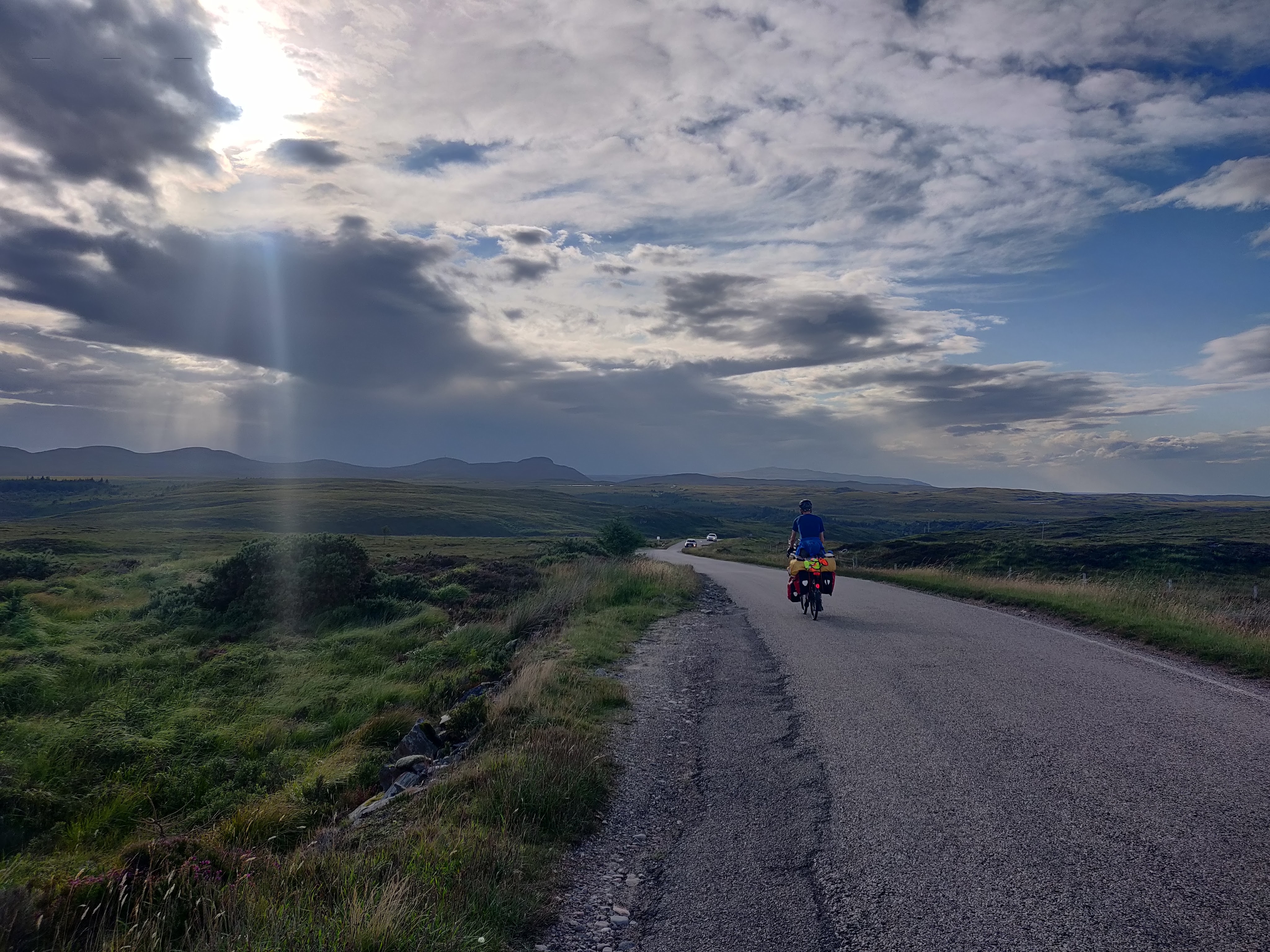
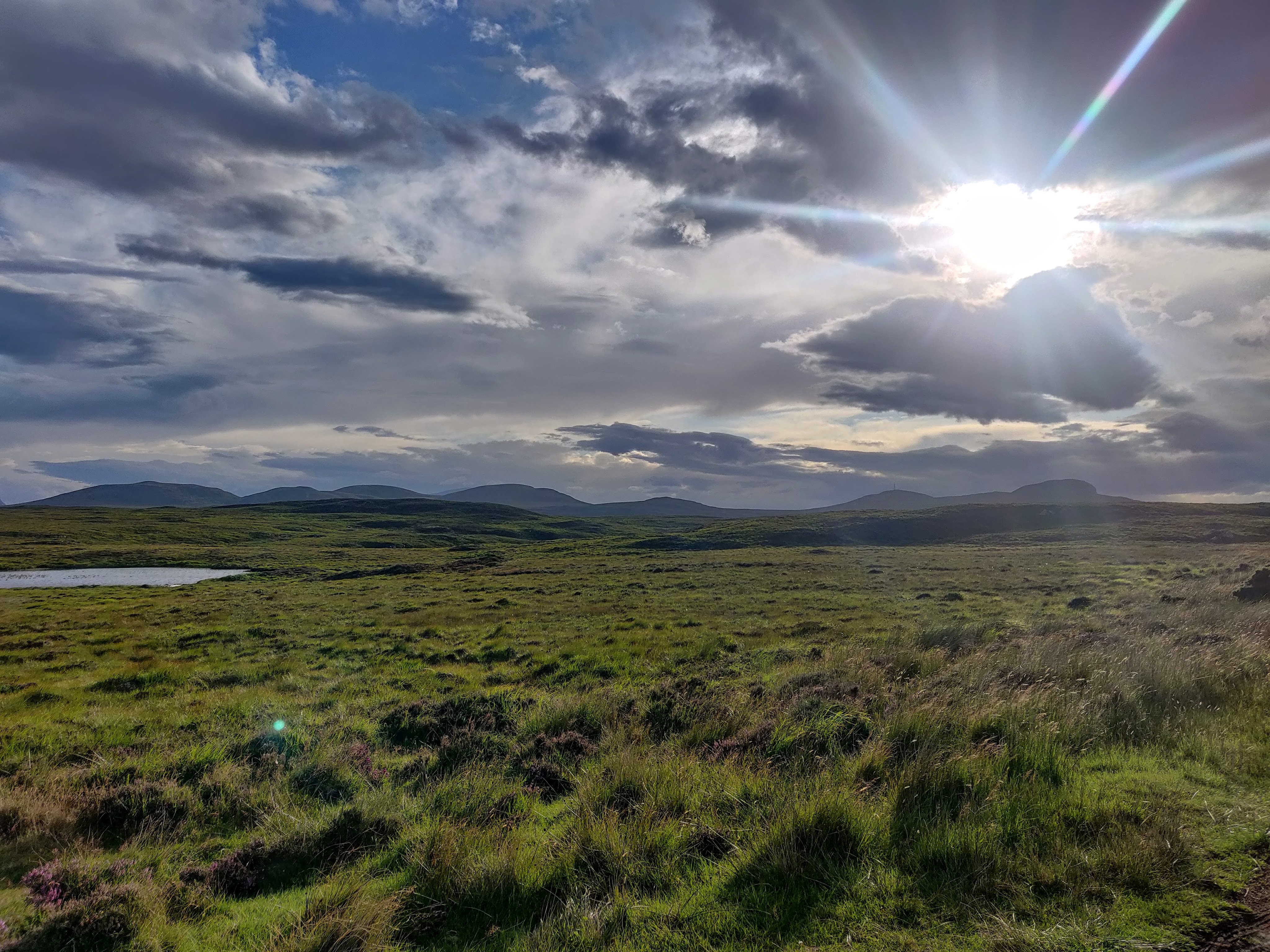
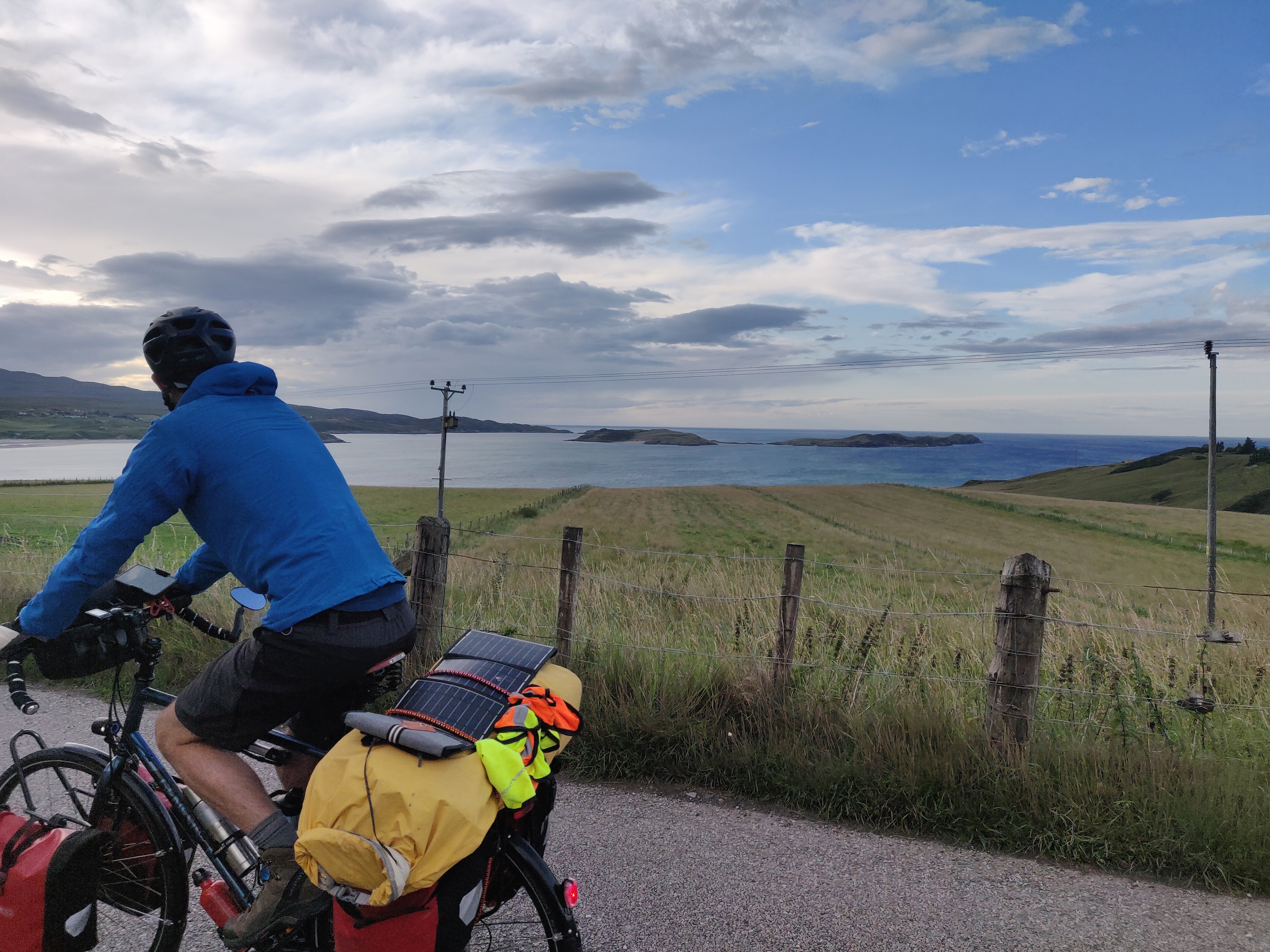
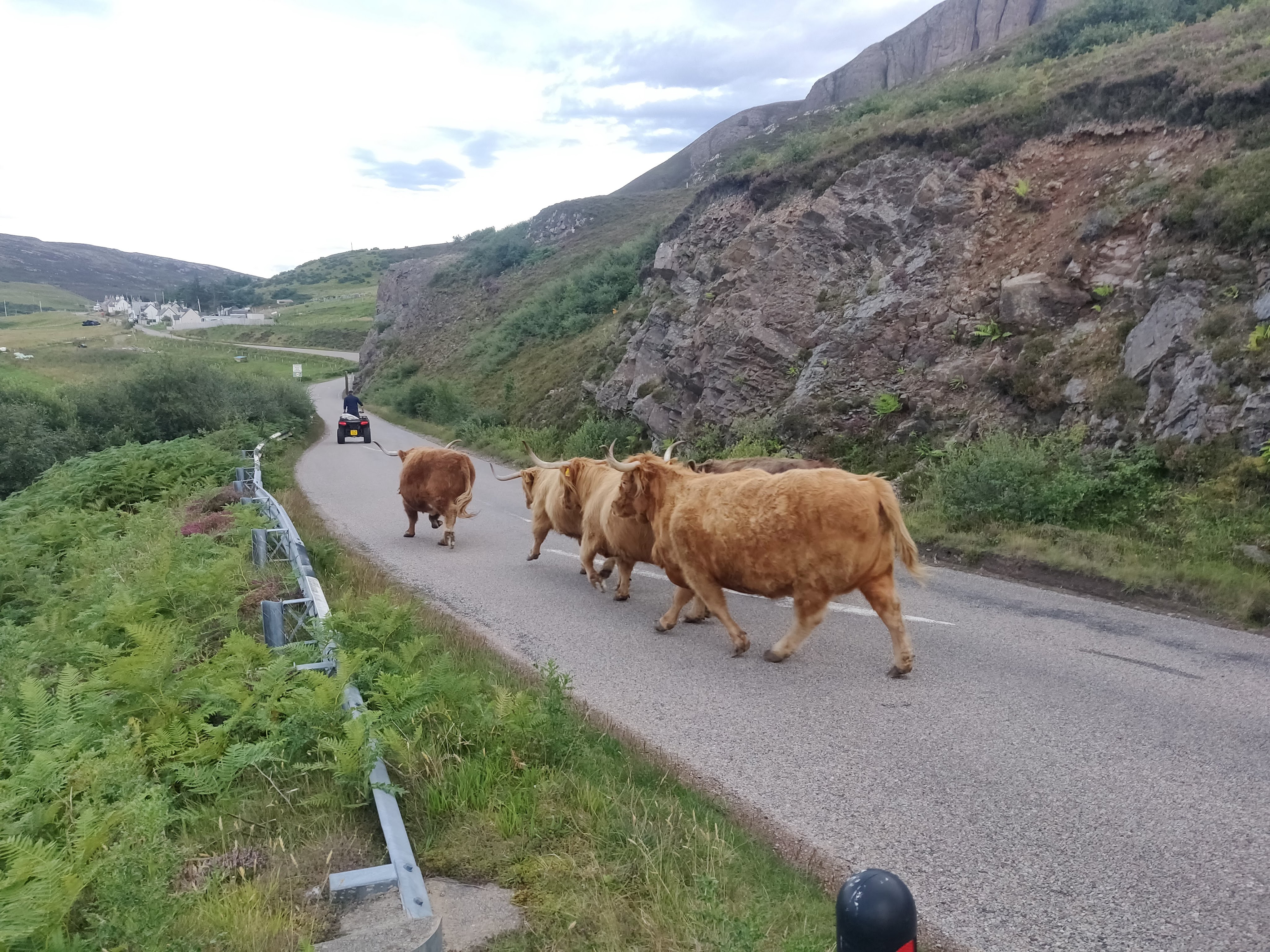
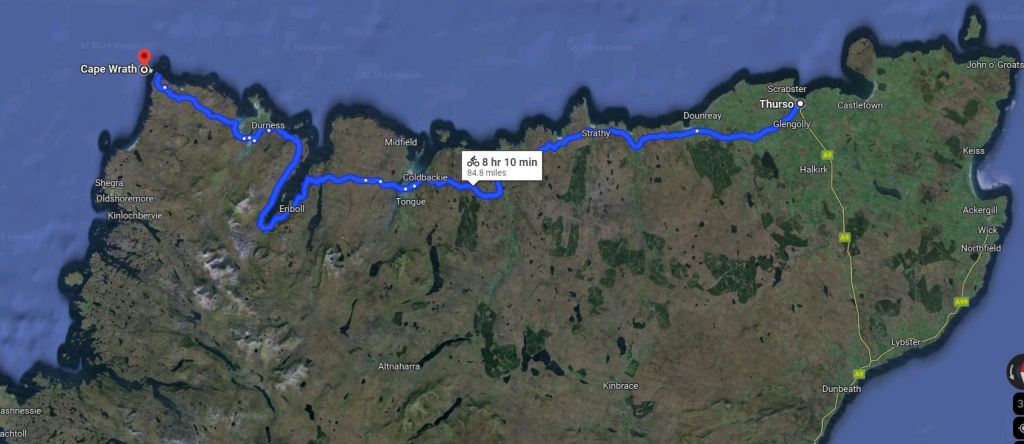
Refreshed, we were ready to battle the undulating route (including Bettyhill) with Ben Hope (927m – the most northern Monroe as a backdrop) on our way to the inland of Tongue. Our descent was slightly interrupted on the way down to the hostel, by a man on a quadbike shouting at us. With the wind rushing past our ears, we only just made out that there was a herd of highland cows approaching down the road, just before they appeared. Quickly getting off our bikes and pulling them into the heather as much as possible, we were told ‘we should be fine’ as 5 cows trotted down the road, instantly rearing and retreating the moment they saw us. The leading one with the largest pair of horns, Grumpy(!), was tempted back from us by rattling buckets of food, an the wide of the crofter chivvying from behind, they decided that their new pastures were more tempting than a pair of nervous cyclists, they trotted on.
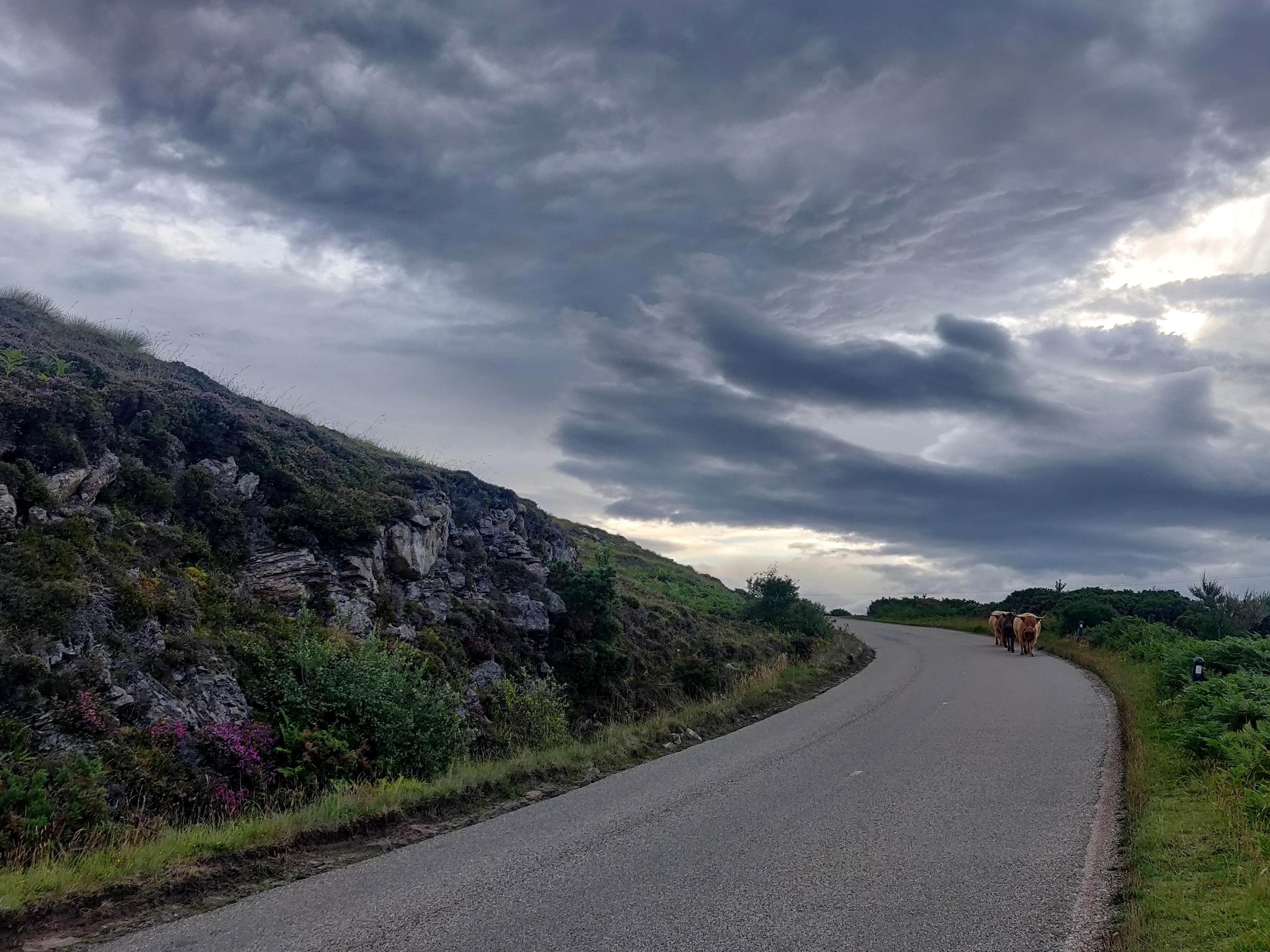
Our night’s companion in Tongue, a beautiful peninsula into the Kyle was a soldier on leave who had reached the most northern point of his trip. His diet of pot-noodles and biscuits was not what we expected, nor his night wild camping in the peat bog – not ideal for midges. Despite the hunger, and the midge bites, he had decided from the trip he was going to take a position in Scotland for the next four years, so the country had managed to win him over!
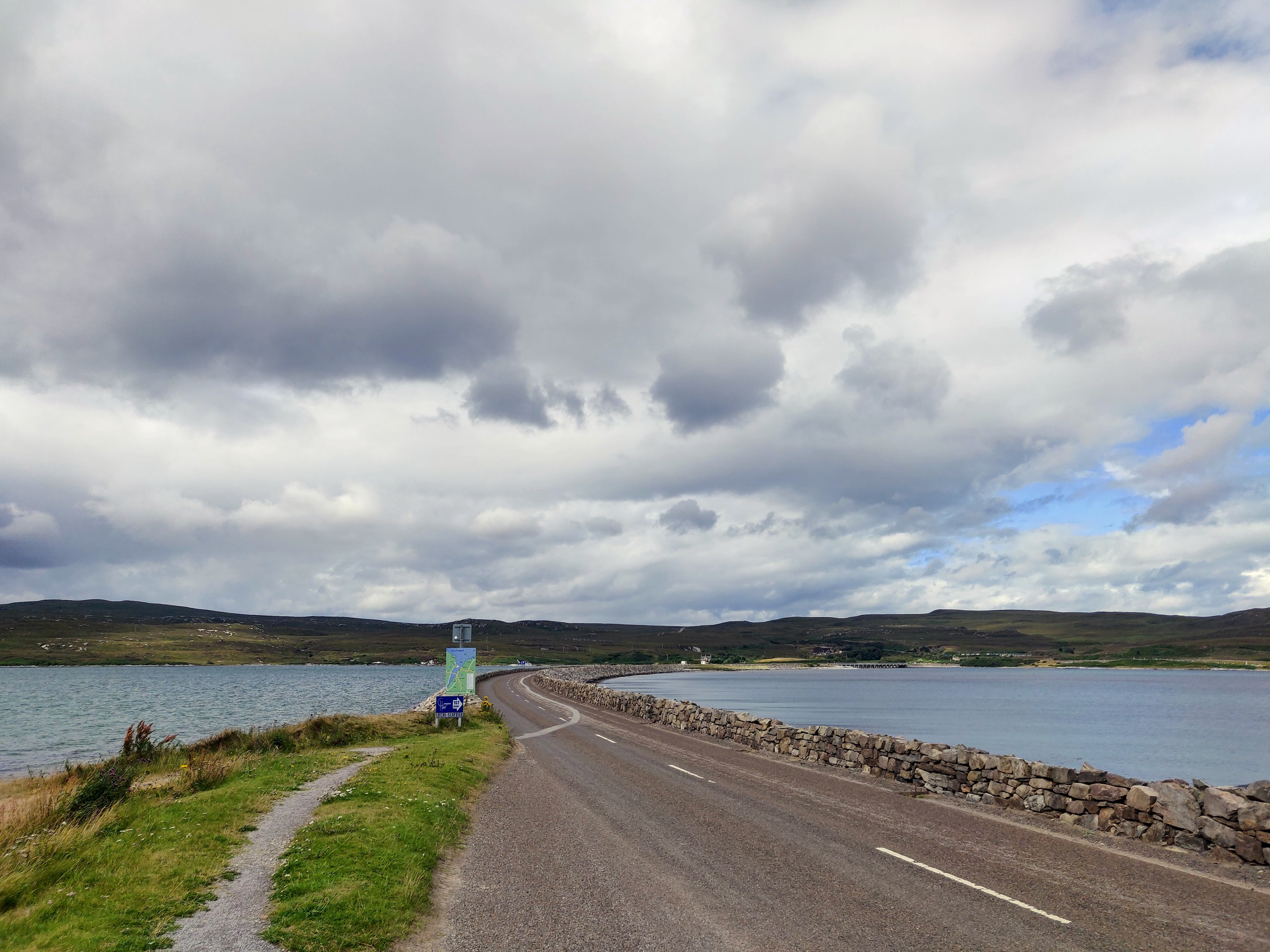
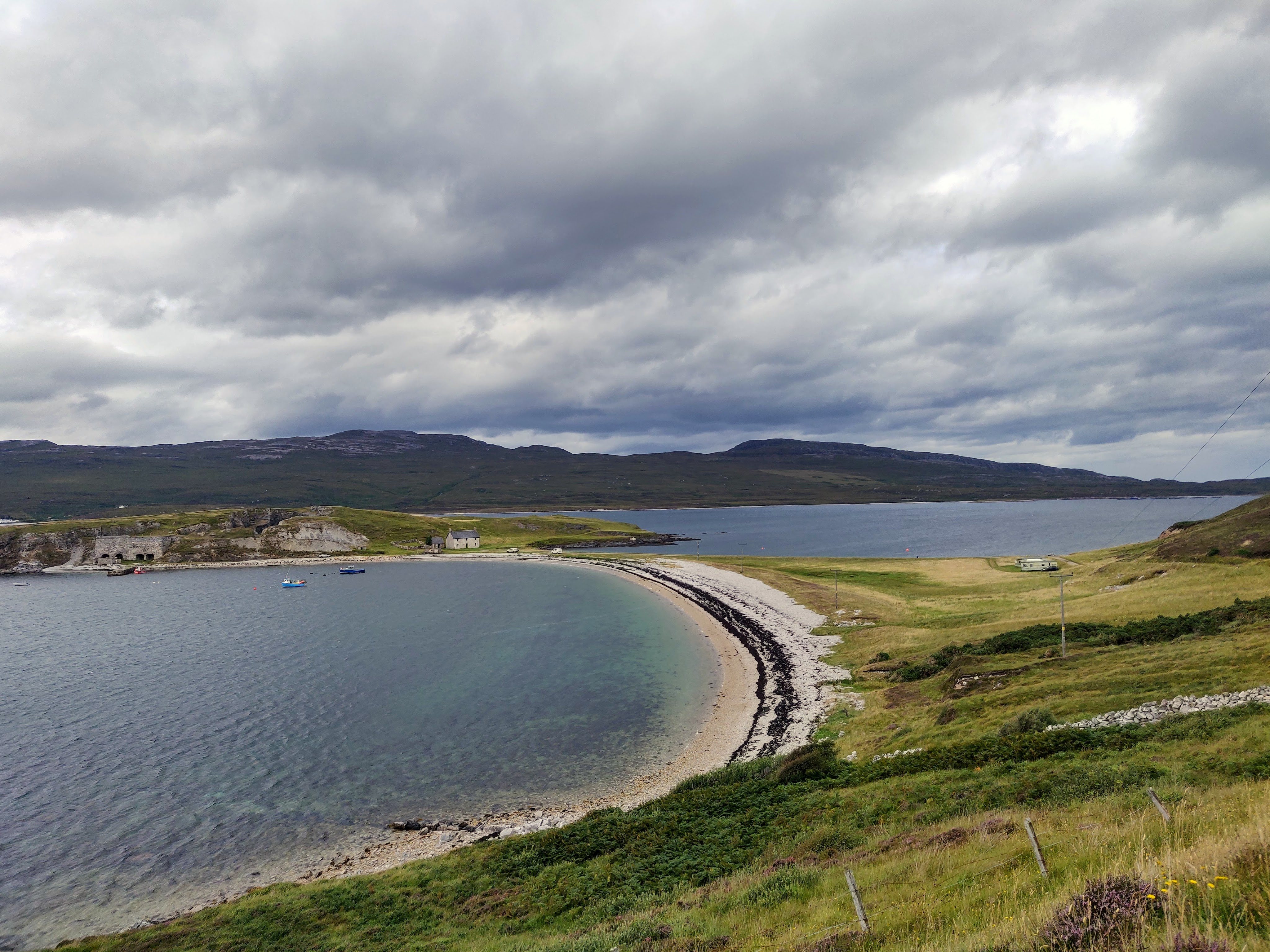
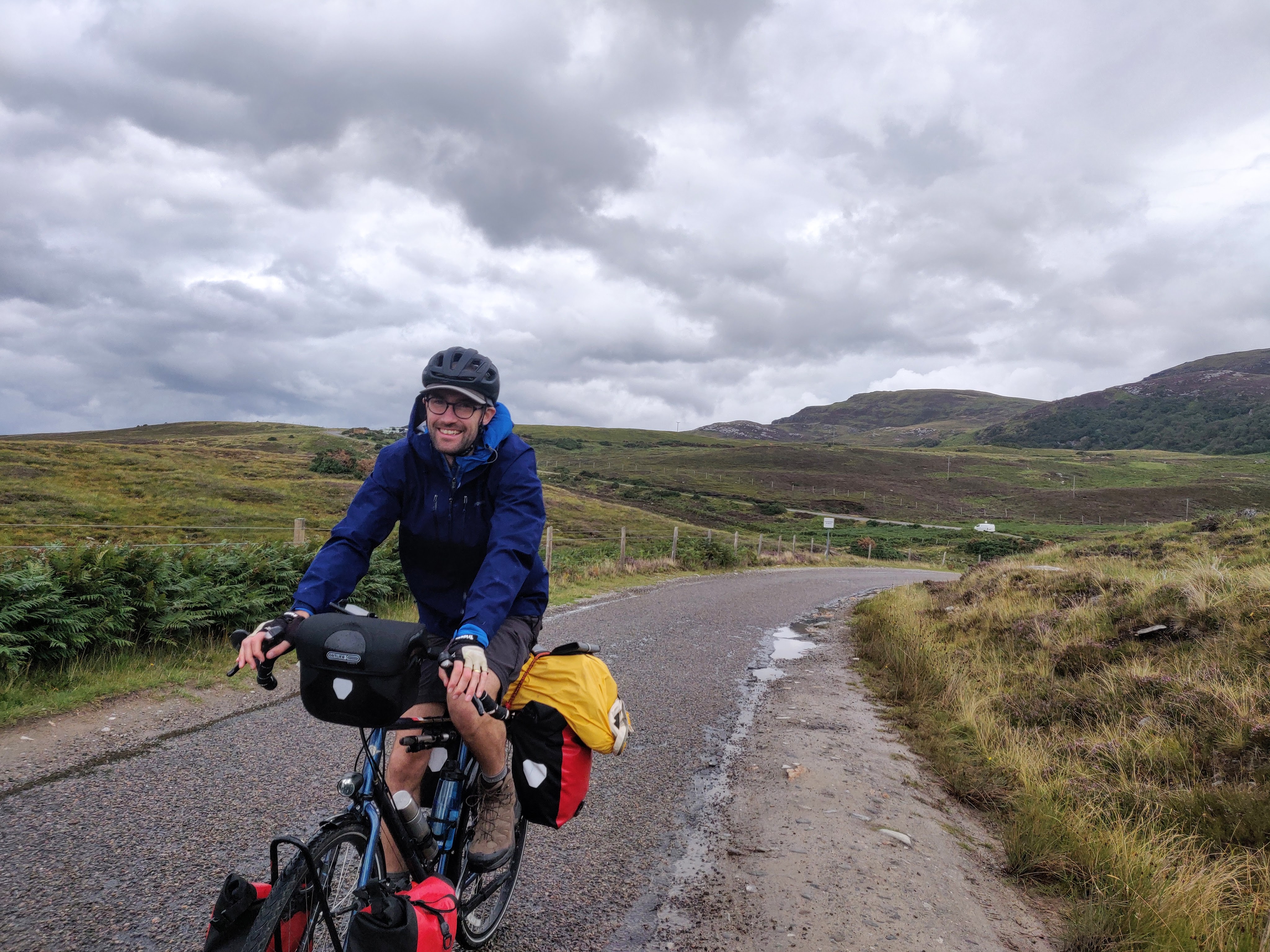
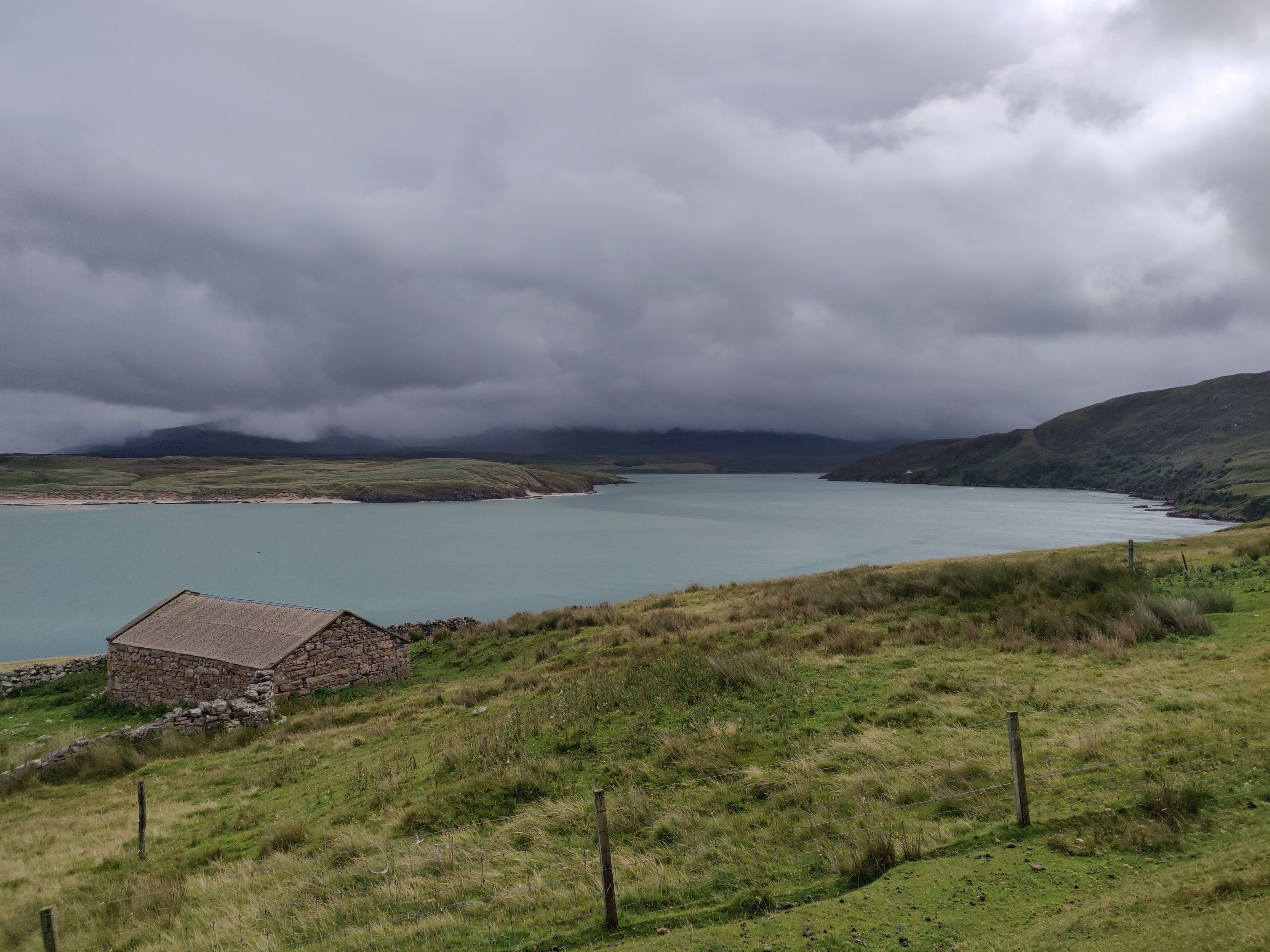
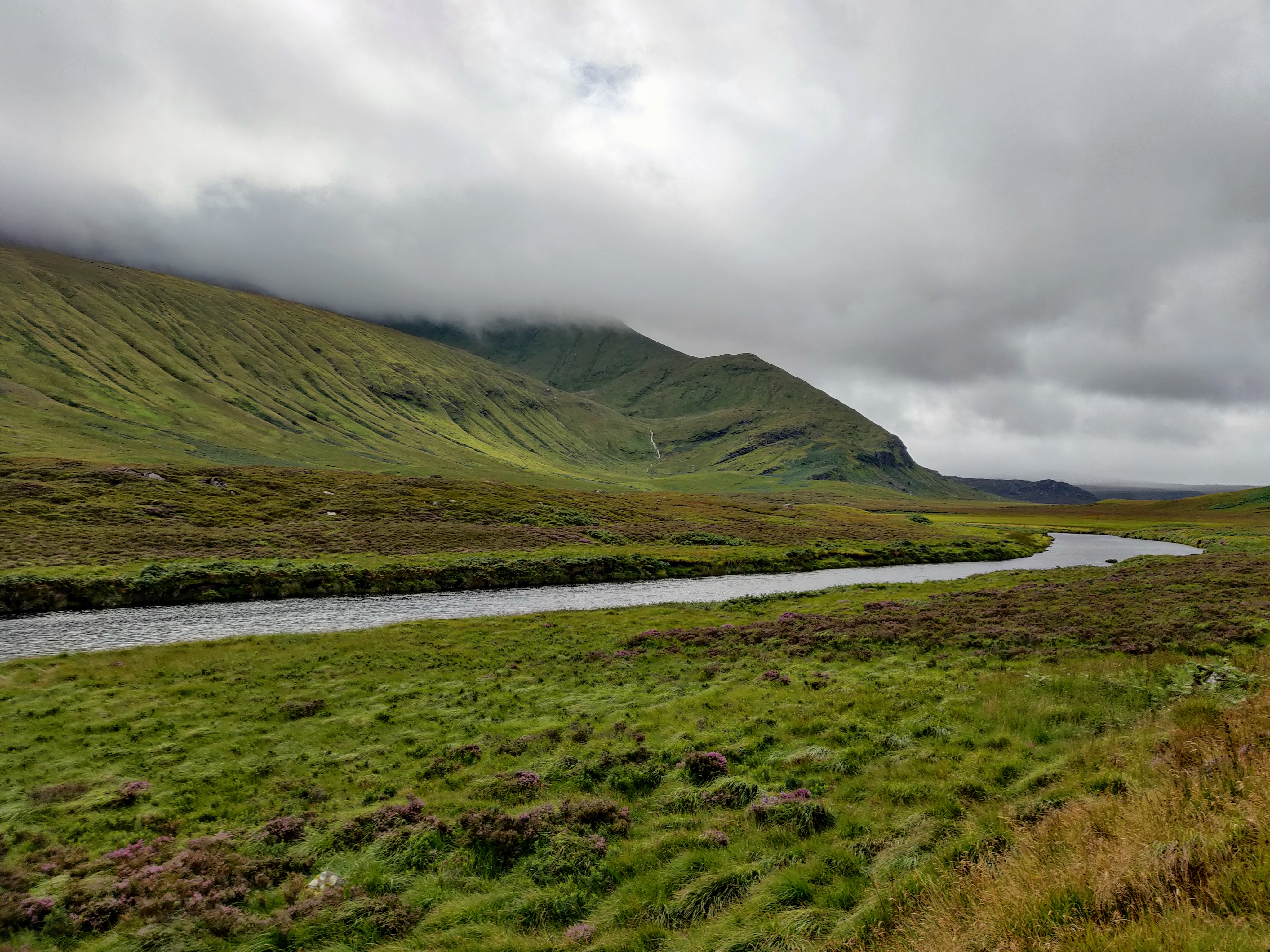
As we hadn’t managed to do as much training as we would have liked before the wedding, and the lack of rest days, meant the next day from Tongue to Durness was a tough one. At the base of Loch Eriboll, we saw what we *think* could have been a golden eagle – the cry and the brown bird with yellow feet certainly suggested that it was. The aquaramarine waters did gradually become greyer as the rain cluds came down, and we could see the sheets of rain along the valley.
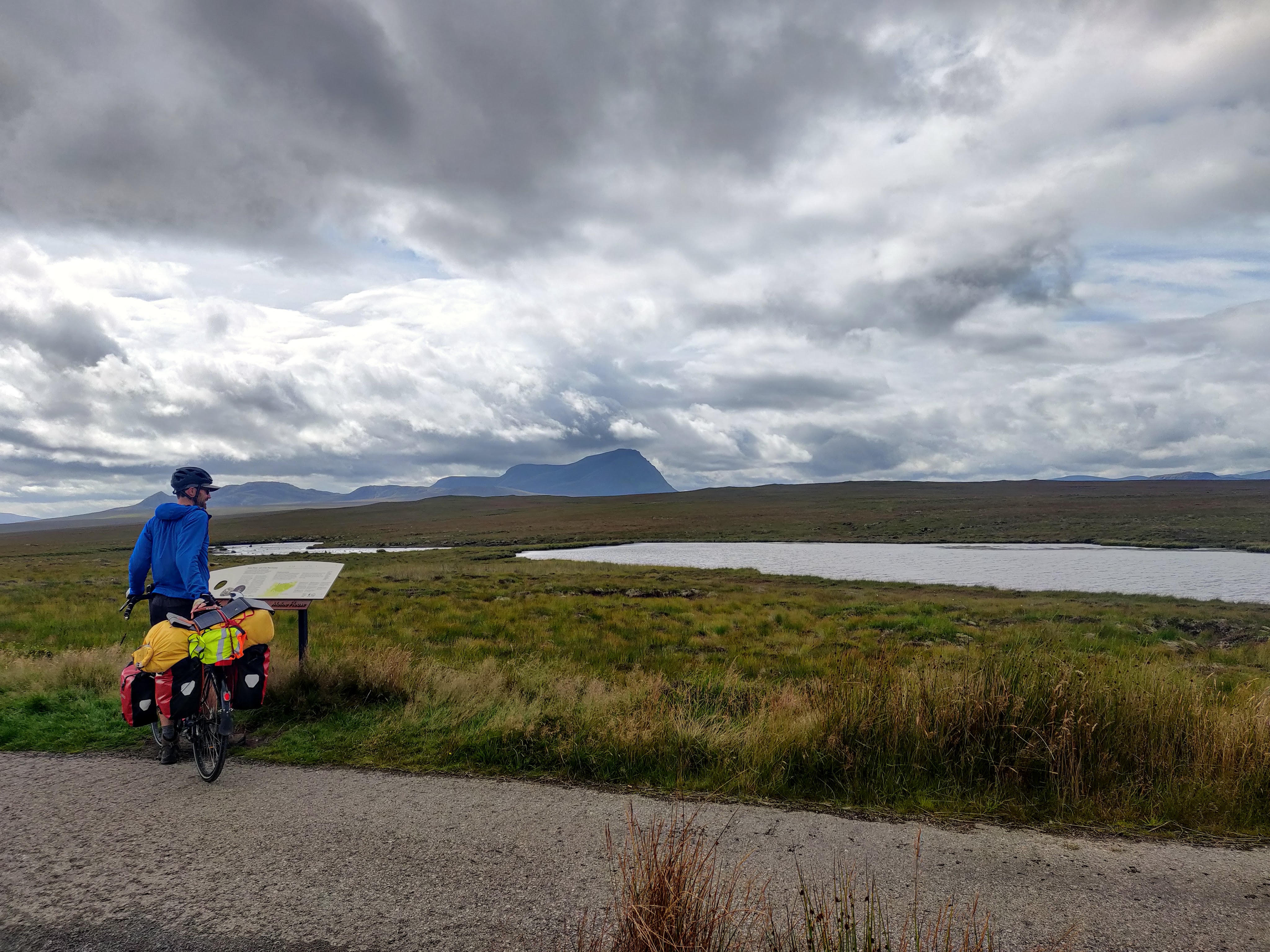
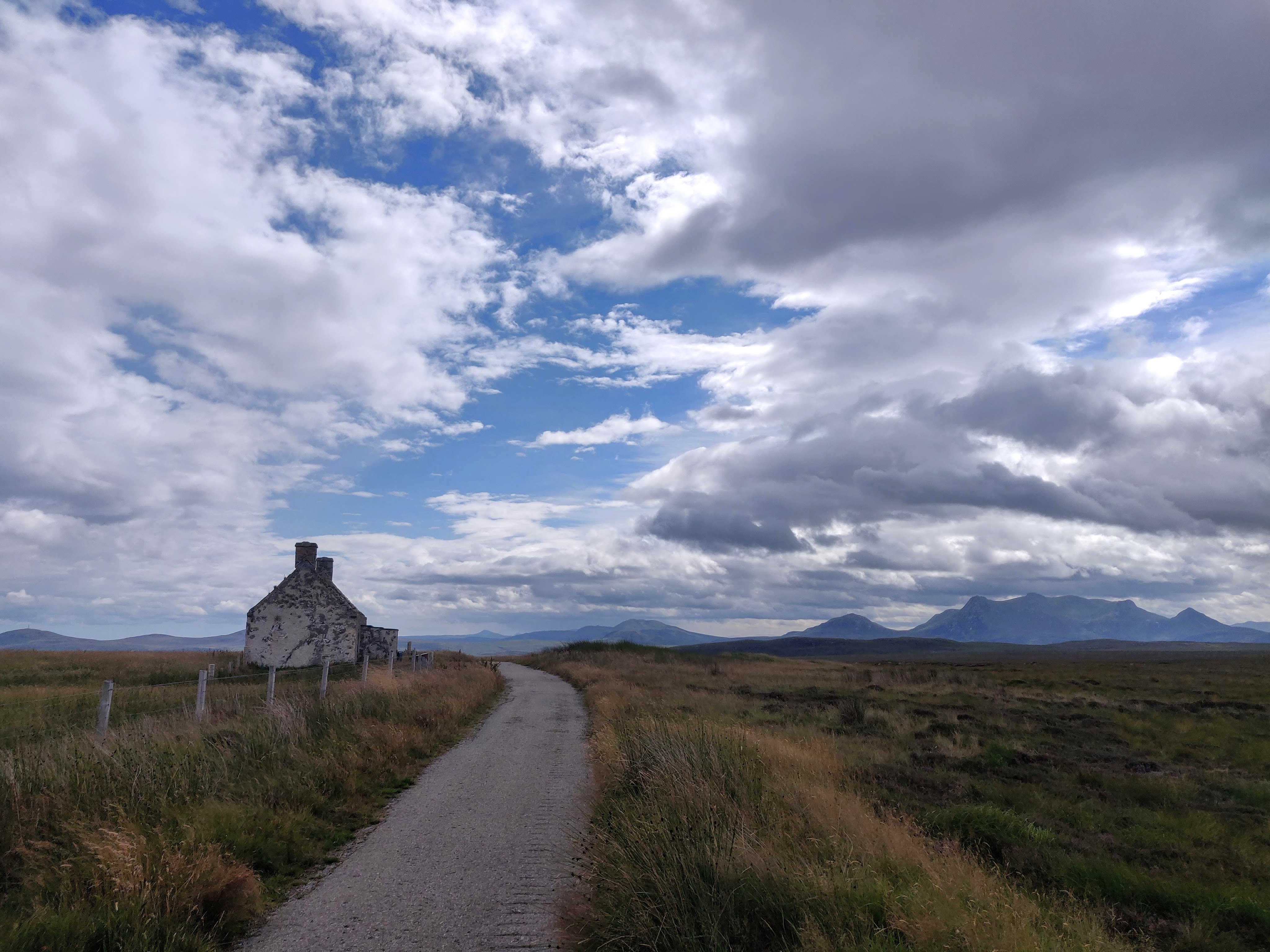
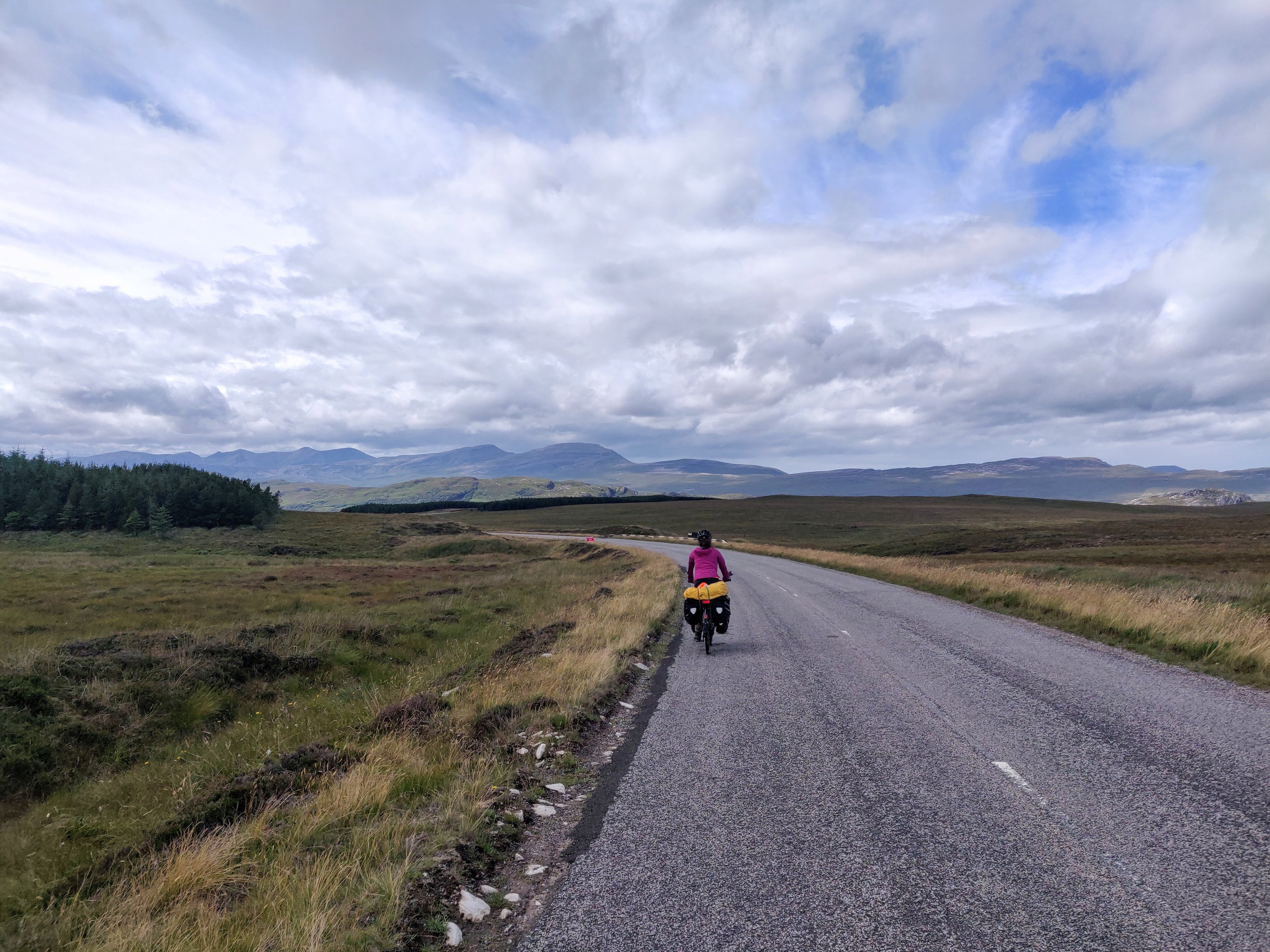
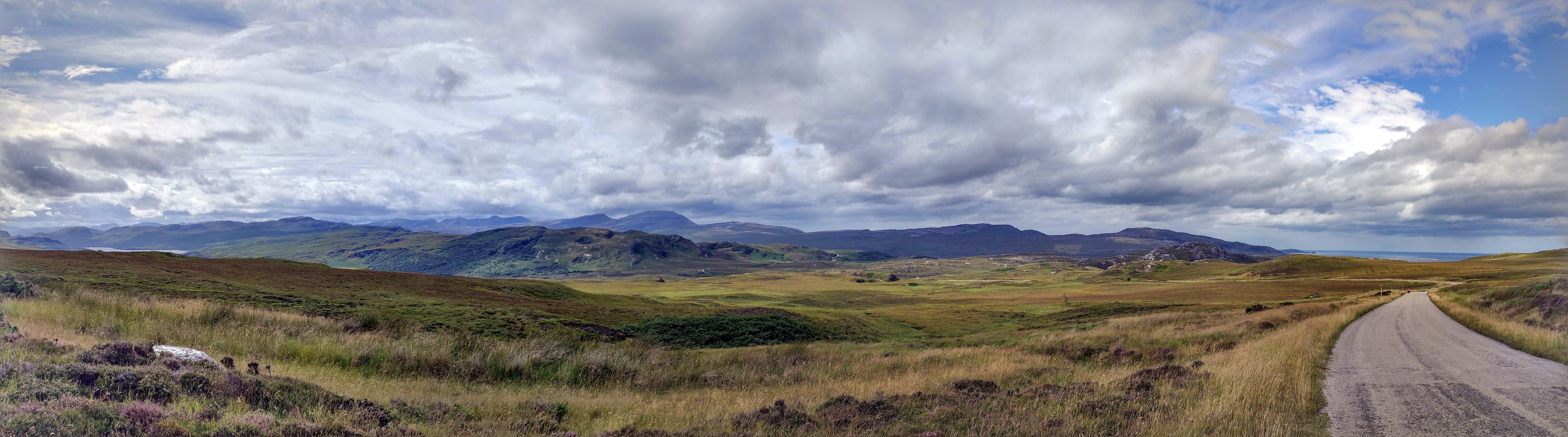
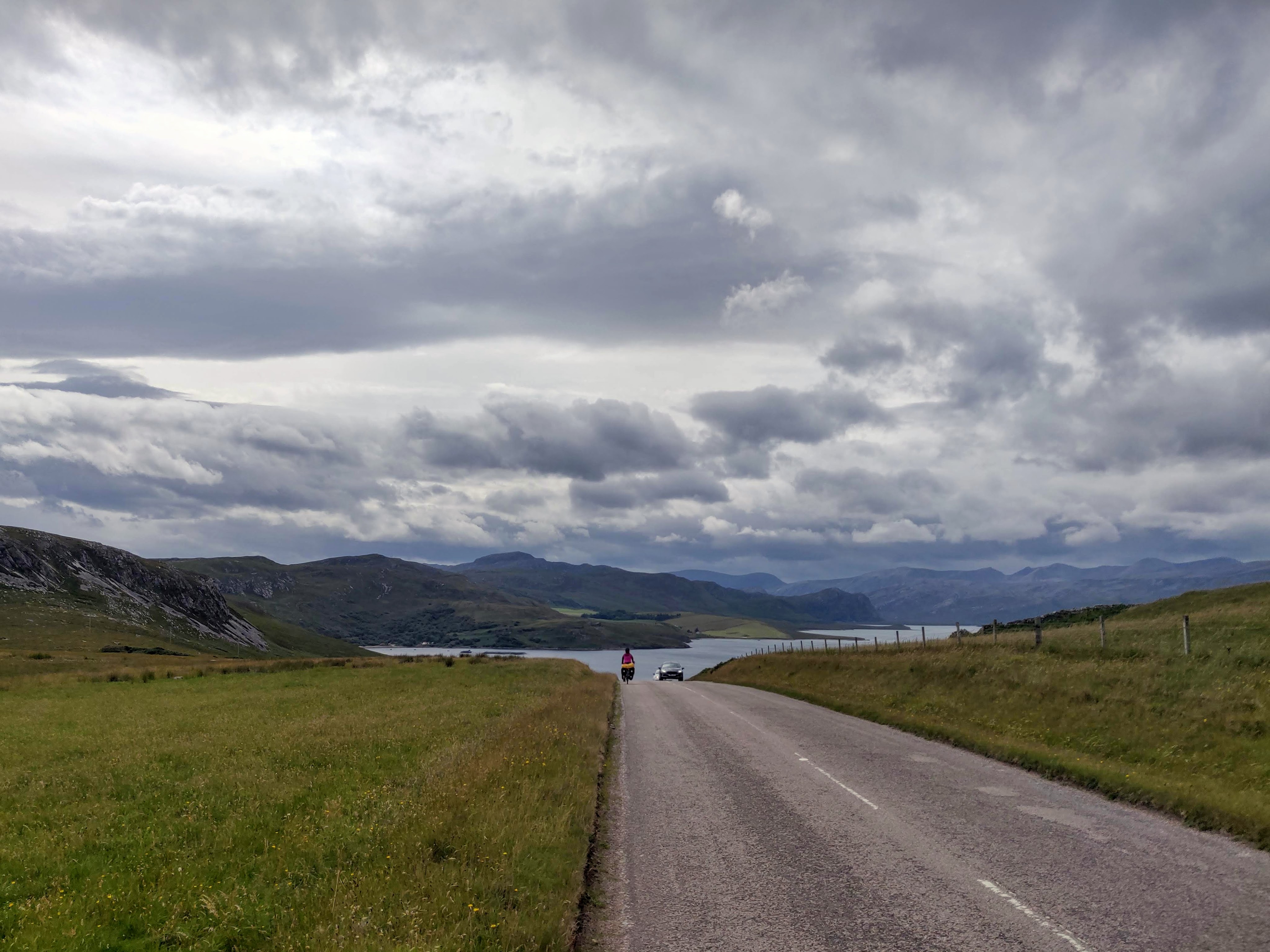
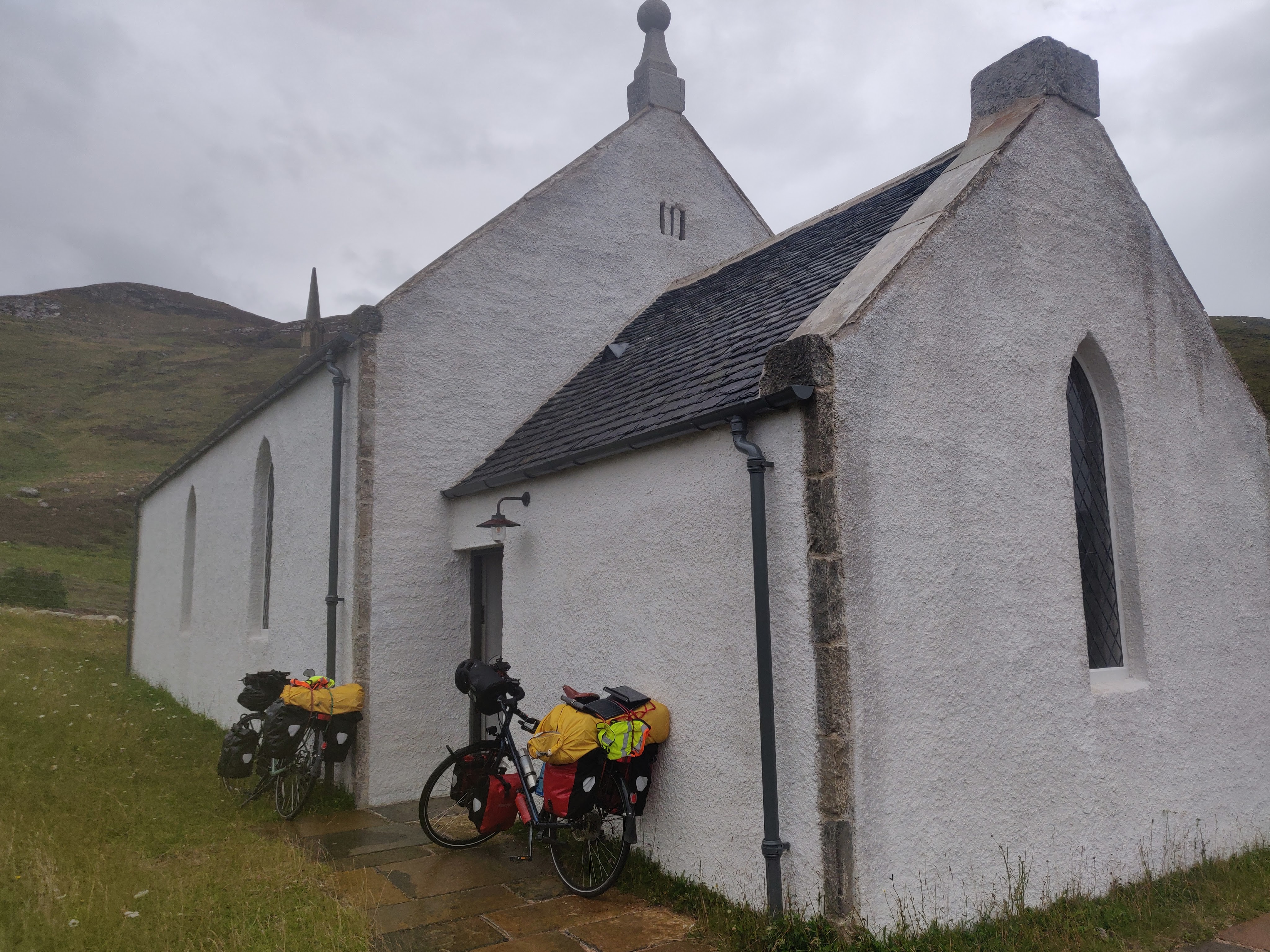
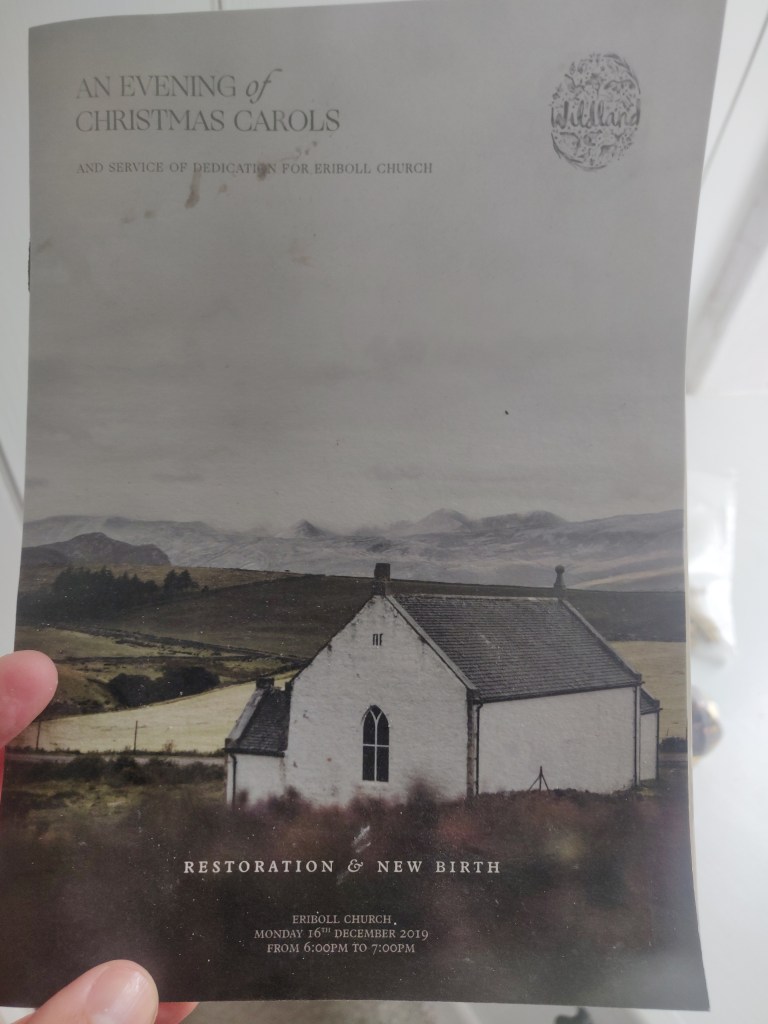
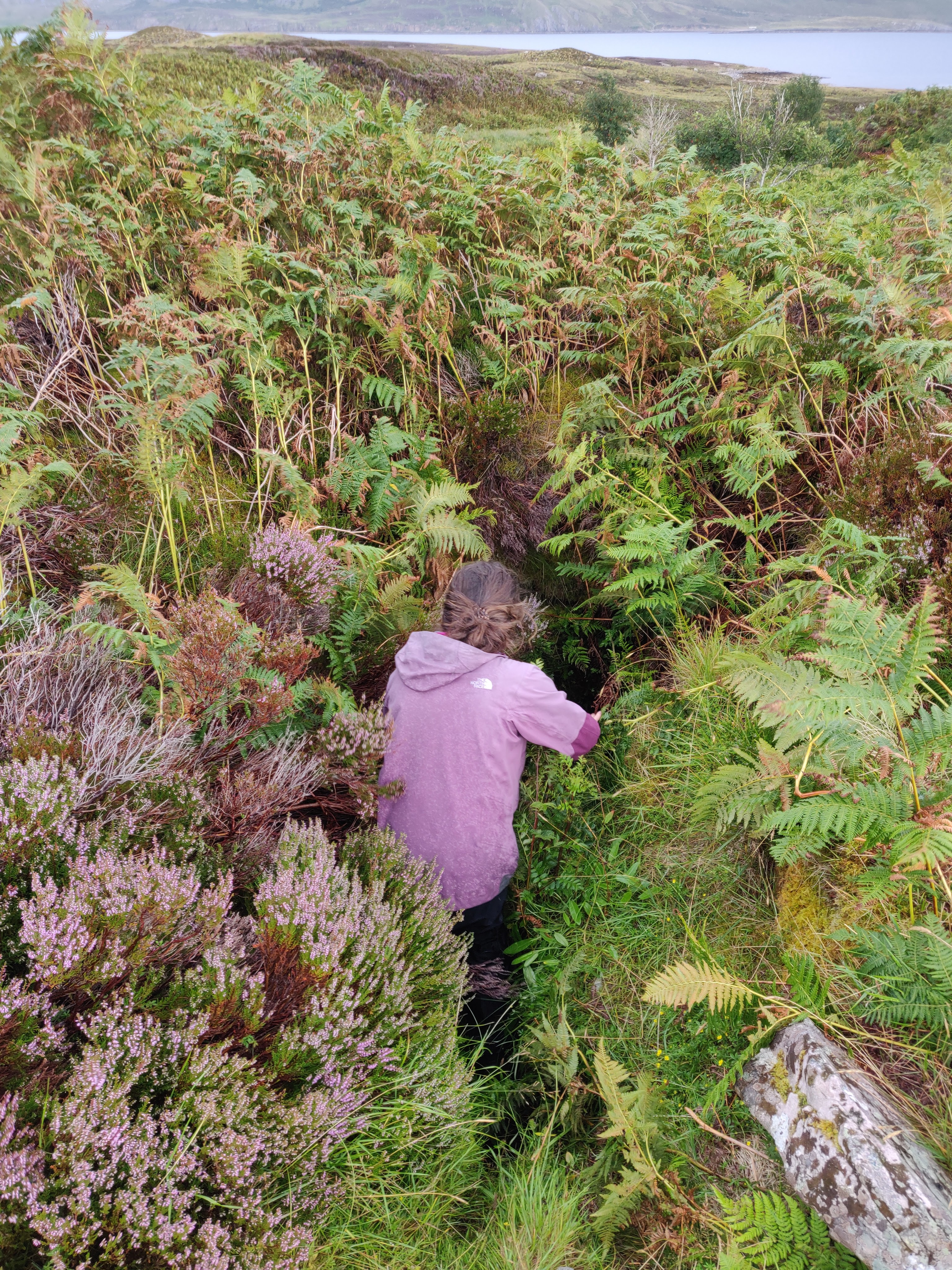
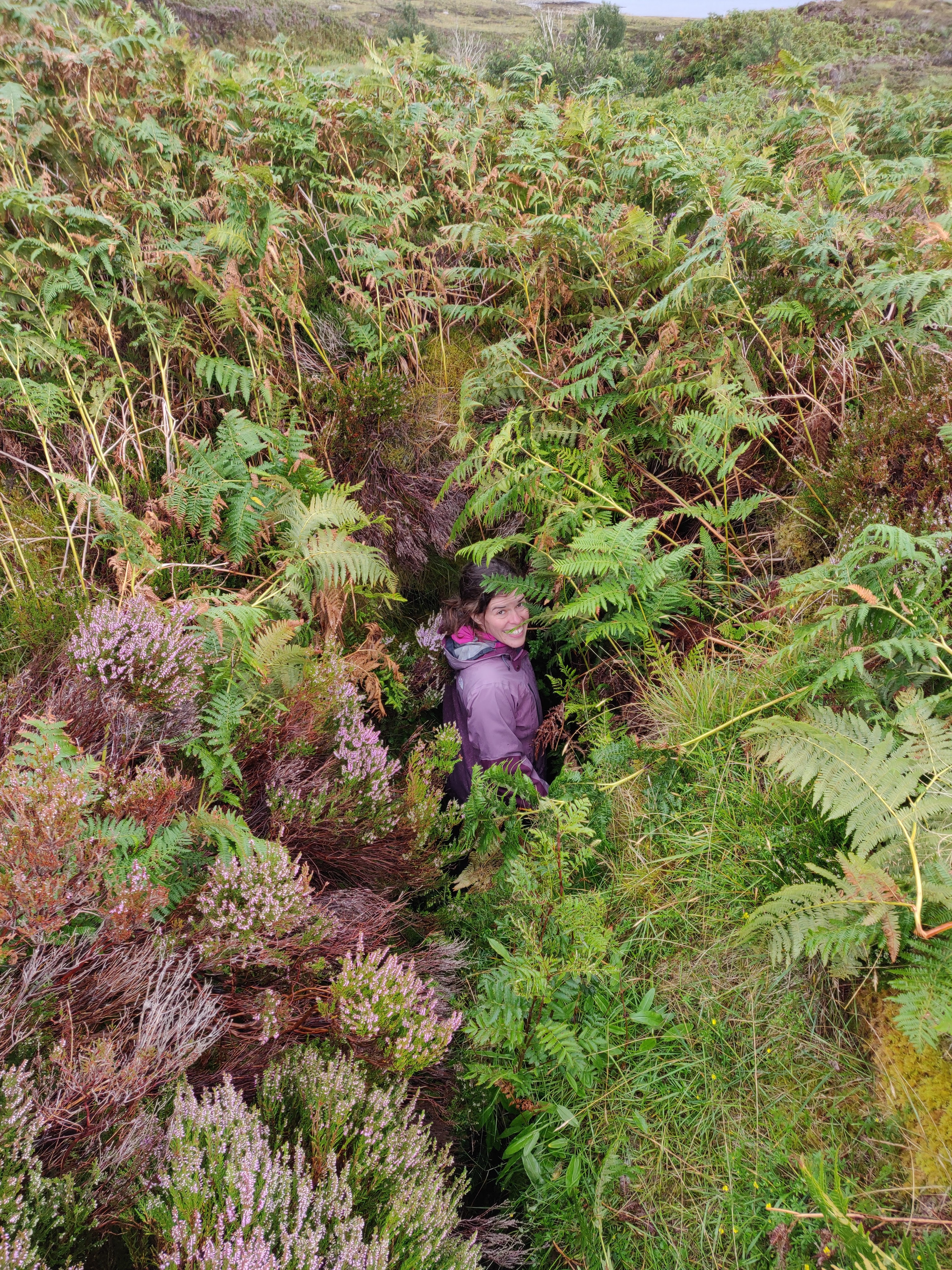
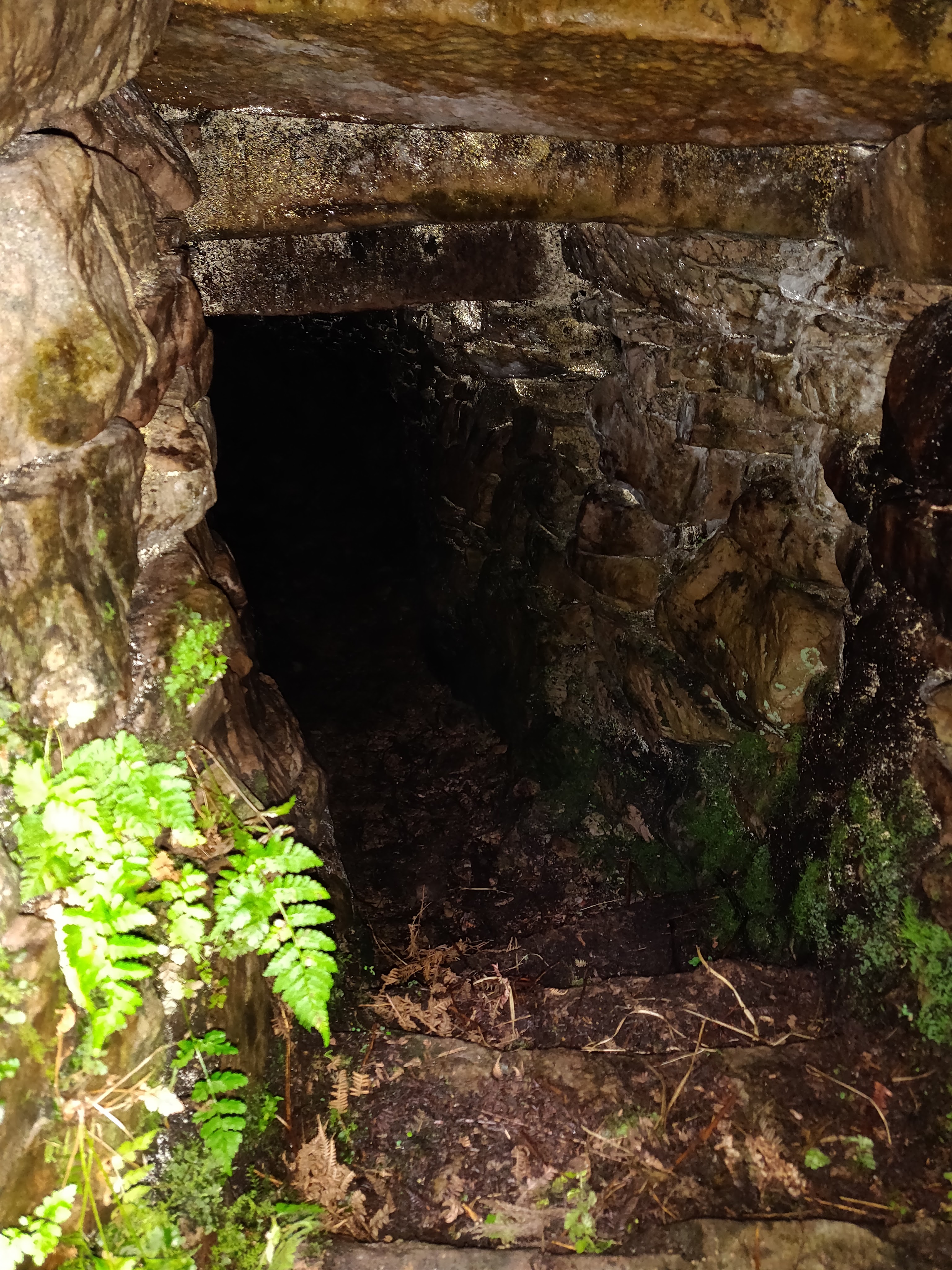
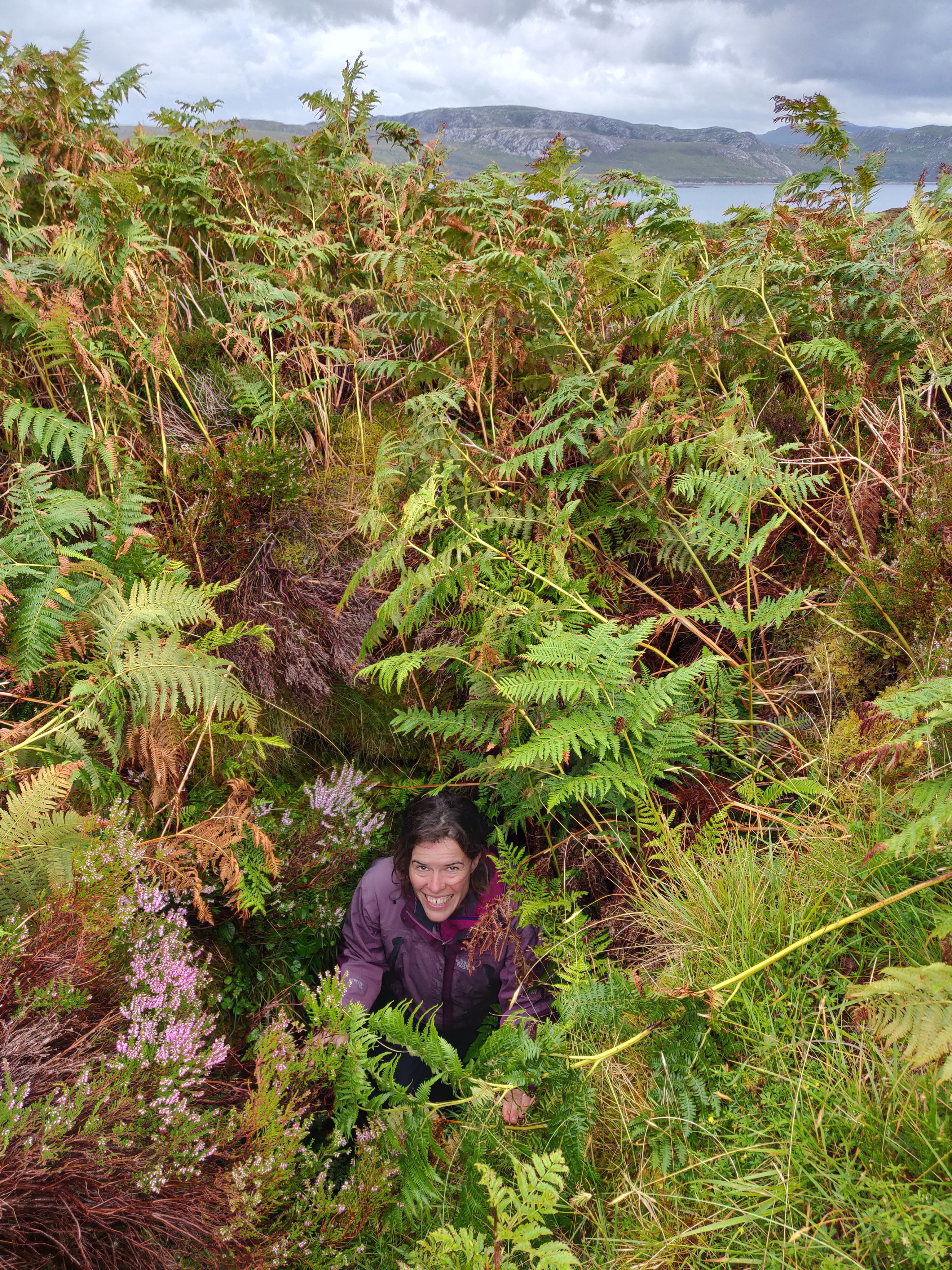
Luckily there was an open, and from what the service books said, recently restored beautiful little chapel which was welcome shelter from the elements. Leading out of the loch we kept a lookout for the souterrain (an iron age subterranean dwelling) http://portal.historicenvironment.scot/designation/SM3776 which my boss’s father had done some archeological digging in the 1930s. Although pretty hidden amongst the ferns, two cairns marked the route, and the little staircase leading down to the low entrance was magical – claustrophobia prevented us both going inside something that felt not that much bigger than a badger’s sett!
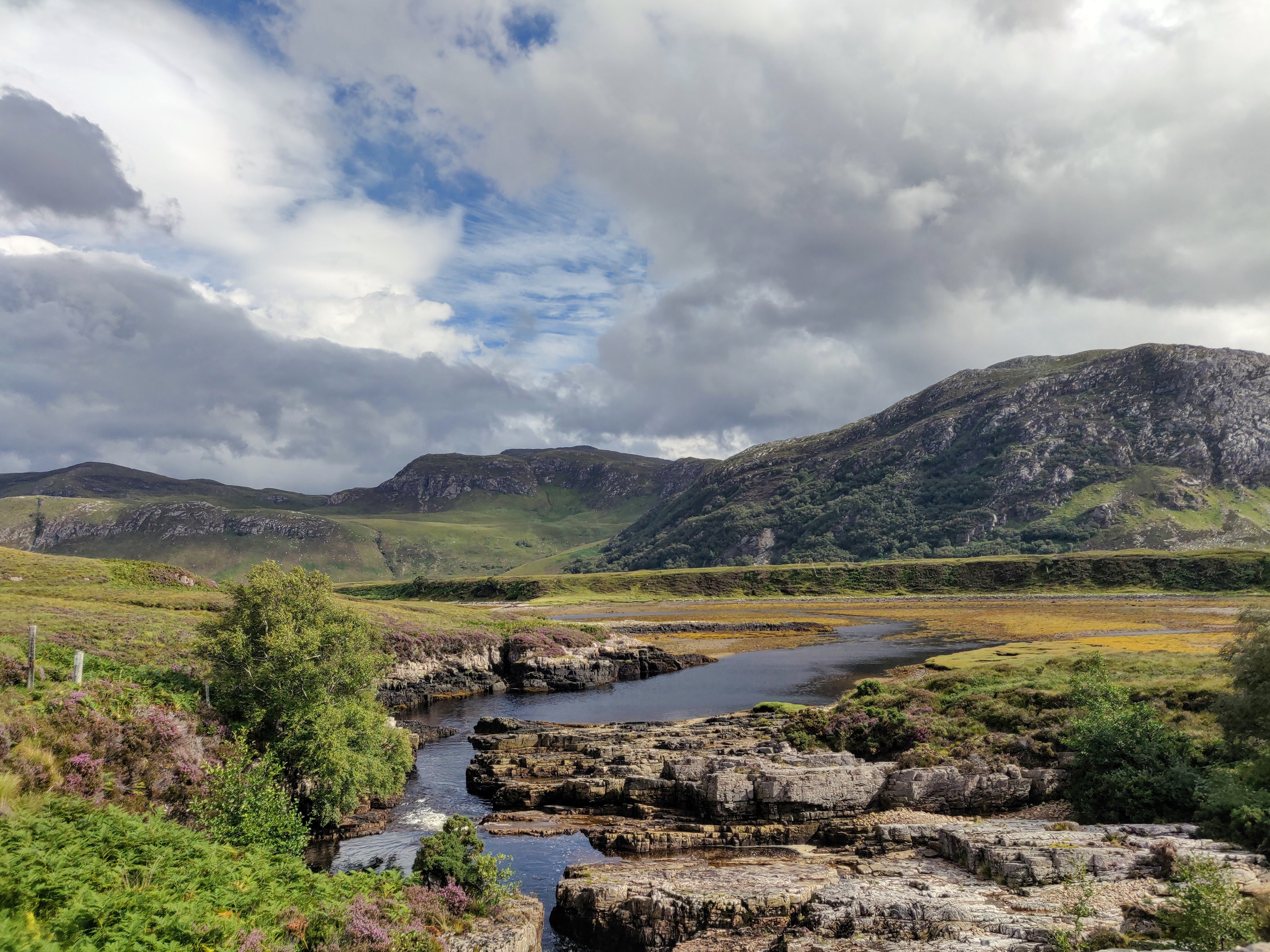
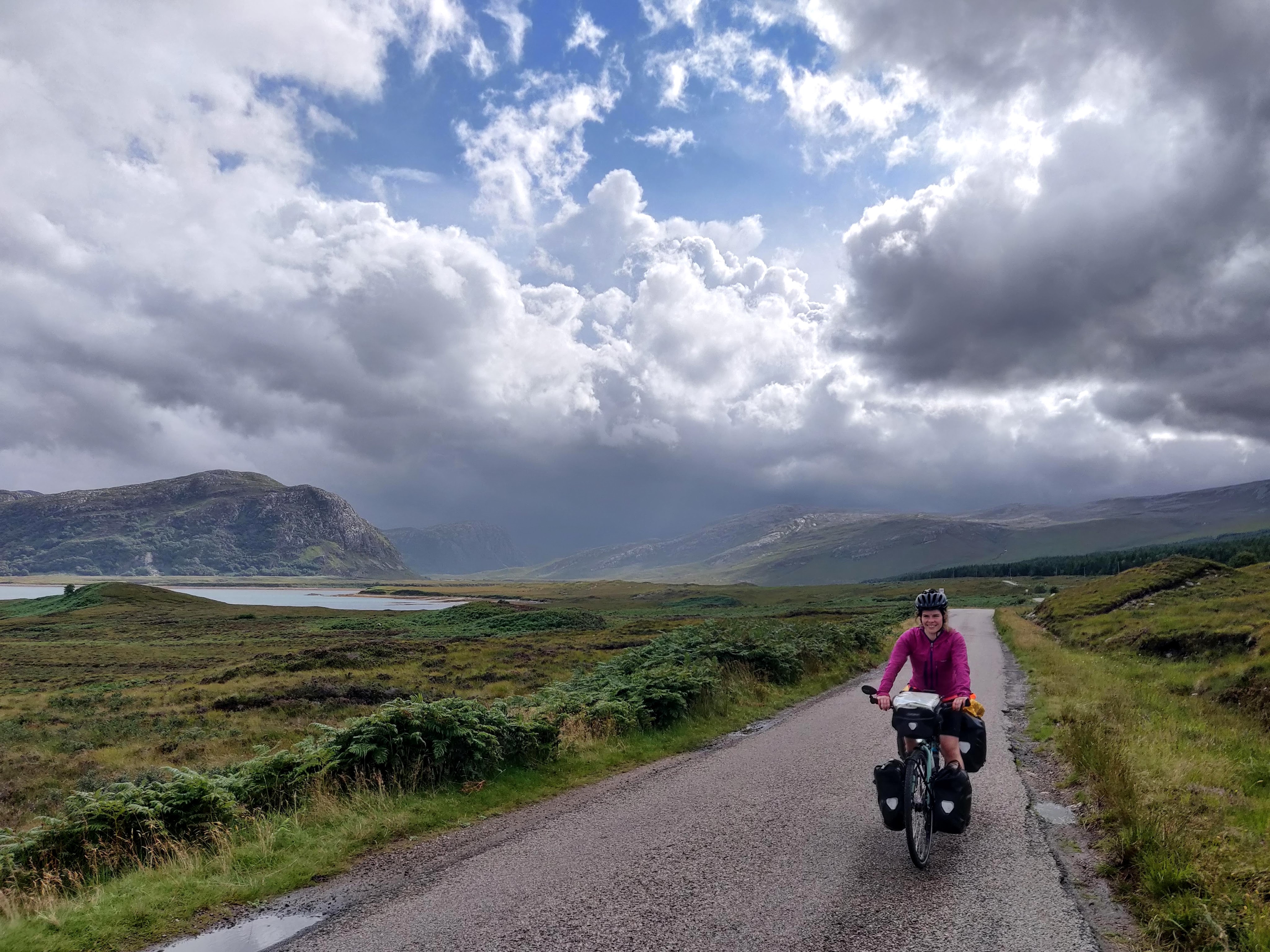
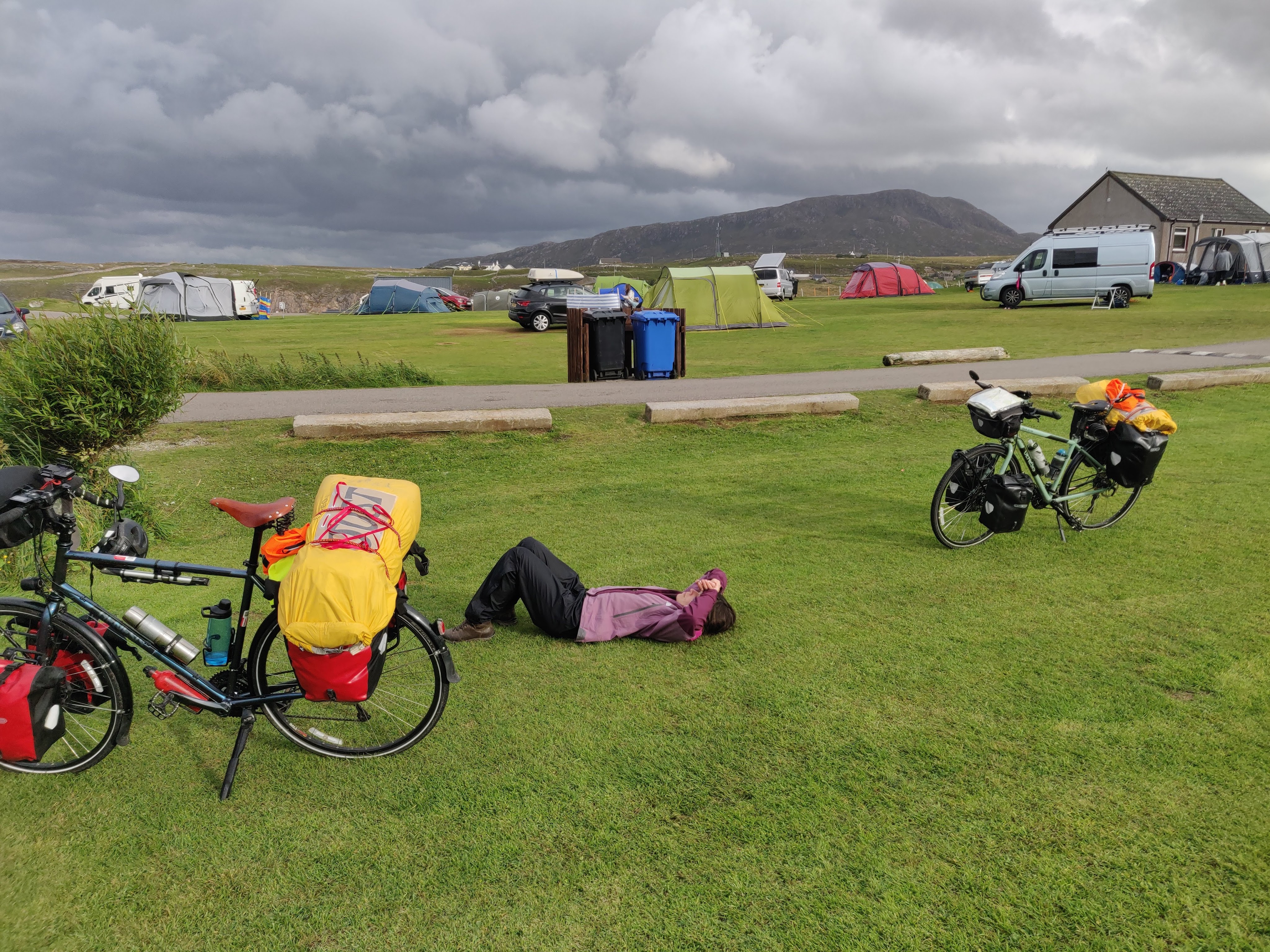
By the time we reached Durness (racing past Smoo cave, some fabulous beaches, and what felt like the longest village, since the first sign) we reached the campsite, collapsing onto the grass. As most of the residents in our part of the campsite had just finished the Cape Wrath trail – one of the hardest long distance walking trails – we felt slightly inferior. Tent erected, and the arrival of scampi and lamb stew takeaway from the next door pub certainly improved moods and we felt keener to continue to Cape Wrath the next day.
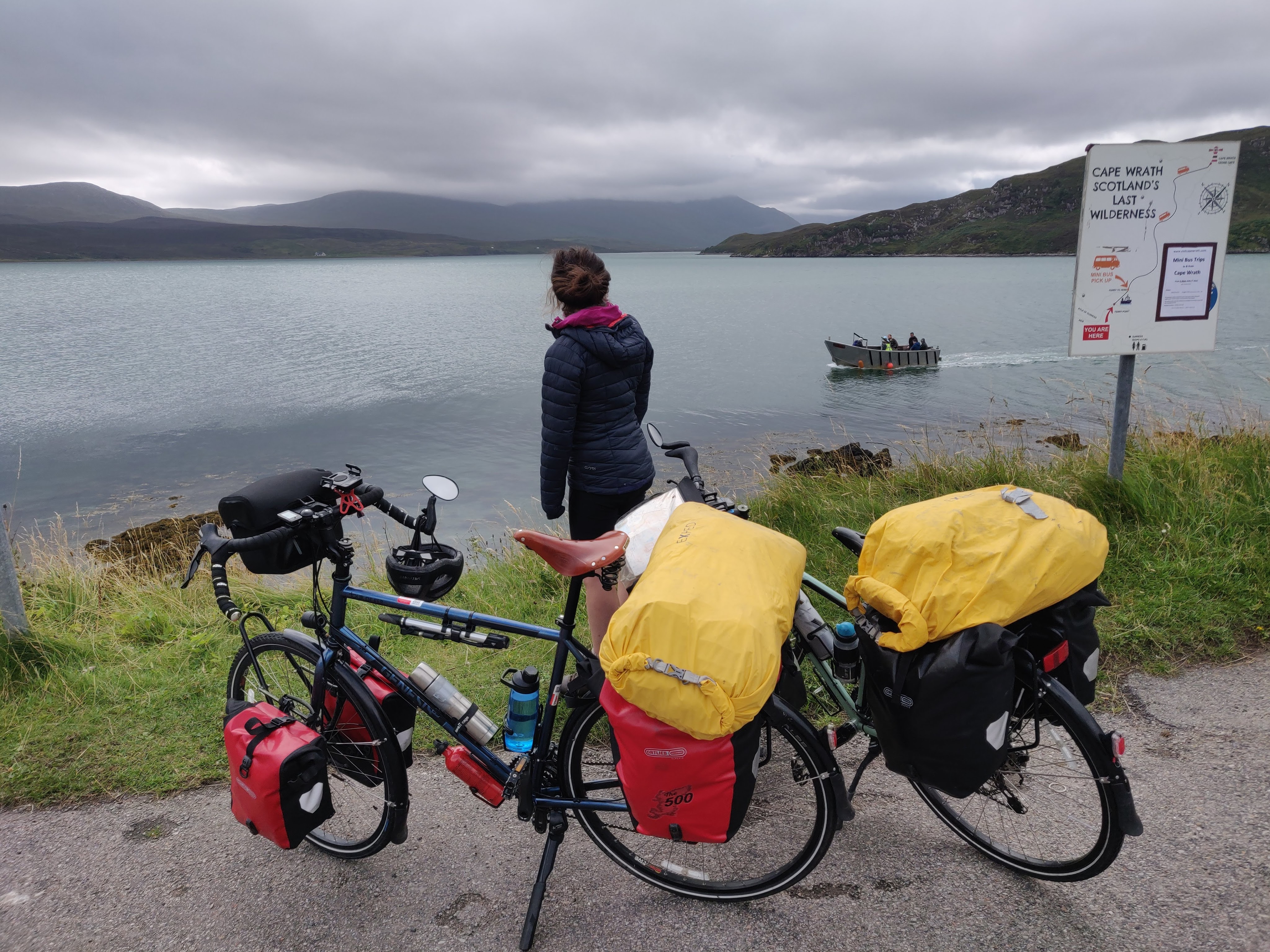
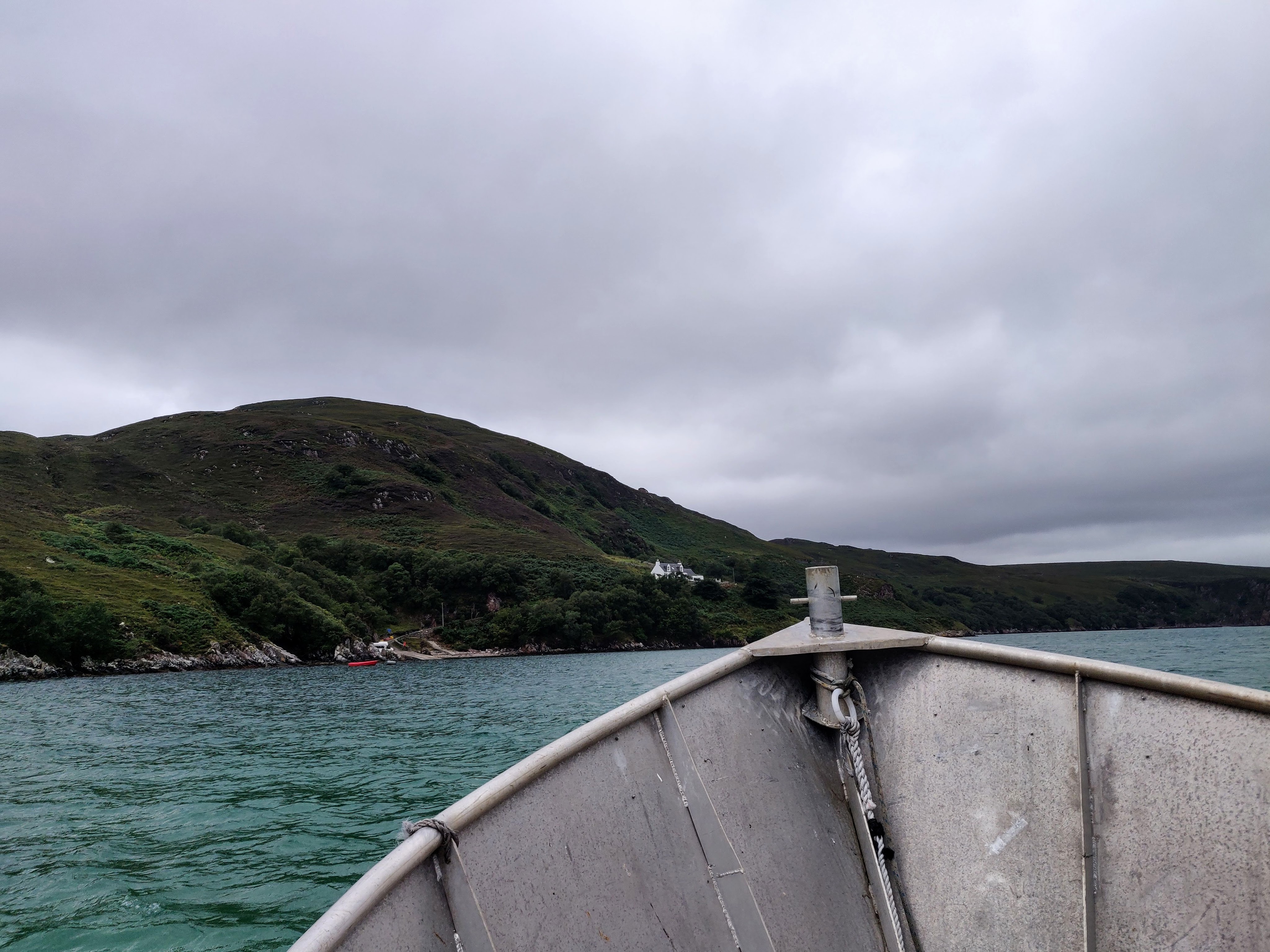
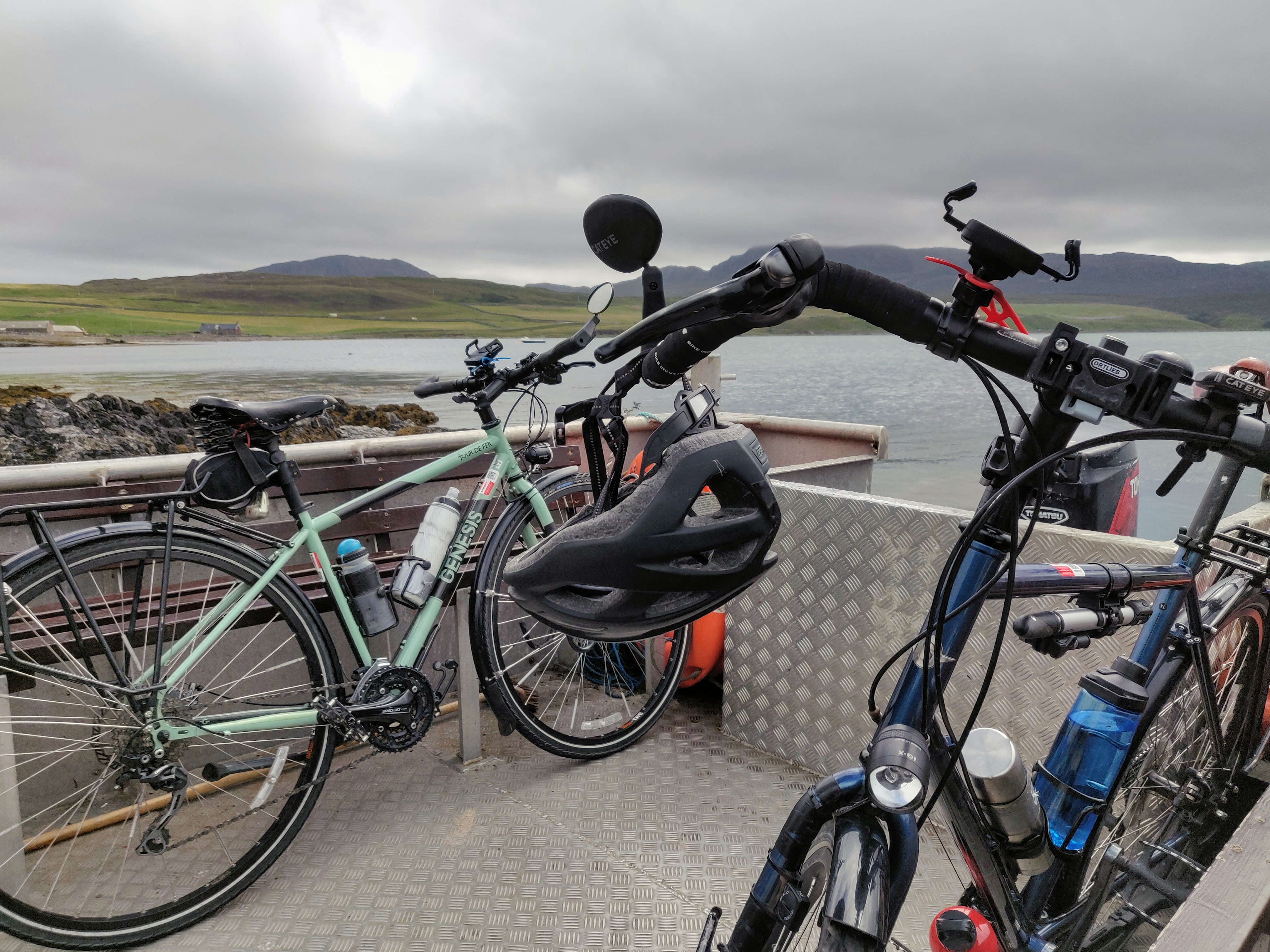
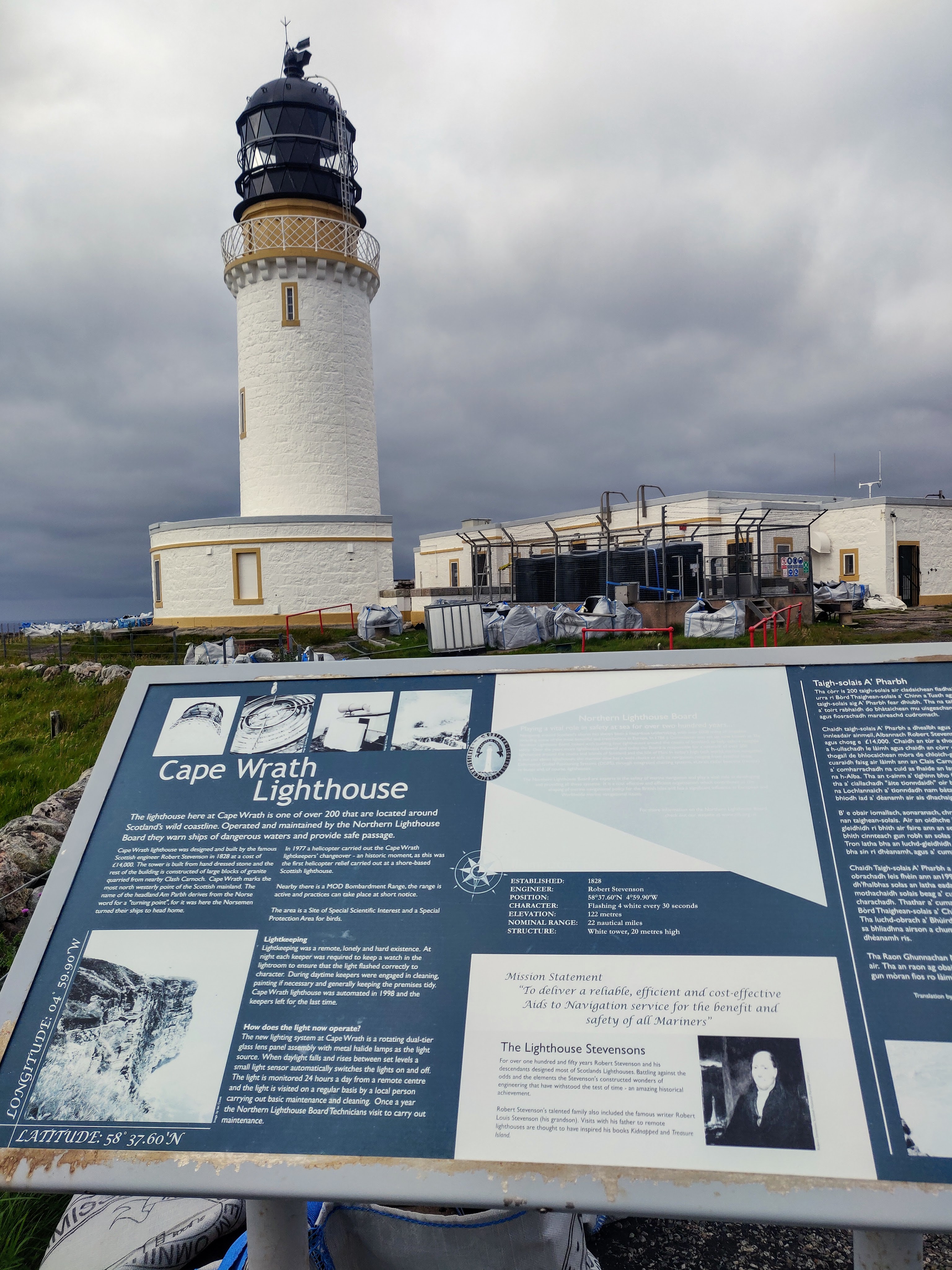
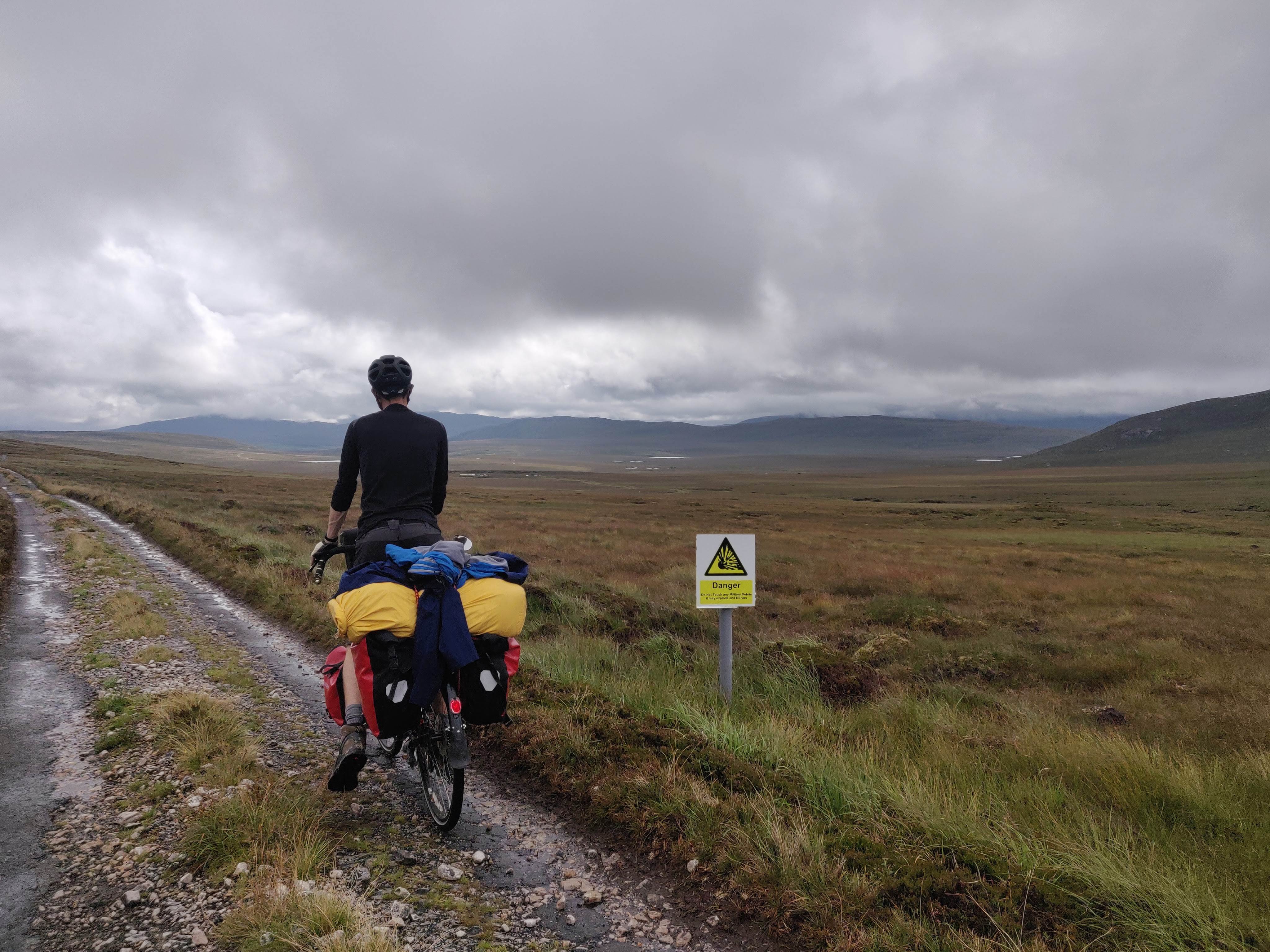
Cape Wrath is the North Western point of Scotland, almost a right hand corner, which is owned by the MOD, and remains an active firing range, crossed by an old rubbly military road, at the end the Cape Wrath lighthouse (another Stevenson creation) and also the official end of the Cape Wrath trail. To cycle to the lighthouse also means that you join the ‘Cape Wrath Fellowship’ a club set up in the 1930s as to cycle to the point was seen as reaching the most extreme point in the UK. Having piled our bikes and array of panniers into the ferry, an open topped vessel, slightly larger than a rowing boat, and unpacked them 10 minutes later, we felt rather intrepid. Although we had been warned in the hostel about the quality of the road and the impact on our tyres, this was not comparable to the Carraterra Austral, which was in another league of road quality! The undulating hills of heather covered peat certainly had a feeling of isolation as we peddalled along – had it been raining it would have been extremely bleak.
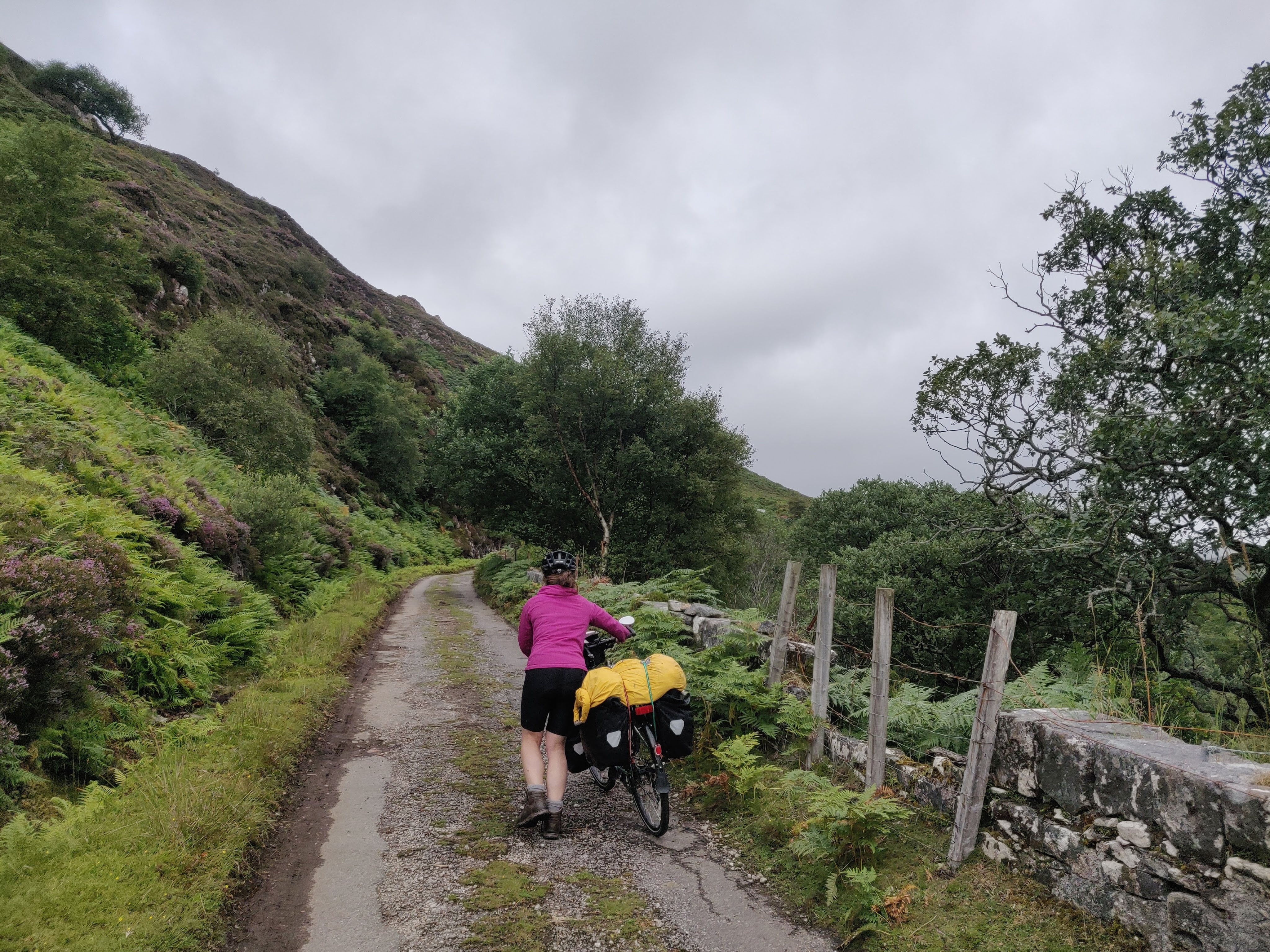
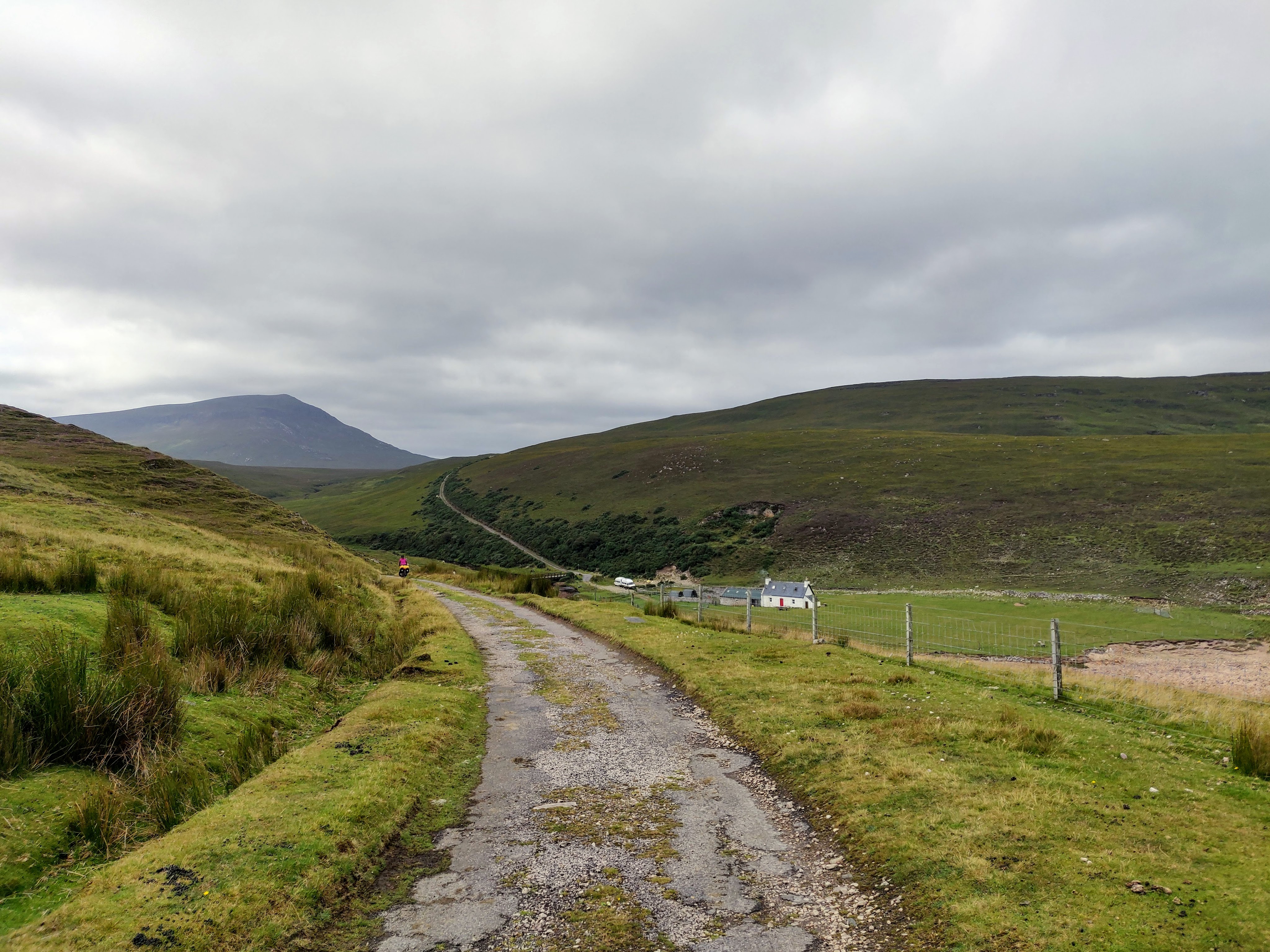
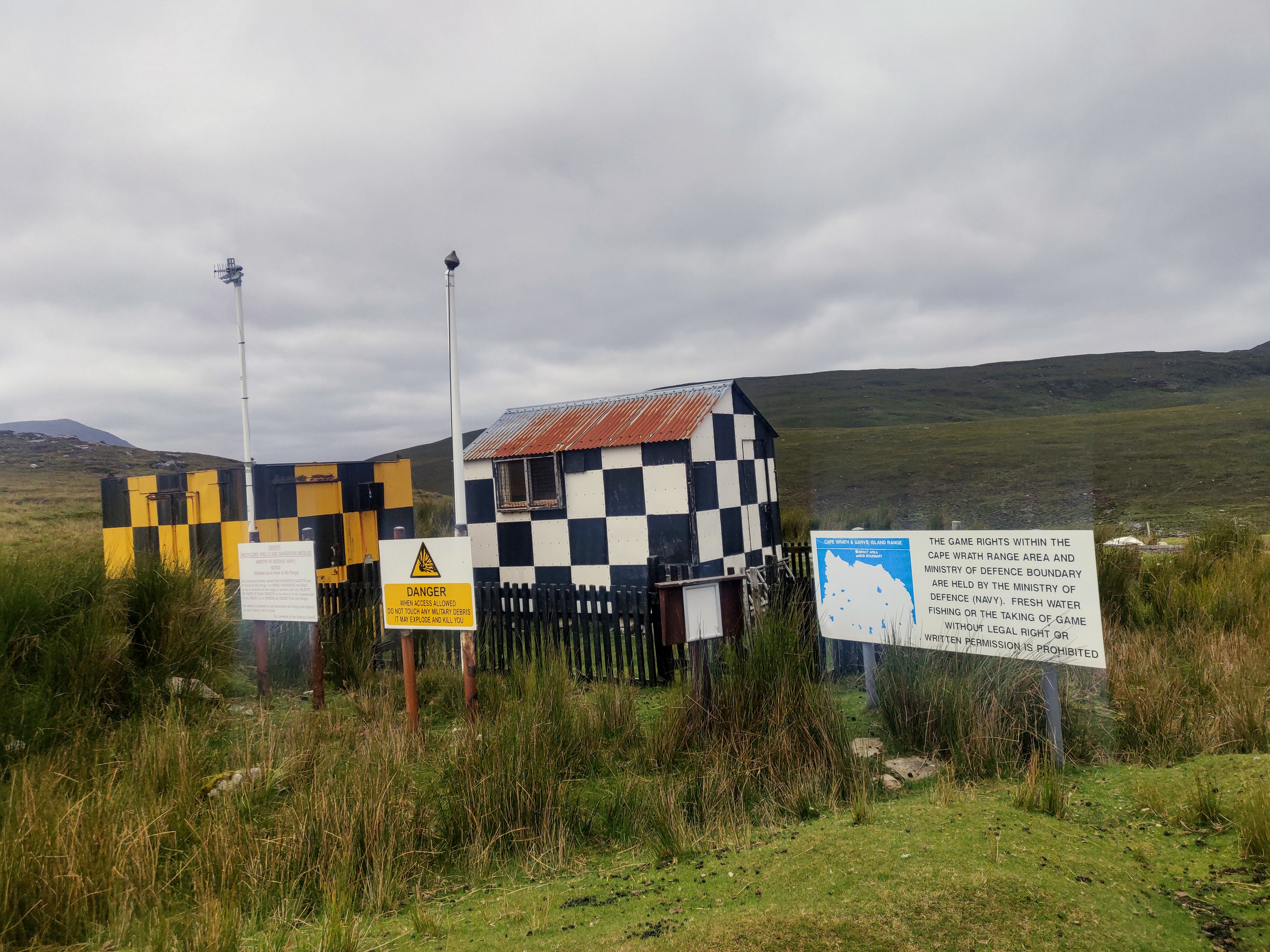
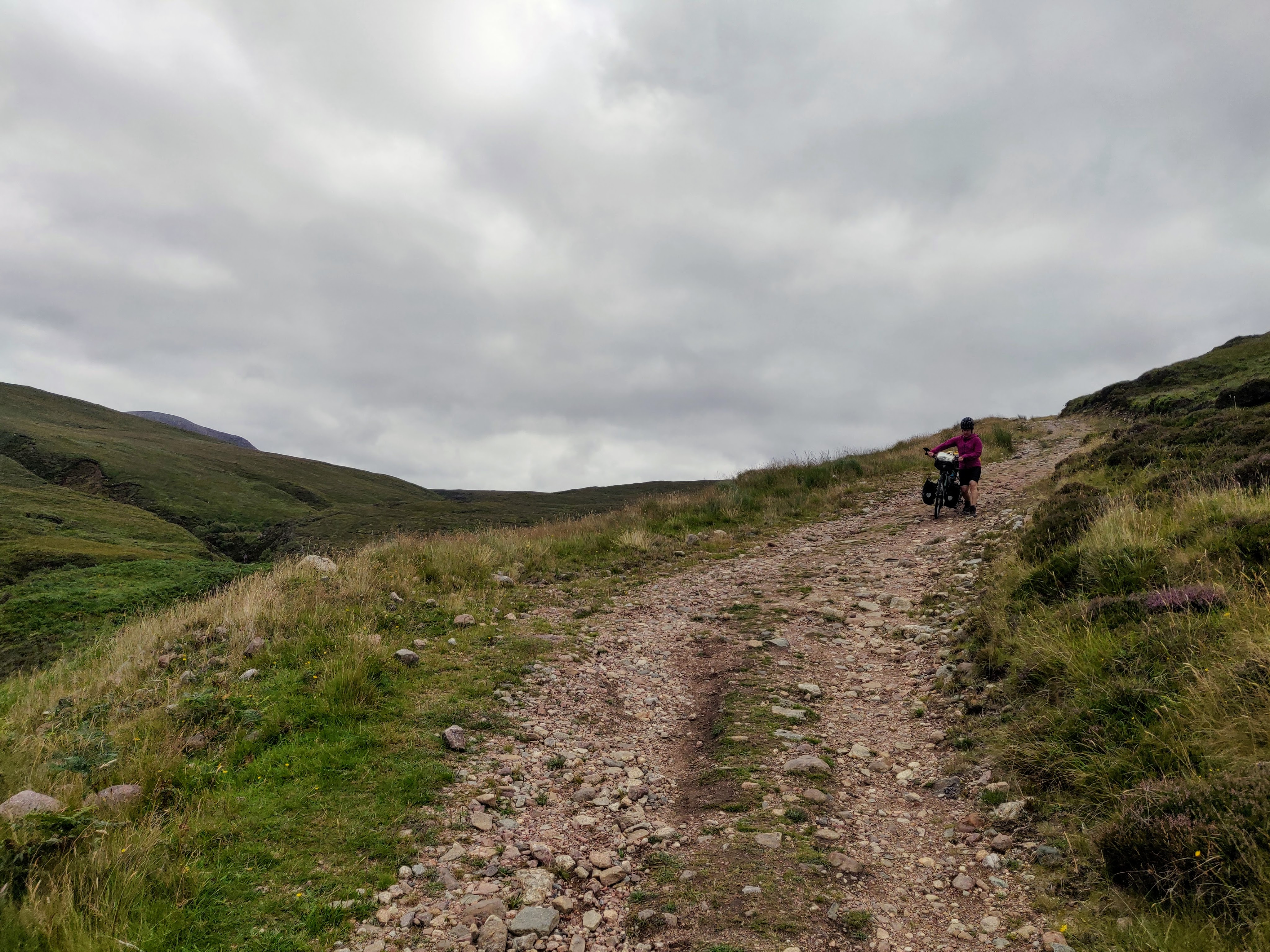
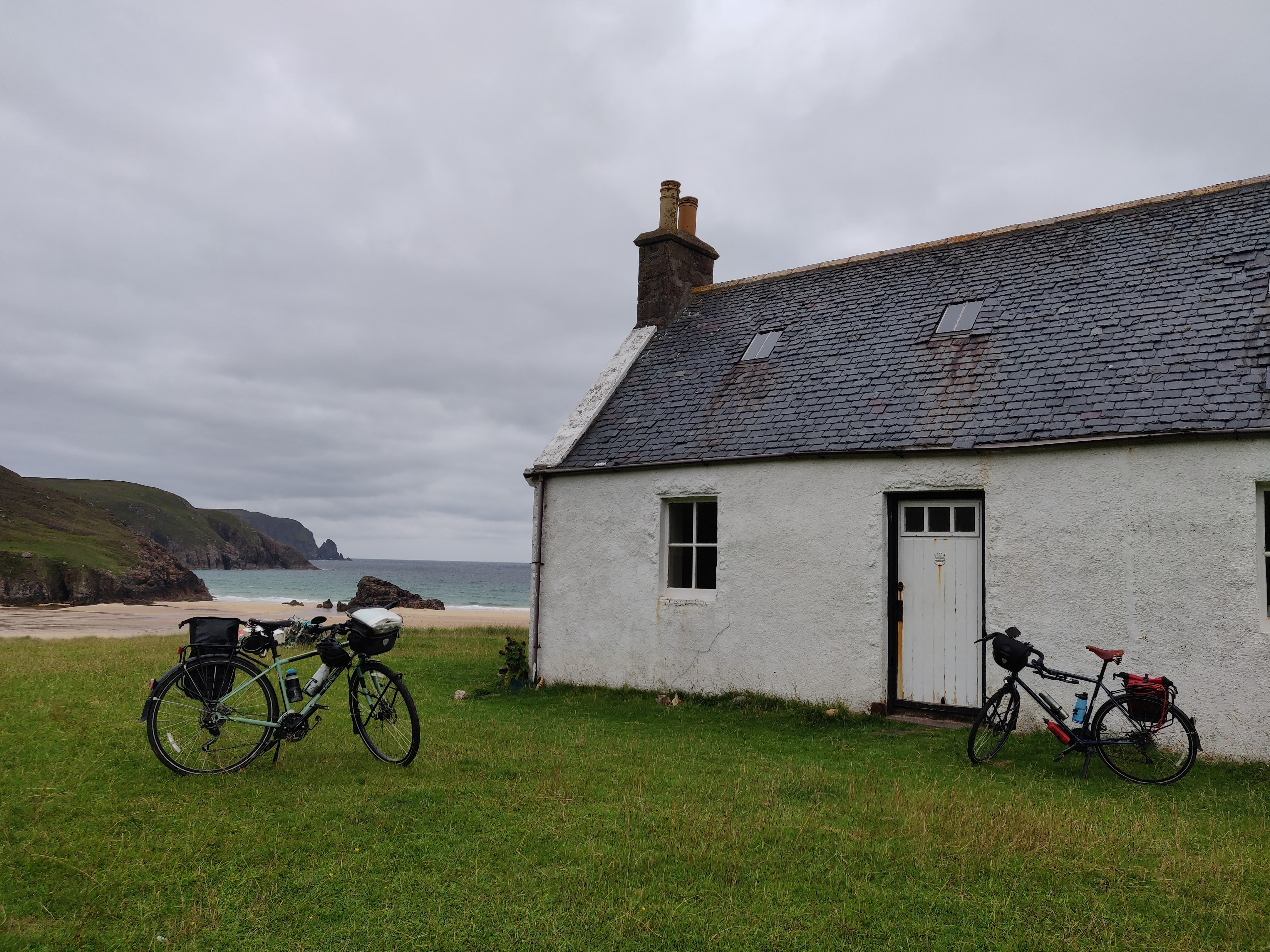
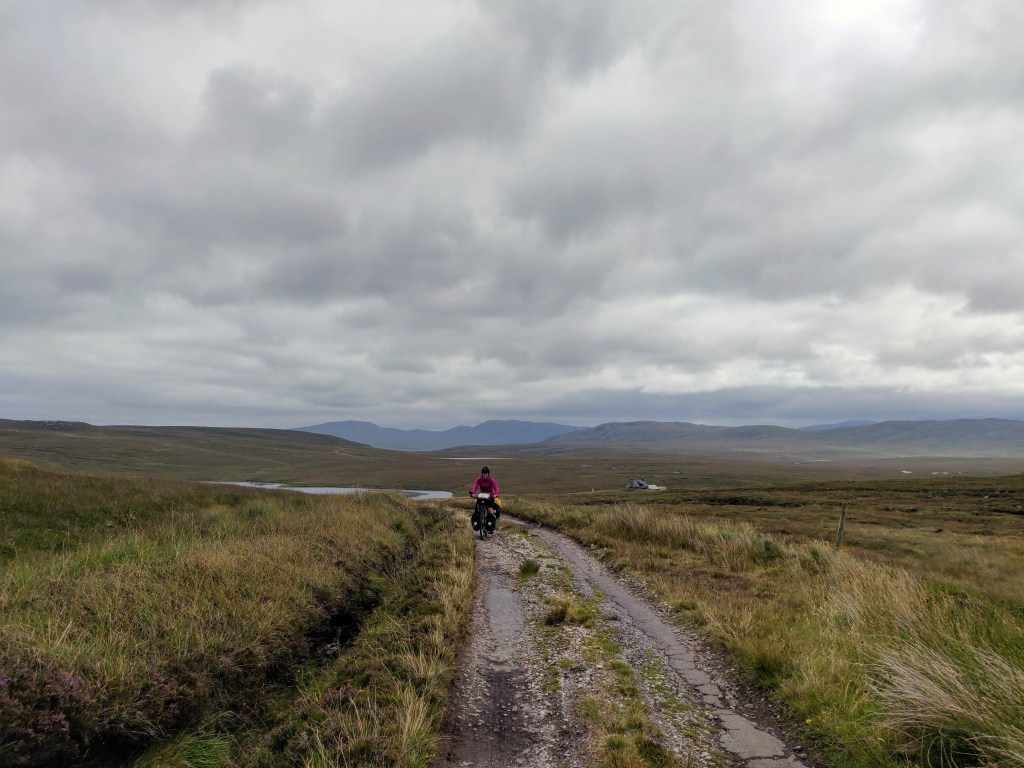
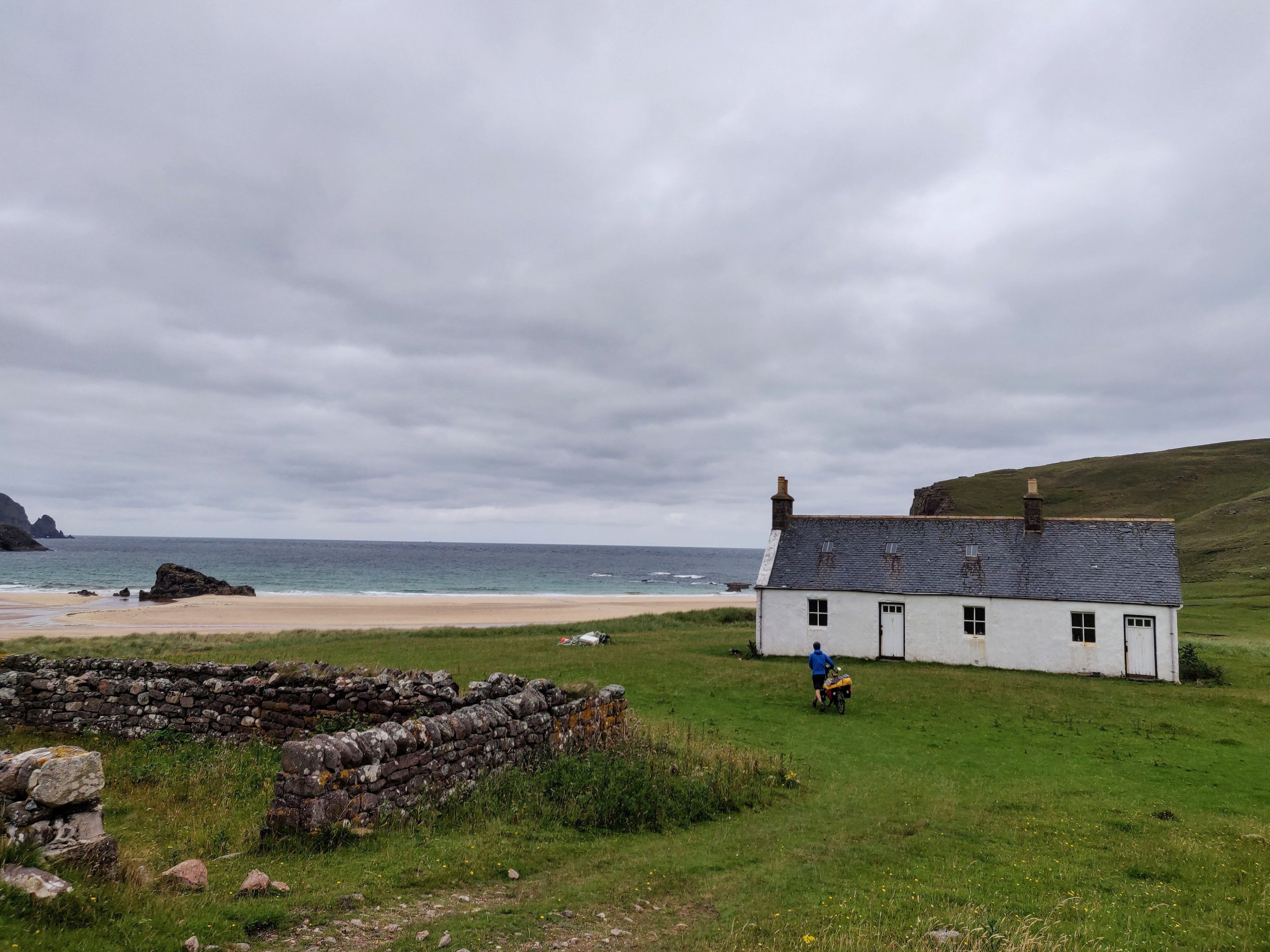
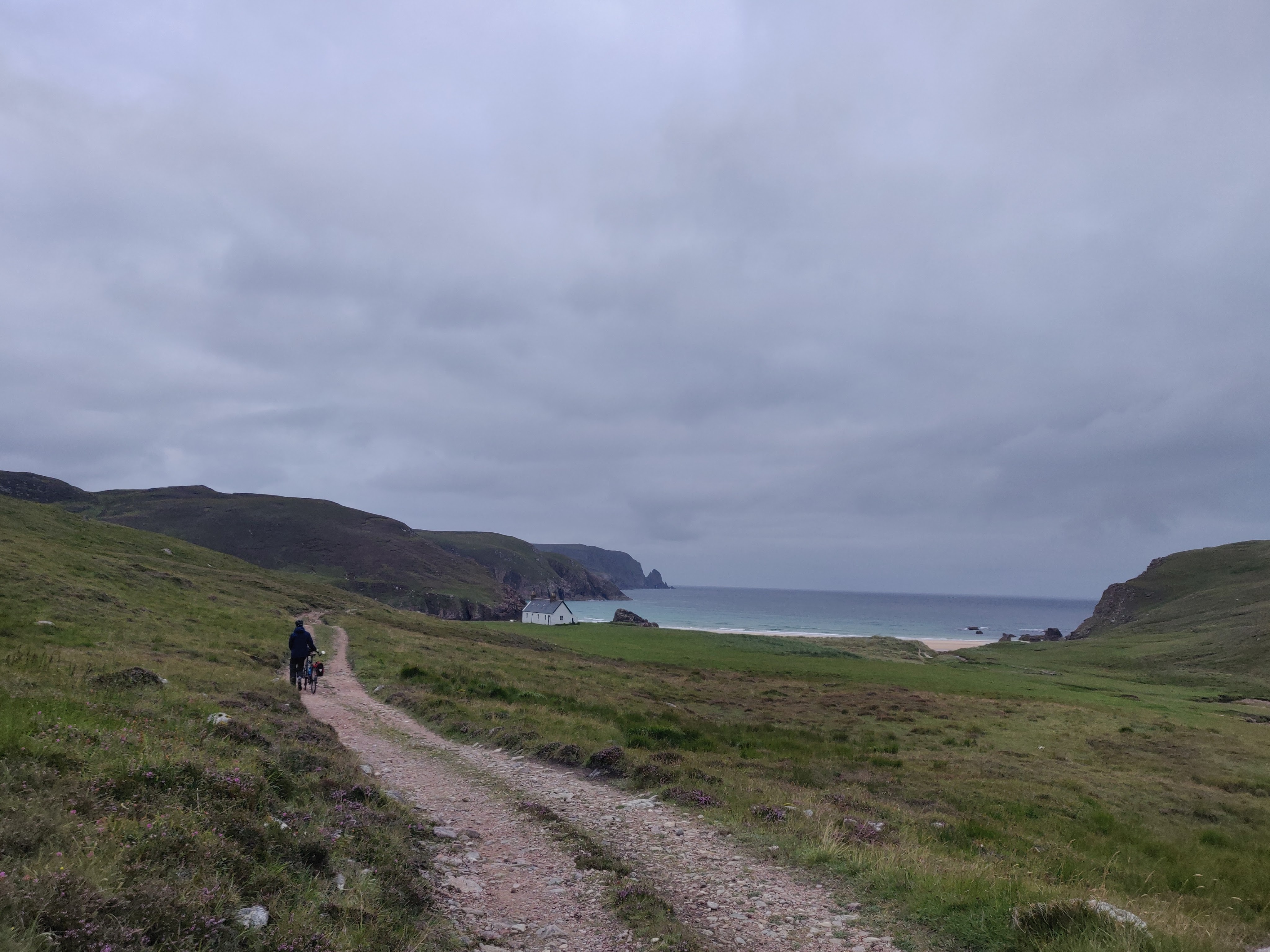
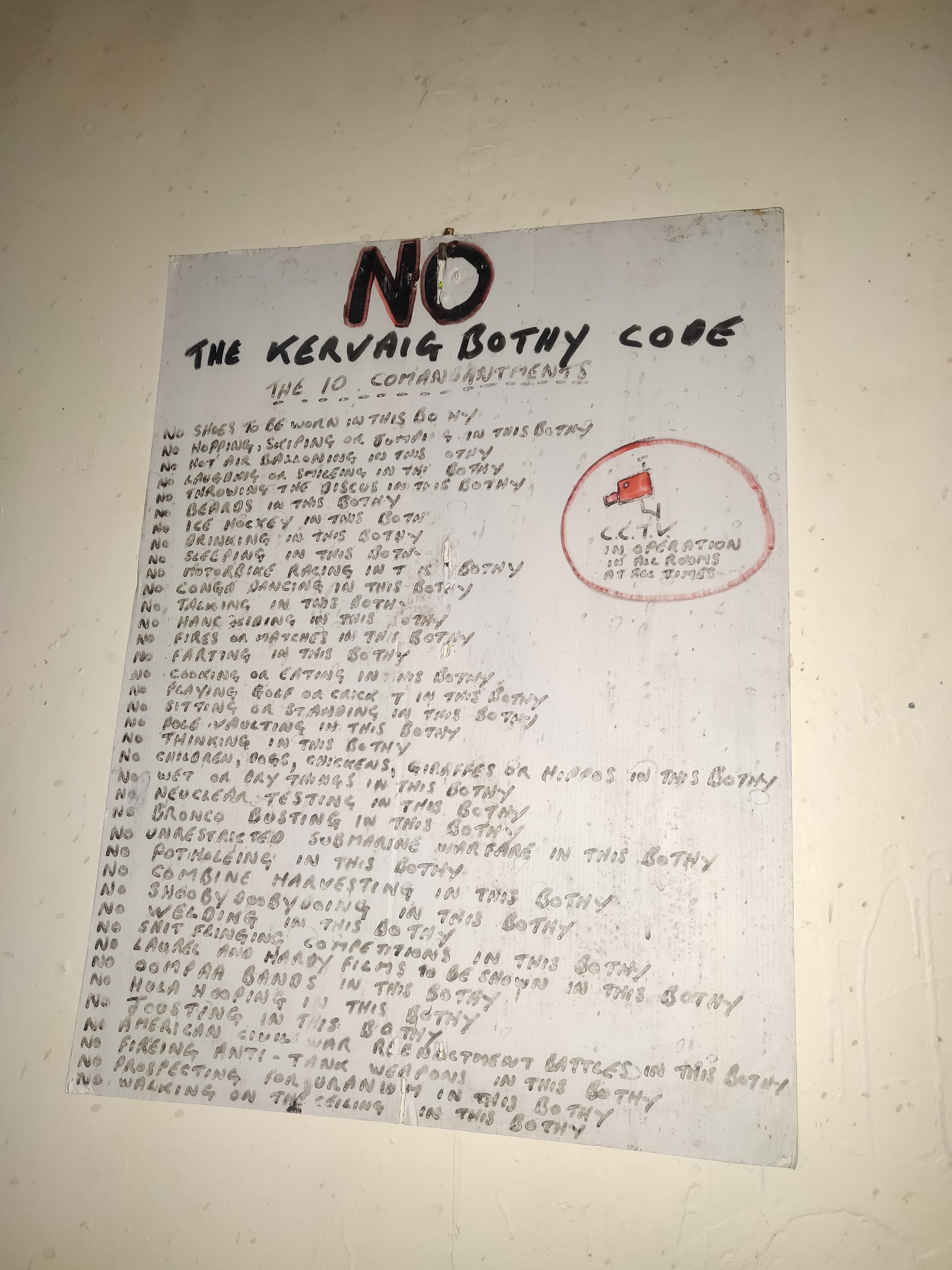
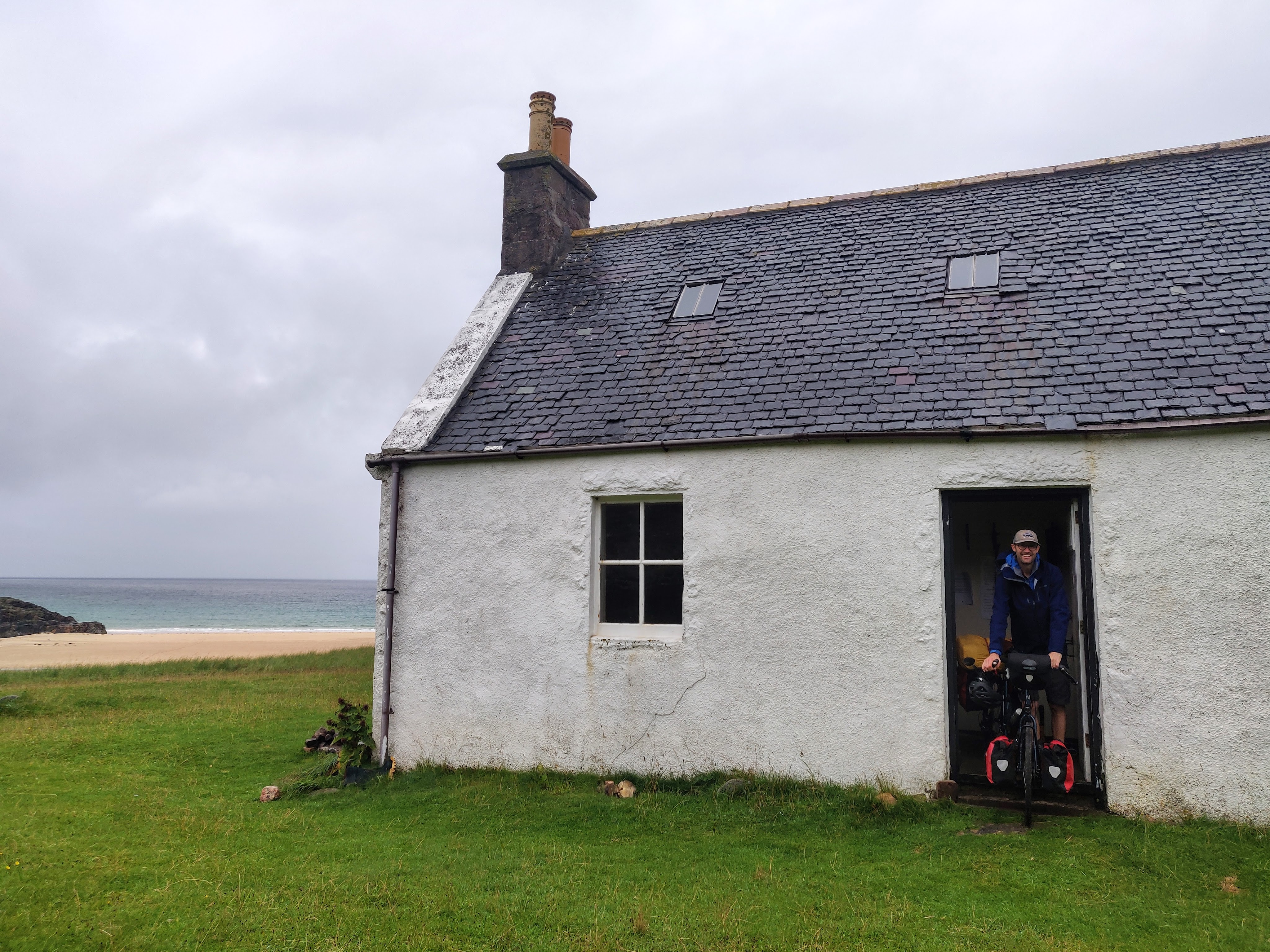
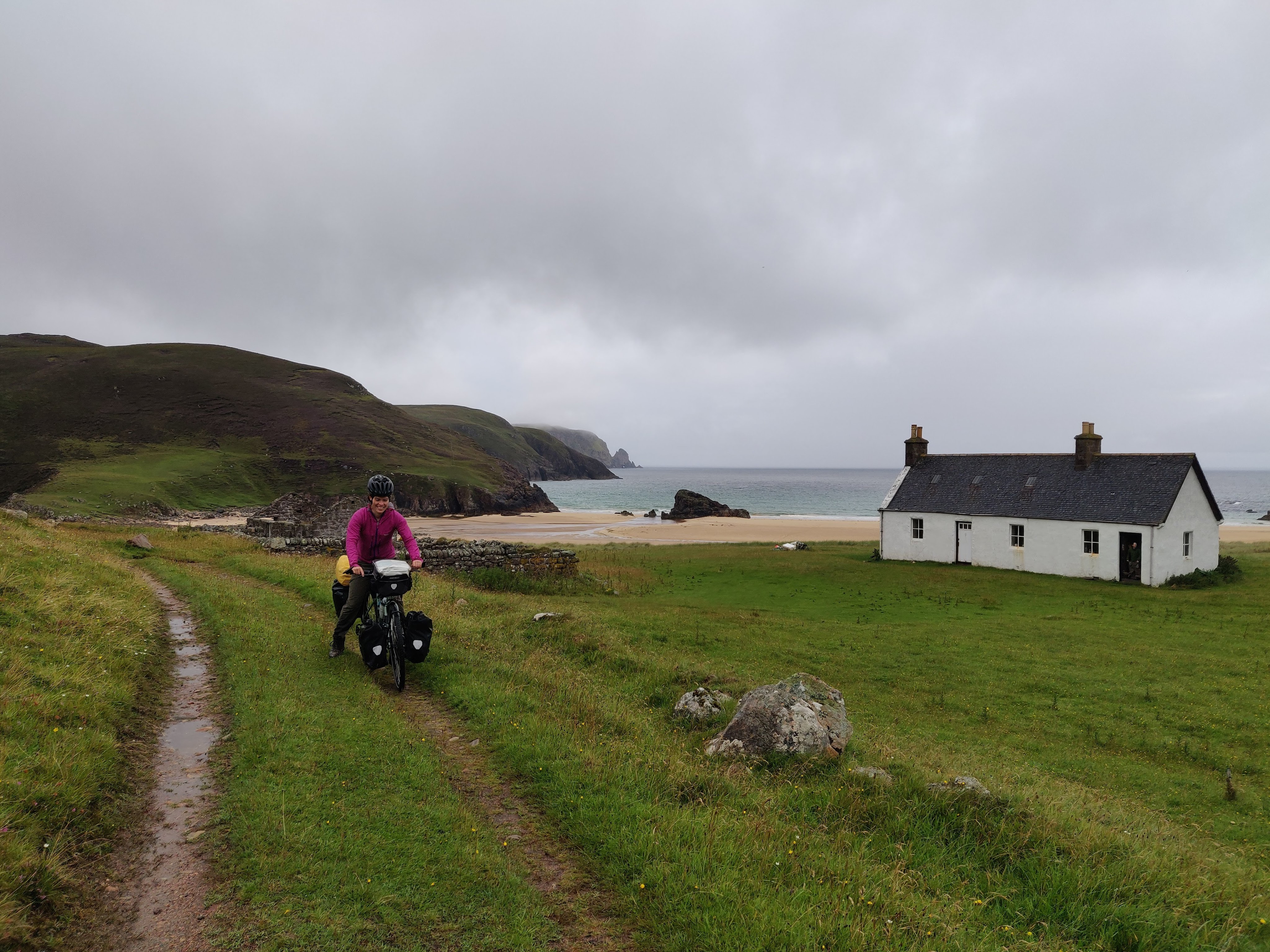
The only sign of human habitation, past the initial few empty crofting houses, was the infrequent signs that it was an active bombardment range and not to stray from the path, or pick anything up. We also saw some returning cyclist, including a family of four with the eldest not over 8 cycling back. We felt slightly less intrepid! Our destination was the Mountain Bothy Association hut of Kearvig, an old white crofting house nestled in its own bay. The trip down to the bothy was a pretty steep downhill with the sweet little house a welcome view. With evidence of another couple in one of the rooms (but no one about) we left the most of our panniers in one of the side rooms, the other downstairs room being the kitchen with fire and table (and plenty of dead heather wood piled up). There was also a three roomed attic leading from the stairs in our room. We were rather glad that there were others staying as the saws, axes and shovel (for the necessary) which are provided across all bothies, plus the isolated nature, did seem like something out of a horror film.
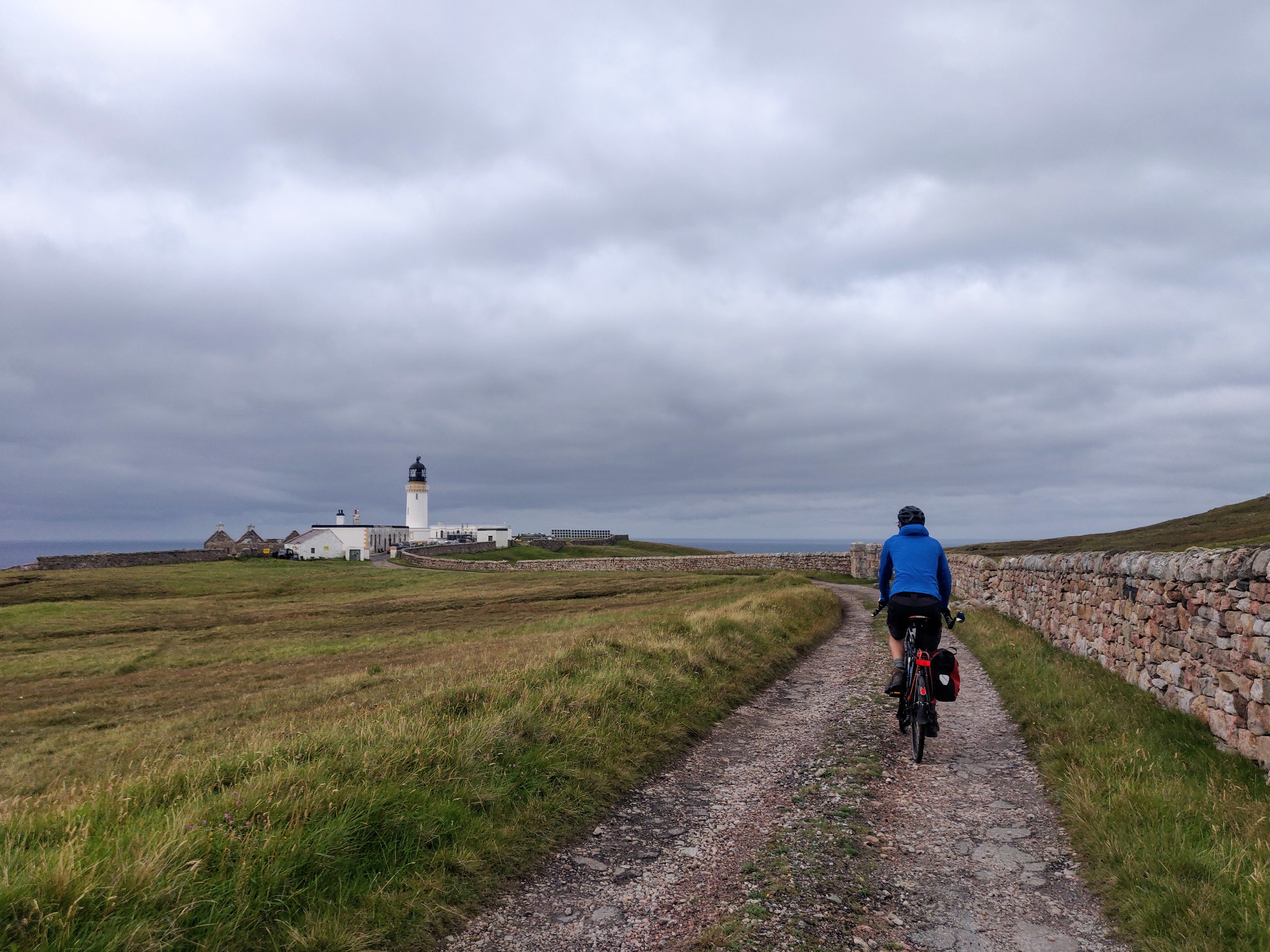
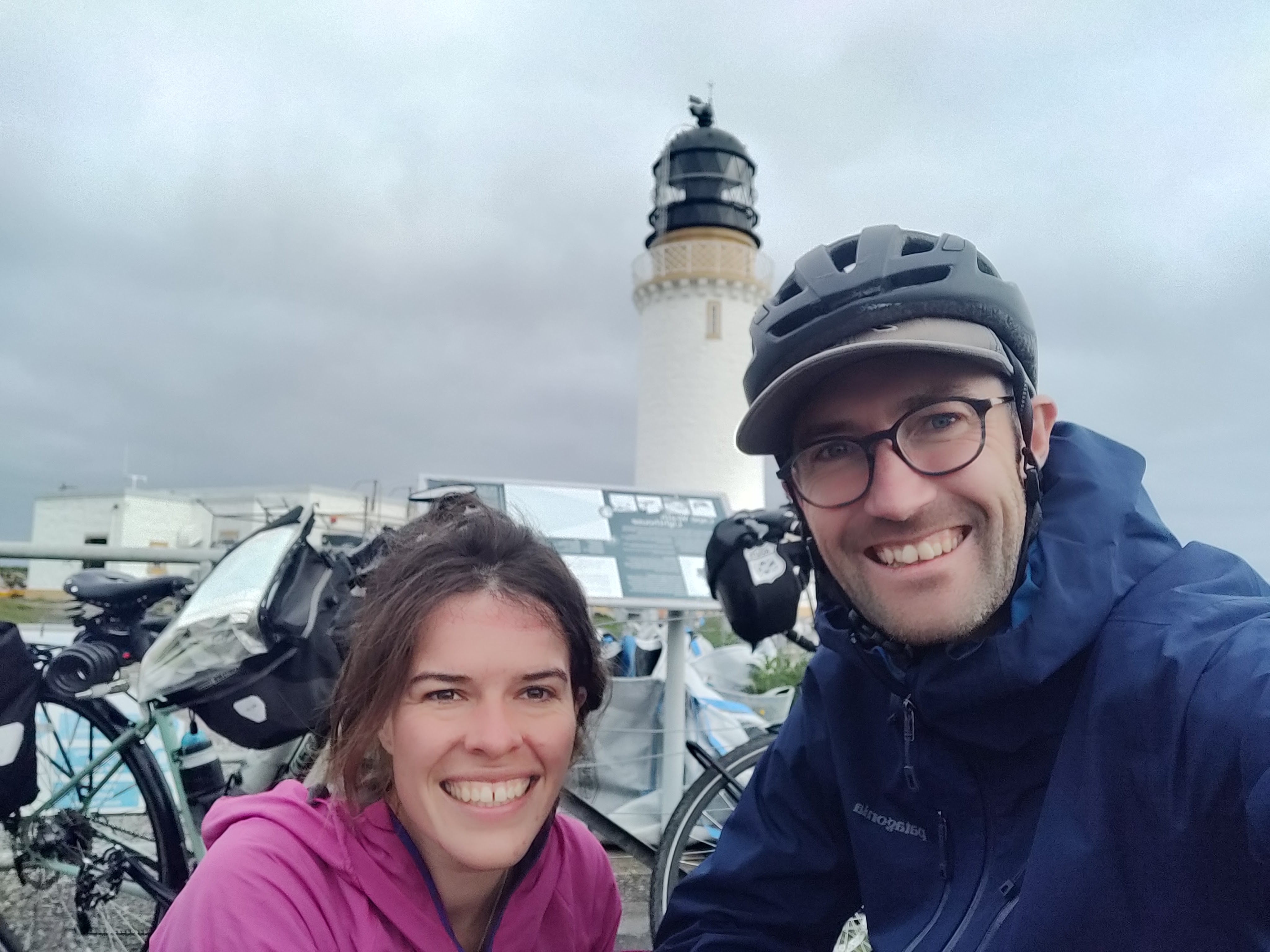
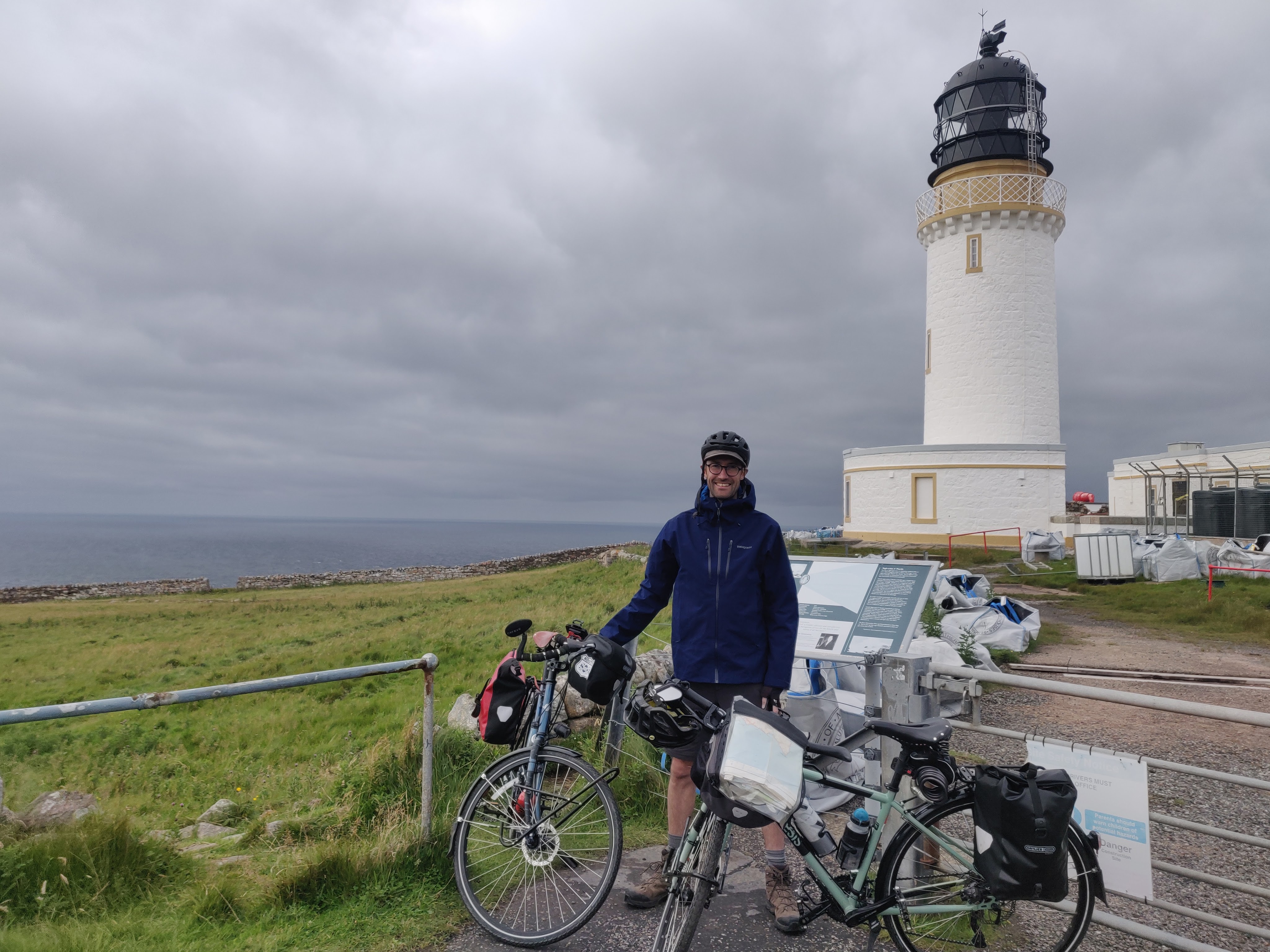
Our bikes skittishly light without the panniers, it was much easier to get up the hill to the main track, than it was to get down. On the route to the lighthouse we saw a herd of red deer on the hillside, our first, as we circled the hillside trying to locate the elusive lighthouse, and the 24hour café in one of the ancillary buildings. The distinctive white lighthouse with yellow edging was a beautiful sight, and with photos of it in the background, the necessary proof to join the fellowship, we joined the couple in the café, and the missing residents from the bothy, for a beer. The couple, a research physicist and Mexican chemistry teacher, had walked up that afternoon and had just ordered a curry. Beers finished, and over an hour later – and no curry appearing – we headed back down for the dinner we had left at the site, as they went in search of their promised curry.
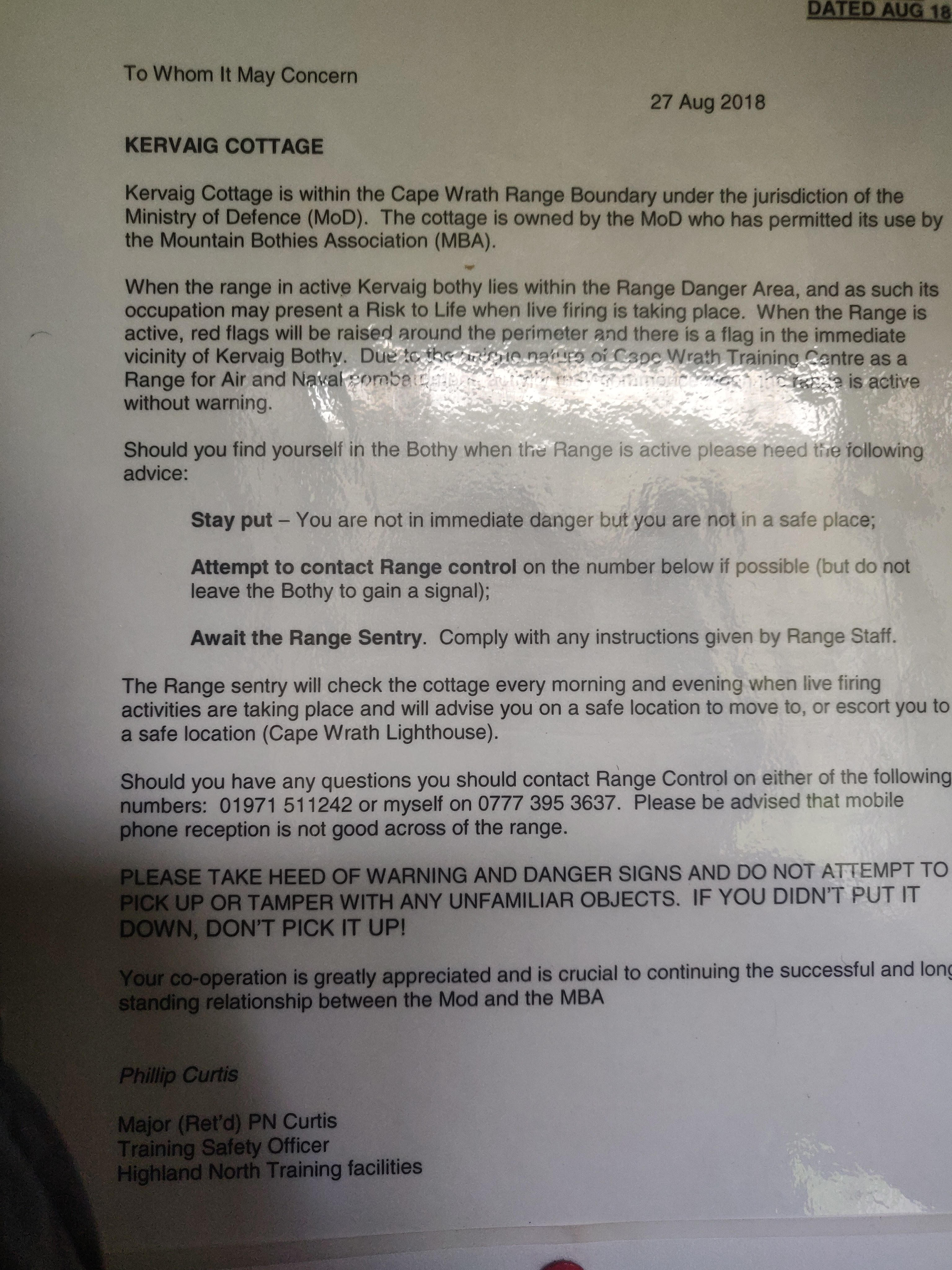
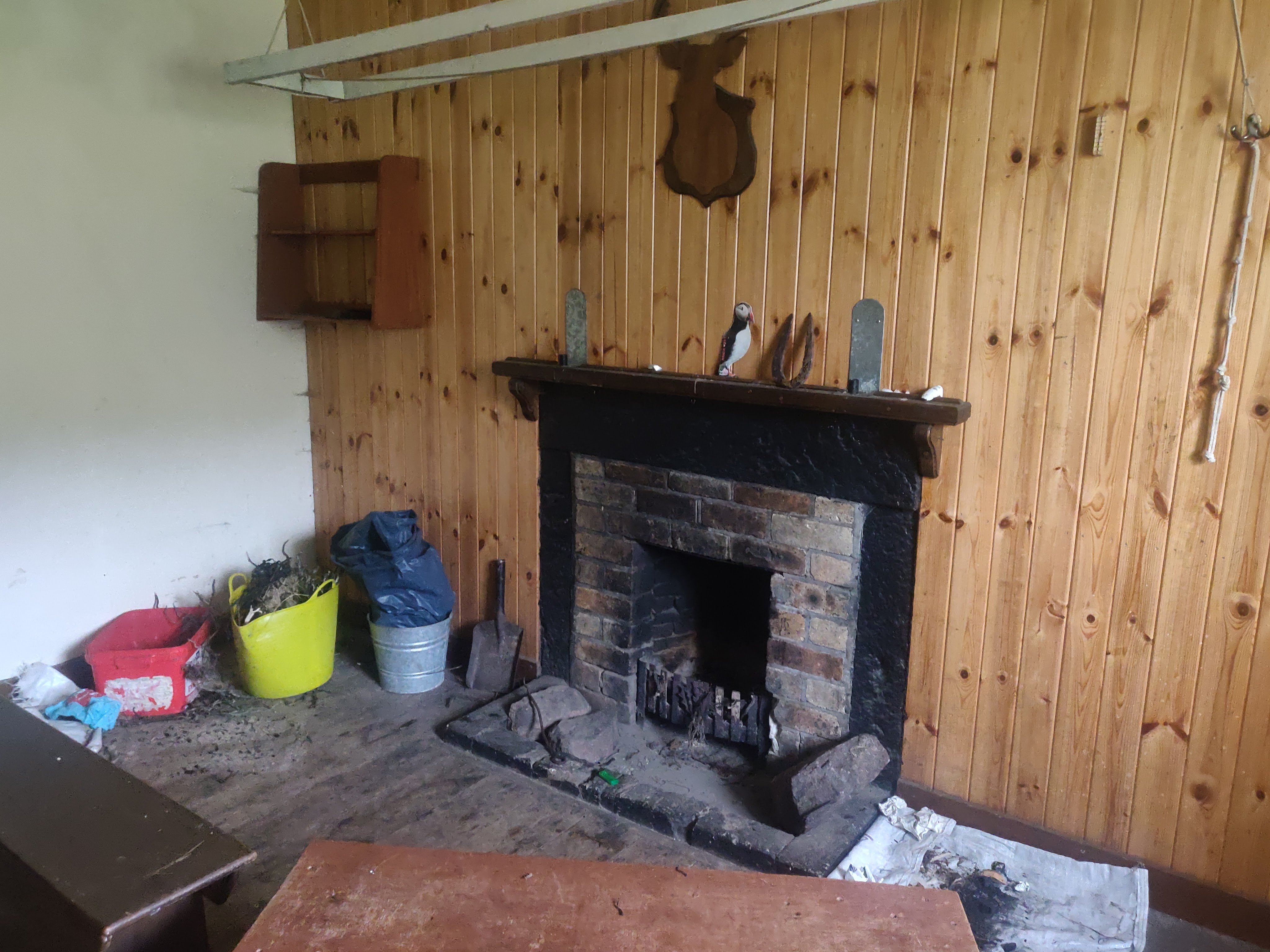
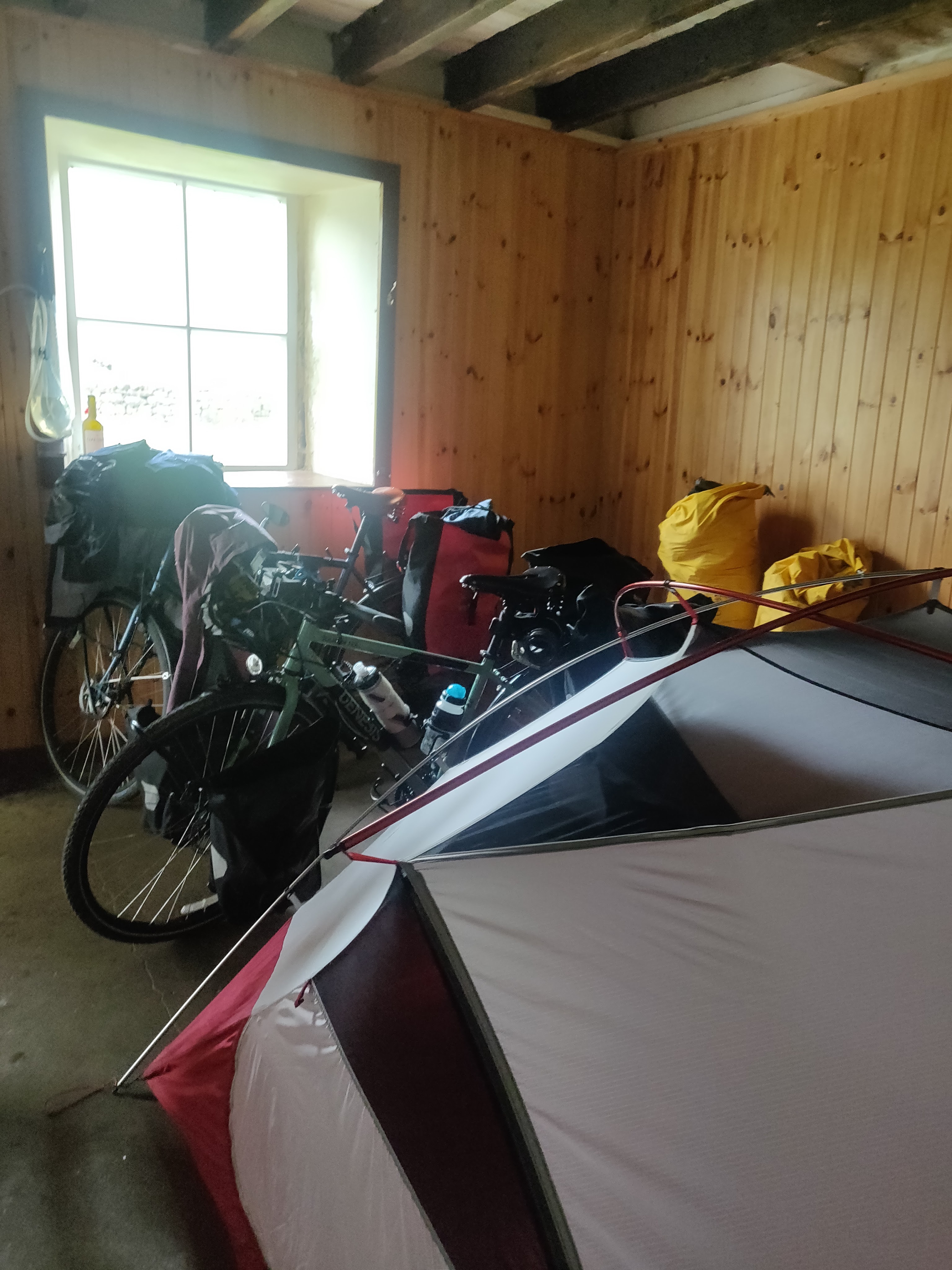
Two hours later, dinner finished and washed up, inner tent erected (we had seen a mouse), they were still yet to appear and it was on the verge of darkness. We looked up the road but expected they had decided to stay at the bunkhouse at the lighthouse. We were disappointed as we had hoped to have started a fire and had some of our whiskey with them and continue our chat from the café. As I was brushing my teeth, out of the darkness, and not from the direction of the track, a figure emerged from the heather. Without glasses, and not having quite got over the horror movie script, it was pretty unnerving, but the damp figure was I fact our friends, who had taken a ‘shortcut; round the hillside, which had involved a stream crossing, tramping through heather and a midgie attack – they were still on better terms than we would have been had that happened to us! Fire started, and whisky open, we were settling down until a tick was found, then the second, third, fourth… our new friends were covered in them and were stripping off their clothes to get rid of them! We hadn’t quite appreciated how small ticks were and we didn’t stay close to the infestation. Fire and whisky abandoned they retired to their room for close tick inspection! Wonderful. We had a much more pleasant time before bed as we stepped outside with our headtorches catching the eyes of a herd of deer that had come down to feed next to the bothy to the left, and to the right the intermittent light of the hidden lighthouse lighting up the sea with the sound of the lapping waves on the shore.
The cycle back to the ferry was pretty damp and we were looking forward to the warm showers at the campsite. We timed our arrival at the same time as the minivan which had picked up the couple and the four girls that had stayed in the attic of the bothy, so it was a full boat on the journey back.
The next day we designated a rest day. We therefore declined kind offers of Richard to look after our belongings in the car so that we could walk to Sandwood Bay (a recommendation) as the cycle and walk were pretty hefty. Having spotted Smoo Cave on the route in to Durness, we walked off to explore that, and an abandoned clearance village, which we thought was close by. Smoo cave was the biggest combination of sea and river water cave we had ever visited. Evidence in shell middens had shown it had been occupied since at least the time of the Vikings and used for boat buildings- it was big enough! Although the recent rainfall meant that we couldn’t have a guided tour into the deeper caverns the first cave had a huge blowhole, the second a beautiful waterfall.
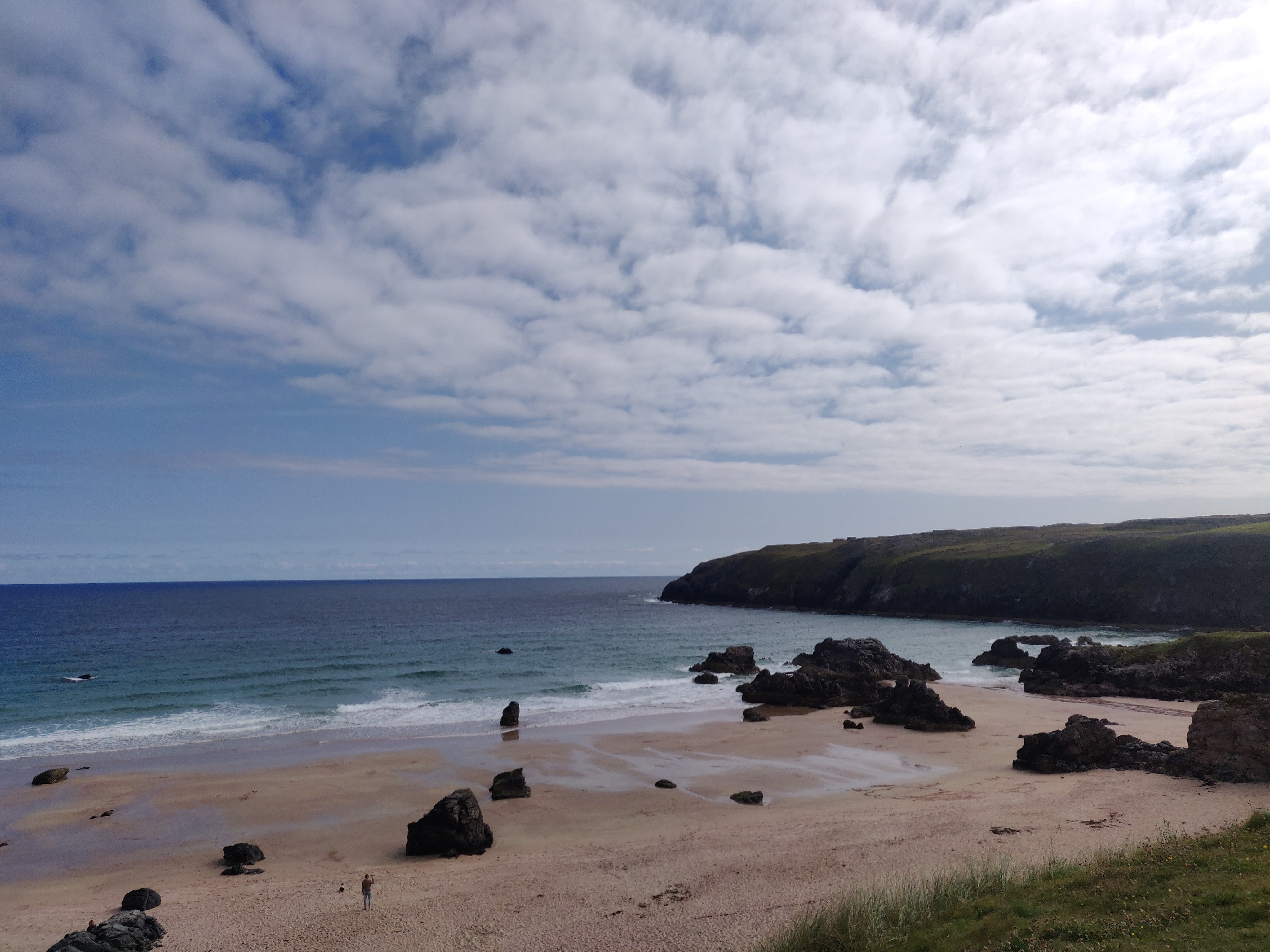
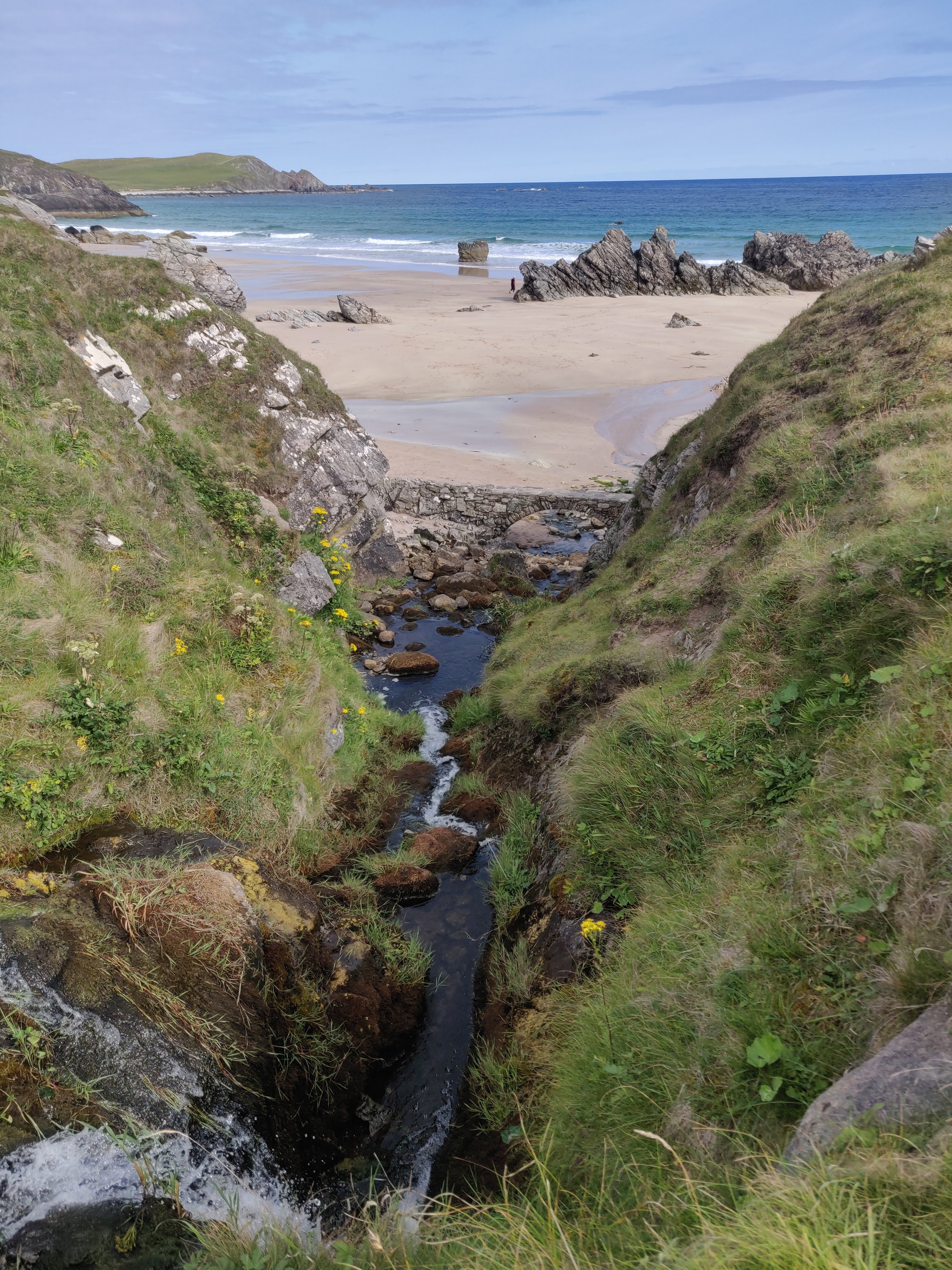
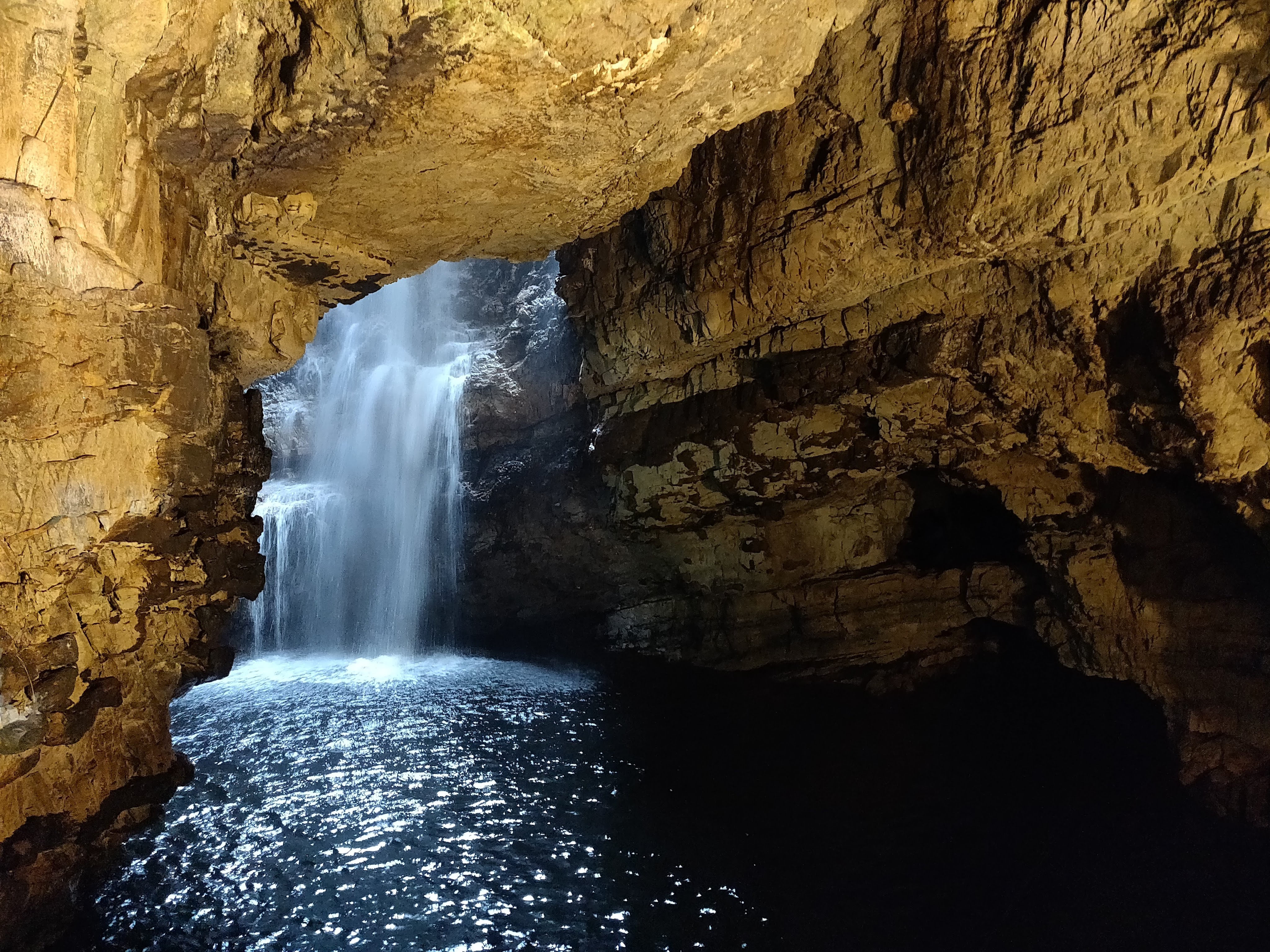
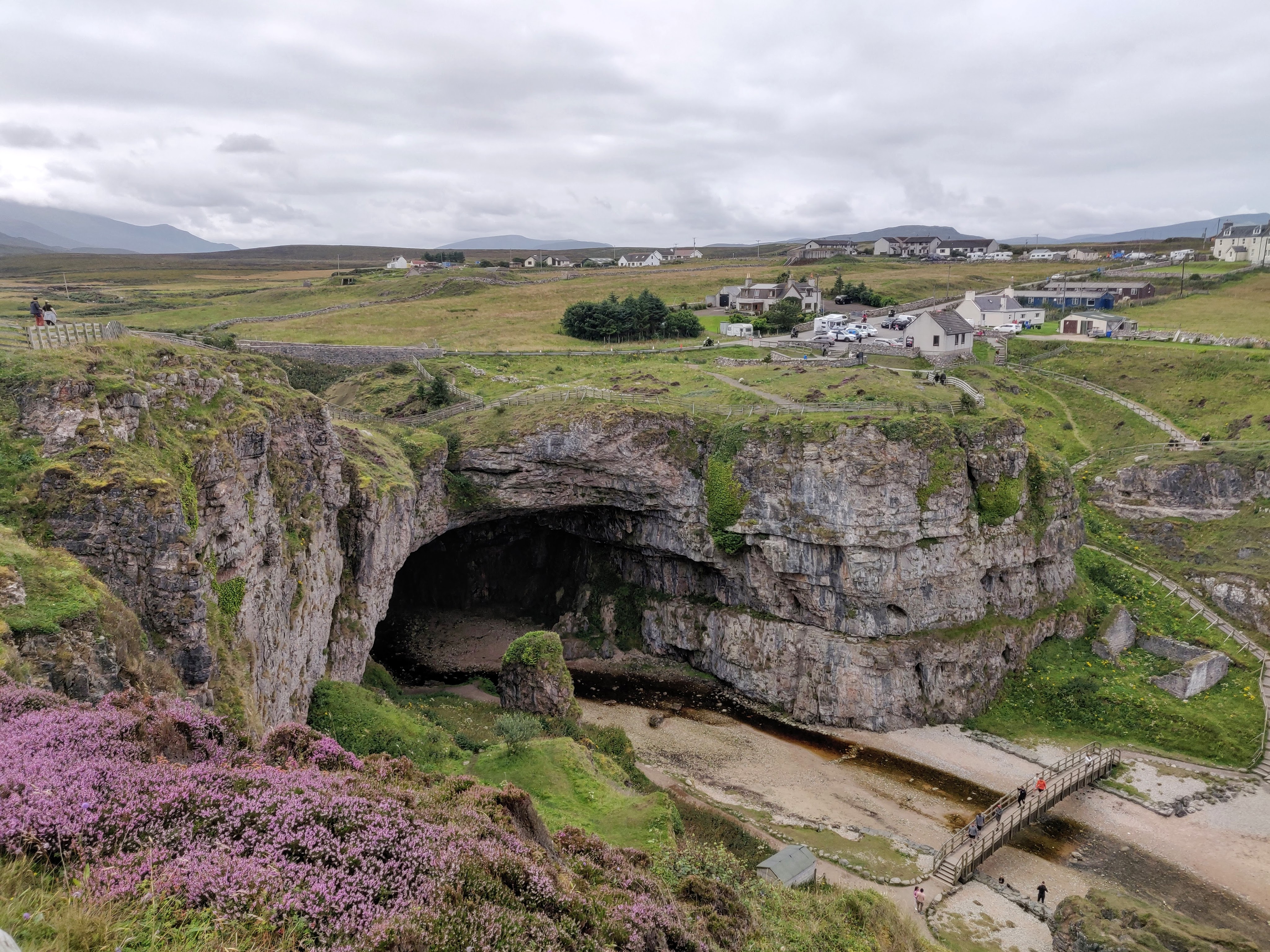
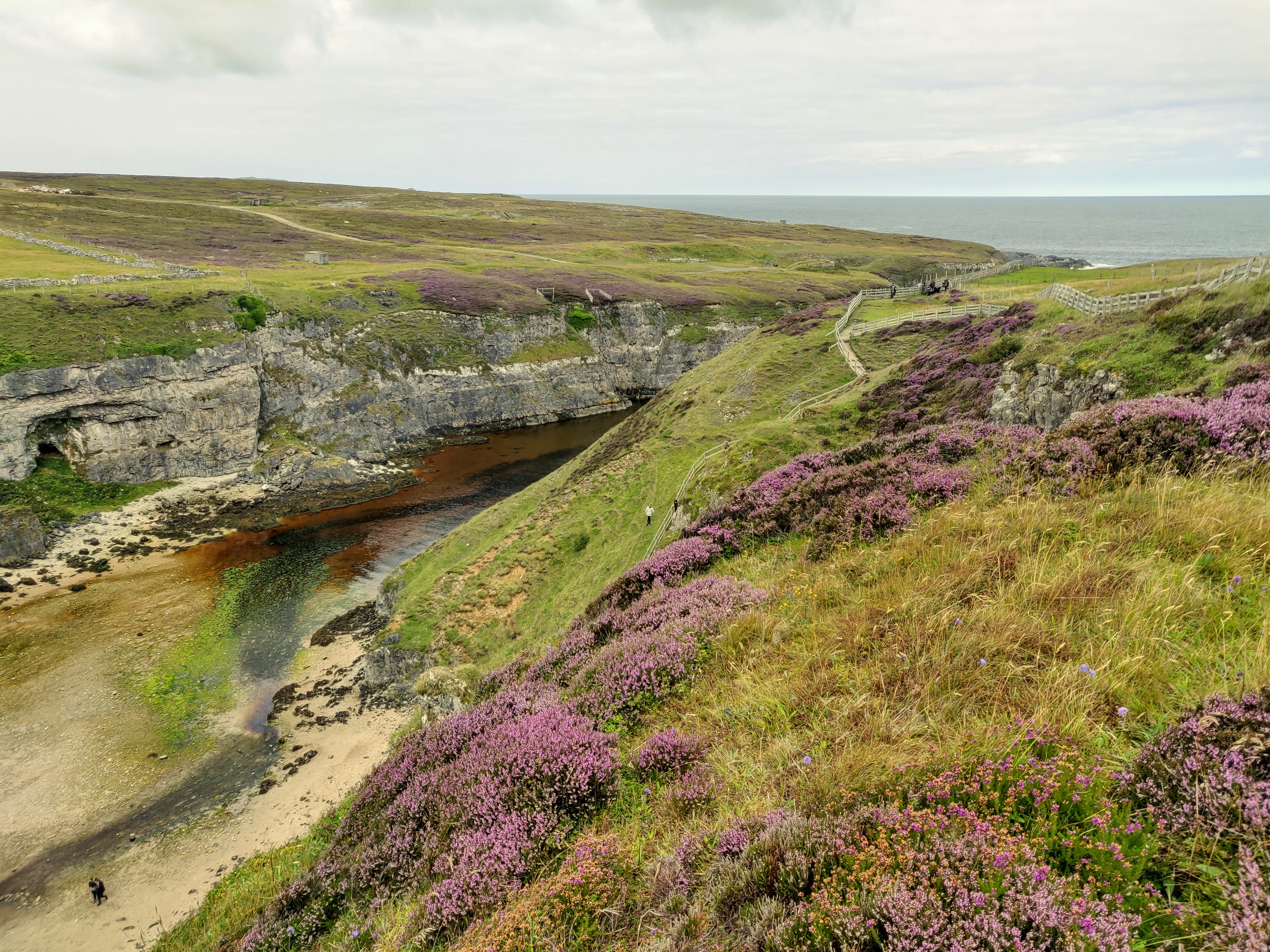
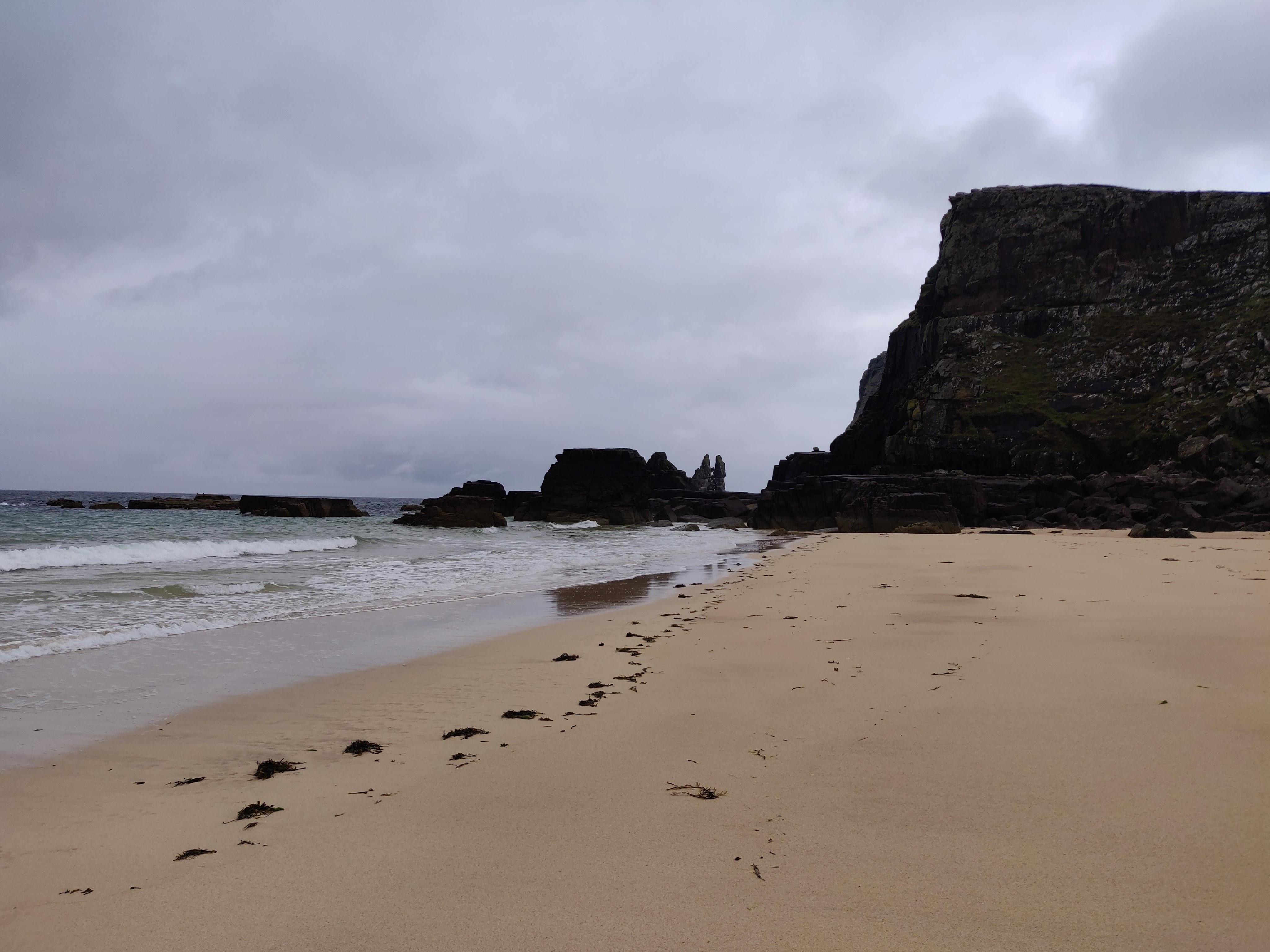
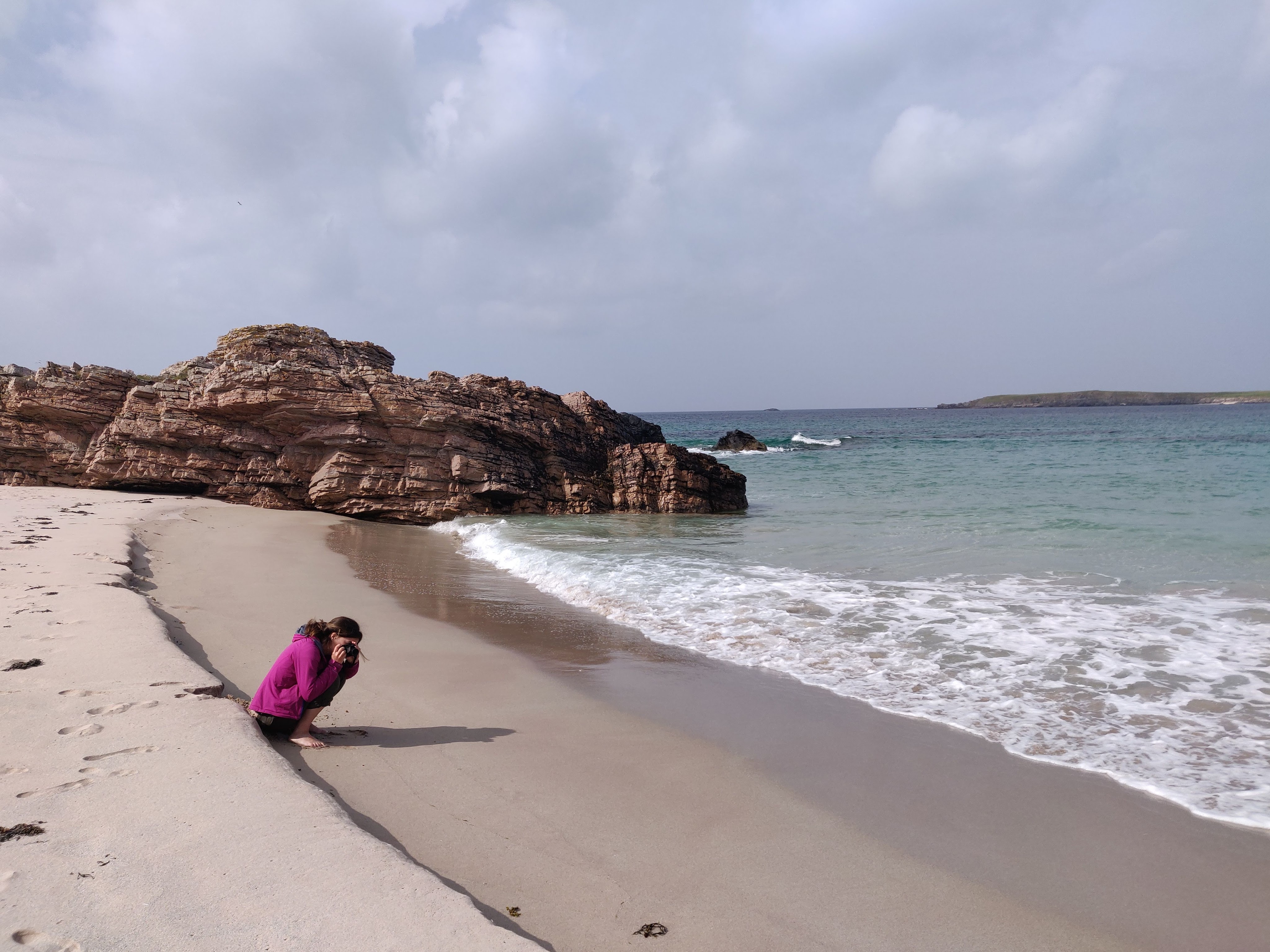
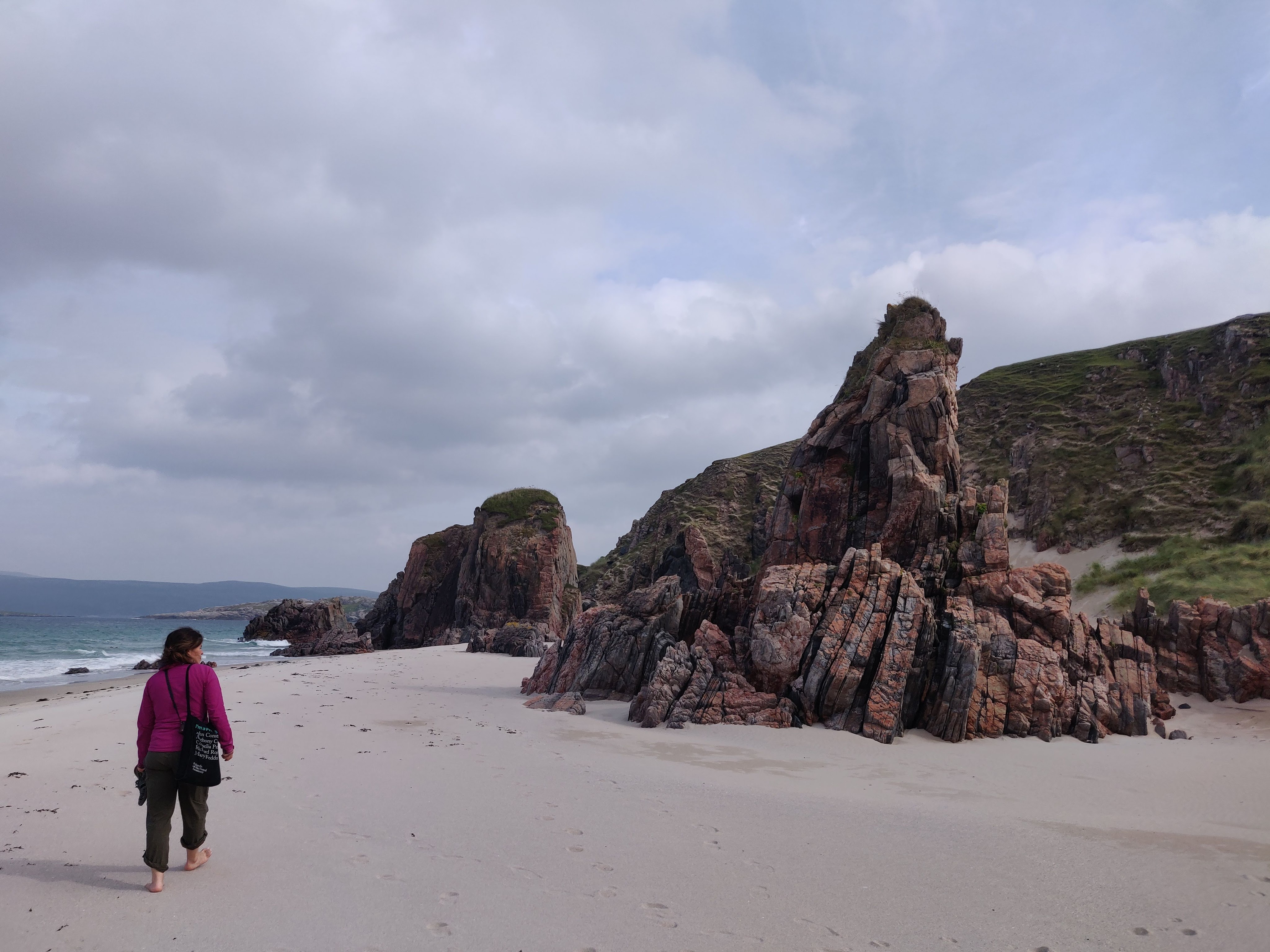
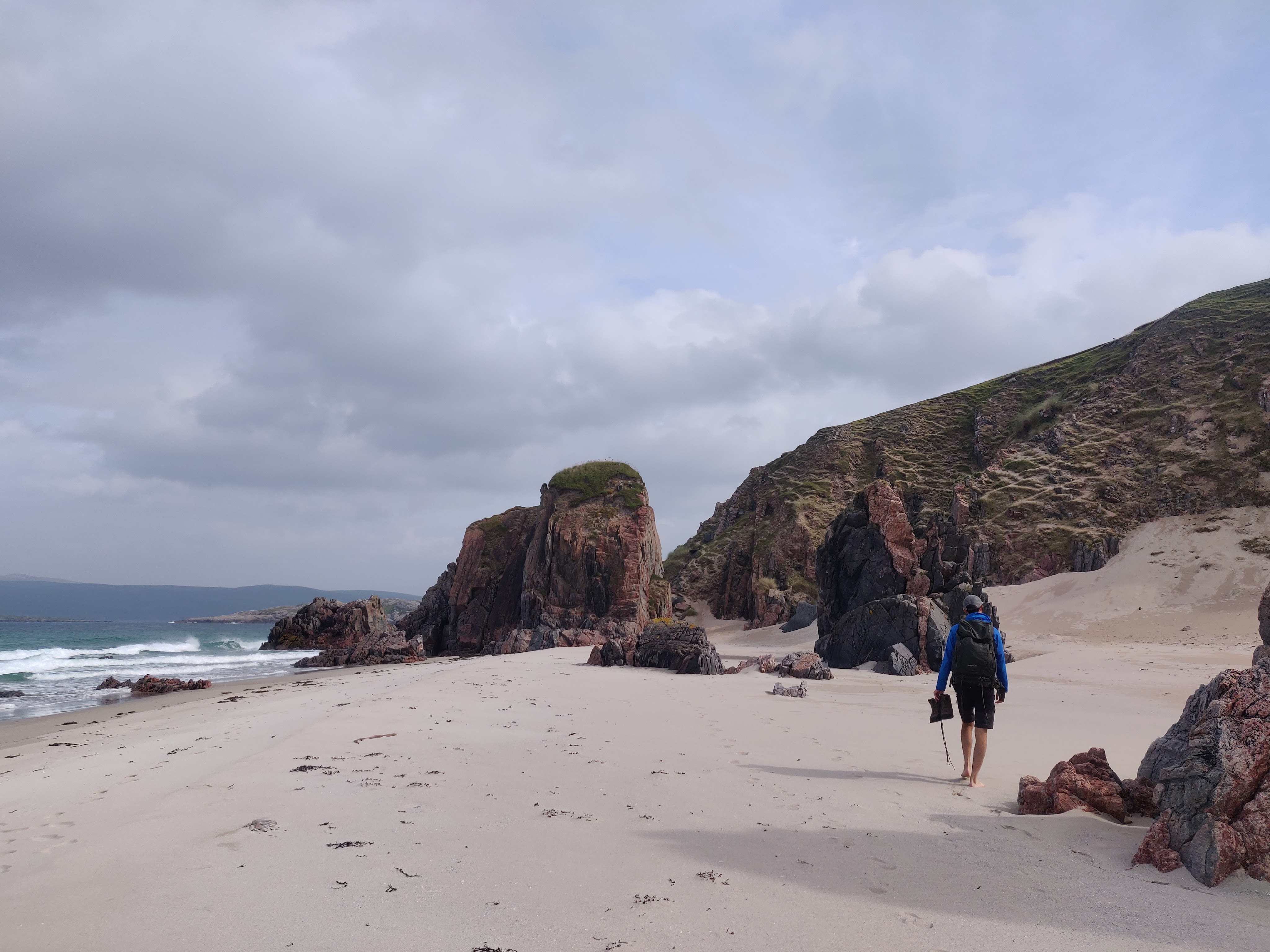
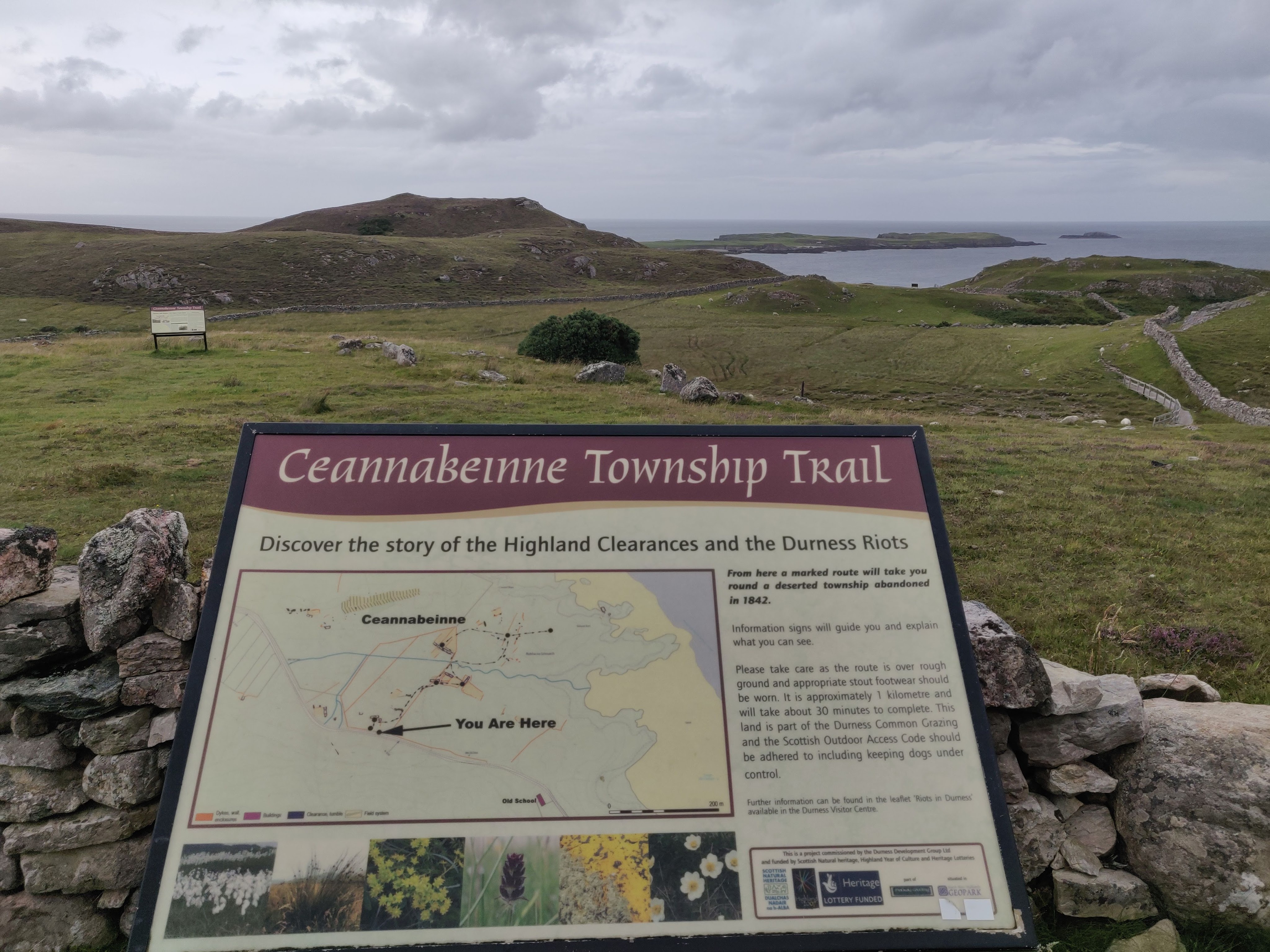
Walking up the cliff sides we were able to walk up the stream to see the waterfall source. We also meandered around a sheep field to try and continue our coastal walk – instead we walked in a rather large loop. Back on the road and on the way to the clearance village, it turned out that it wasn’t as close as we had thought. Once we reached it, the clearance village was both informative and sad – truly horrendous landlords who destroyed a community (although with resistance) for short term profit. By the last side board, we spotted a sheep track leading down to a deserted cove with beautiful sand – it pays to be curious! It also meant that the 18km we walked on our rest day was worth it – but we decided to be much more careful for future rest days as we tramped back up the road.

 Pedalling_Patagonia