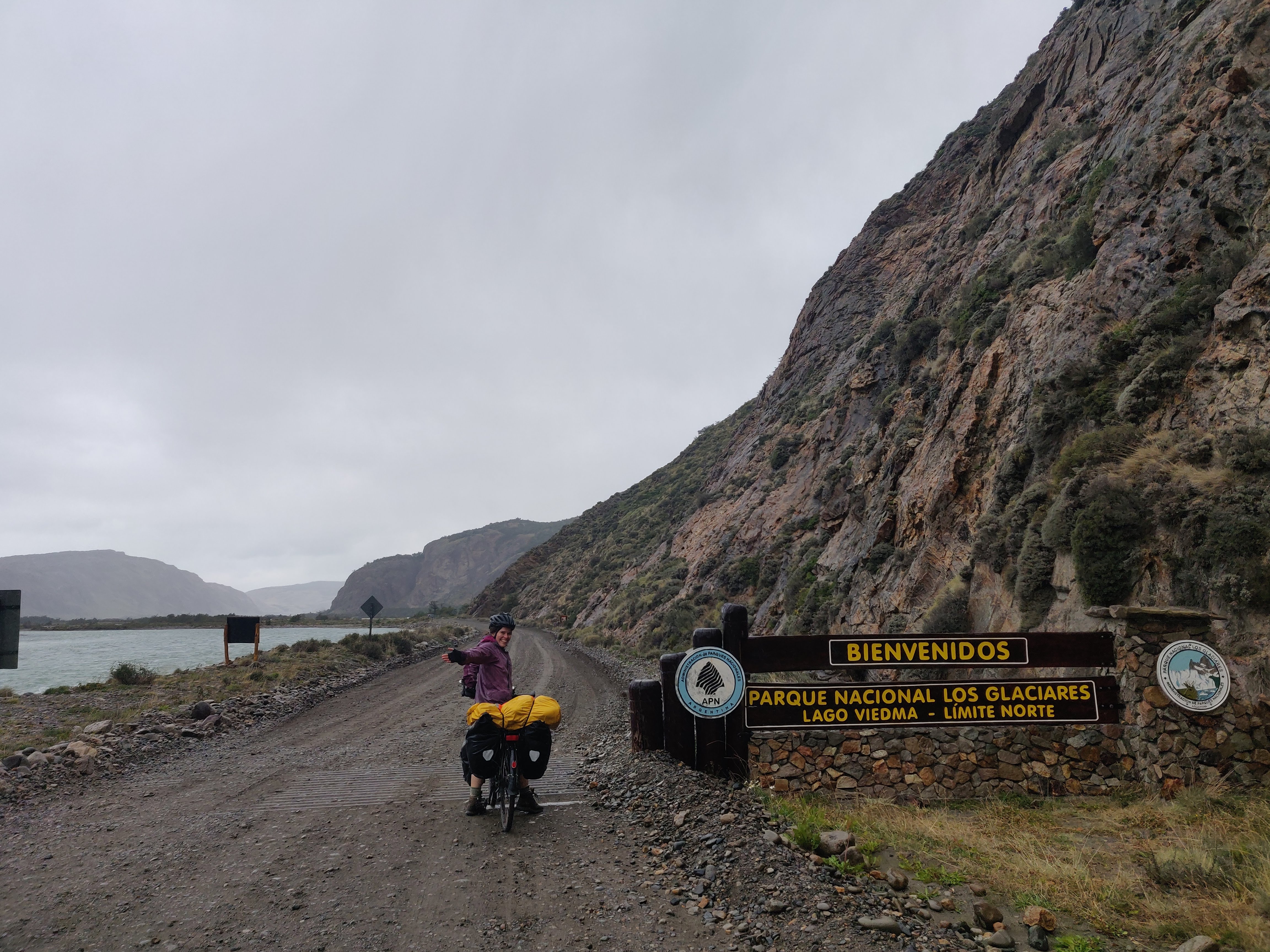
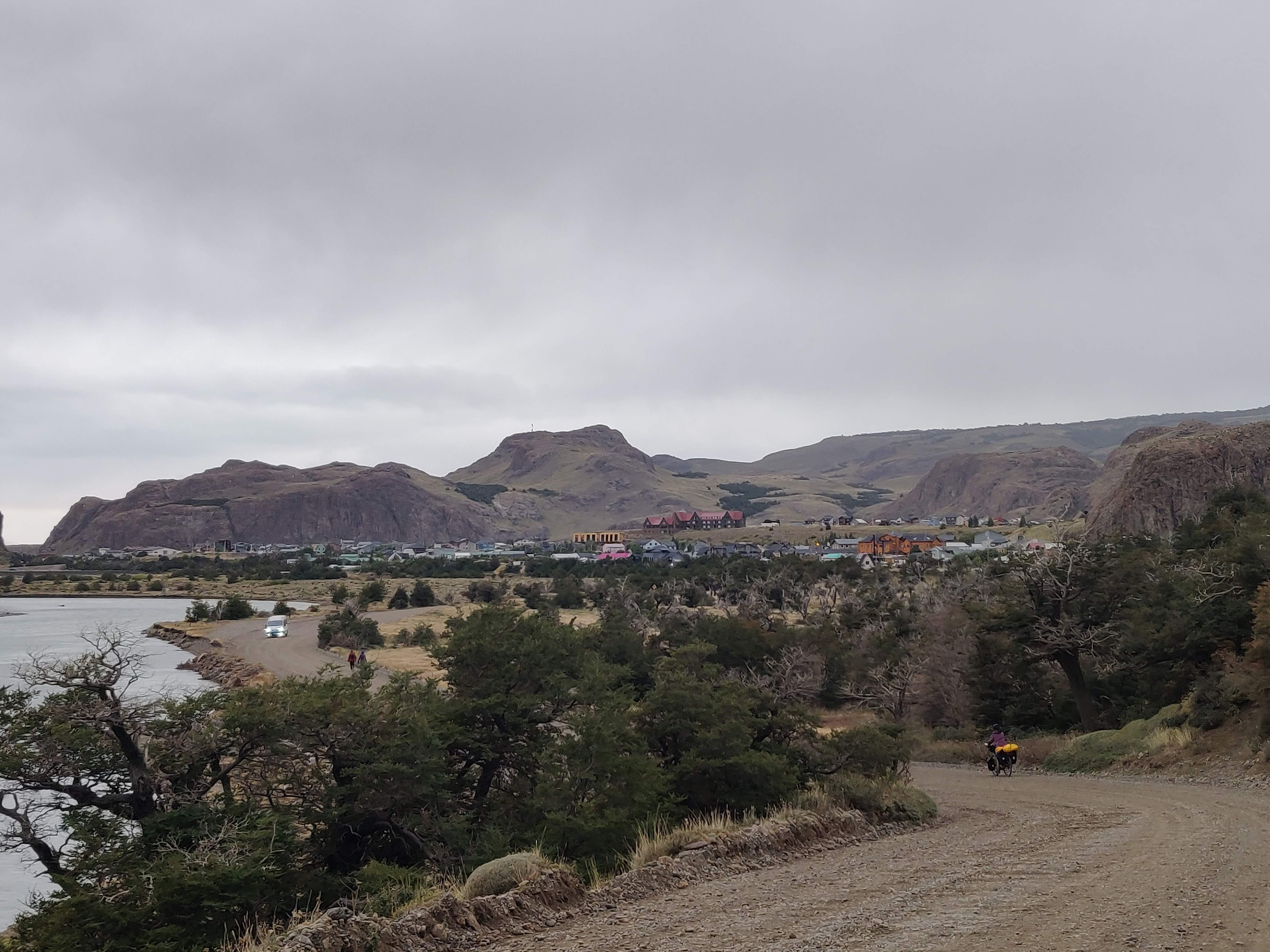
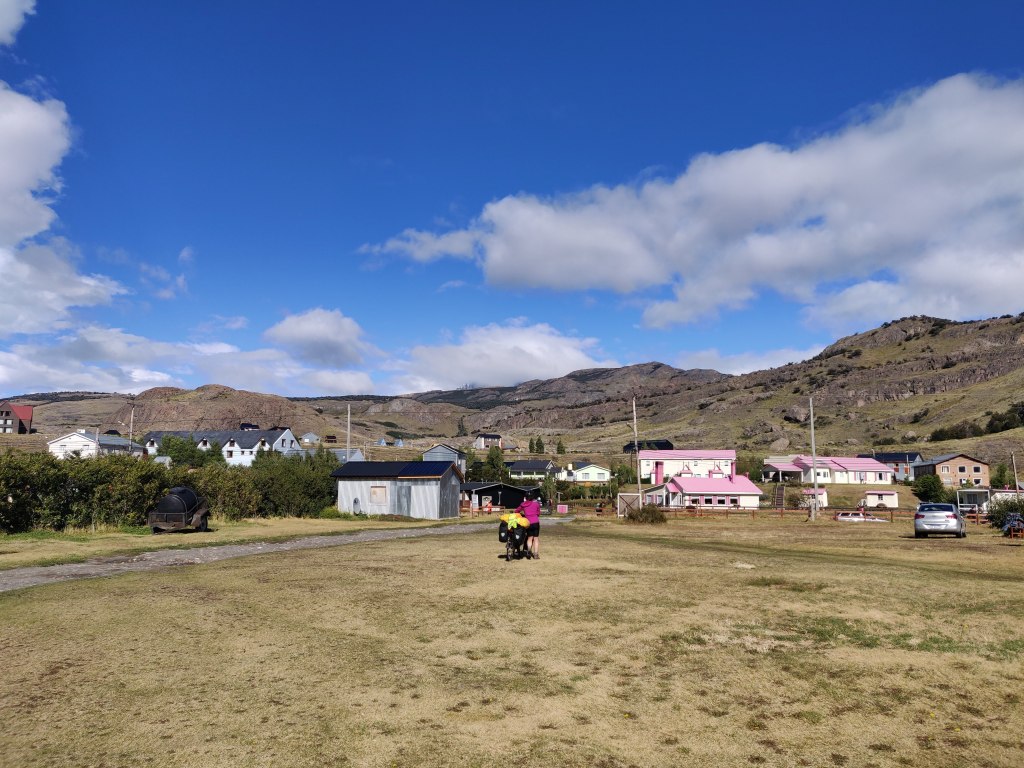
On the afternoon of Friday 6th March we rode into Los Glaciares national park after a tough 36 km ride along the Las Vueltas braided river valley from the southern shore of Lago del Desierto. Though mainly downhill, the ripio was awful, and a fresh cross-wind had blown cold rain across us for most of the ride. The very welcome site of El Chalten appeared soon afterwards, stretched out along Ruta 23 like a frontier town of the wild west, our first Argentinian town since Trevelin on 25th January. Riding along the main street rain and cold was soon forgotten as we passed artisan breweries, parrila restaurants, signs for grilled fresh fish, pizza ovens and even a wafleria. Robbie had to be dragged down to Camping El Refugio to pitch our tent without eating first.
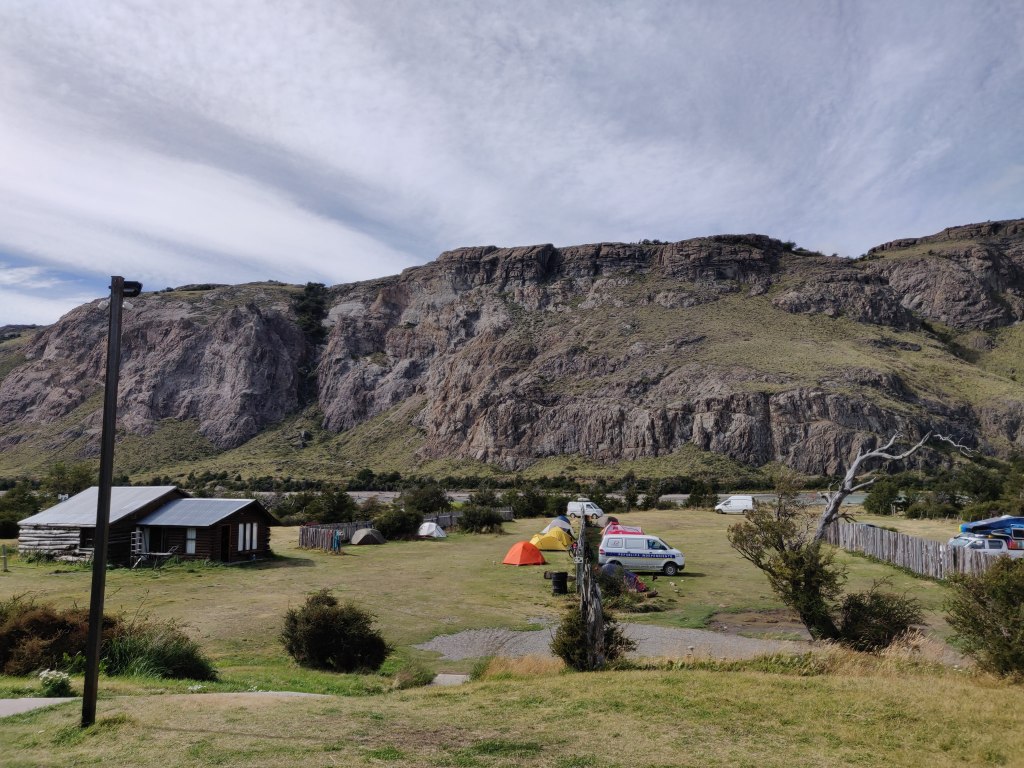
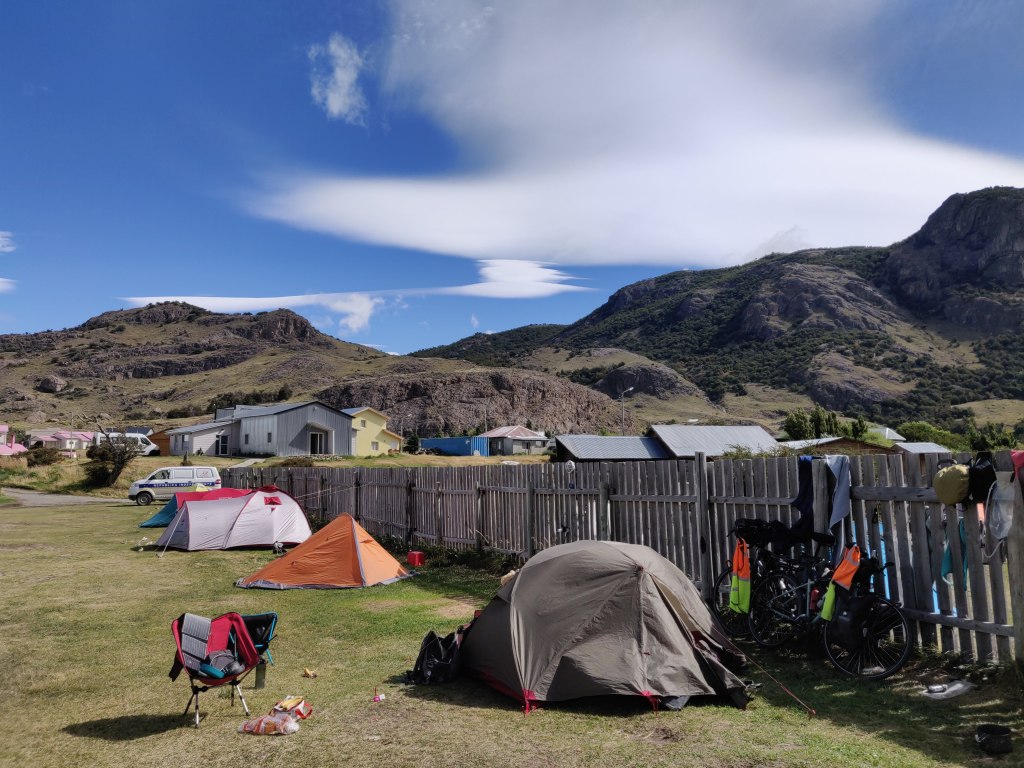
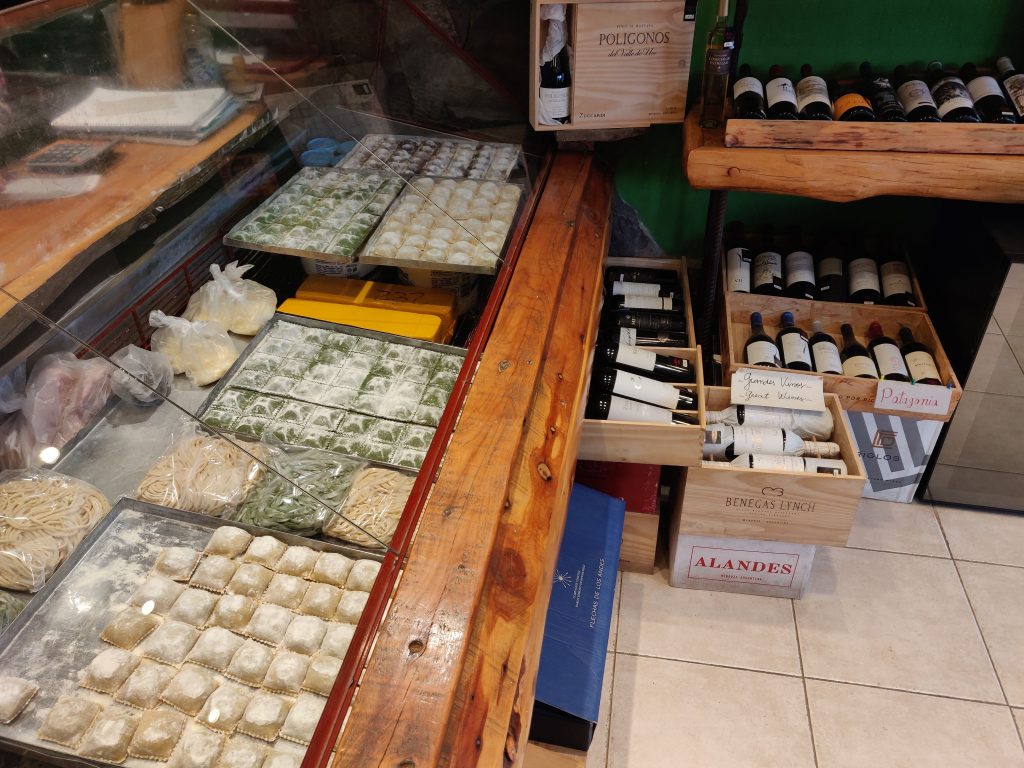
The campsite comprised a large open field set back and below the road, with wind shelter provided by tall wooden fences at 10 metre intervals. We picked a spot behind a fence half-way down towards the river and got set up. Strong winds were forecast from the north overnight, but the ground was soft for guy ropes and the fences seemed sturdy enough. Finally it was time to find dinner and pick from one of the myriad options catering for the array of hungry outdoor enthusiasts who come to explore Los Glaciares each year. Having lived off the simplest of food for a week (o’Higgins excepted), we were utterly spoilt for choice. And were reminded immediately of the Italian food impact on Argentina, which I am afraid left Patagonian Chile behind. In the end we settled for freshly cooked raviolli, followed by gelato and waffles, with plenty of beer. We slept like logs, dreaming of more good food to come and a chance to stretch our hiking legs.
Saturday morning dawned wet and windy as we popped up to the camping reception to pay. The professional receptionaist showed us around a large kitchen with multiple gas hobs and ovens, a modern dining area with mountain walkers and climbers charging phones and laptops all over the place, wet gear being dried on the radiators, and the cleanest and most modern block of showers we had seen in weeks. It wasn’t the cosiest of refuges, but would do us nicely for a few days recovery from the border crossing, and base to explore the mountains. The rest of Saturday we spent wandering around town, shopping, asking about walking poles, finding hiking route information, and, of course, eating plenty of good food.
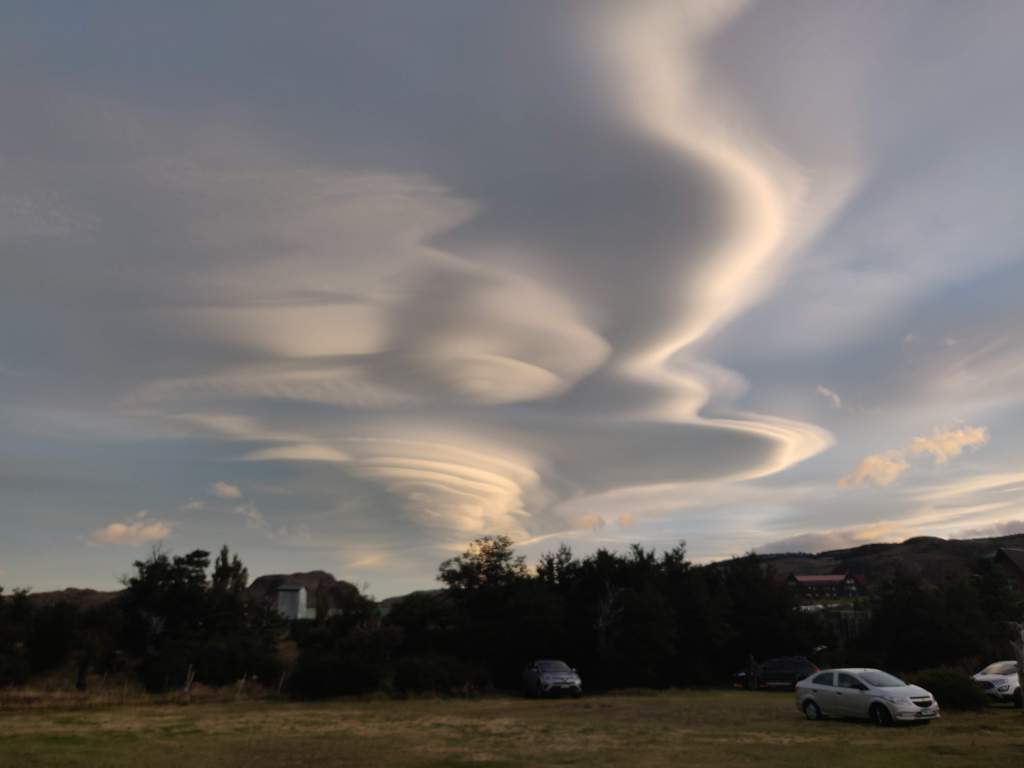
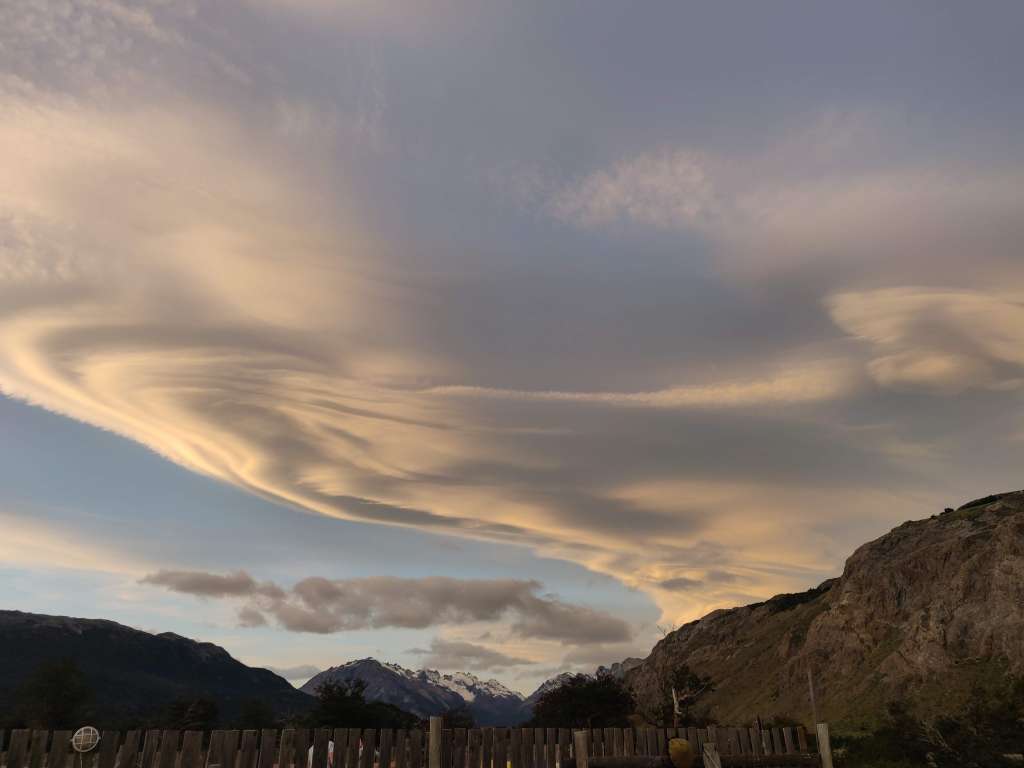
It was more of the same on Sunday, which was much brighter though still windy. We wrote up some more blog entries and also took advantage of the dry weather to do some washing. Hannah meanwhile treated herself to a massage in town, and with both sampled the “submarino” hot chocolates for good measure. The evening brought some incredible cloud formations rolling in, which made a good backdrop for a stroll up to a nearby lookout point, after which we went to rent some walking poles ready for an early start for a hike the next morning.
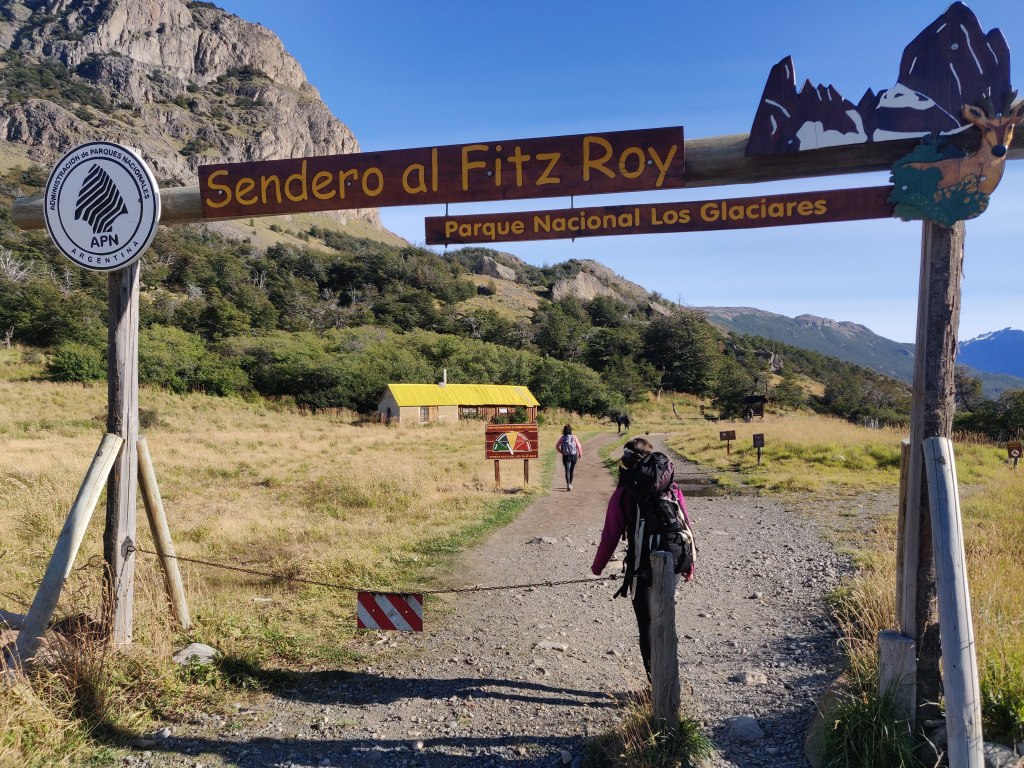
On Monday 9th March we set off early to explore the Sendero al Fitz Roy hike. We headed north out of town onto the Cerro Fitzroy track, climbing steadily northwest up to the Mirrador Fitz Roy, past Laguna Capri and along a valley towards the route up to Lagnuna de los Tres viewpoint.
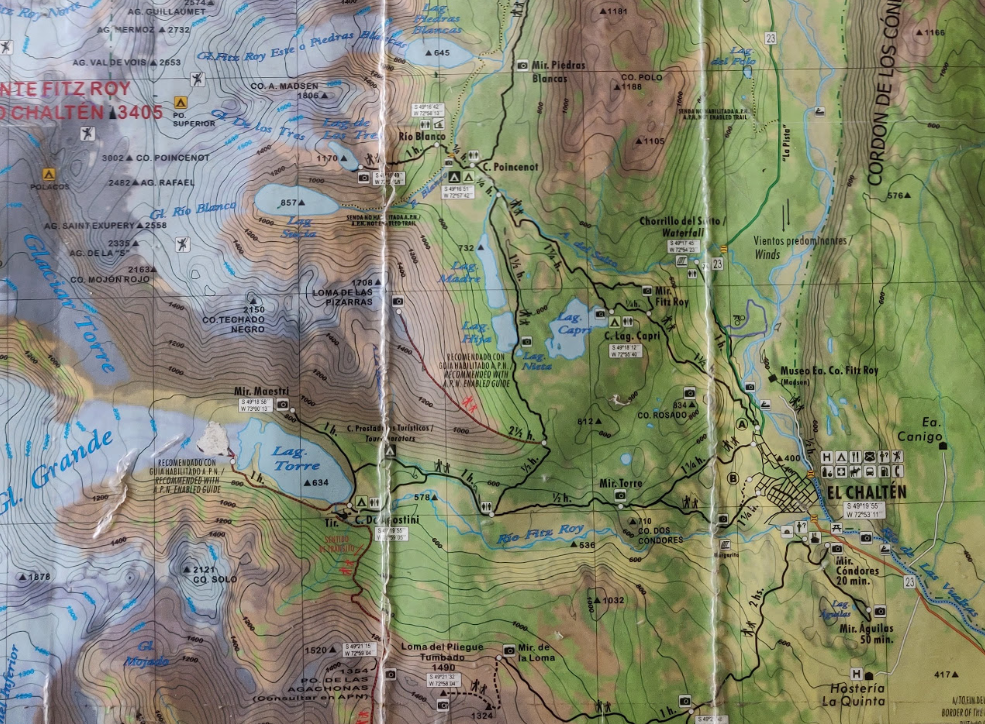
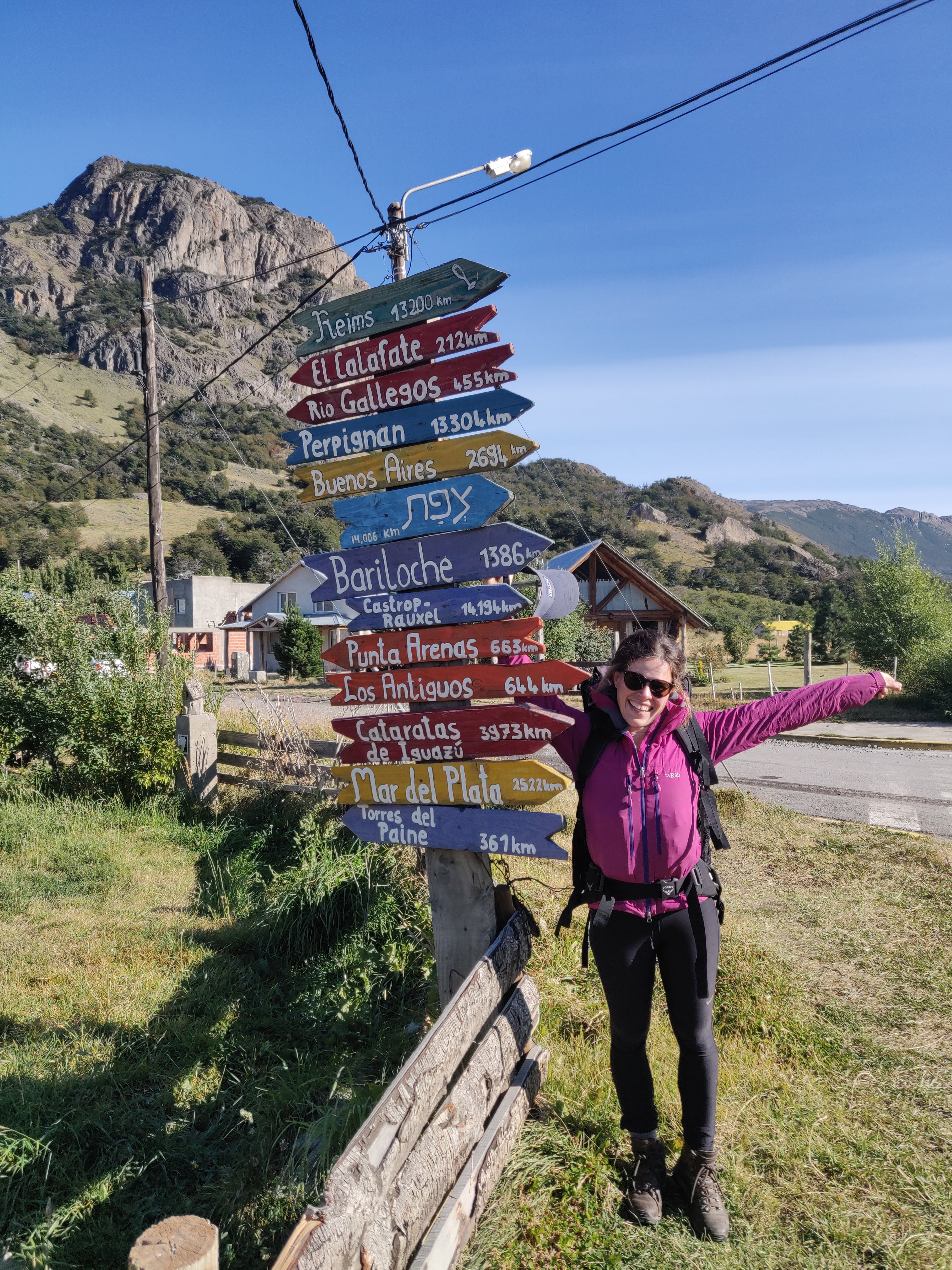
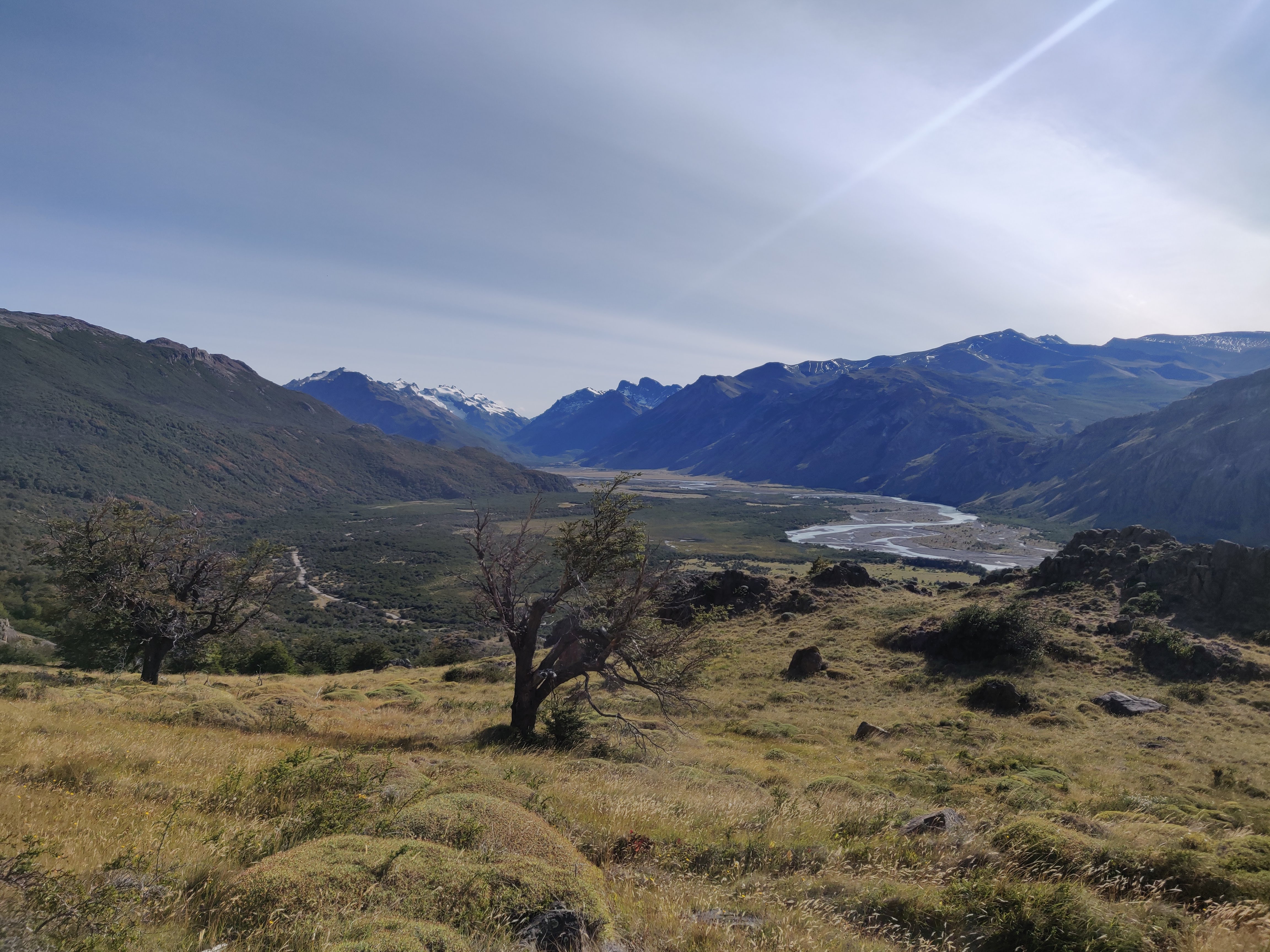
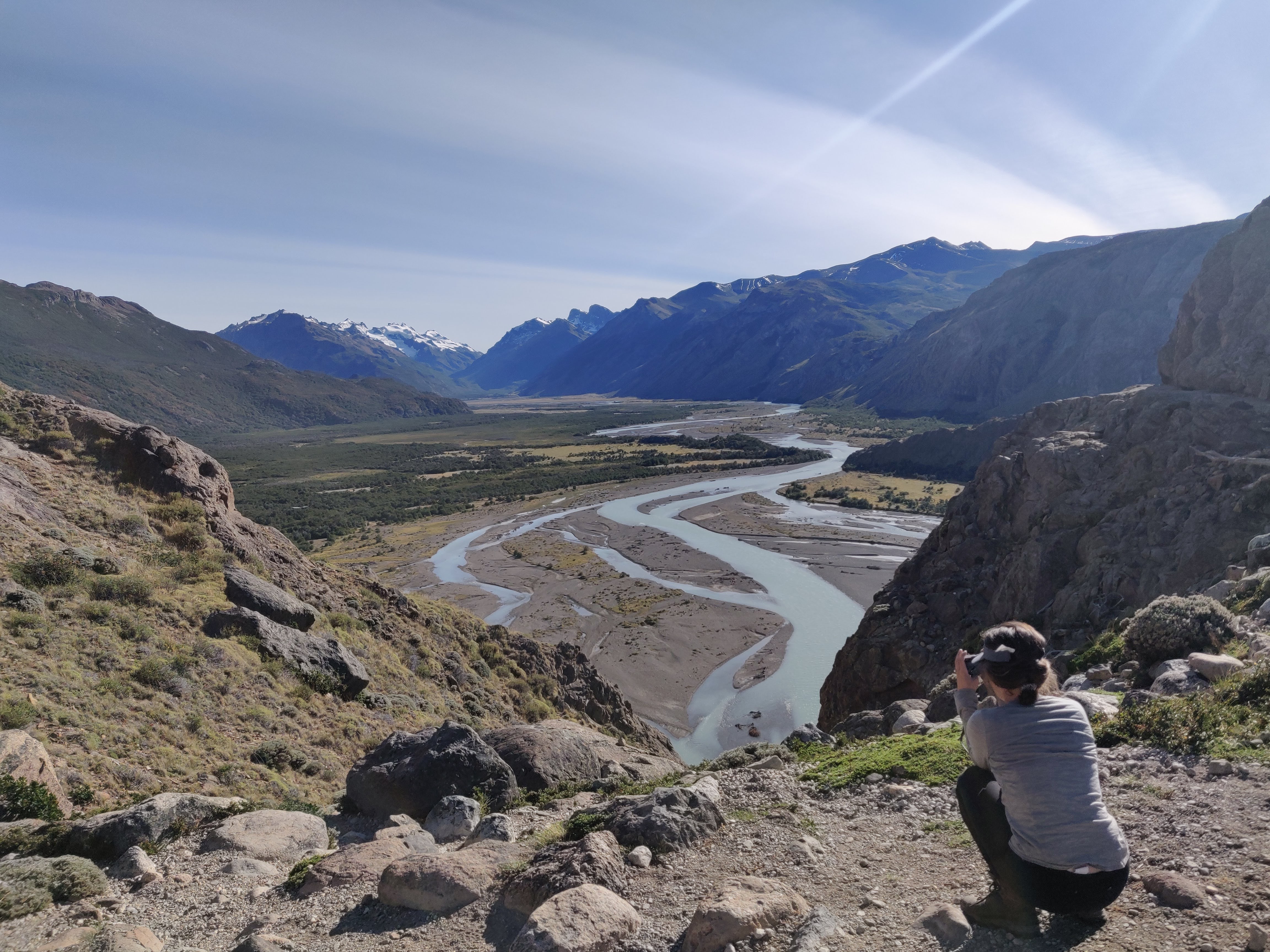
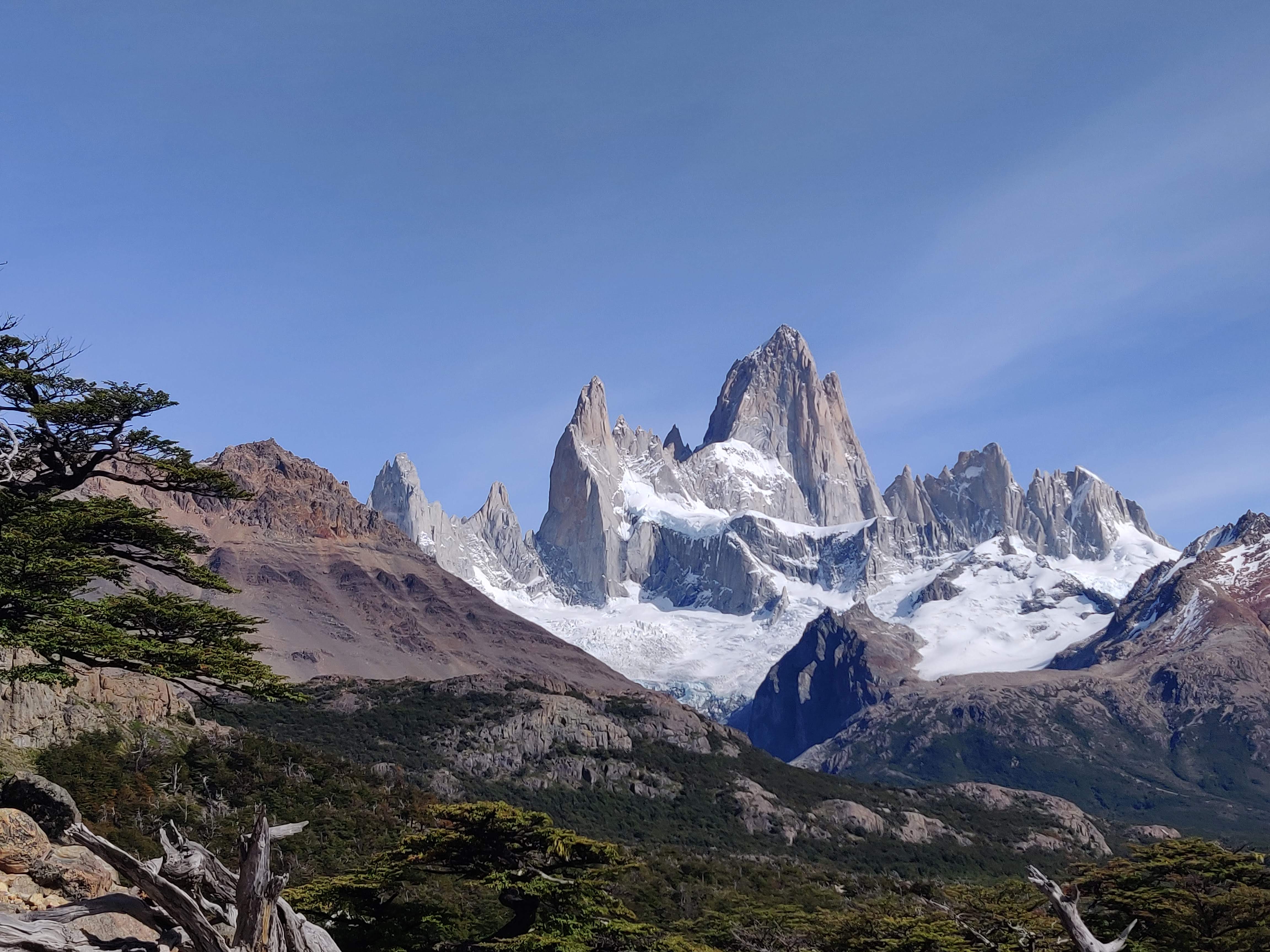
Instead of going up to los Tres (the start point for attempted ascents of Fitz Roy), we turned south past Laguna Madre and Laguna Hija (lakes mother and daughter), and on into the Rio Fitz Roy valley.
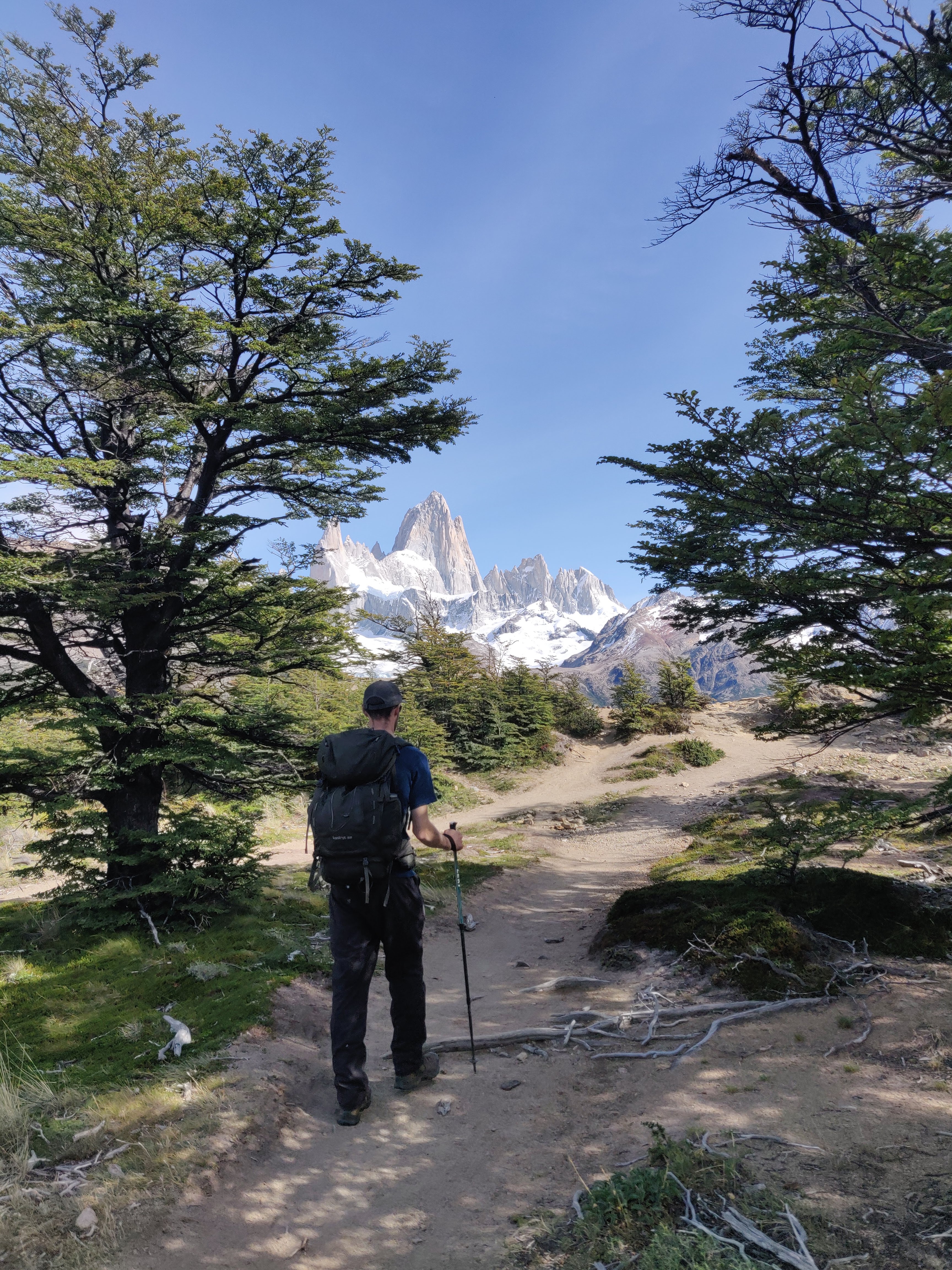
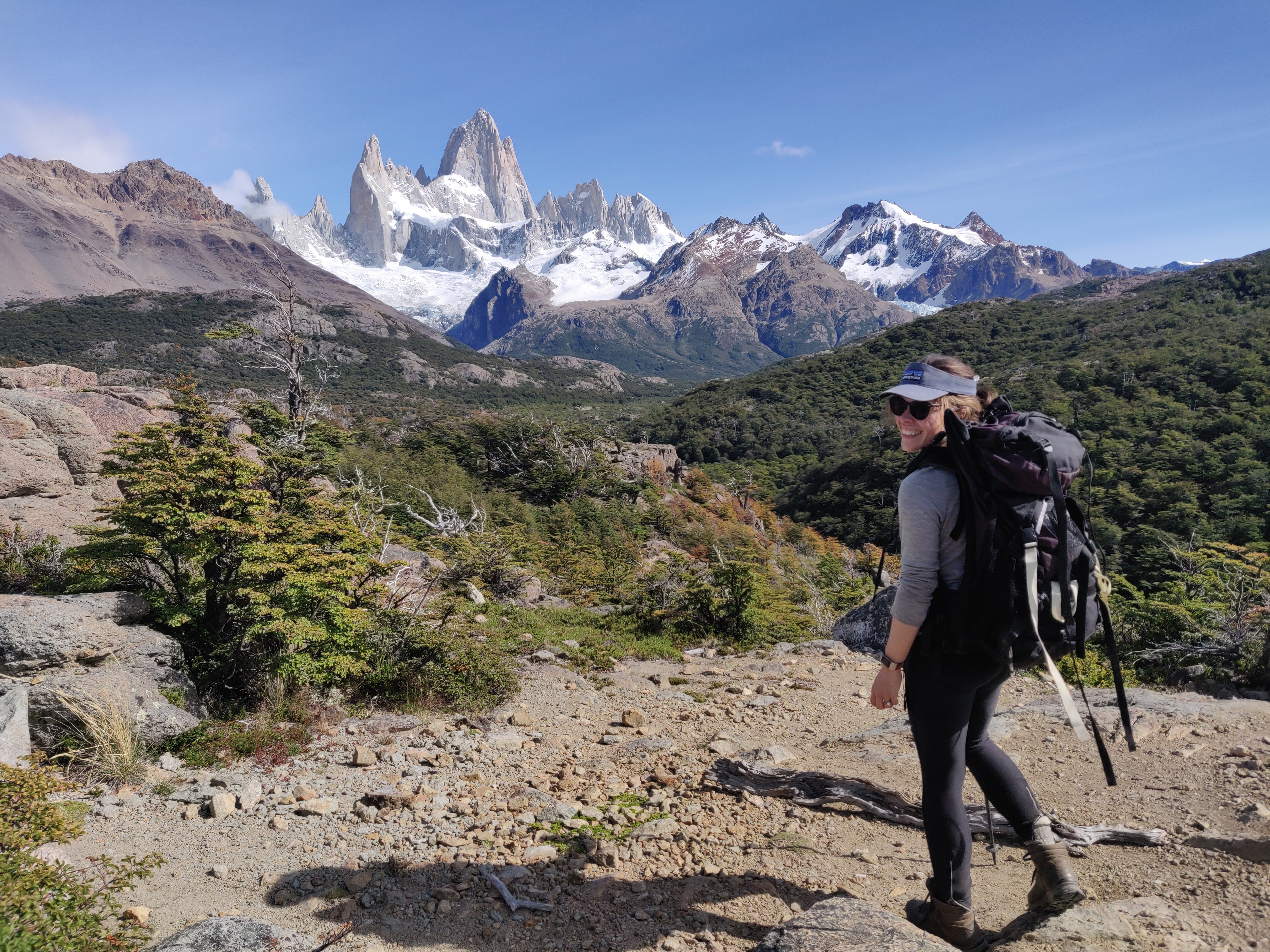
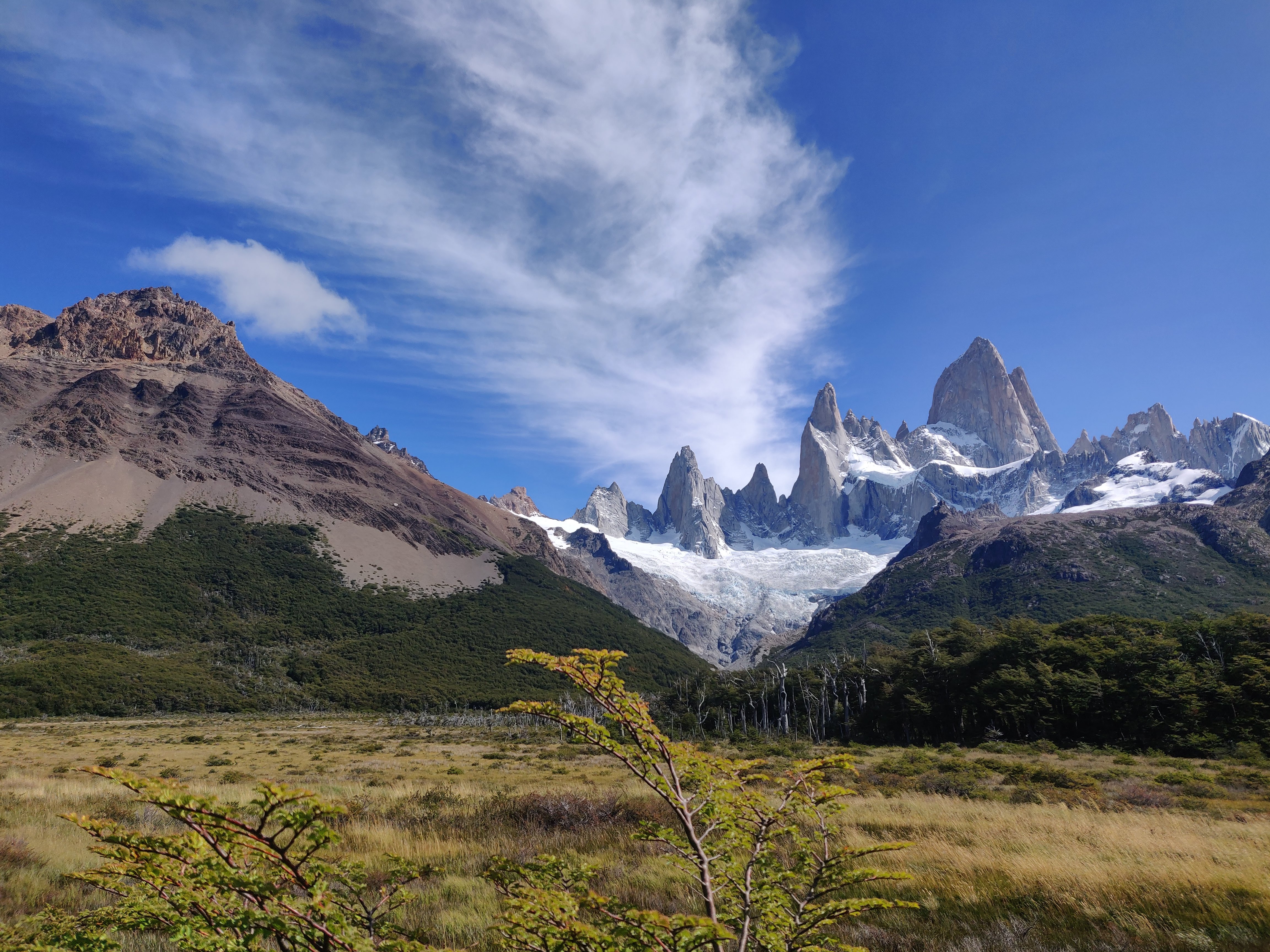
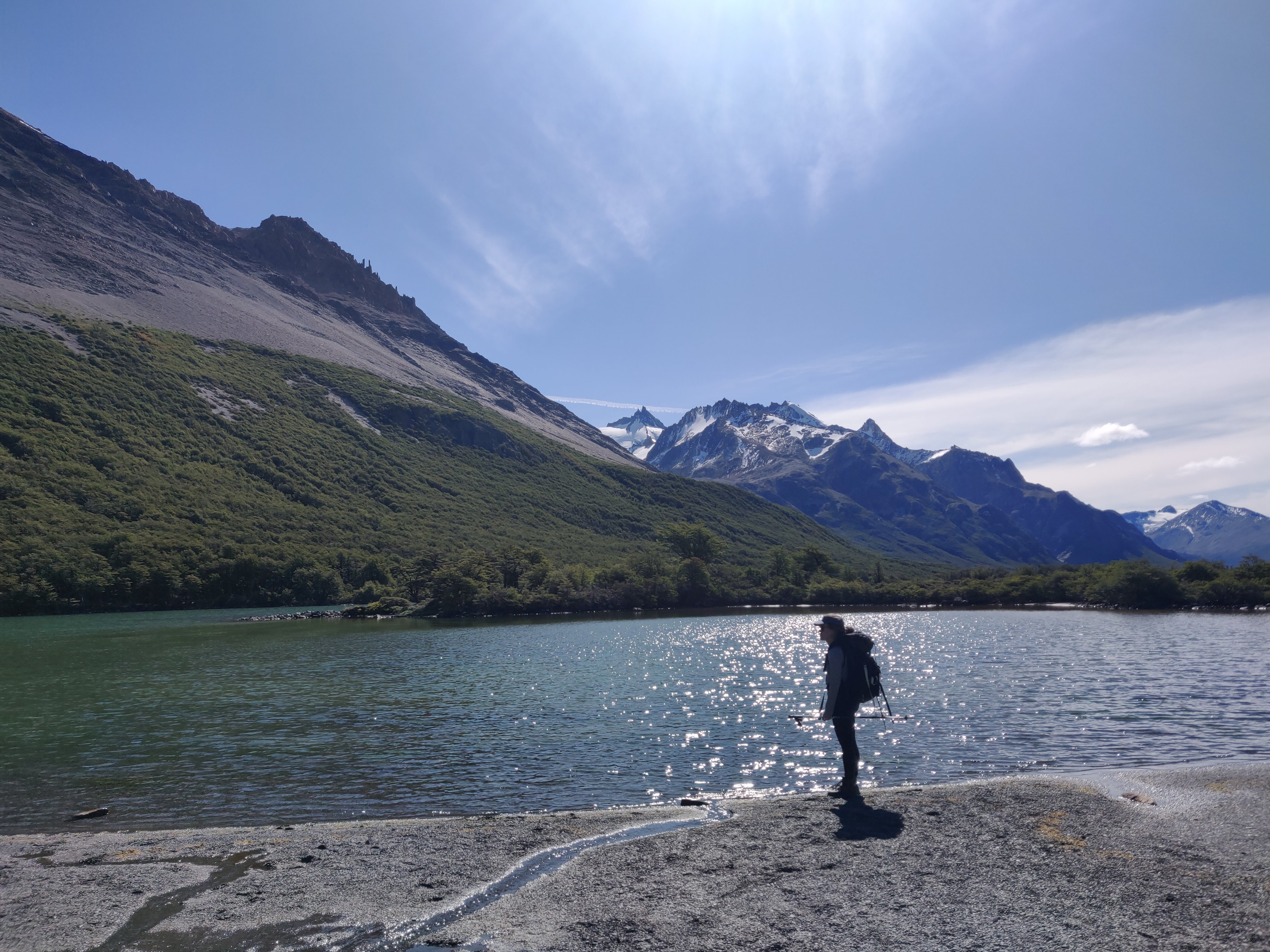
The shadows were lengthening by the time we got to the Cerro Torre path, but we decided to turn west to see Laguna Torres, famous for the glacier which flows right into the lake’s western end, depositing floating ice into the lake as it does so. We strolled through dwarf beach woods whose leaves were just starting to turn orange, a sign of the seasons changing in the mountains this far south.
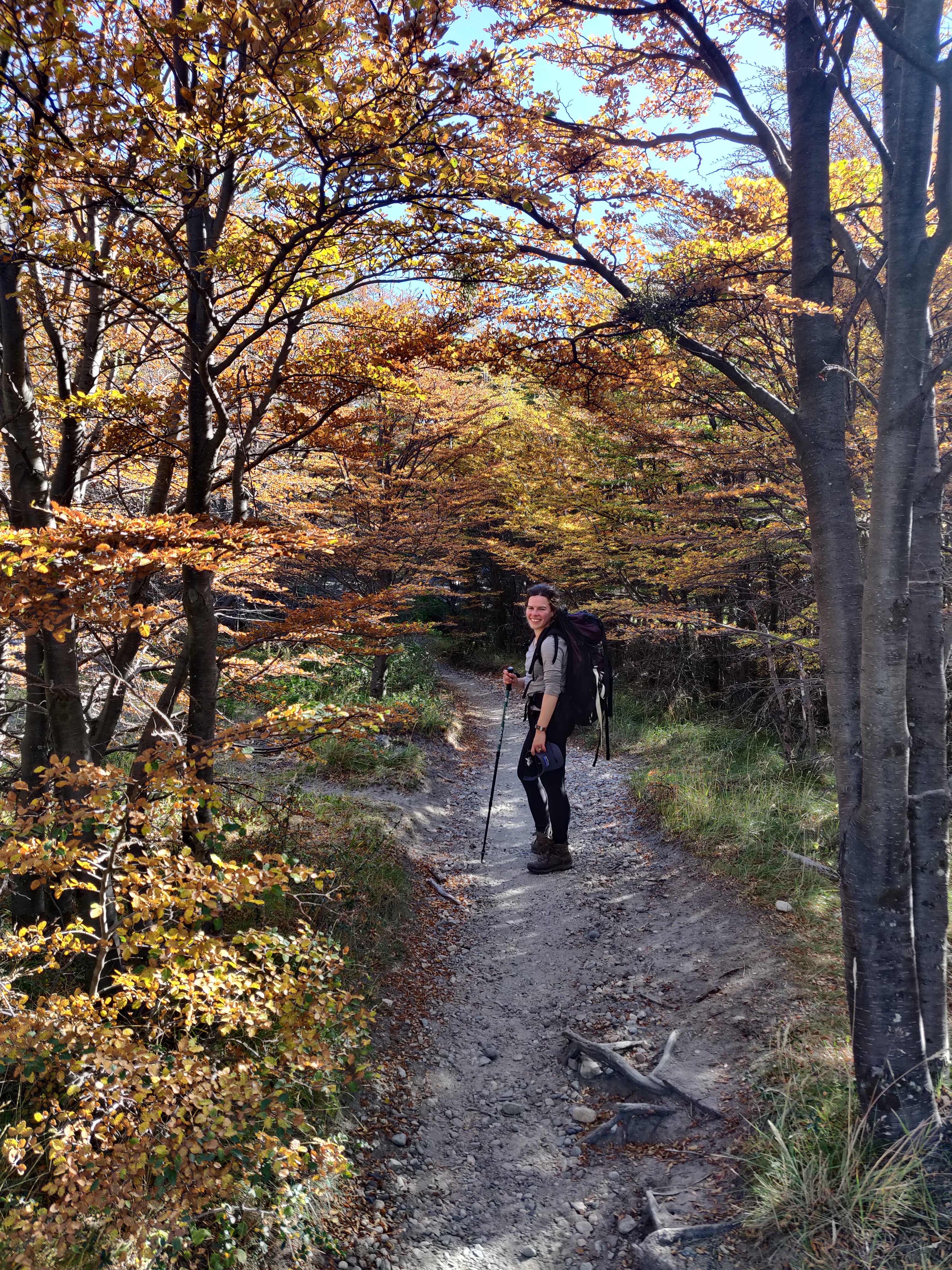
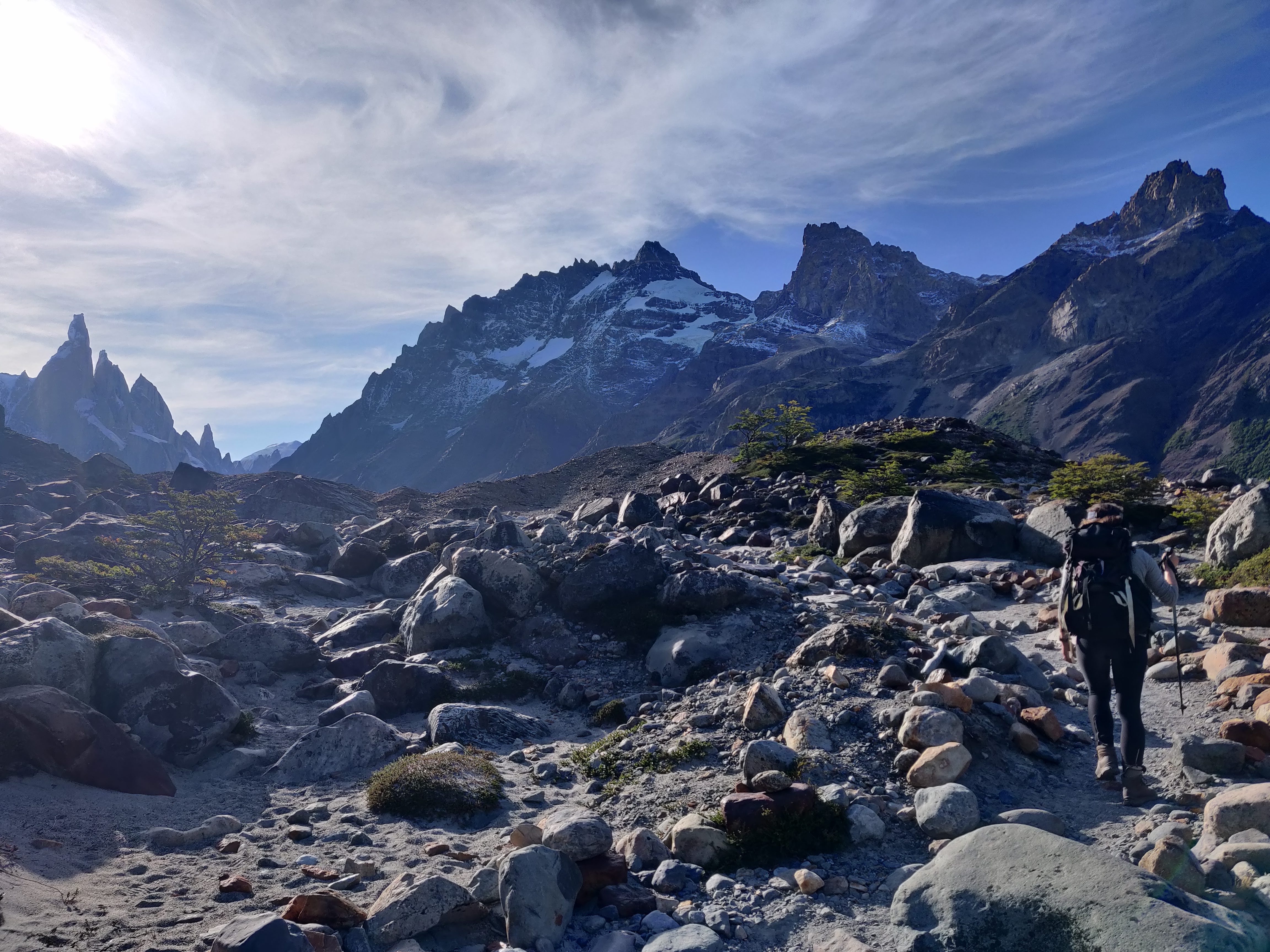
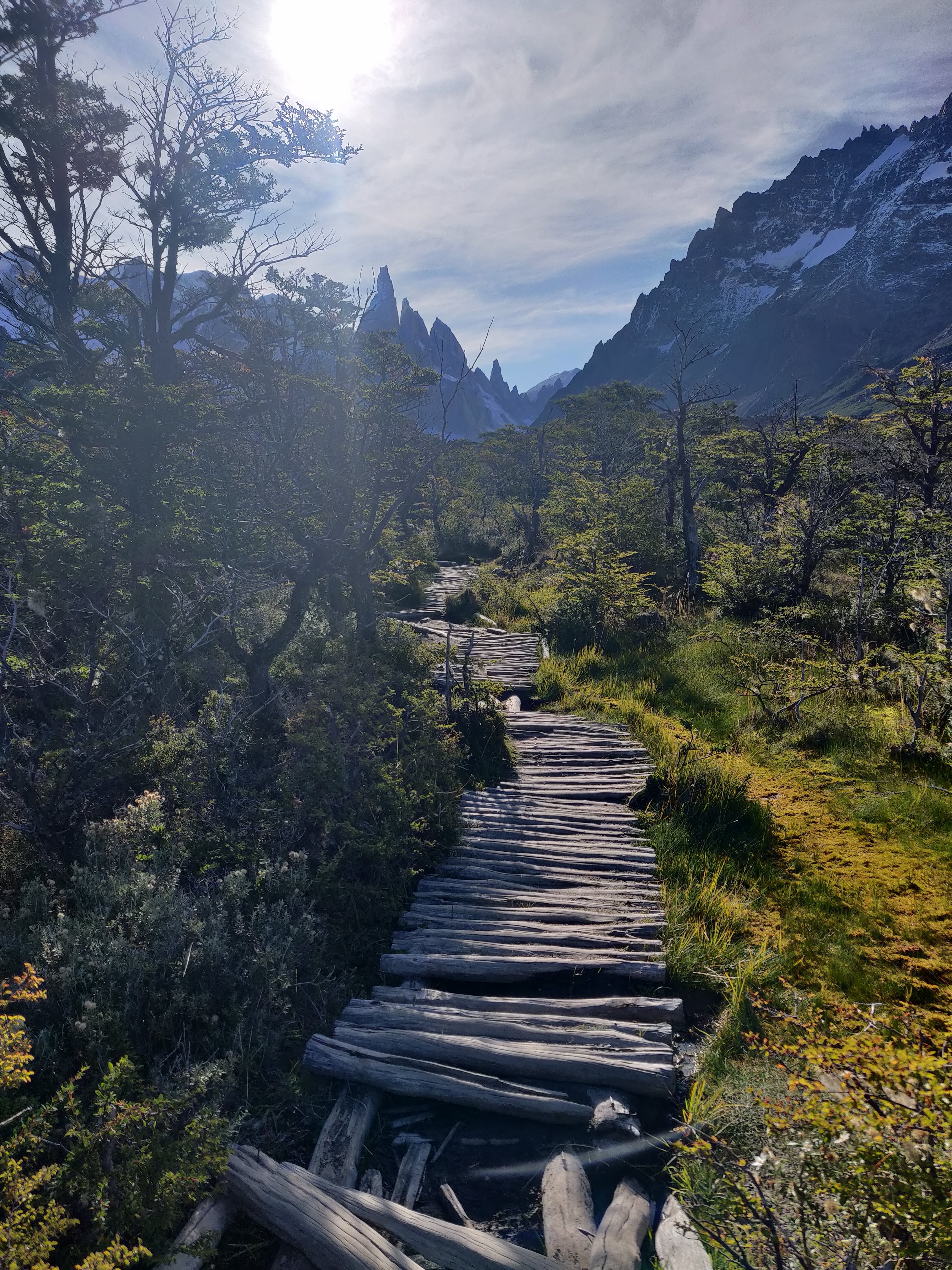
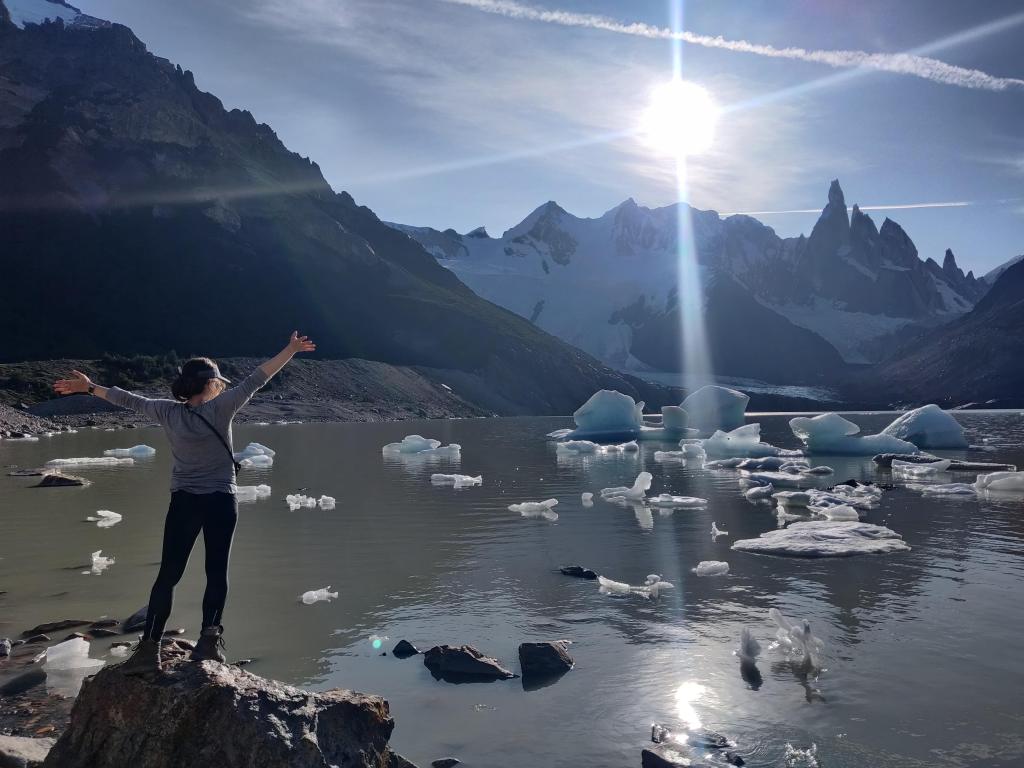
It was nearly 6pm when we arrived at the lake, but we were treated to the lowering sun silhouetting the mountain peaks above a lake dotted with floating chunks of ice.
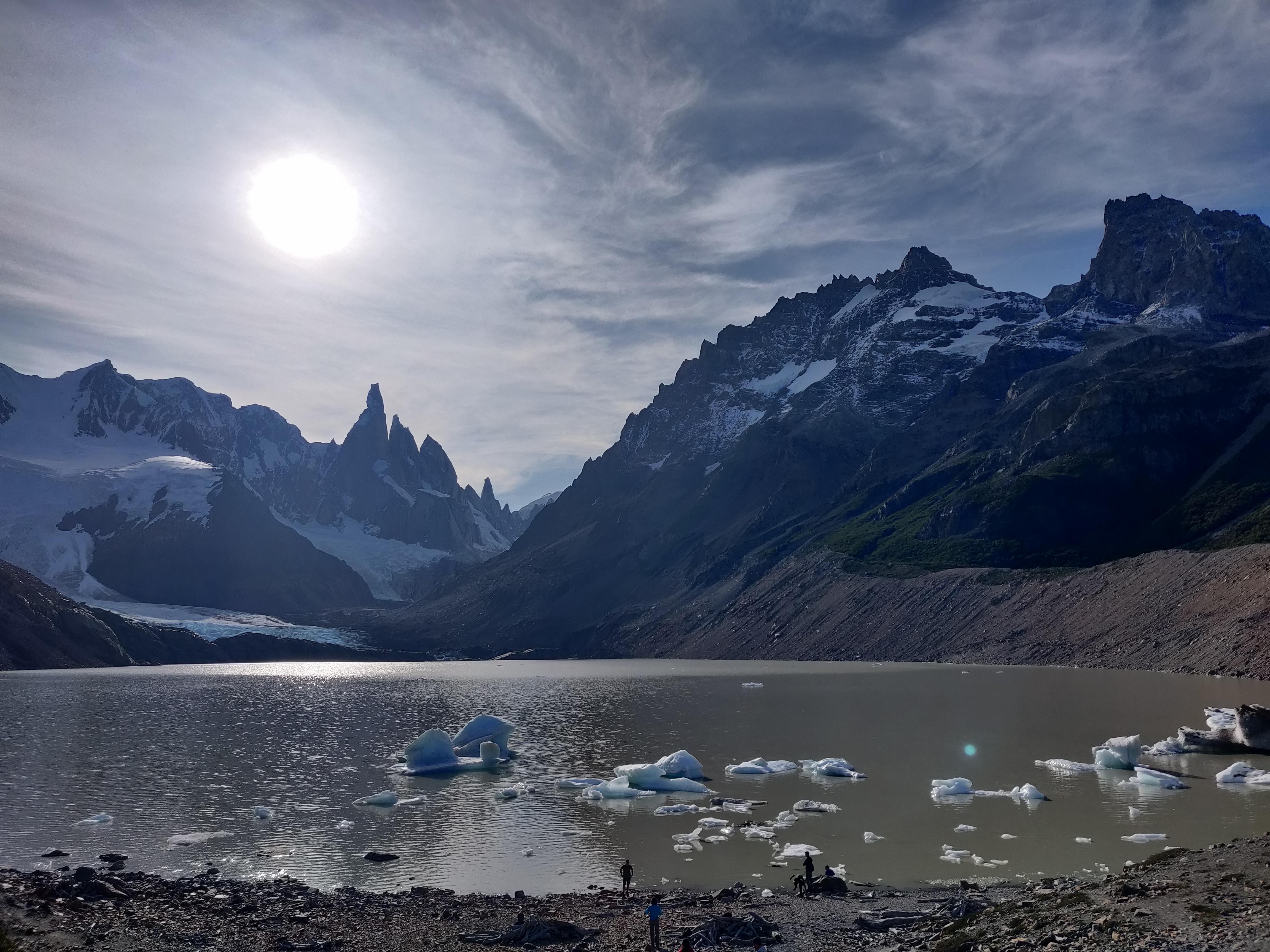
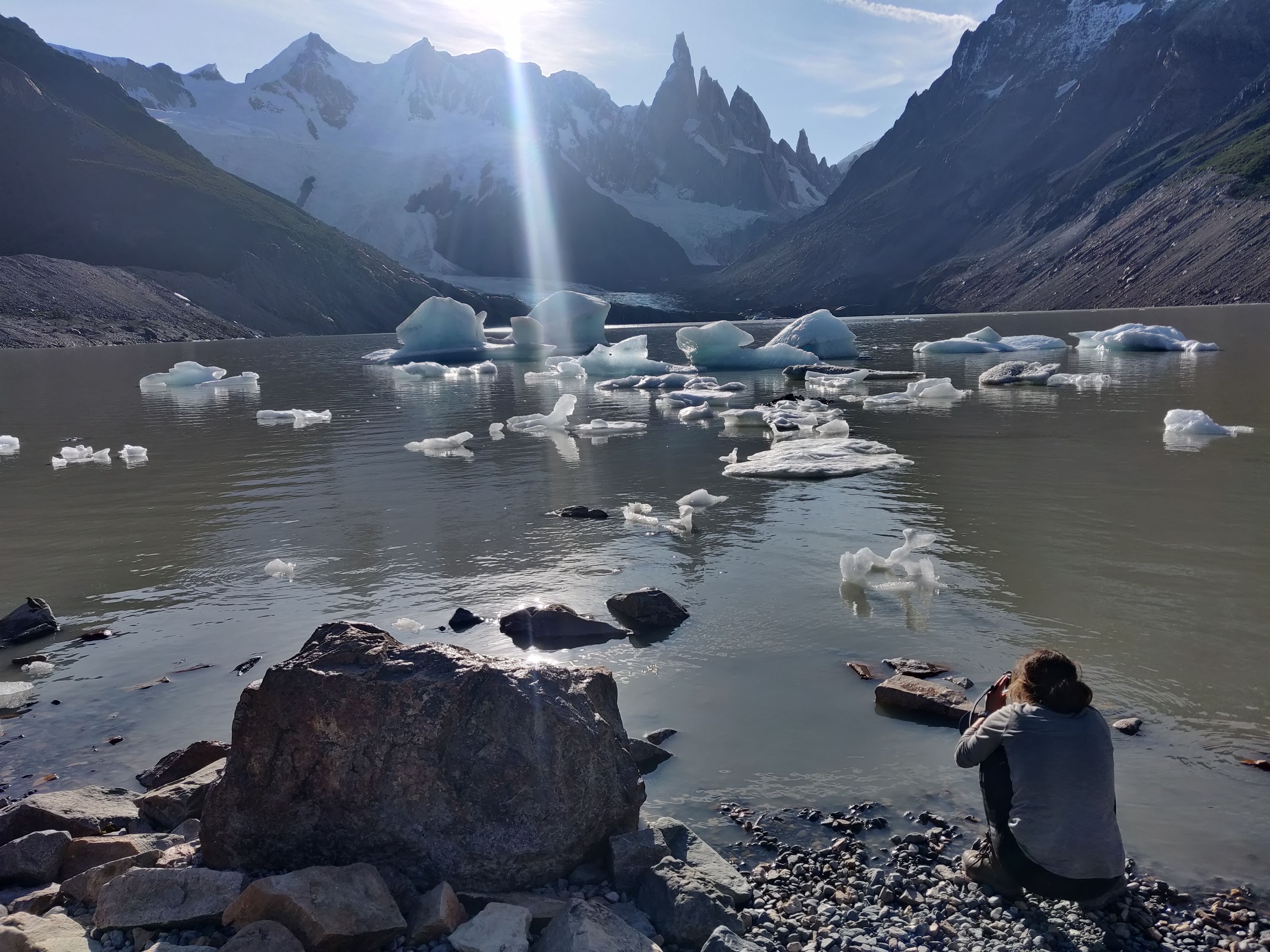
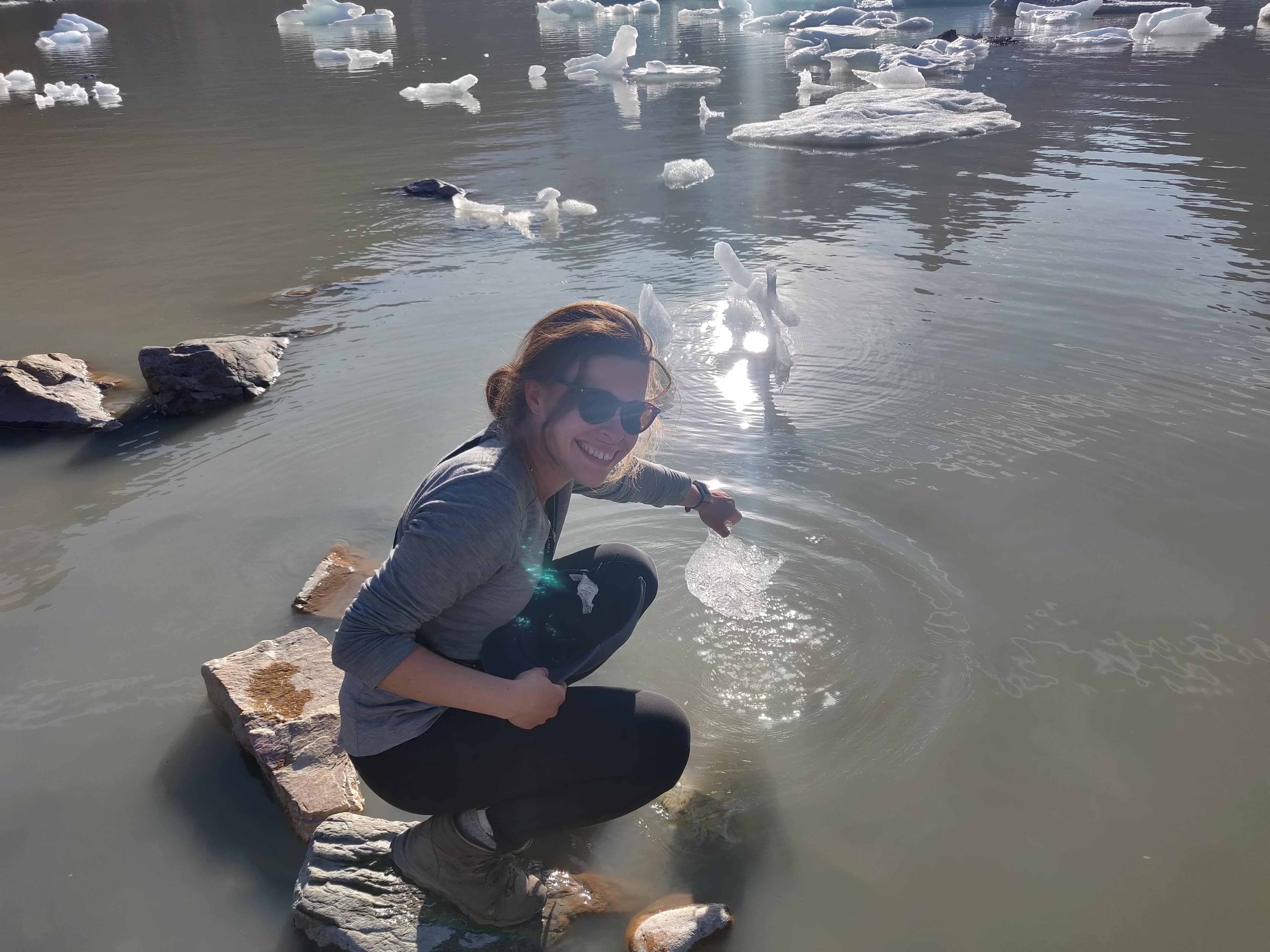
Just as we were about to leave, we turned to find none other than the German and Australian cyclists we had met in Cochrane. They had made it to Villa o’Higgins, the return point for their rented bikes, and then continued on foot, by ferry and bus across the border into Argentina. We congratualted one another on making it this far, and then left them to return back to El Chalten.
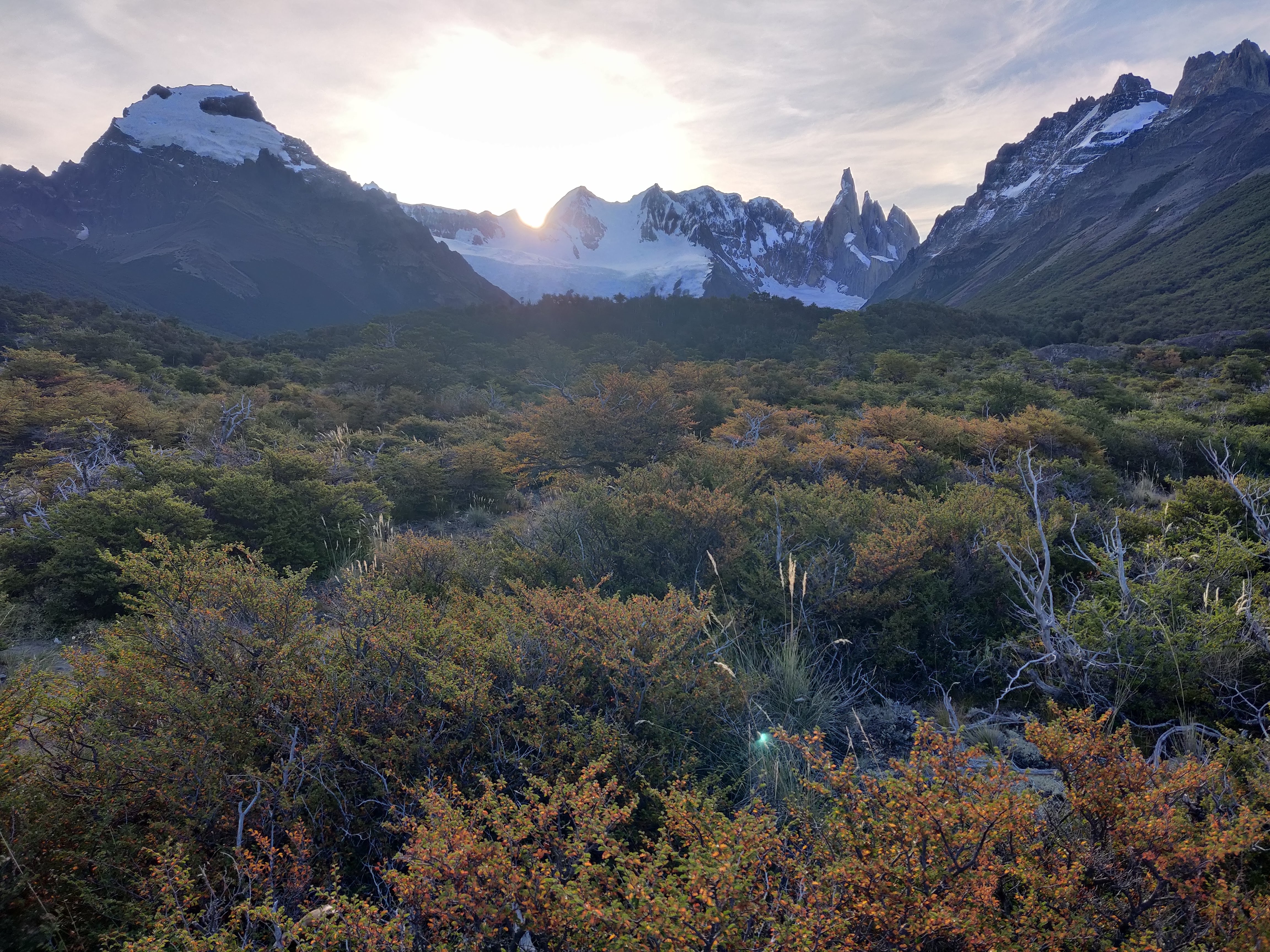
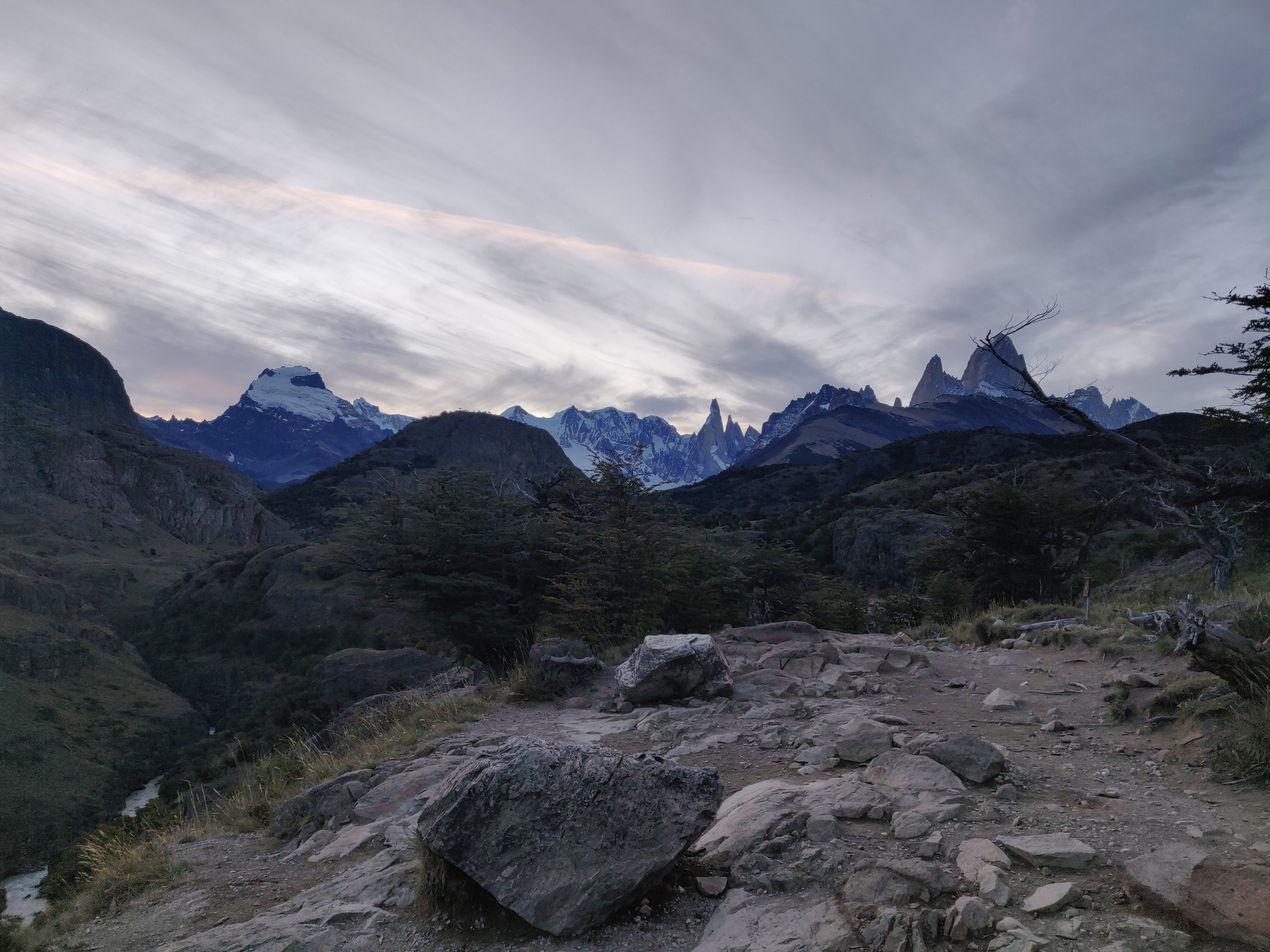
The route back was a good 2 hour walk, steeply downhill at times, and we arrived at a viewpoint above the town at 8.30, ravenous. Robbie hurried back to the tent to drop off hiking gear and to return the poles, whilst Hannah found a table at a parilla restaurant, ordering beer, wine and large quantities of barbequed lamb/fish.
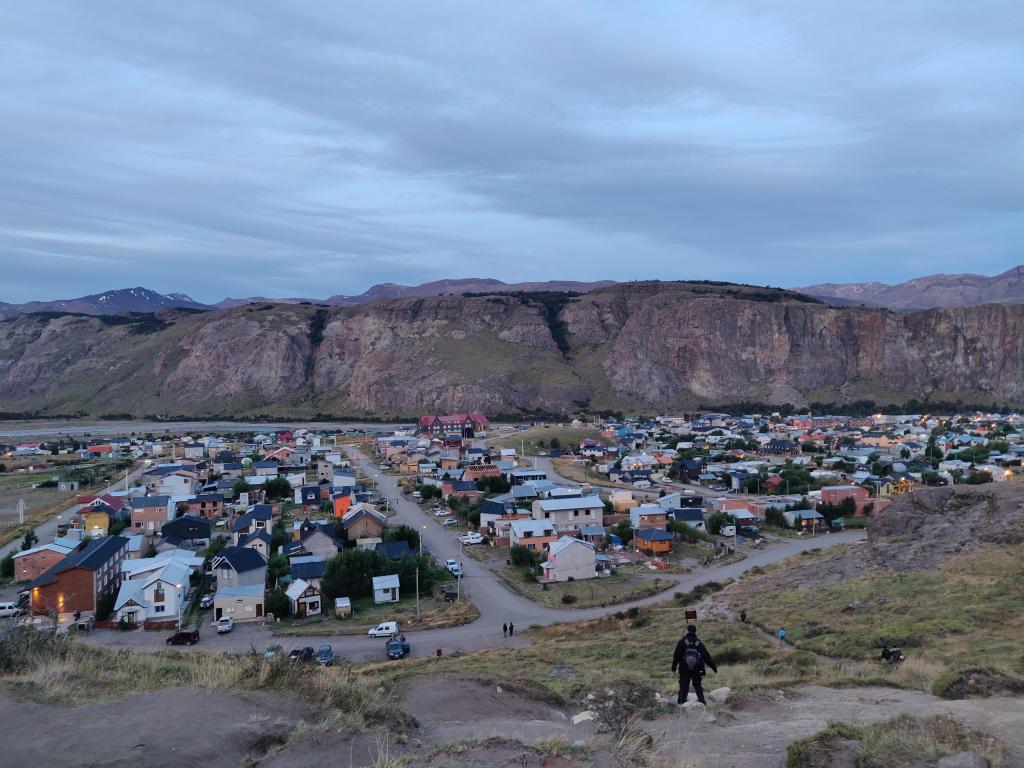
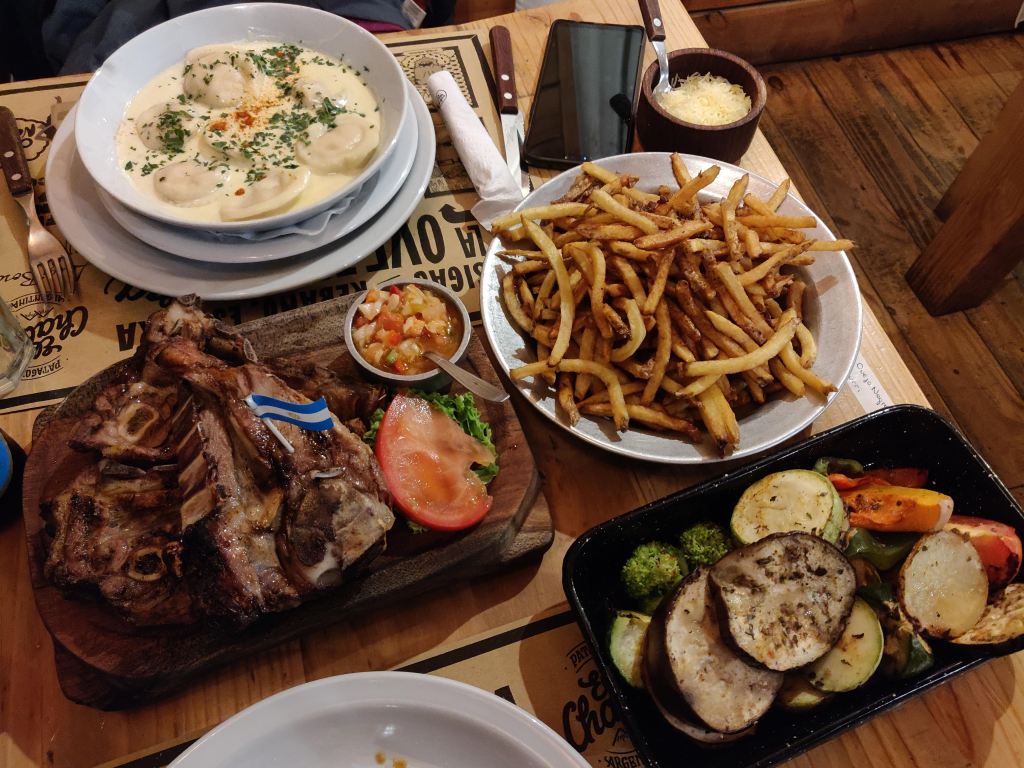
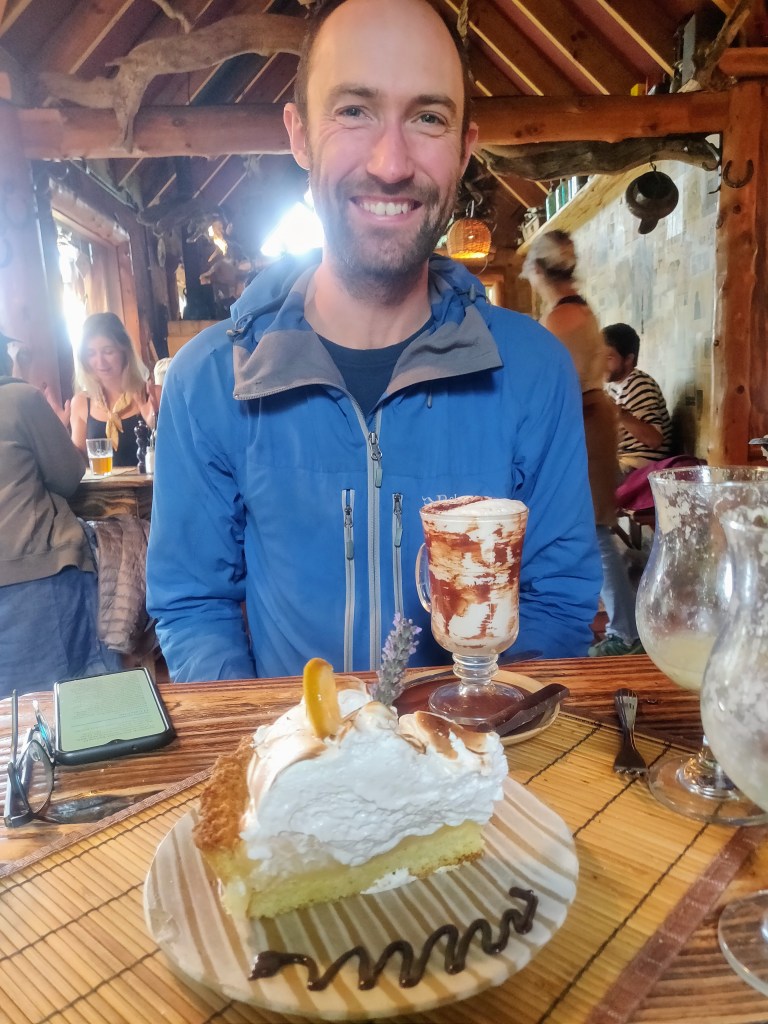
Tuesday was spent preparing ourselves for the onward 3 day ride south, and making the most of the luxuries of Chalten for one last time. The homemade pasta at restaurant Maffia made a fitting final lunch, followed by more lemon meringue pie at La Cerveceria.
Wednesday morning dawned sunny with a fresh westerly breeze to blow us on our way. After one last shower we were packed up by 11.30 and soon on Ruta 23 cycling southwest.
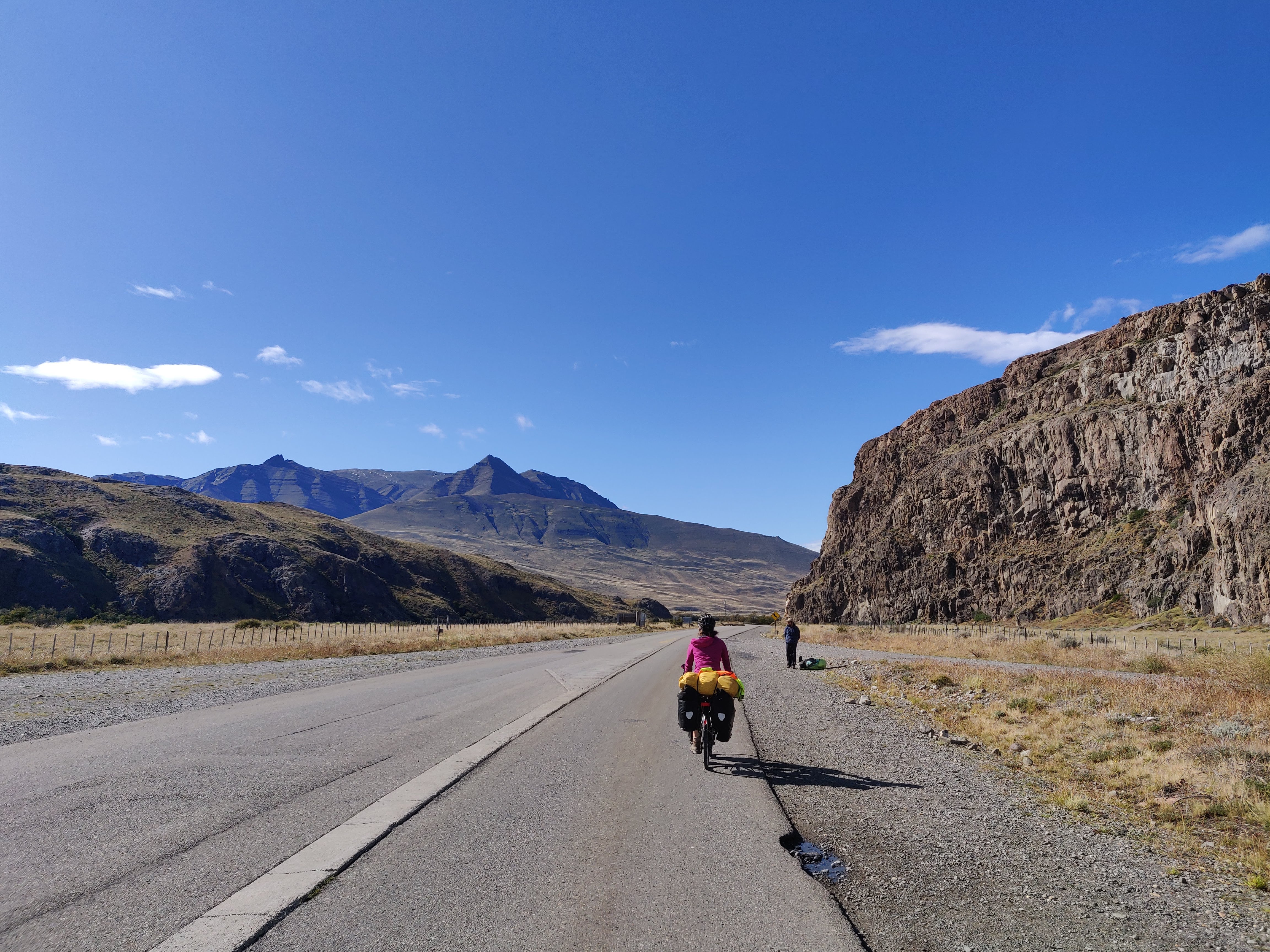
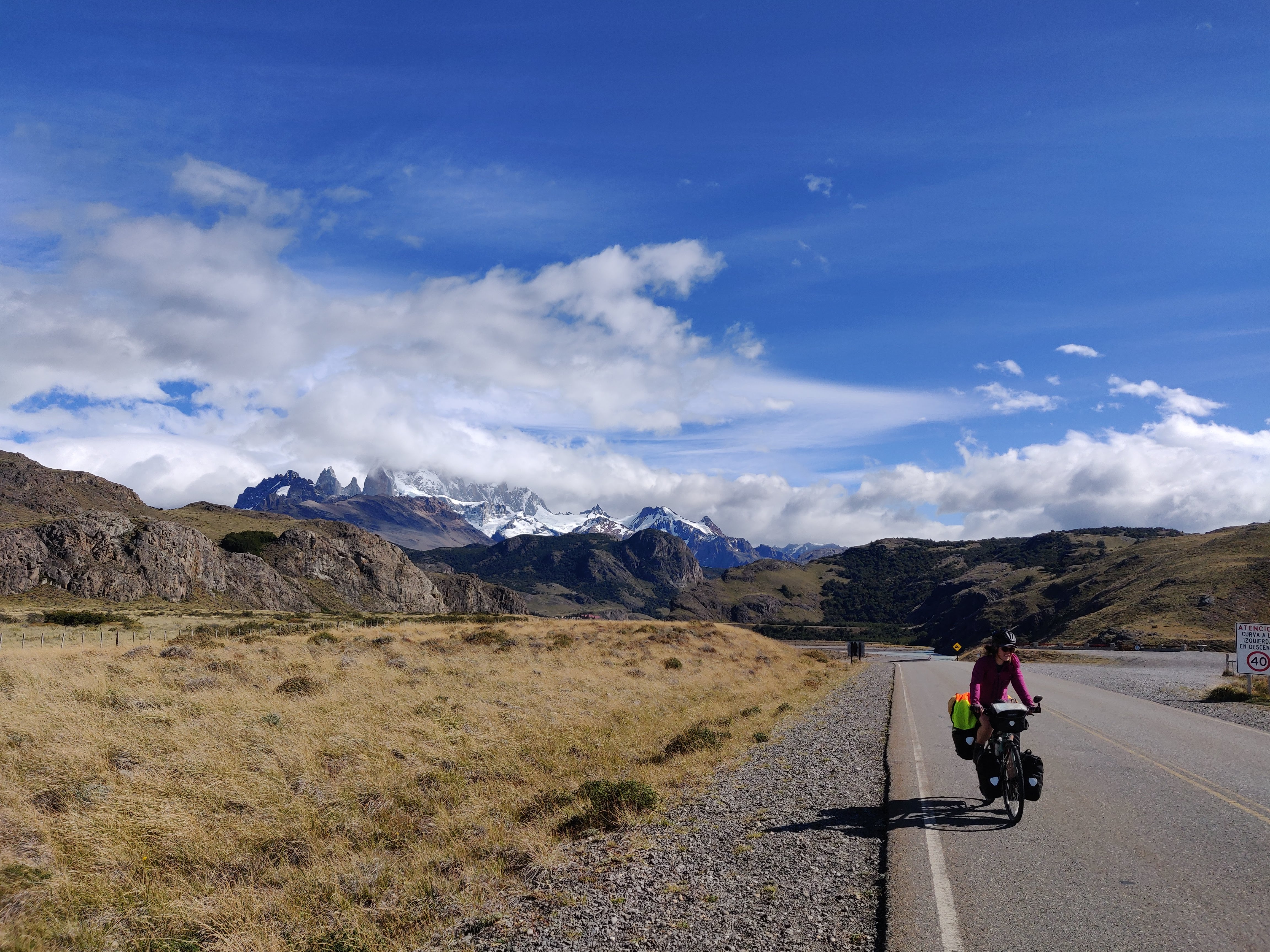
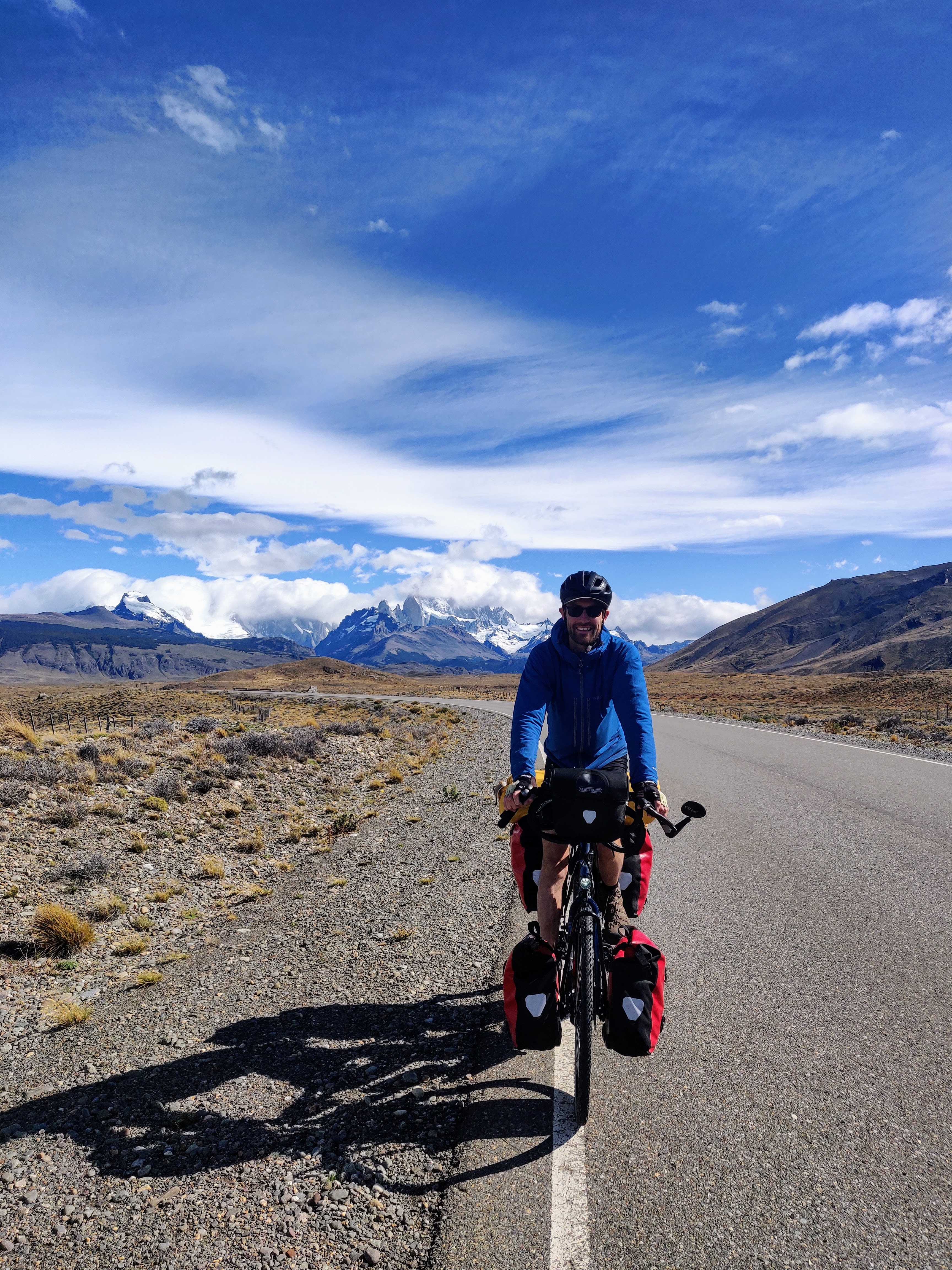
With the wind blowing force 3 to 6, we soon discovered what cycle touring could be like with a tailwind on smoooth asphalt. We were crusing along the flat at nearly 40 km/hour, and barely even pedalling uphill, as the Fitzroy range gradually receded behind us.
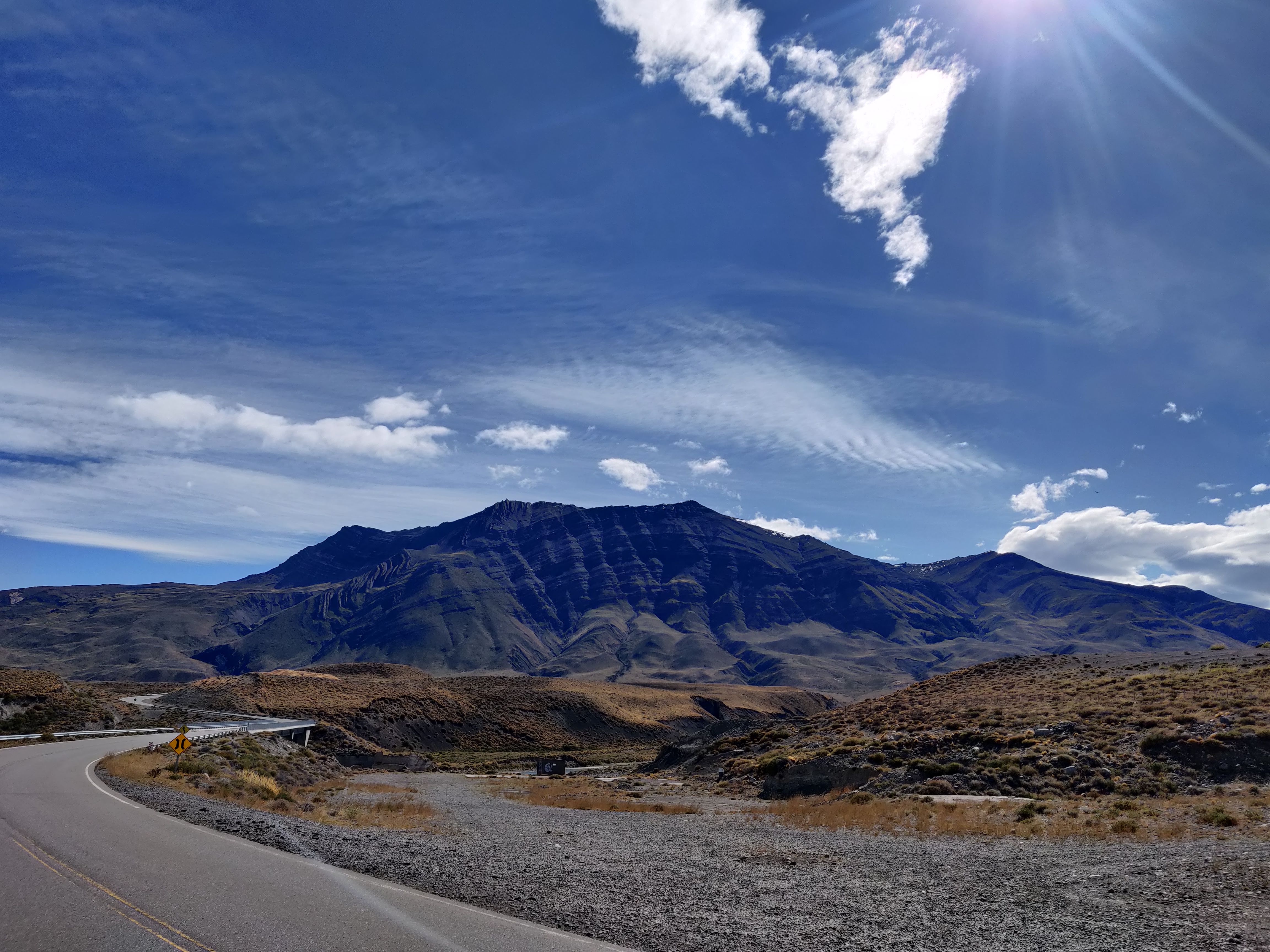
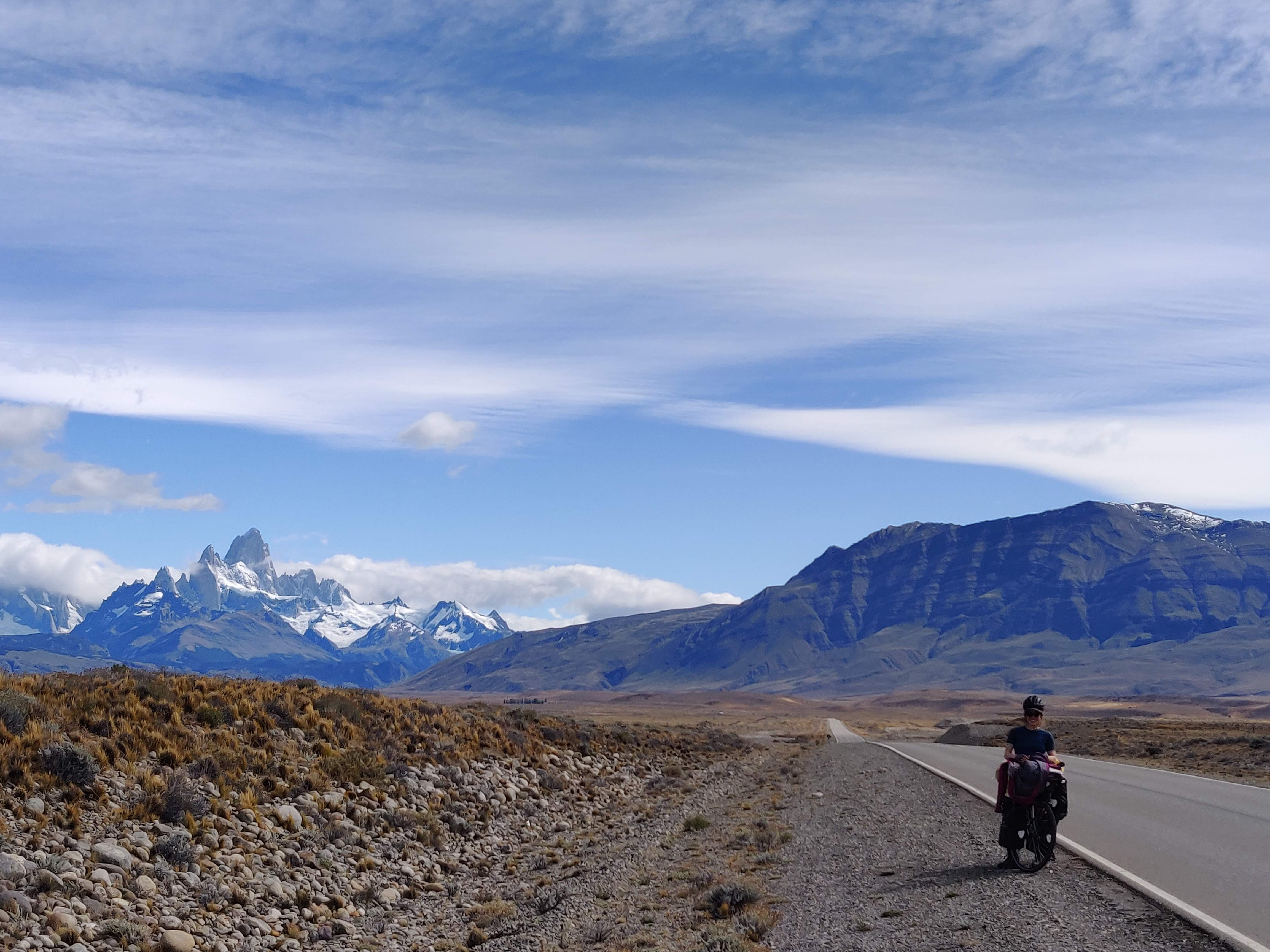
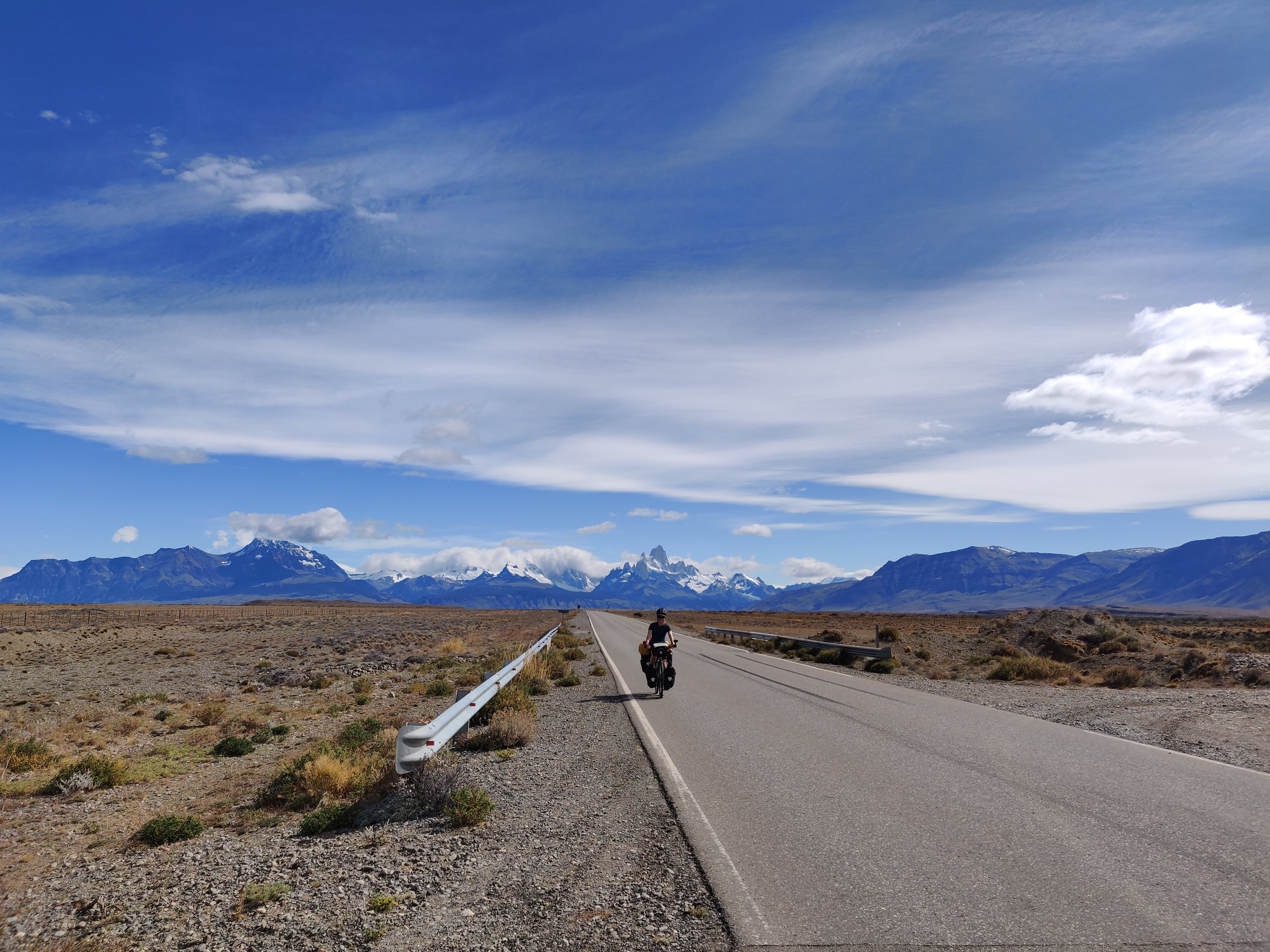
Whilst fantastic when cycling, the lack of shelter along the road made lunch a quick affair, with the usual oat stock soup wolfed down by the roadside. We had made fantastic progress and decided to press on to La Leona for the night if possible. This meant rejoining Ruta 40 for 20 km, but having completed 85 km already, we felt confident it would be possible.
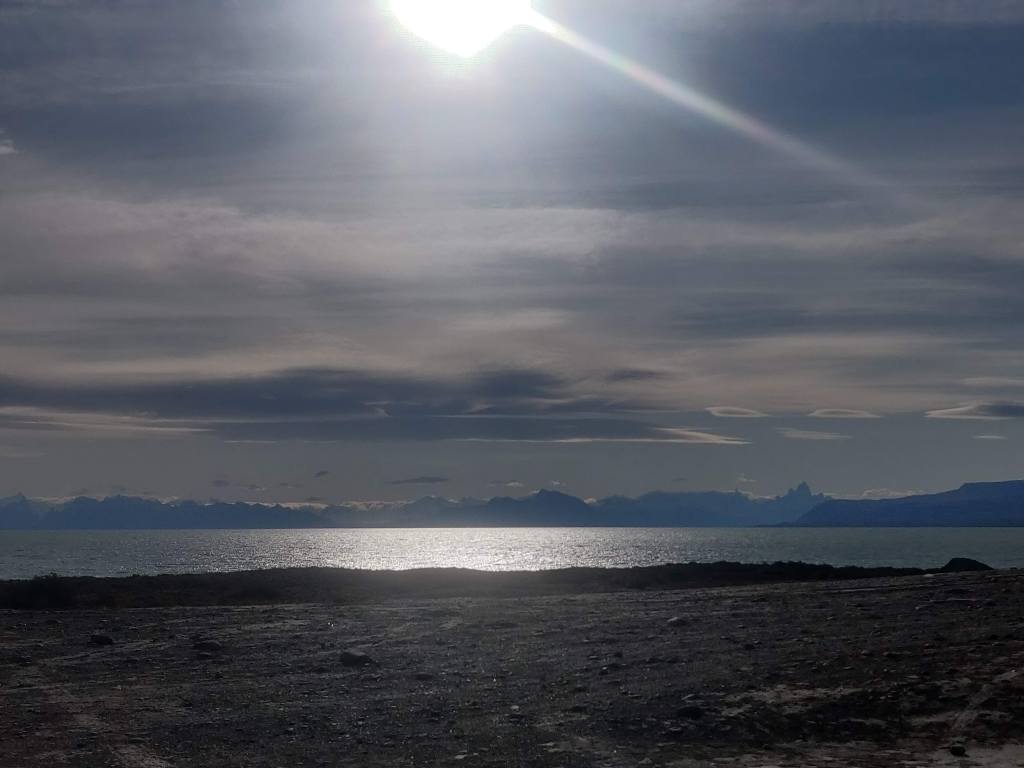
The decision was cemented when we realised our water was getting rather worryingly low. Cycling until now, we had never had to worry about water – streams, rivers, lakes and waterfalls being a continuous companion. However here, whilst we were tracking the northern shore of Lago Viedma, the rivers were fewer and further between, and having passed Rio Crangrejo, now a long way back upwind, we realised there were no more sources of water until Rio La Leona. This would have been fine but for the abrupt change in direction when we joined Ruta 40, now heading west-southwest straight into the wind.
It was a rather long and subdued final 20km along Ruta 40 to La Leona river and restaurant/motel, and we arrived at around 7pm. Built in 1894 by a family of Danish immigrants, it was at this place where Francisco P. Moreno (consecrated Argentinian scientist and explorer) had been attacked and badly wounded by a female puma 17 years previously. After this incident, the river that runs through this region was named after this animal. We were shown out to a dusty paddock behind the restaurant, and hoped that the nearby horse might be a tastier treat for any pumas than us in the tent. After tuna past dinner, we treated ourselves to some excellent lemon meringue tart in the restaurant.
As we settled down to bed, we heard some very loud noises outside the tent, and realised the horse was charging around his paddock. Tired and warm inside, we waited nervously for a guy rope to be ripped out by the horse and the whole tent torn open, but fortunately he gradually calmed down and we all dozed off.
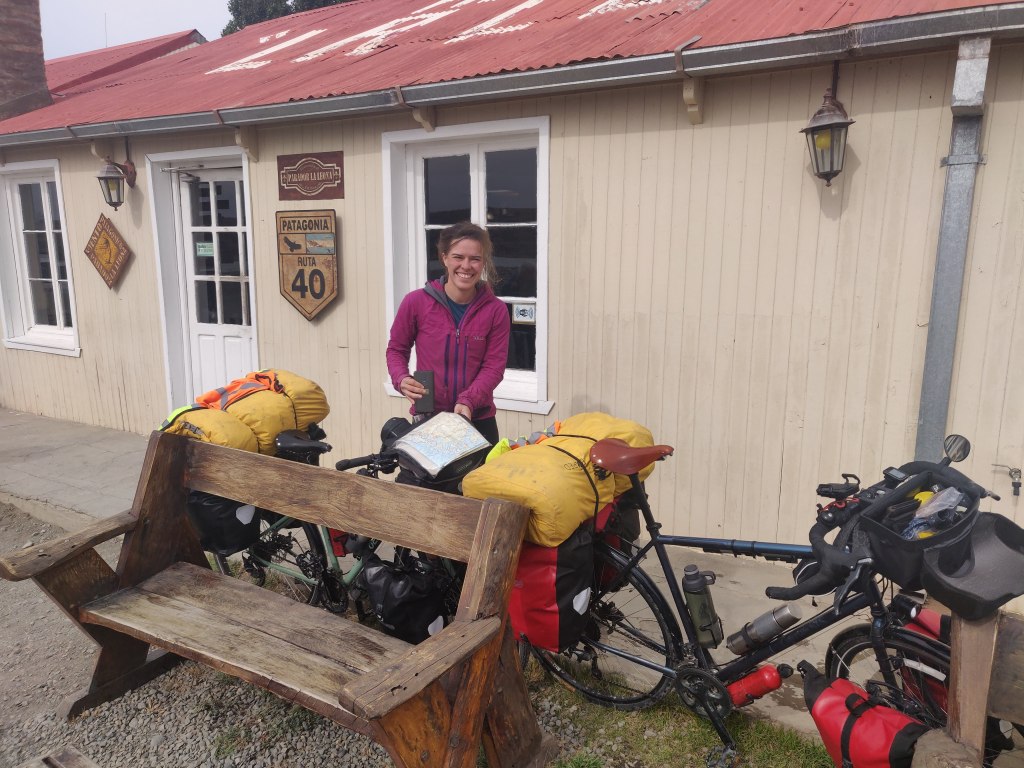
Thursday was cloudier but with lighter winds, and we decided to give ourselves a shorter 45 km day down to the north shore of Lago Argentina, before the final longer push into El Calafate. This meant a leisurely start, and enabled us to enjoy an early lunch in the Leona restaurant before departing. The first hint of changes to come was when a tour group entered the restaurant and halfway through dinner we overheard worried conversations about the situation with the Coronavirus that was now spreading rapidly in Europe.
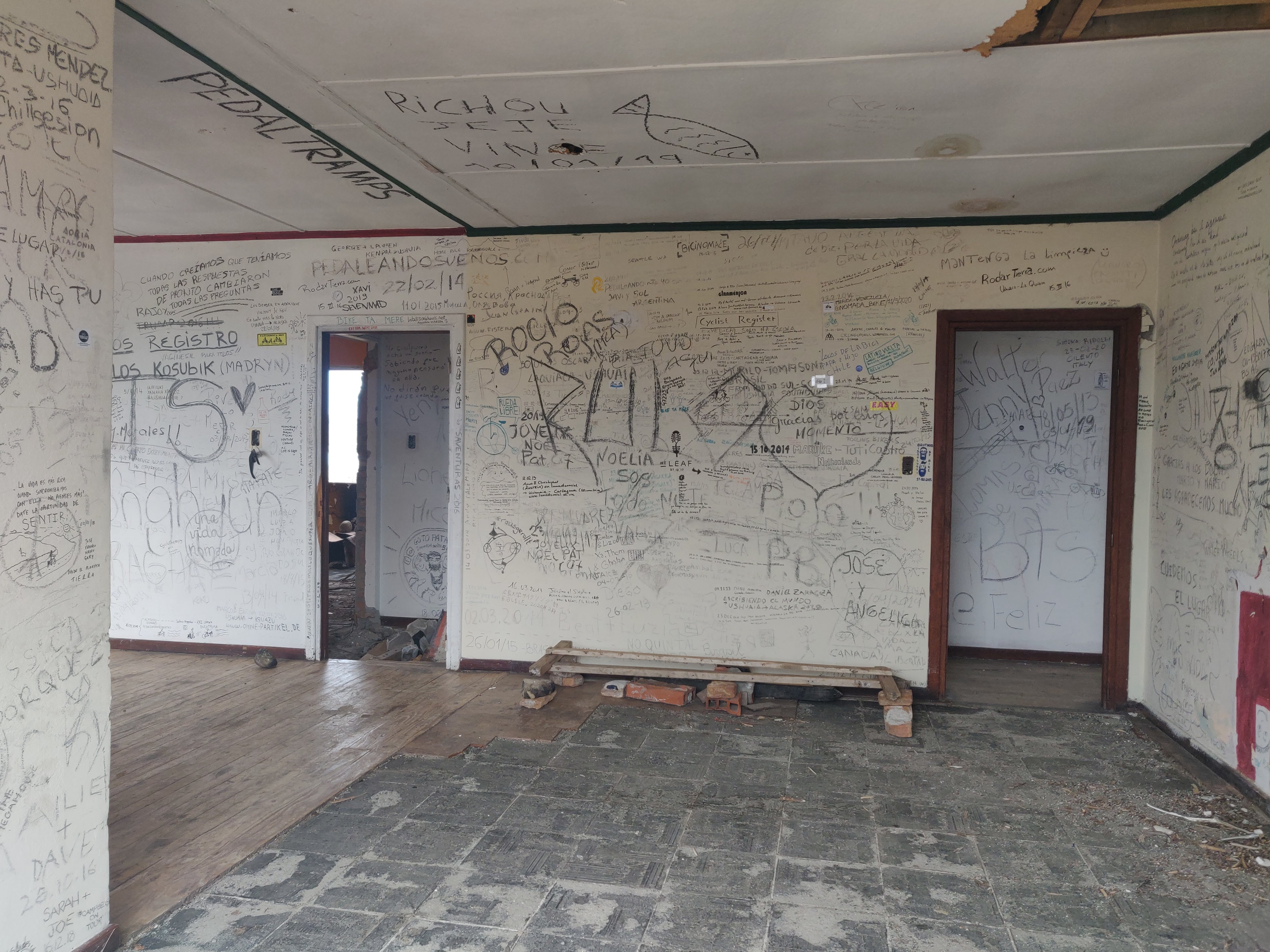
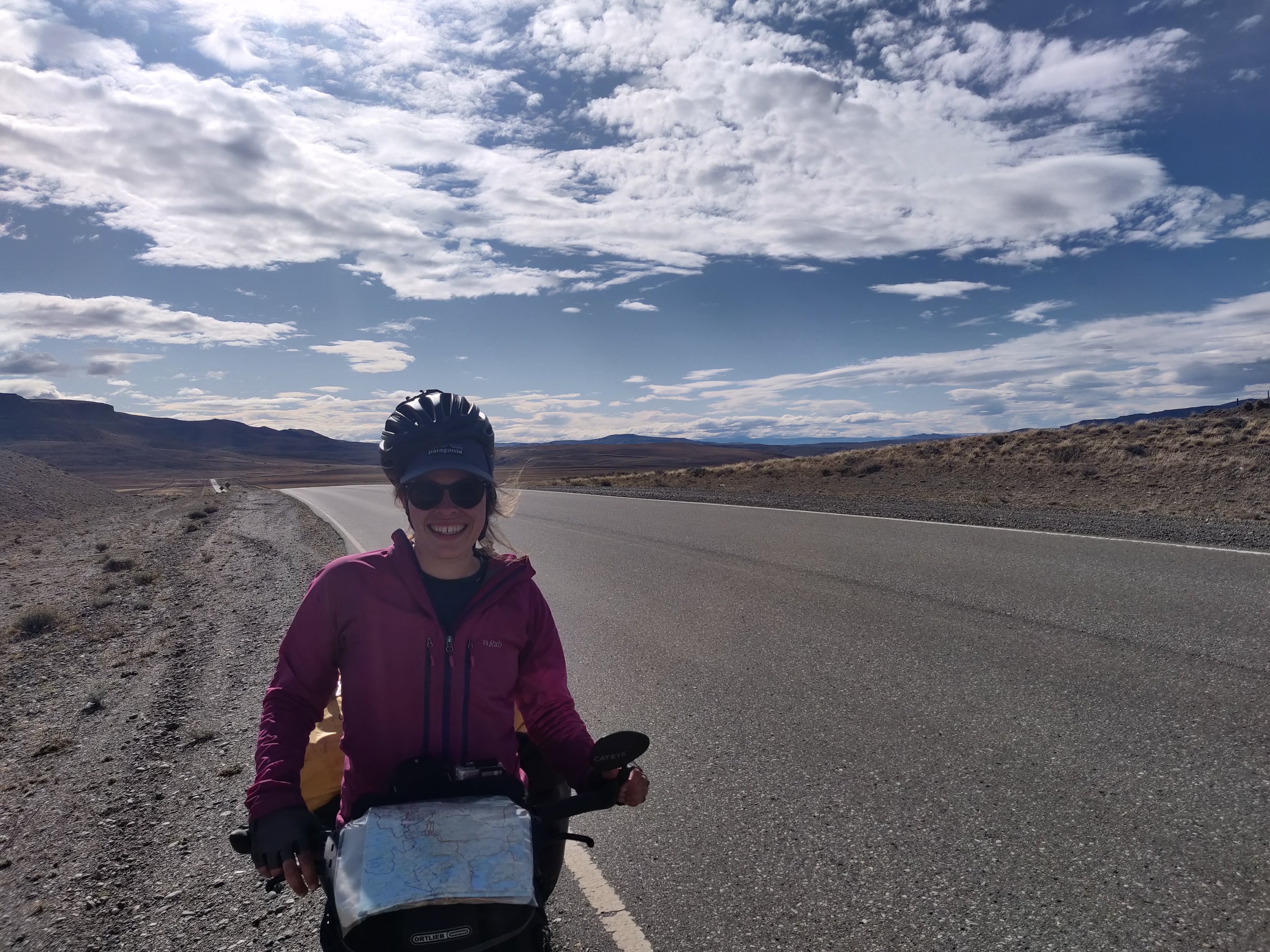
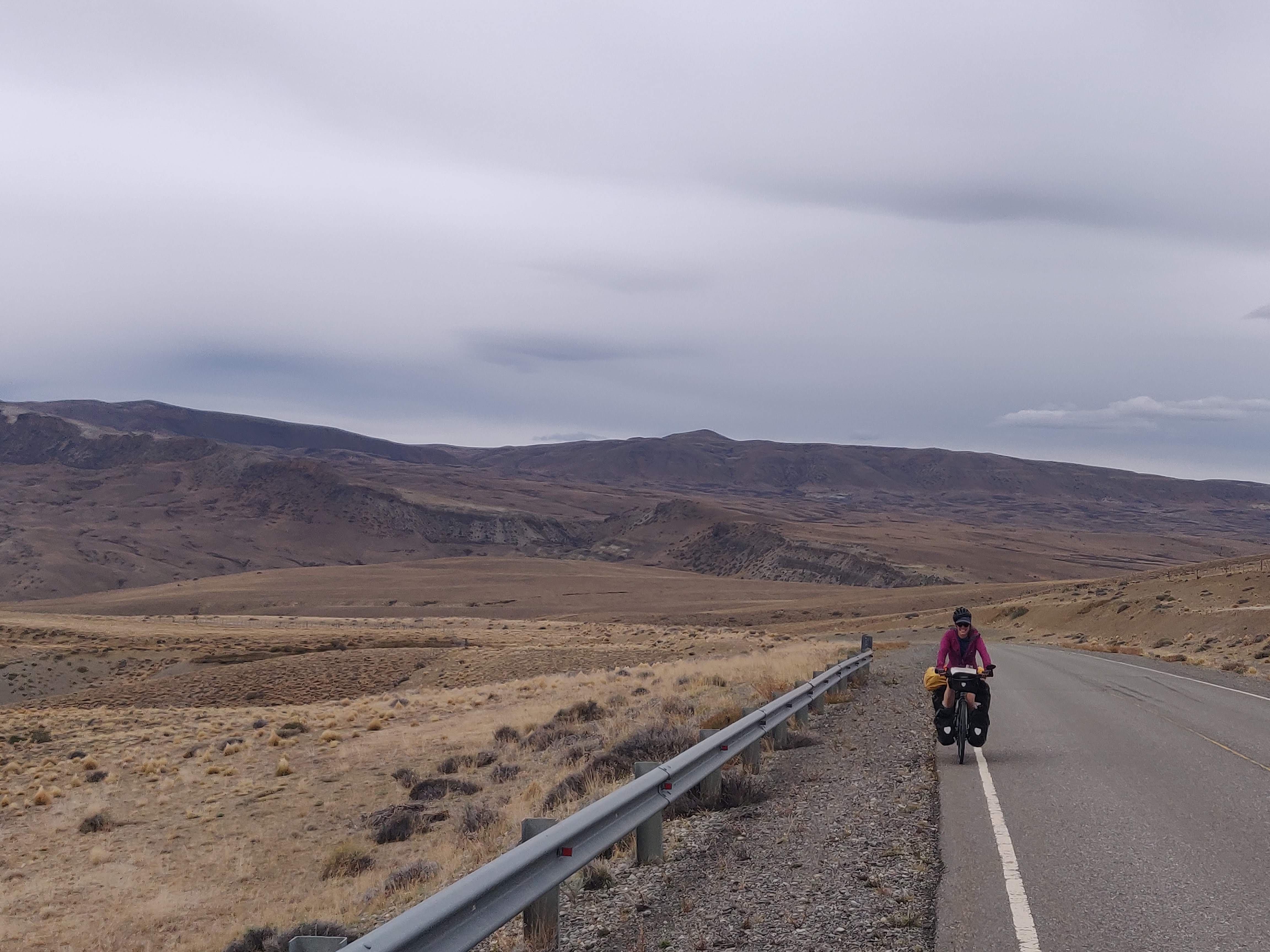
We headed off by 1pm, due south down the River Leona valley. We stopped briefly at the abandoned “pink house”, referenced in Bicycling Patagonia as famous for offering cyclists shelter from the wind, which it has to be said was decidely bleak, and then continued onwards, bearing more west and uphill away from the river.
By 4pm we were rewarded with views of the quite incredibly aquamarine Lago Argentina, with Calafate in the distance. We turned southeast and downhill towards the turn off onto RP19 towards the wild camping spot marked on iOverlander.
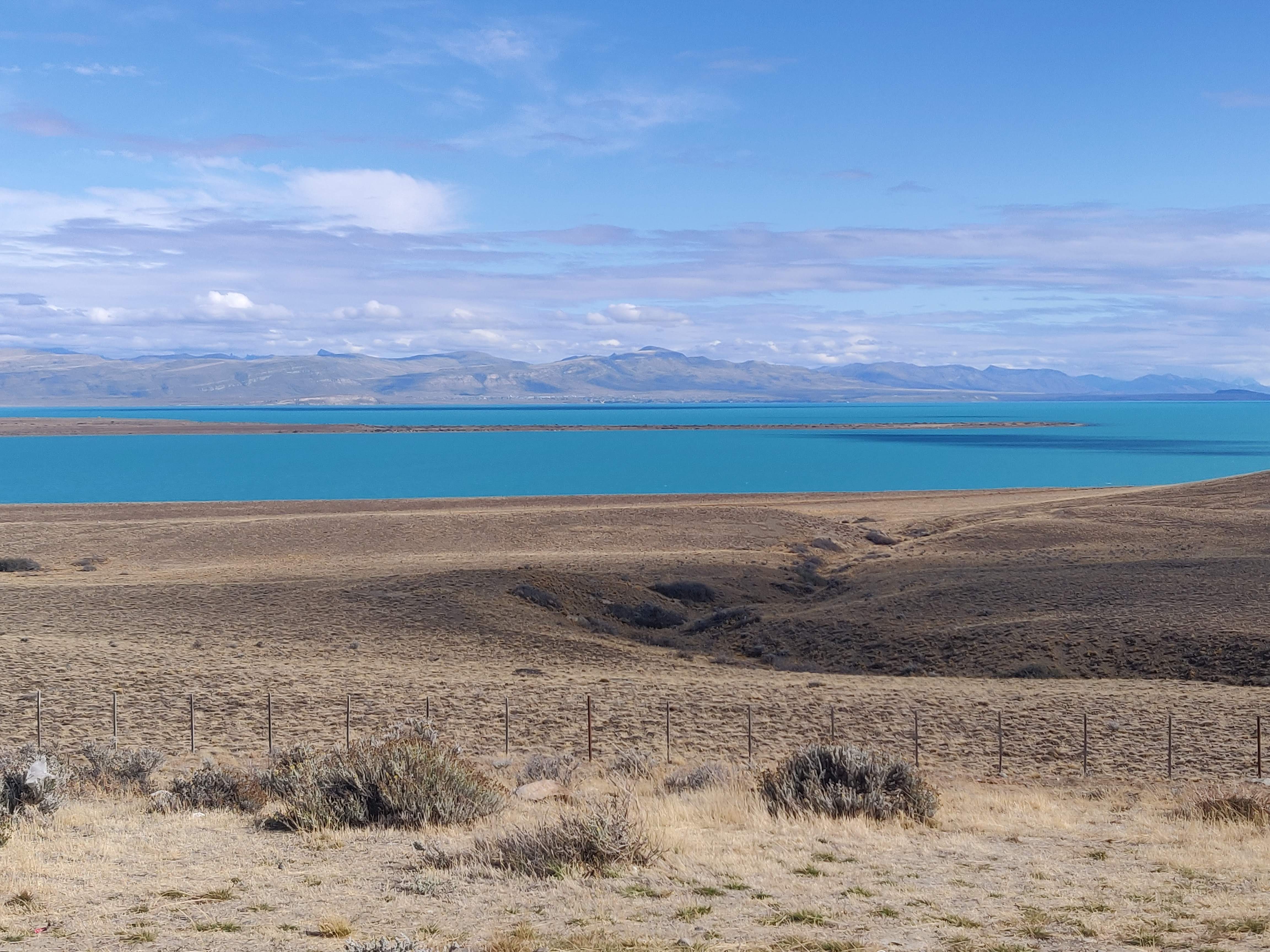
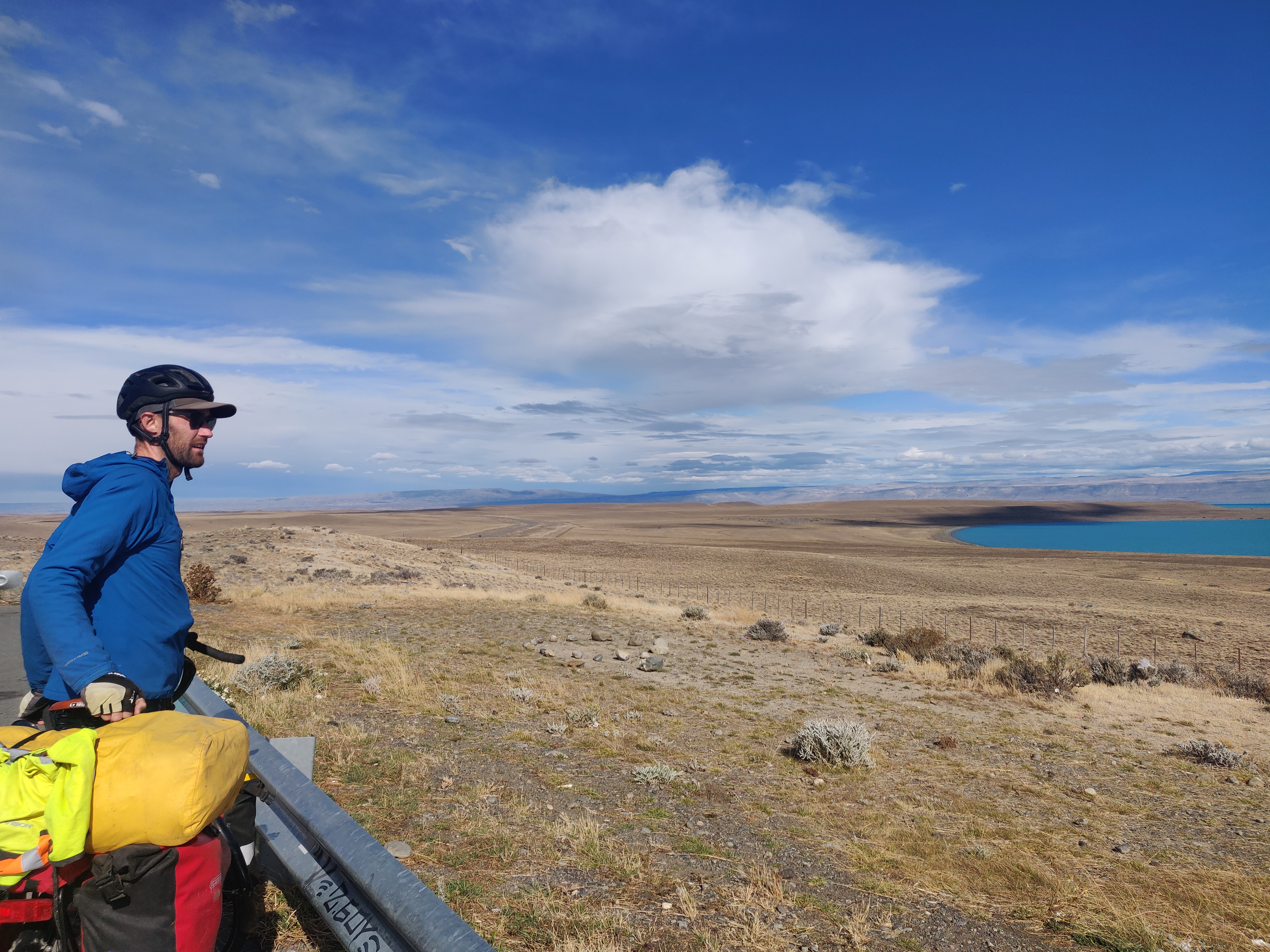
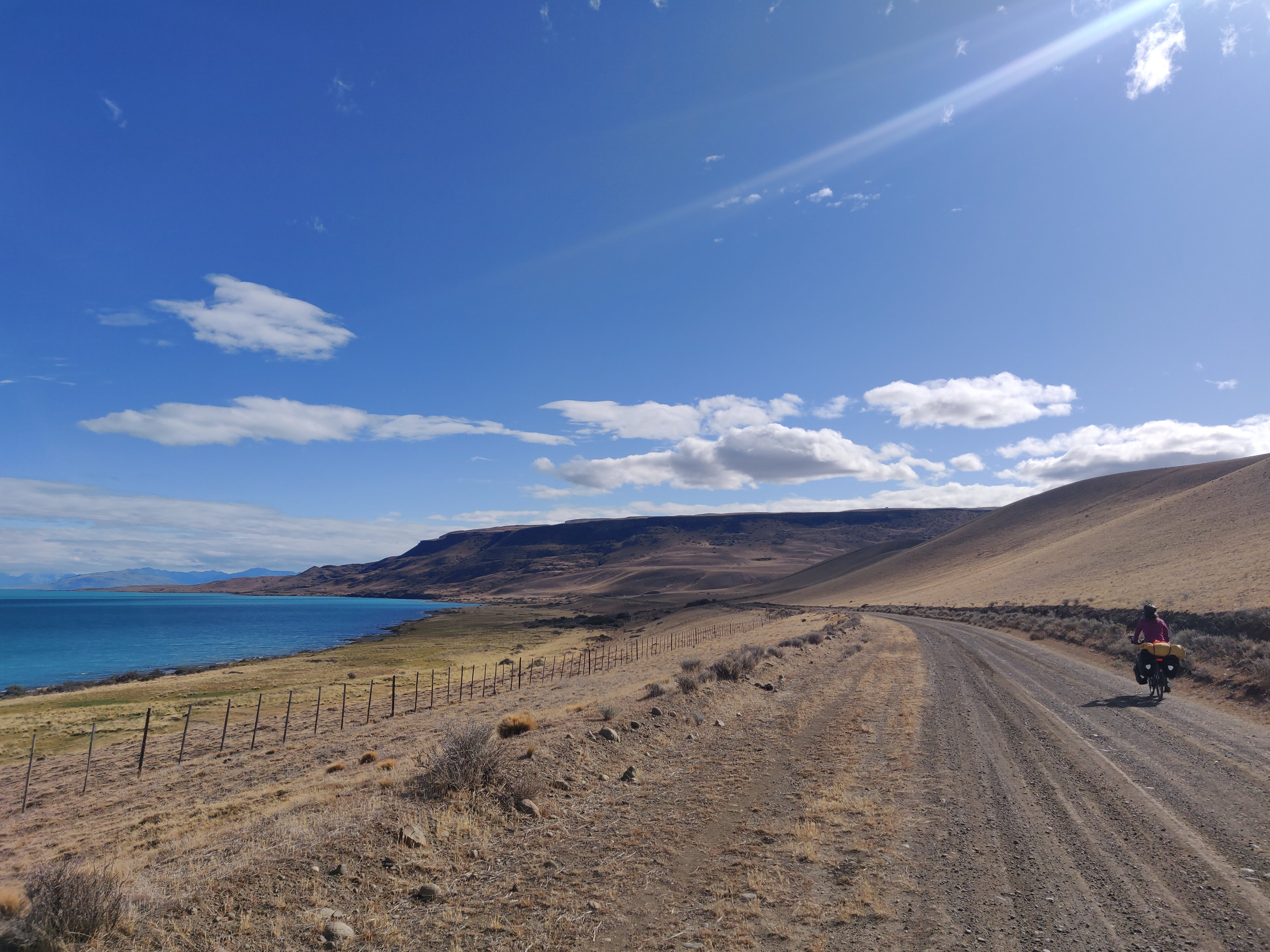
Whilst only a few km long, the ripio RP19 track reminded us of previous hardships, although the site of some families of guanaco grazing nearby and the approaching lake made the bumps just about tolerable. We found the beautiful camping spot well sheltered by a hillock to the west, and with access to its own little lake beach.
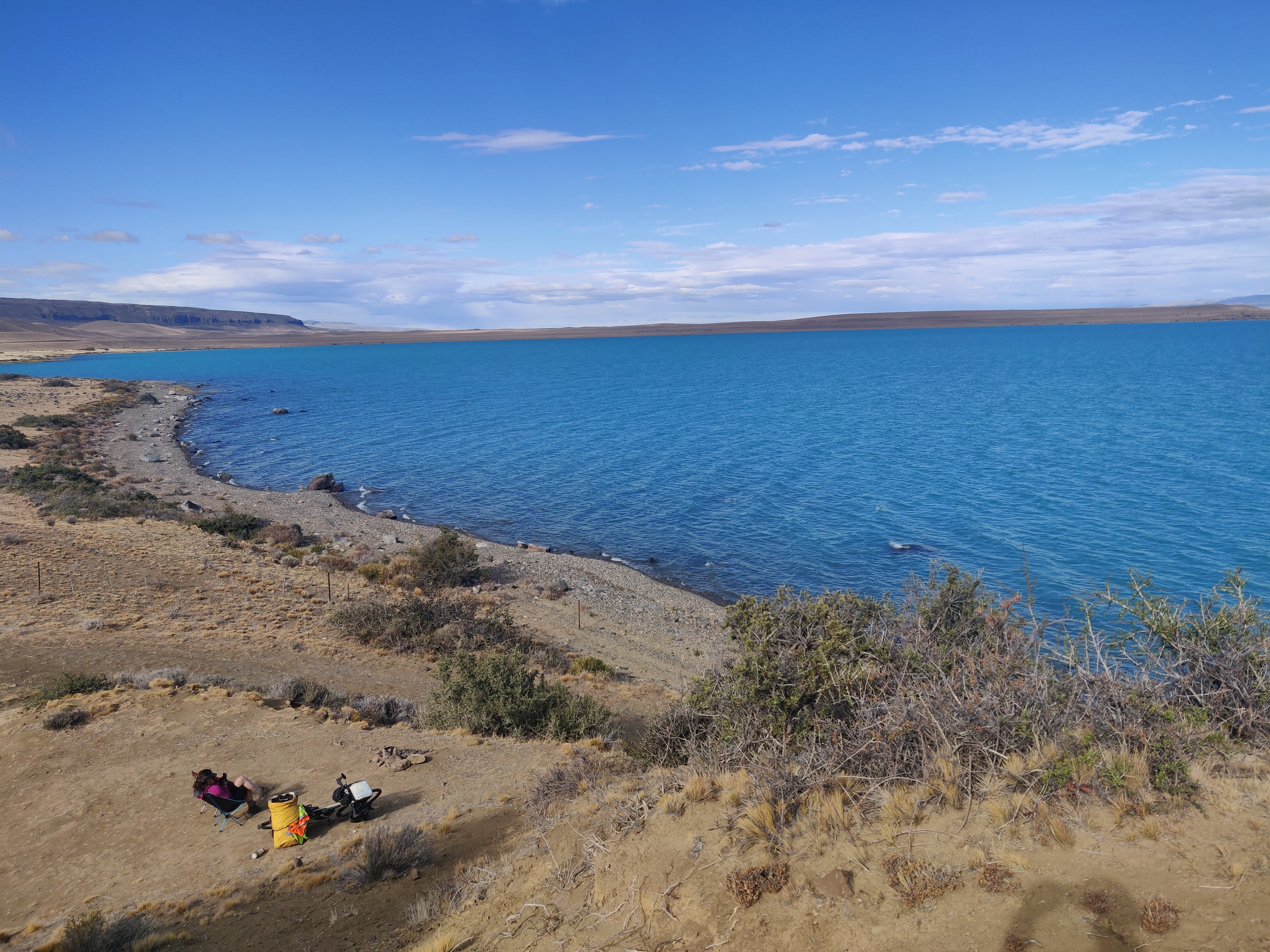
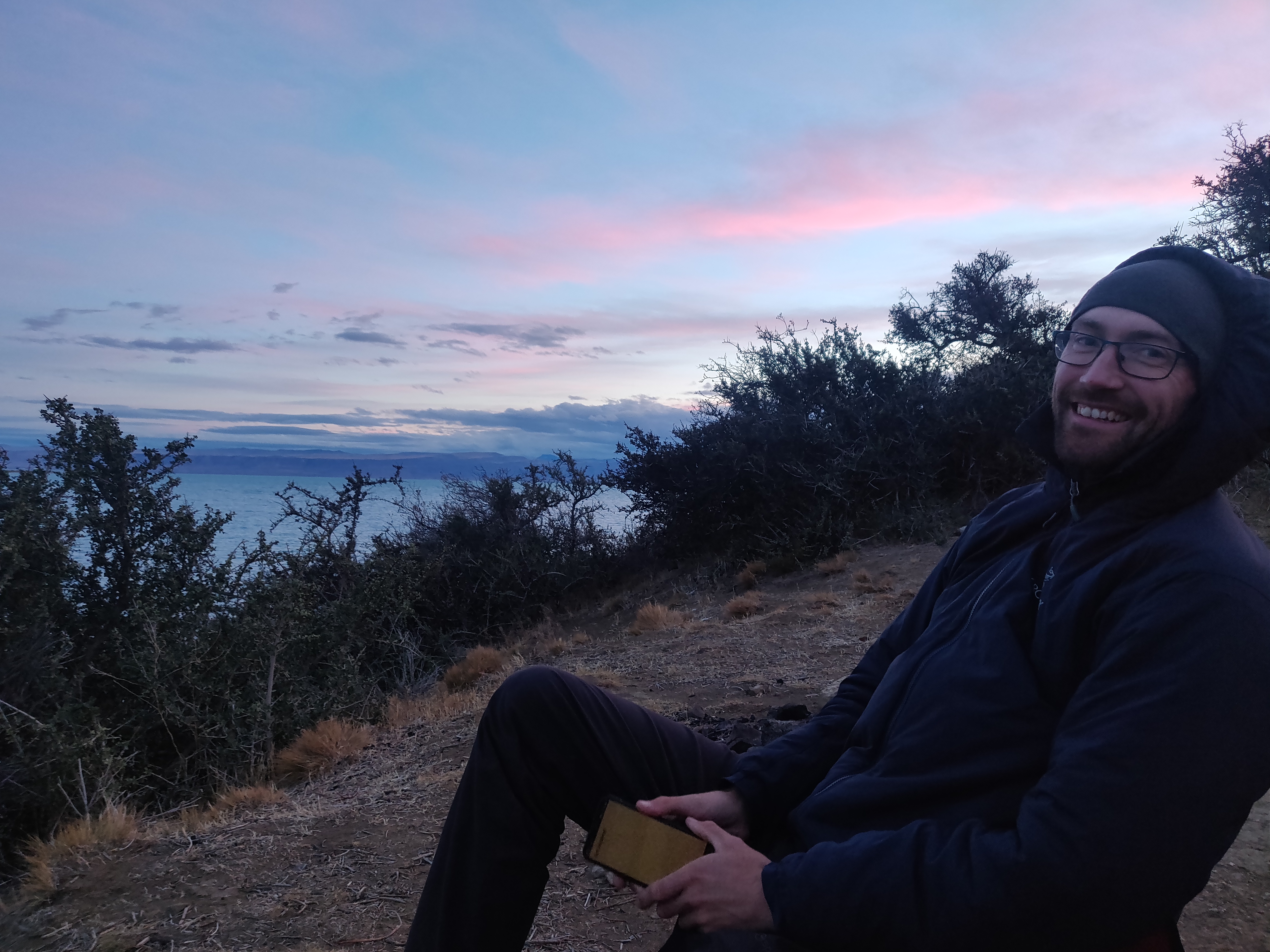
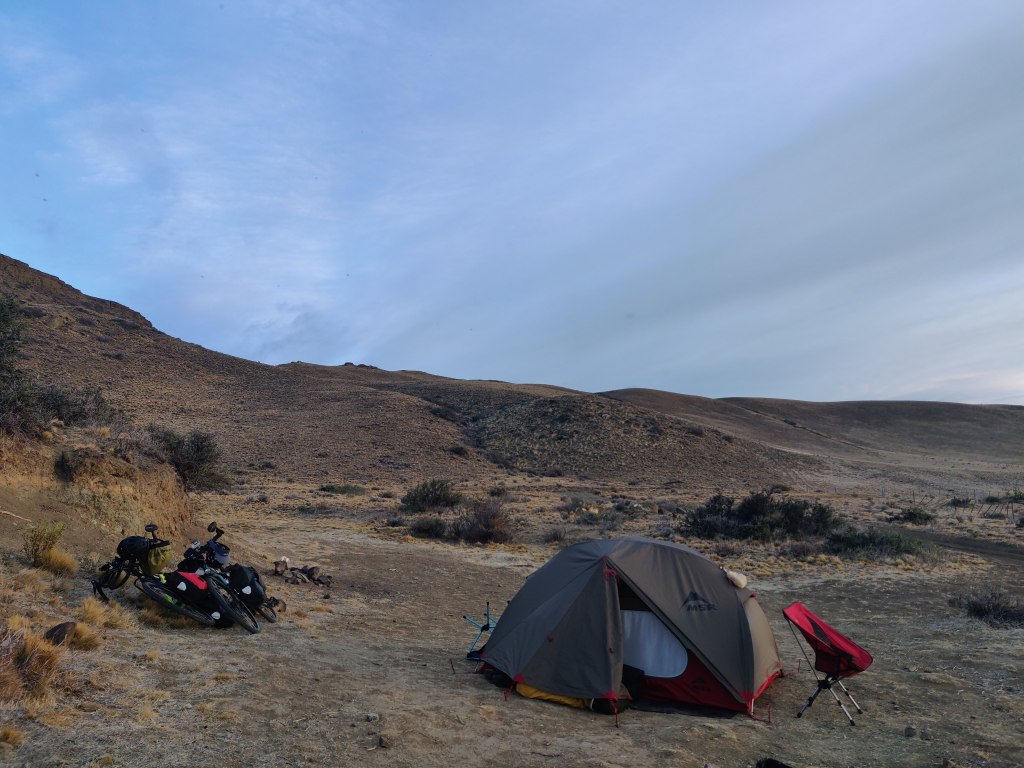
We set up for the night, refilled water from the lake and went for a short walk. As night fell, the lights of El Calafate appeared on opposite shore of the lake, 20 km to the south.
On Friday morning, we rose earlier to try to make the most of lighter morning winds, and were away by 11am, disturbing a few guanaco families as we rattled back east along the ripio track to Ruta 40. Heading southeast initially, we had a light headwind, but made steady progress as the morning wore on.
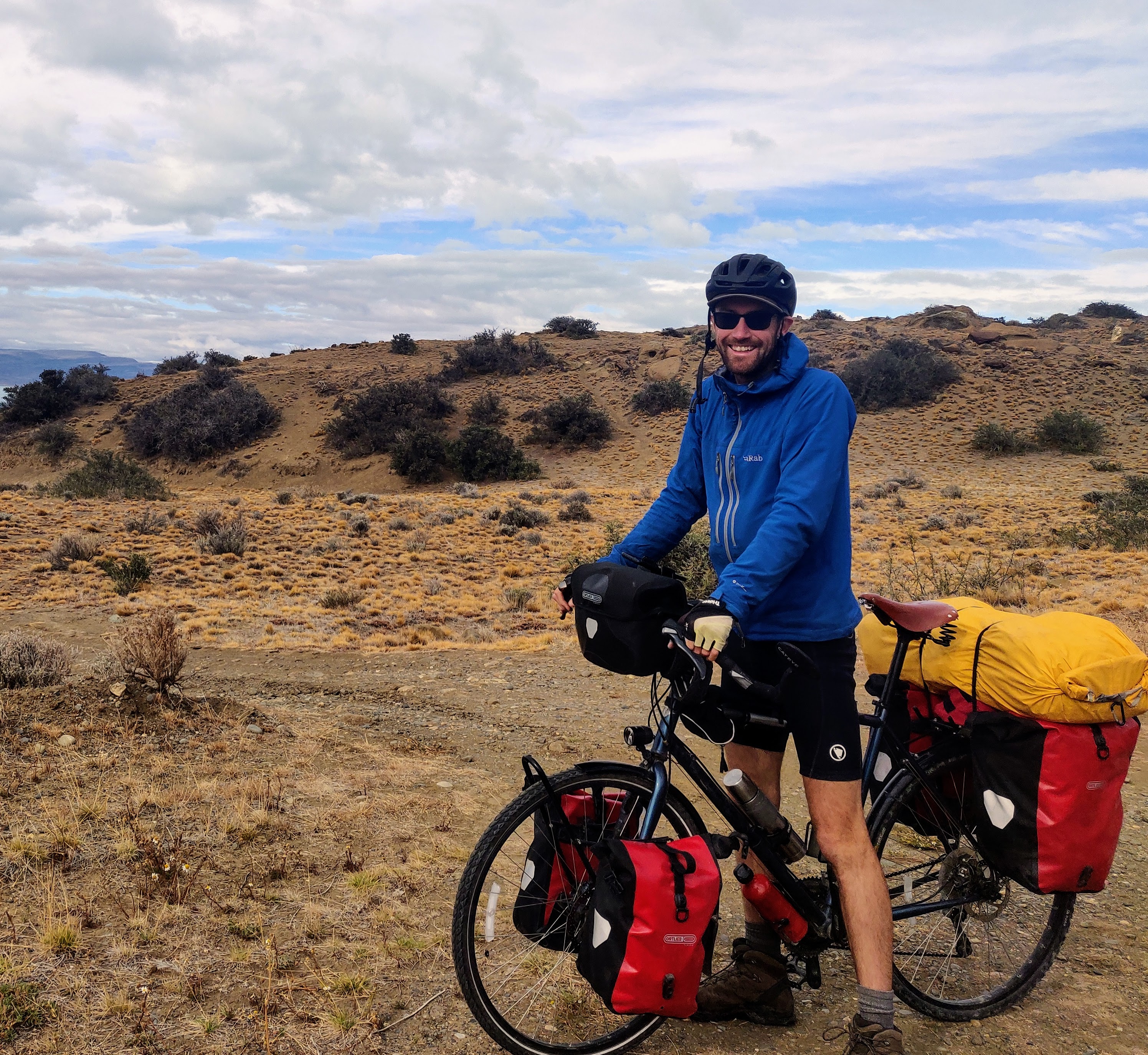
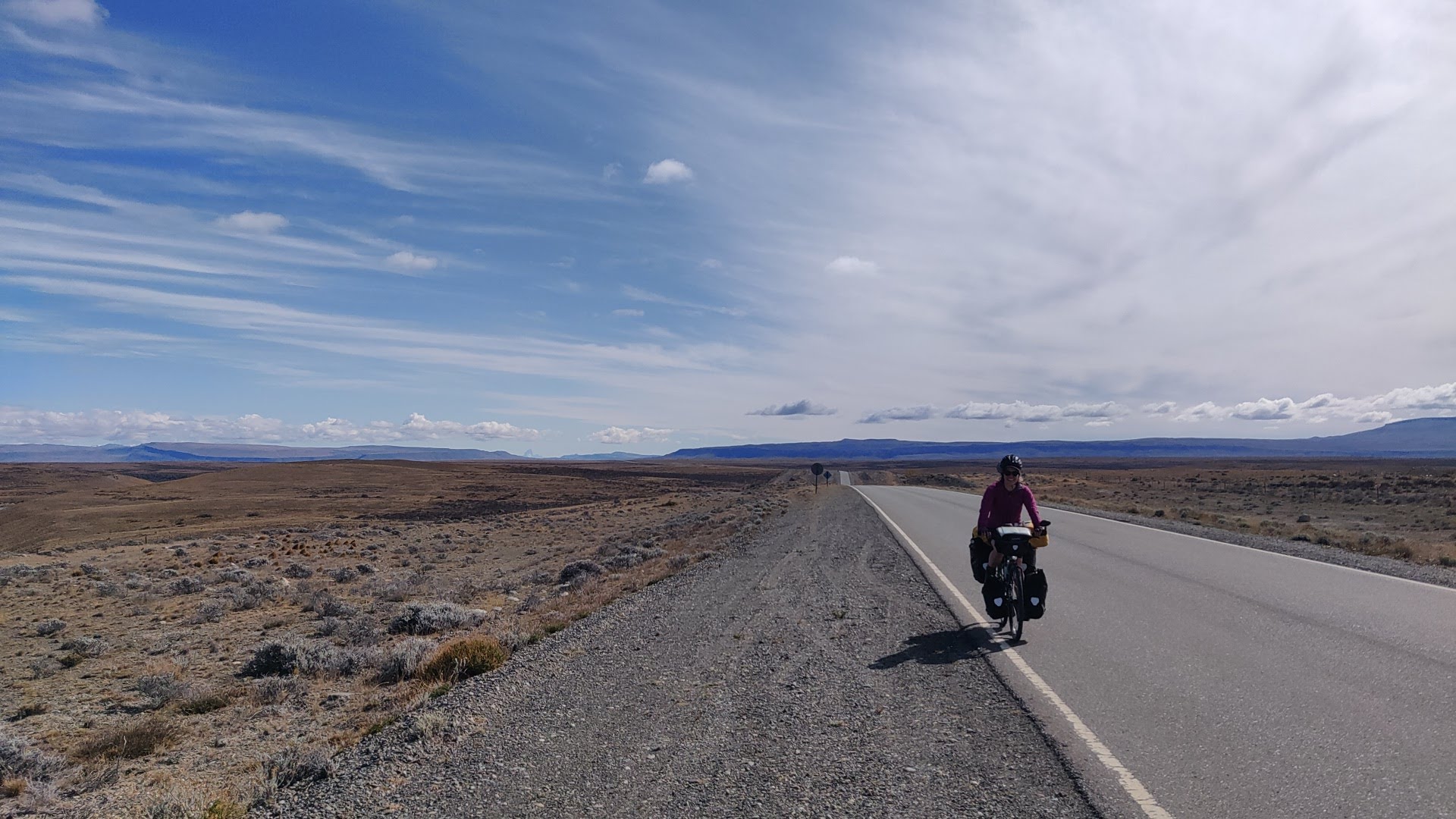
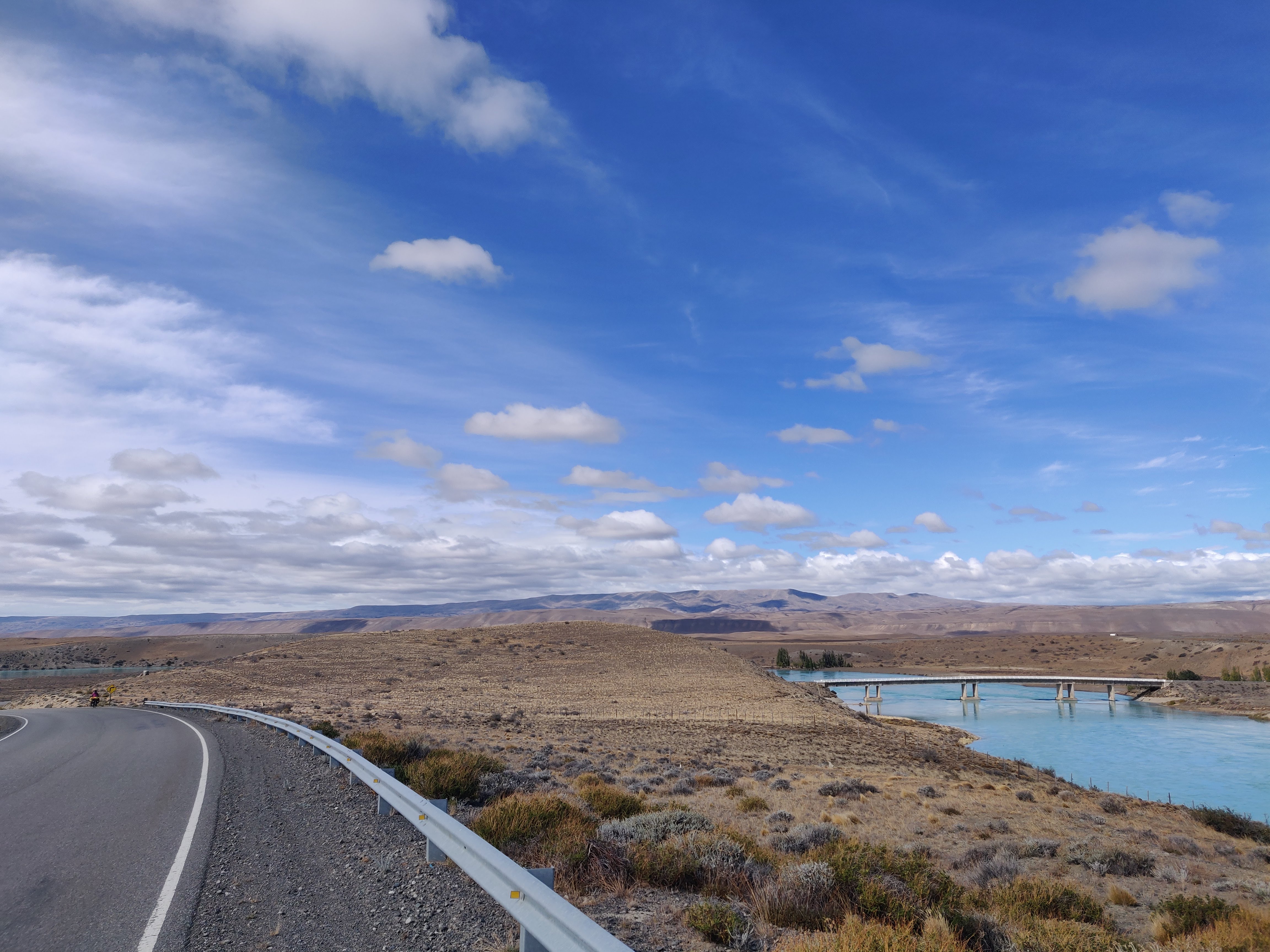
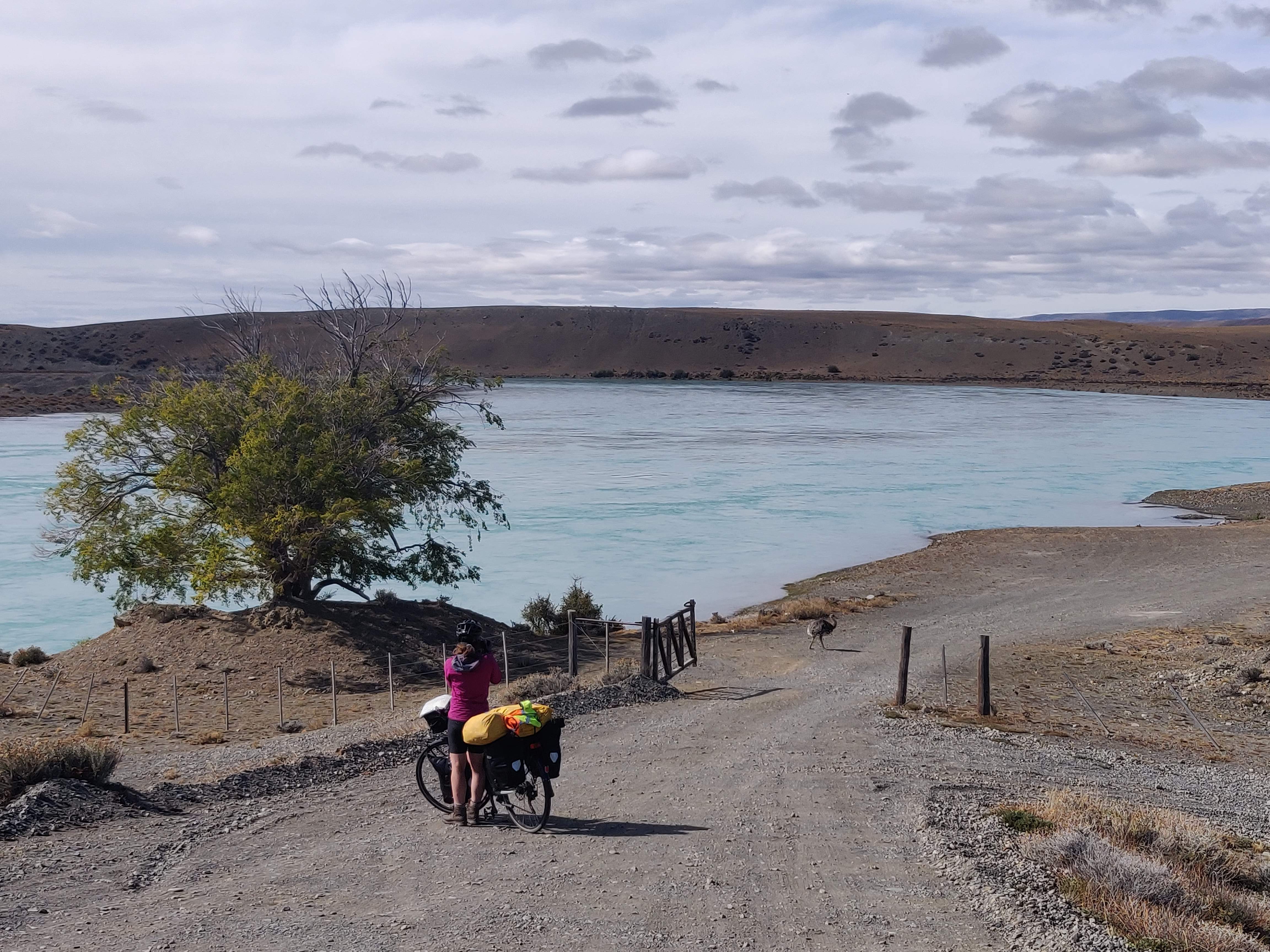
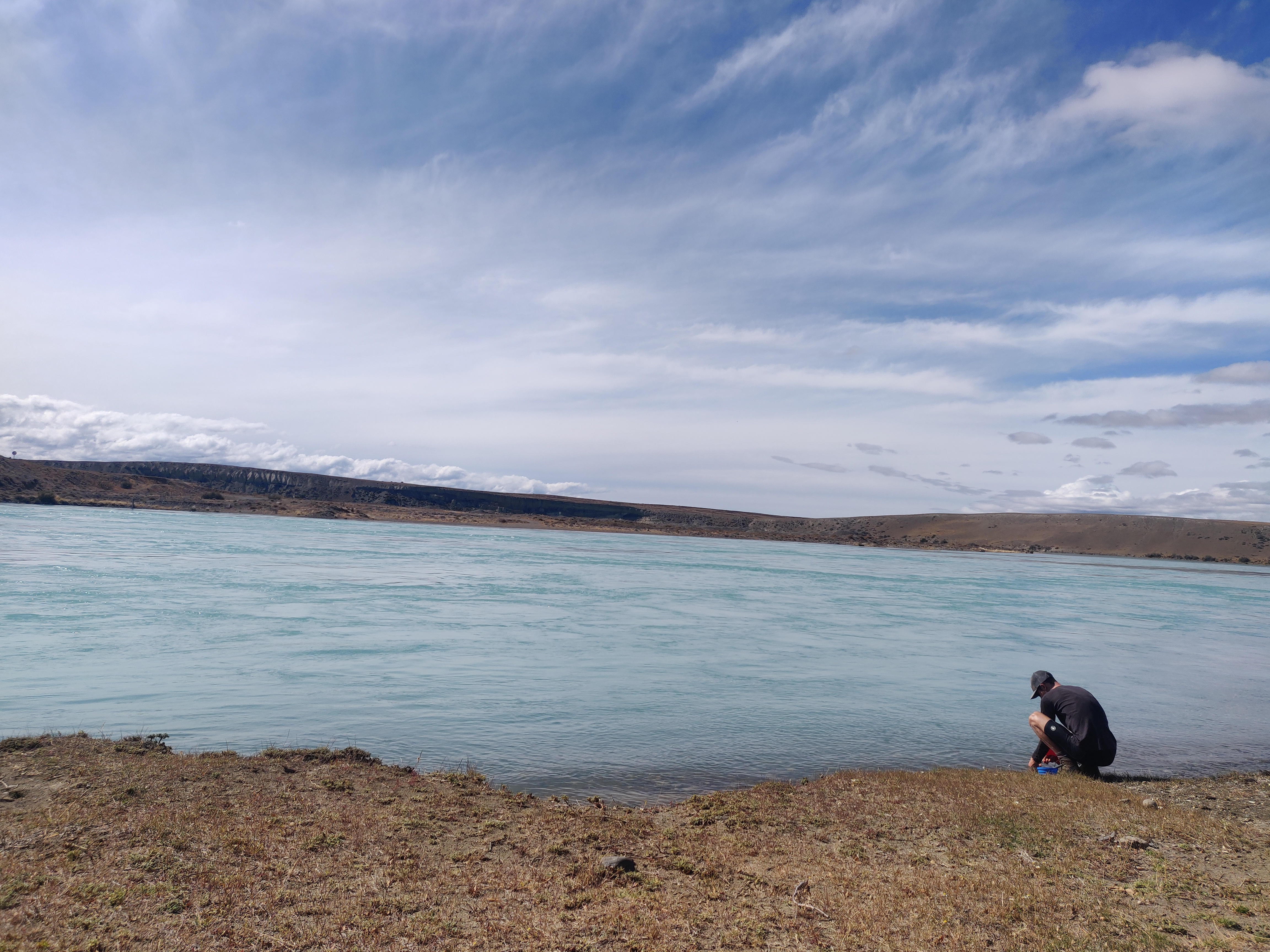
Before long we were back at Rio La Leona, crossing this before a gentle climb up and down into the valley of the Santa Cruz river, which drains Lago Argentina and flows all the way to the Atlantic 250 km to the east. A meander in the river at the road bridge made an excellent spot for lunch, where we were priviledged to spot a Rhea walking across our path.
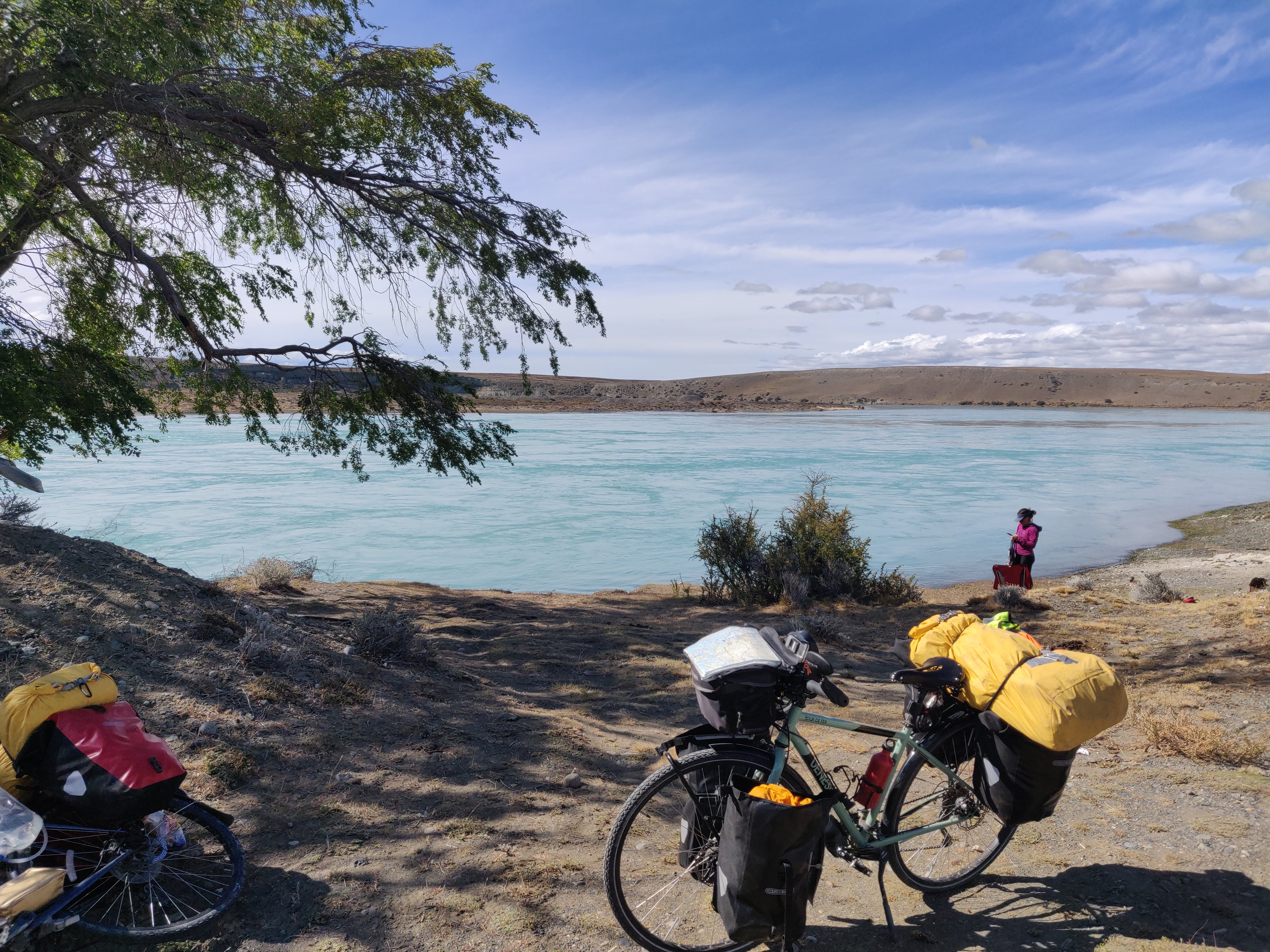
In the afternoon, only 5km south brought us to the junction with Ruta 11 and a sharp turn west towards El Calafate. Now gone 2pm, the afternoon wind had set in from dead ahead and there was no disgusing the fact the next 30km to Calafate were going to be a slog, with a gentle uphill the whole way adding to the exertion.
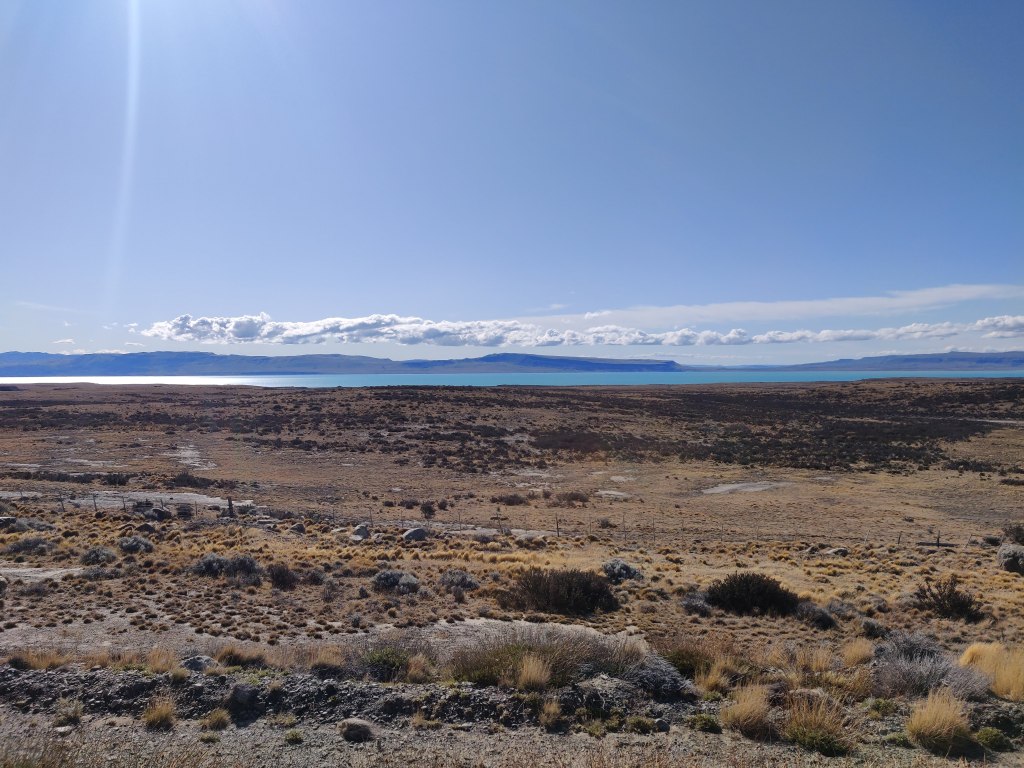
We passed the airport after 15 km and then were treated to more traffic on the road as well as the headwind and climb. After another hour, we finally passed through the city border gate, and emerged by the Alto Calafate Hotel with views down over the town. We turned right downhill along Avenue Jorge Newbury, and cruised into Calafate town, bustling with tourists browsing souvenir shops, alfajore “factories”, restaurants and bars.

 Pedalling_Patagonia