We had wanted to visit Park Patagonia ever since reading about it at the farm in El Blanco. An initiative started by the Tompkins Conservation Trust; the charity founded by Kris & Doug Tompkins (the respective previous CEOs of the clothing brand Patagonia and North Face) to assist in the landscape scale approach in the conservation of nature and wild places, centred in Chile and Argentina. To read about the other project themes that Tompkins Conservation has been involved in, below is helpful graphic:

More information can also be found at: http://www.tompkinsconservation.org/home.htm
The history and strategy of National Park Patagonia is particularly interesting given its location and history. The site had previously been a huge (170,500-acre) estancia (sheep farm) and up until the 1980s had been owned by Belgian (presumably absentee) landlord. However it is situated in a biologically critical area in Aysén, Chile, and contiguous to the Jeinimeni Reserve the north and the Tamango Reserve to the south. Since the purchase of the site, the removal of the sheep, the associated fences and slow introduction of other species the landscape has flourished. In January 2018 Kris Tompkins and the Chilean president, Michelle Bachelet, signed a secree creating 5 national parks, including Parque Patagonia, effectively gifting the park to the nation.
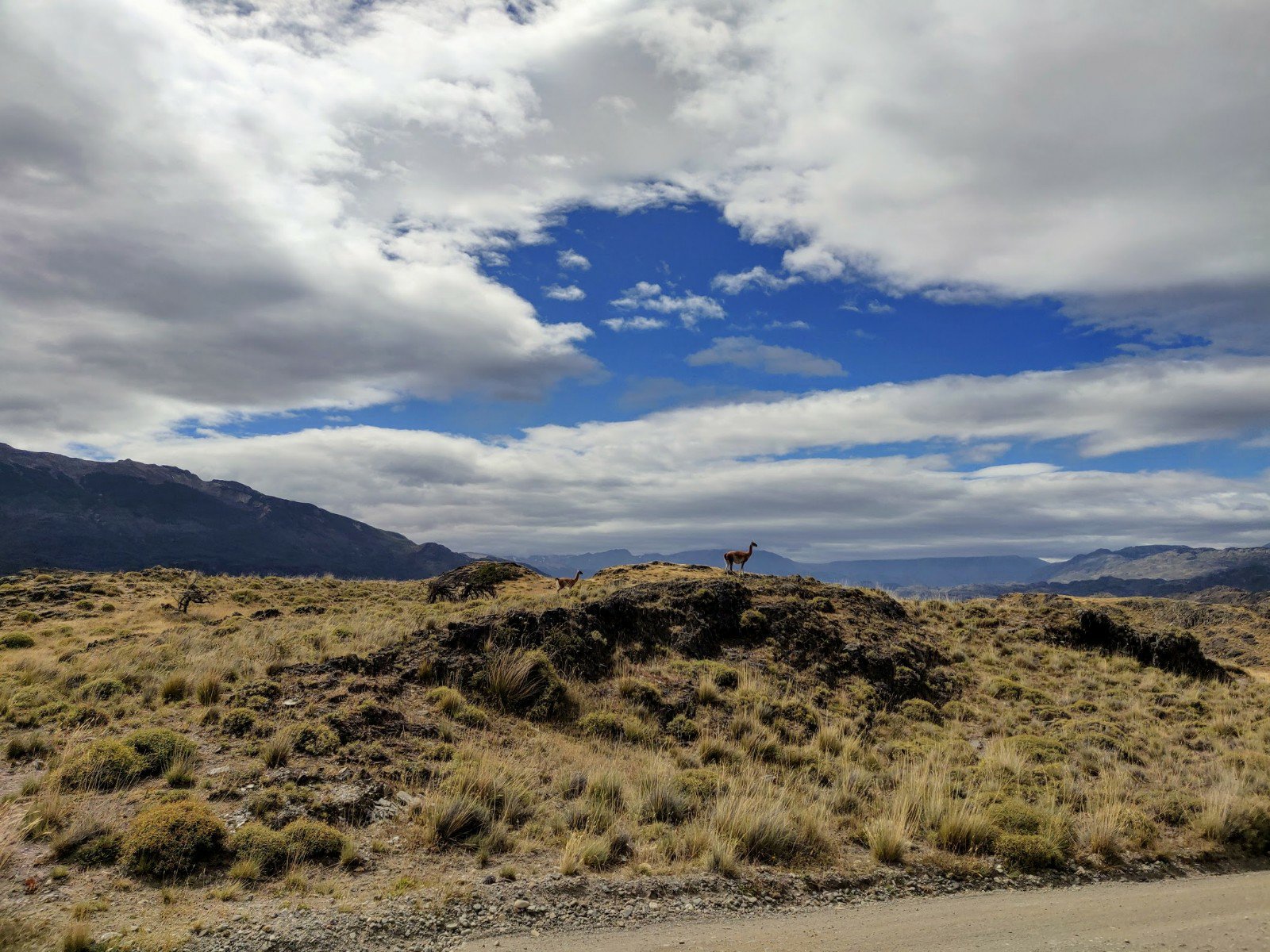
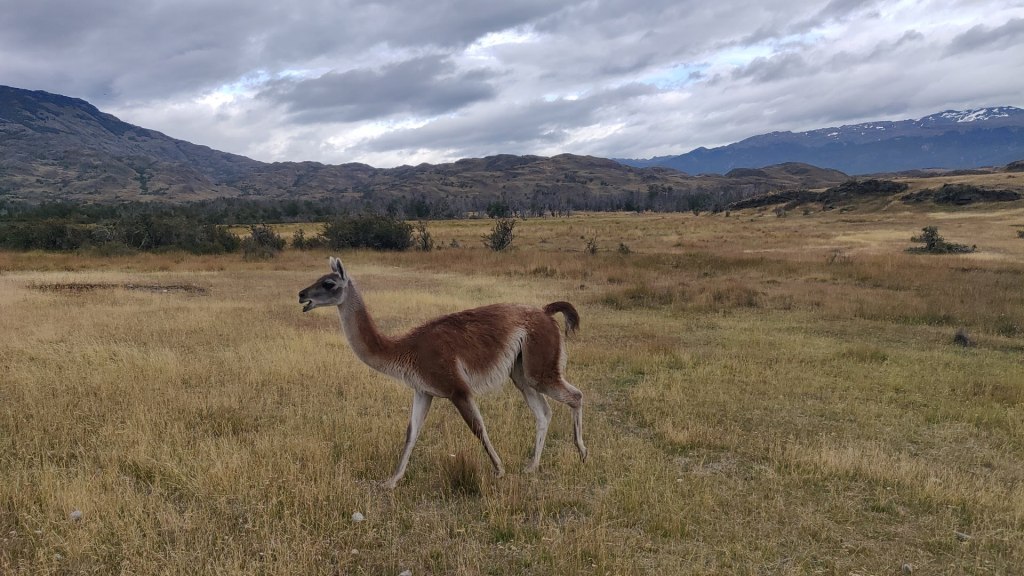
The most physically noticeable fauna being the guanaco, a wild relative of the llama. Its rather comic behaviour described by a little known biologist named Charles Darwin as:
I have more than once seen a guanaco, on being approached, not only neigh and squeal, but prance and leap about in the most ridiculous manner, apparently in defiance as a challenge.
http://www.conservacionpatagonica.org/blog/2012/08/28/a-history-of-valle-chacabuco/
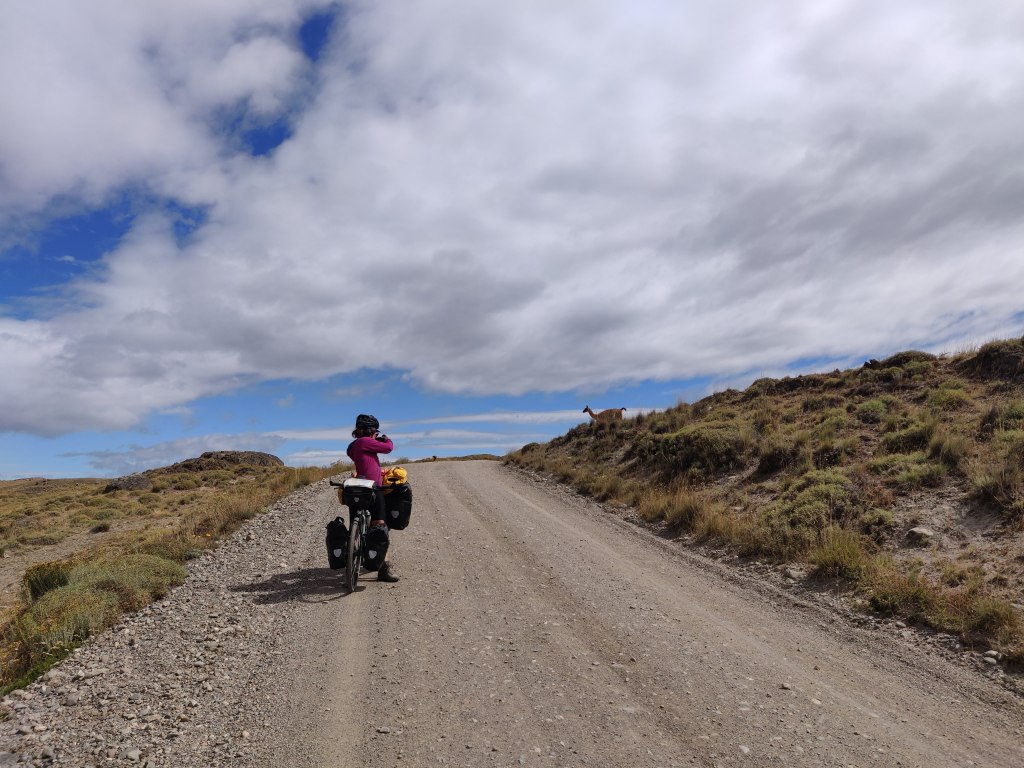
As we had yet to see a guanaco, a key stone species of Patagonia, we were very excited to visit, despite the exhausting ride to get there. Thankfully, after a brief rest at the entrance gate and we set off again uphill into the park. we almost immediately we spotted our first one, grazing peacefully on a hilltop to the south some way away. Photos taken, we pushed on into the park, suddenly aware of the potential presence of pumas. The couple we met in Exploradoras had seen one cross the road in front of them here and we both cycled a little closer together under the gloomy skies. Soon we emerged onto the wide open grass plains and were met with the glorious sight of clusters of guanaco in every direction. We found a hillock just off the road and sat down for lunch, watching the grazing animals around us. We were intrigued to see a few cows and horses as well, presumably left over from the park’s recent previous livestock inhabitants.

After lunch it was another 5 km to the park headquarters, during which we passed more guanaco and assorted birds. The headquarters comprised a collection of large dark buildings with steeply pitched rooves, scattered across a wide flat valley surrounded by hills. A helicopter and propellor plane were parked up at one end, whilst the biggest herd of guanacos we’d yet seen grazed freely across the valley, oblivious to any people wandering around. This felt even more like Jurassic Park than Queulat had done, and as we went up to the park office building it would have been no surprise to see some stegosaurus wandering past.
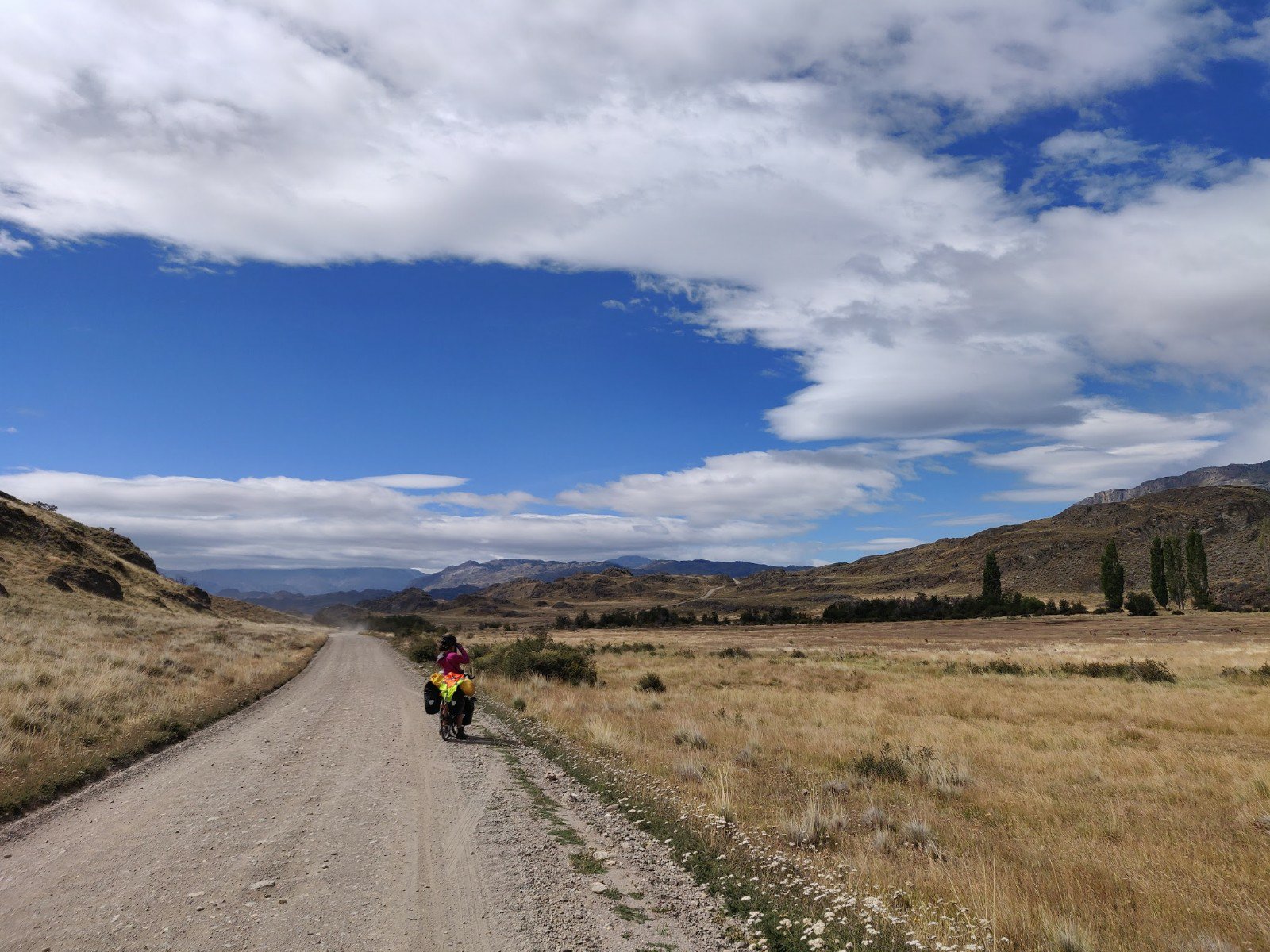
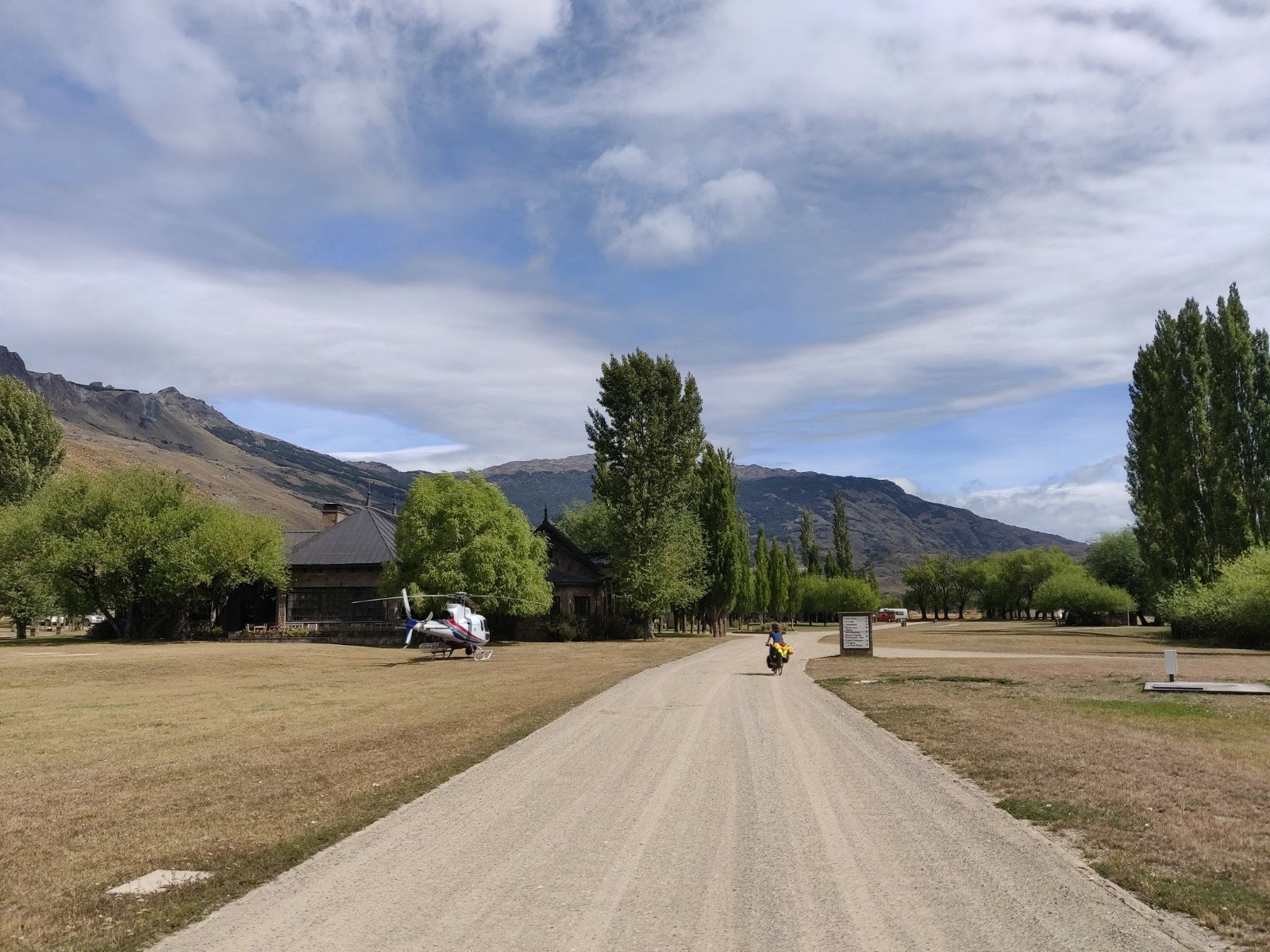
We bought our park entry tickets and paid for one nights camping before investigating the restaurant nearby. Here we learnt that the helicopter was part of a film crew making a documentary all about the Tompkins land regeneration work, of which the park was a key feature. We later found out it was being directed by Jimmy Chin of Free Solo fame, with helicopter camera work by the cameraman from Top Gun 2. Unfortunately for us, the film crew had booked out the restaurant entirely for tonight and tomorrow and there was nowhere else at all to buy any food. Staying two nights would be pushing our rations to the limit, so we decided to see how we felt tomorrow.
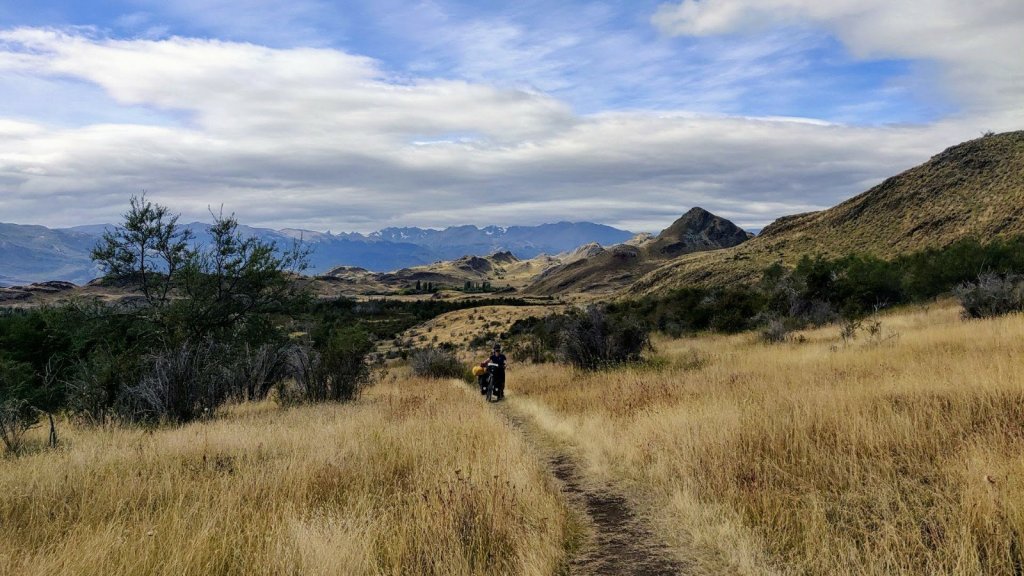
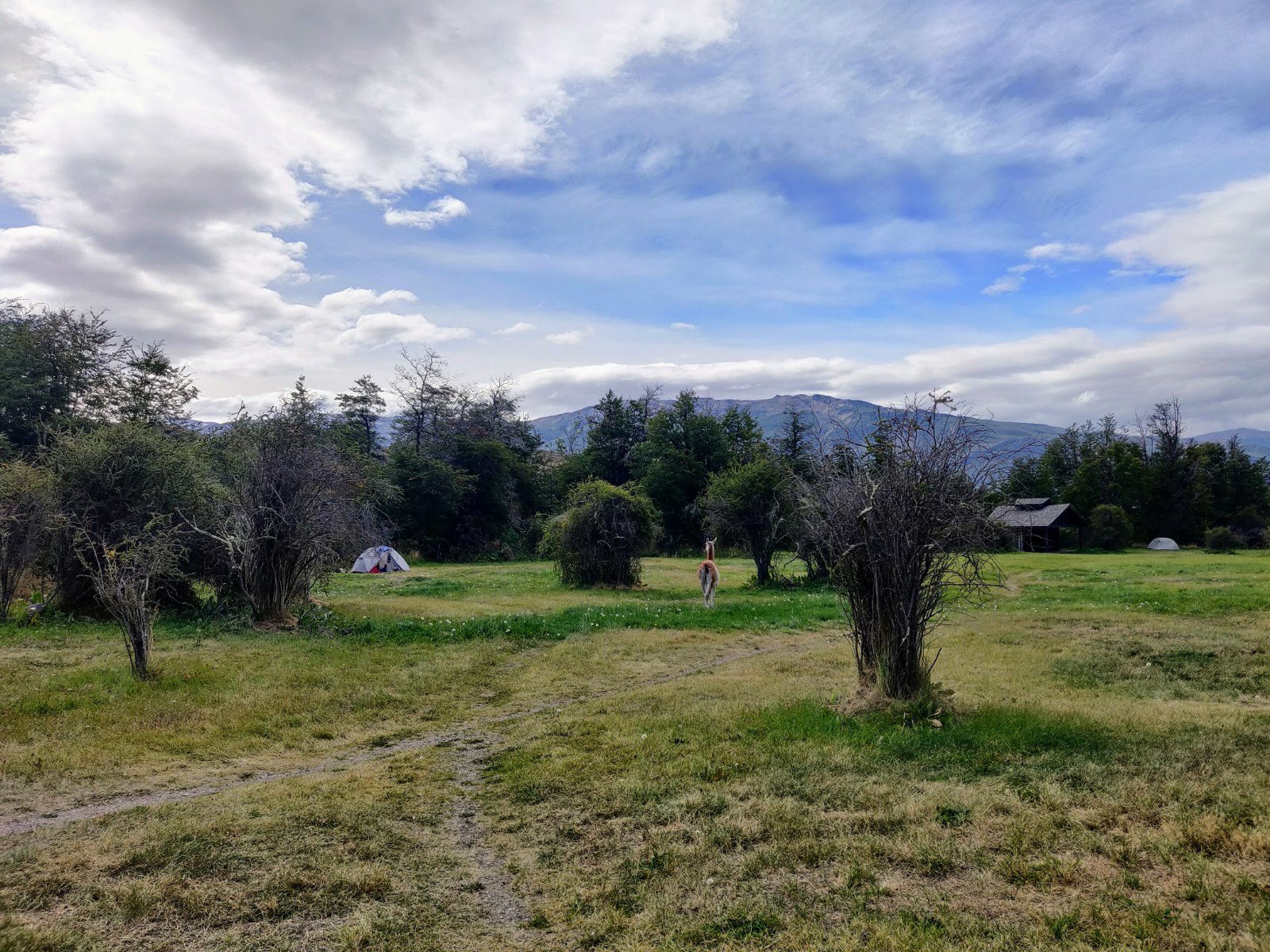
We cycled and walked our bikes the final 2 km to the enormous west winds campsite and pitched up at our own sheltered table spot. After a tepid but very welcome solar shower we relaxed in the late afternoon sun before cooking up some quinoa.
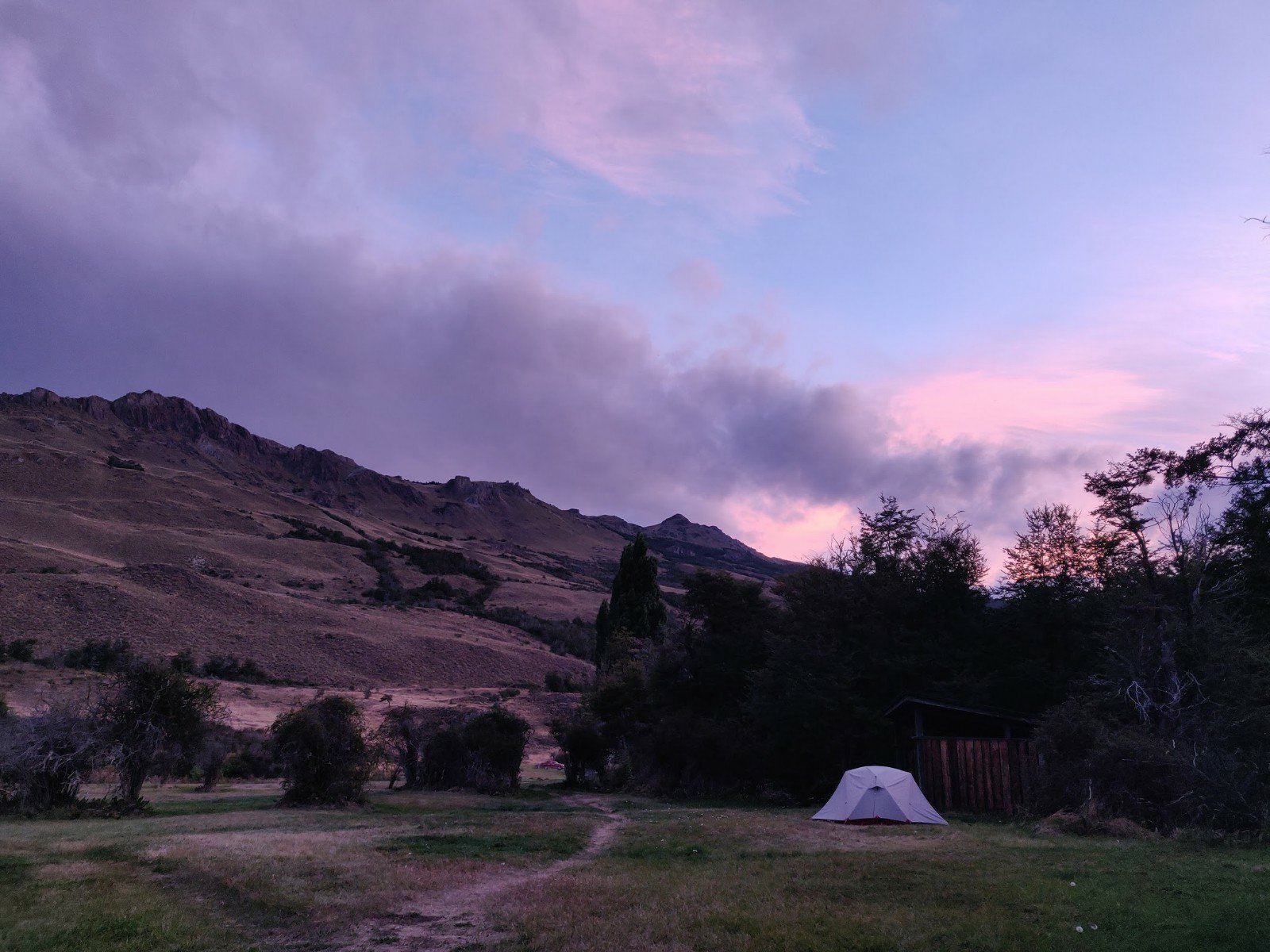
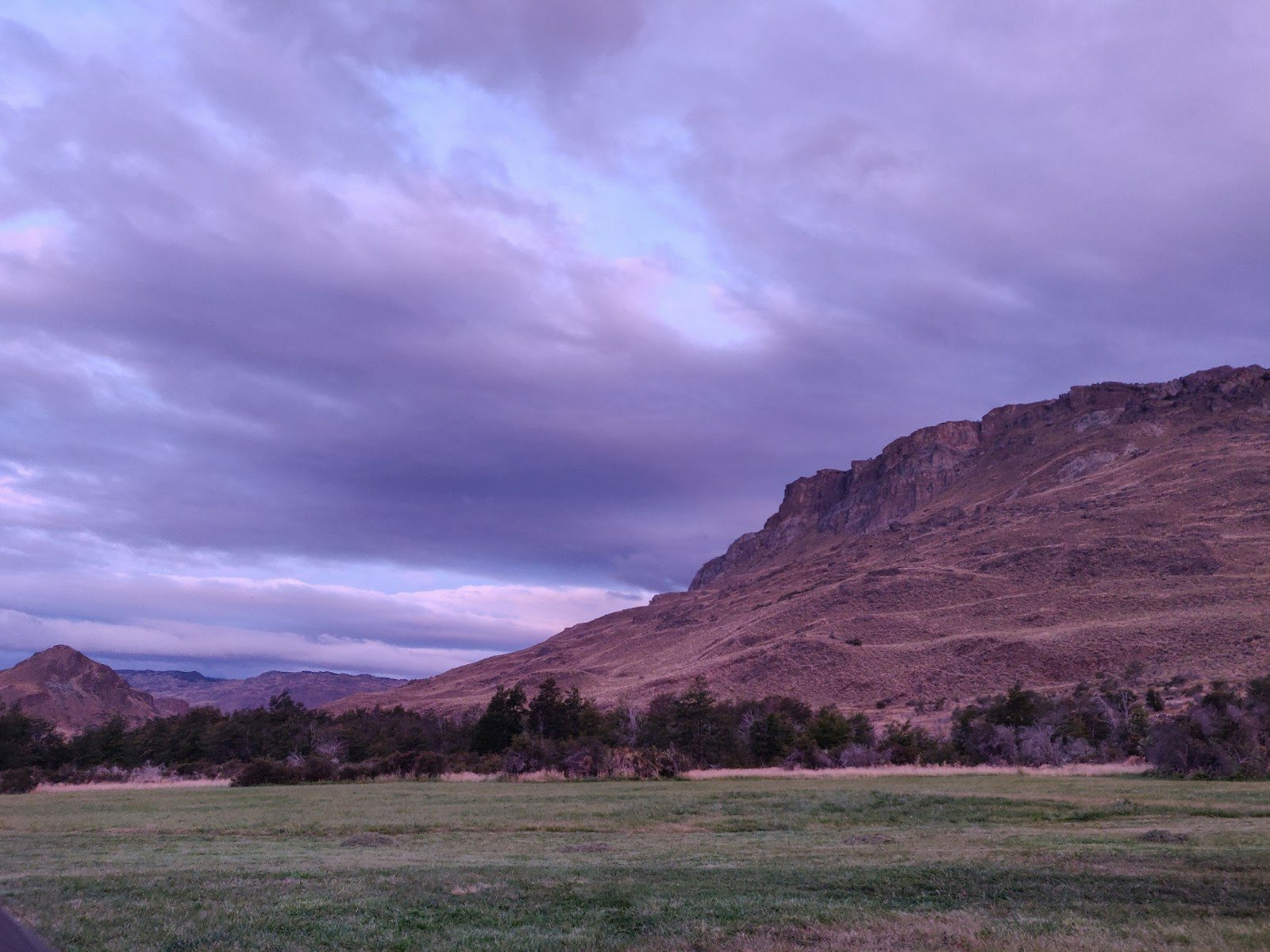
First thing the next morning, we compared our remaining food (meagre) to what we still wanted to see & do in Parque Patagonia (alot). With very limited options to get more food before Cochrane, this resulted in Robbie doing a prolonged amount of soul searching. With matters of existence weighing heavily on his conscience, we decided to stay one more day and try and fit as much as we reasonably could in it.
We therefore set off to the park headquarters to visit the museum. Although relatively small, it was one of the best musuems/information centres we had ever visited. A combination of the human impact on the world; a background to the park (history, flora & fauna, peoples); and the rationale behind the creation of the park and the wider wilderness movement. As I was in the process of reading Isabella Tree’s ‘Wilding’ it was so interesting to see the movement in a South American context. The exhibits in the museum were very interactive, including the impact on the number of children you had, your energy use depending on which and how many appliances you had in your home (photo below). We truly wished we had more than half a day allocated to spend more time revisiting and reading the exhibits.
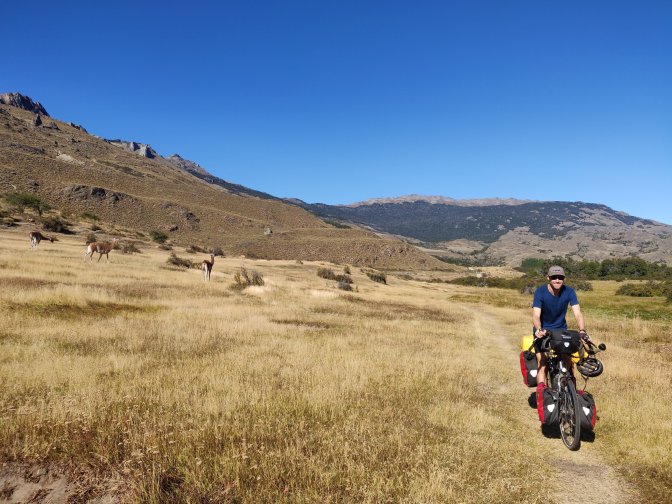
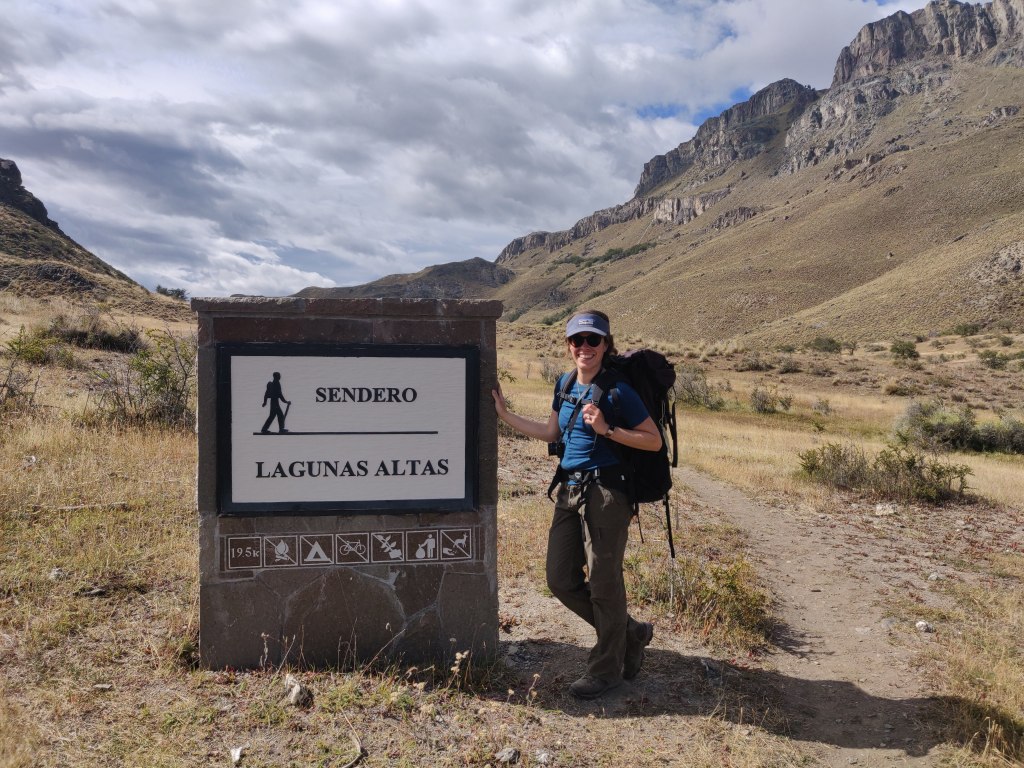
However, we also wanted to at least attempt some of the Laguna Altas trek. Effectively a walk to a high plateau with lakes on the top (neither of us have yet worked out what the geology/geography was) it was a beautiful if not strenuous walk, even if you had a full day which we did not (and still not enough food! Compromising with doing the hard bit of walking up the hill an back down again, we were greeted with a sight of multiple condors and high level views of the River Baker valley. Although sad we couldn’t do the full day walk (and indeed explore the rest of the extensive park) it was definitely somewhere where we would love to return (with sufficient food supplies!)
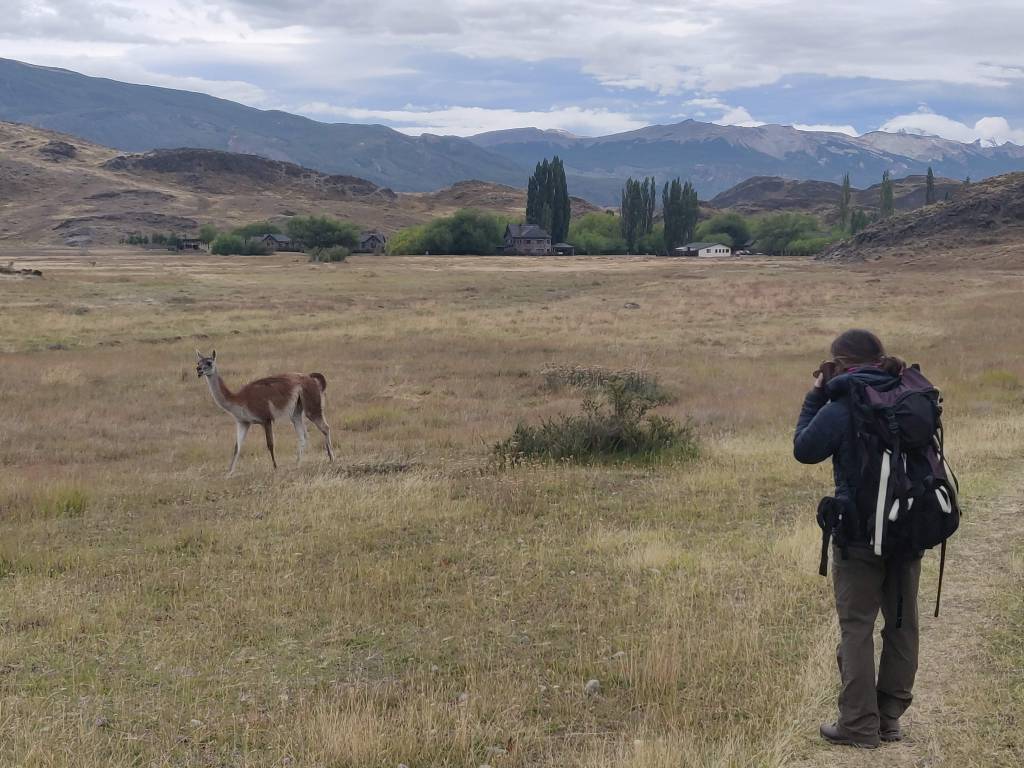
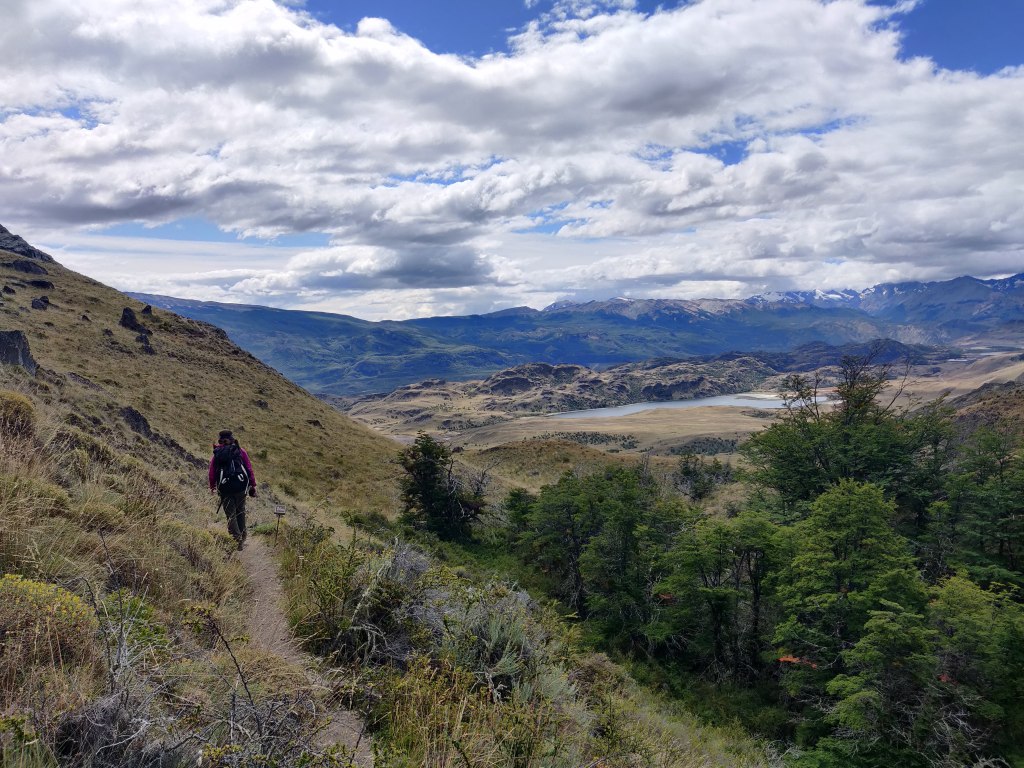
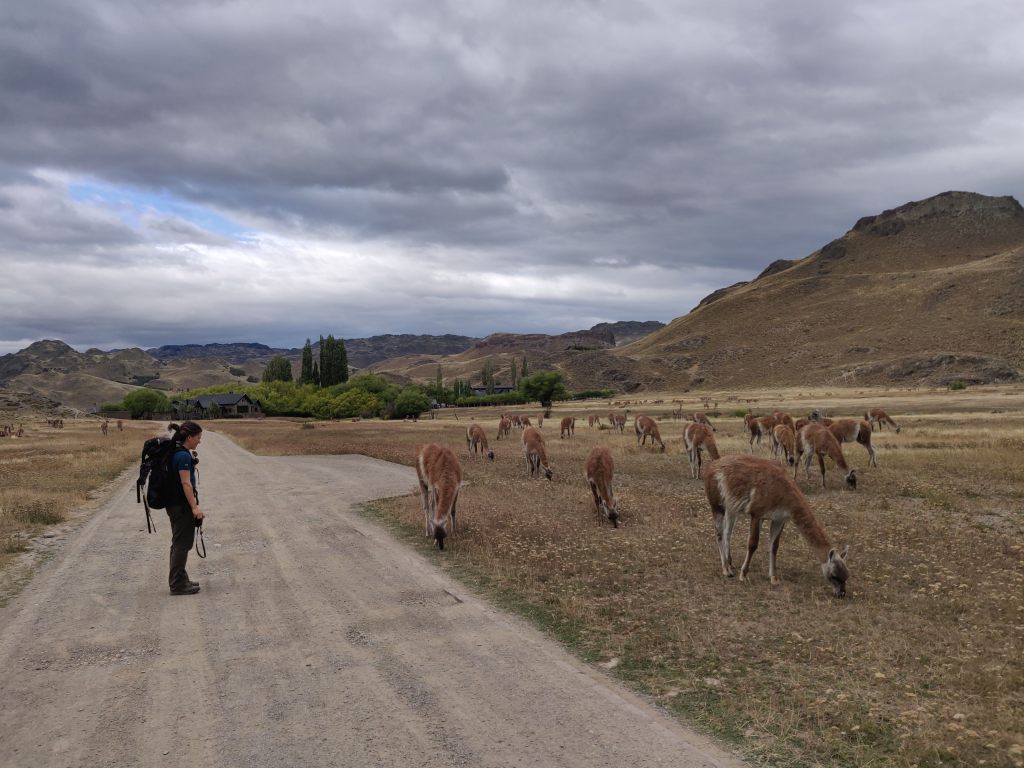
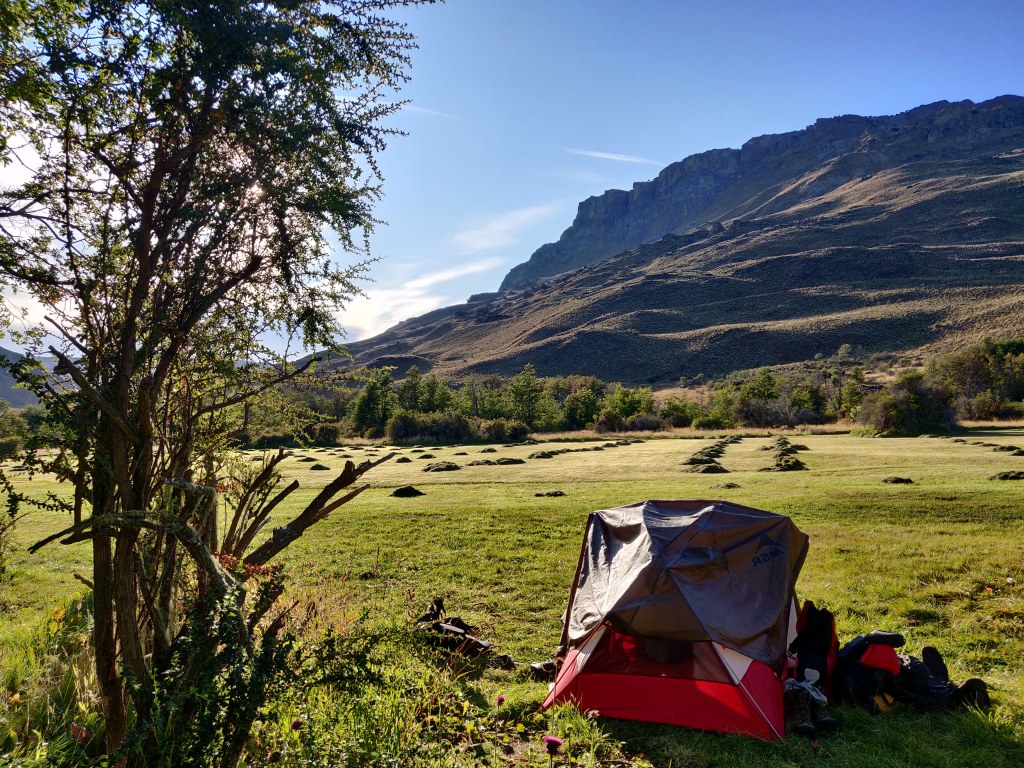
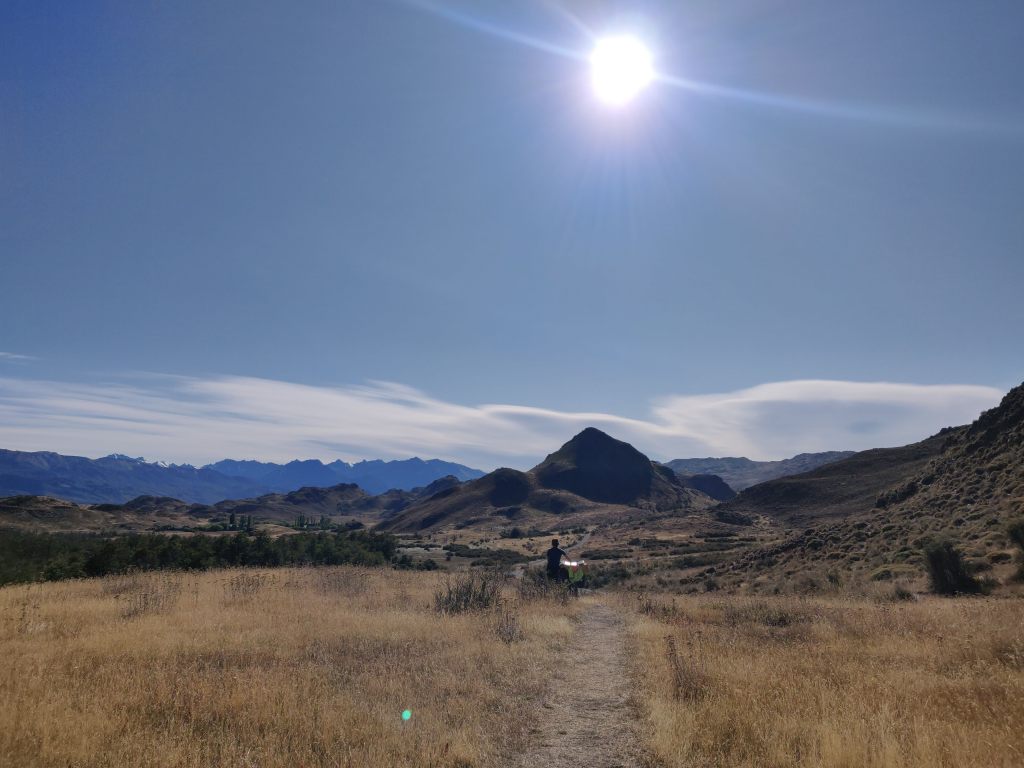
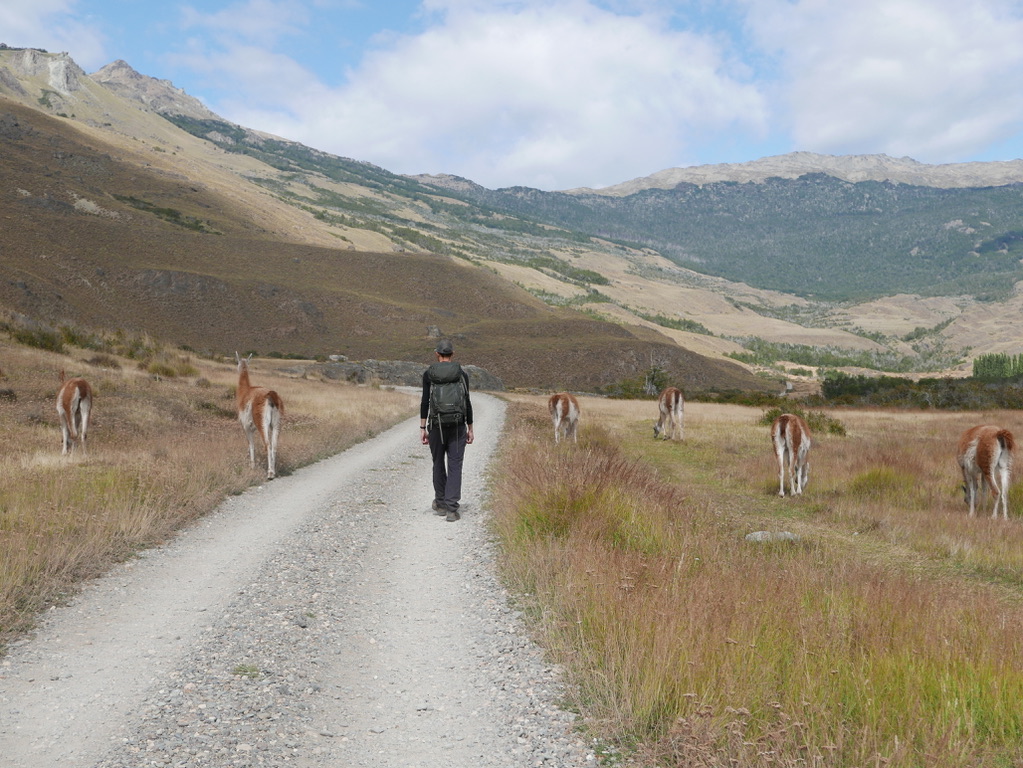
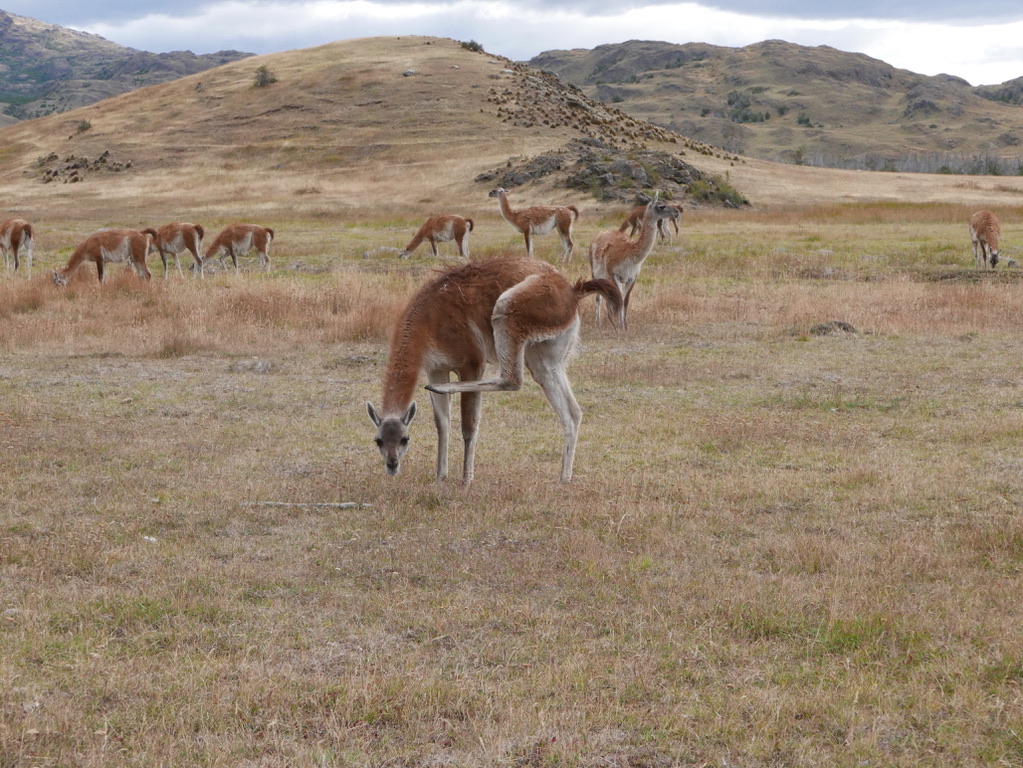
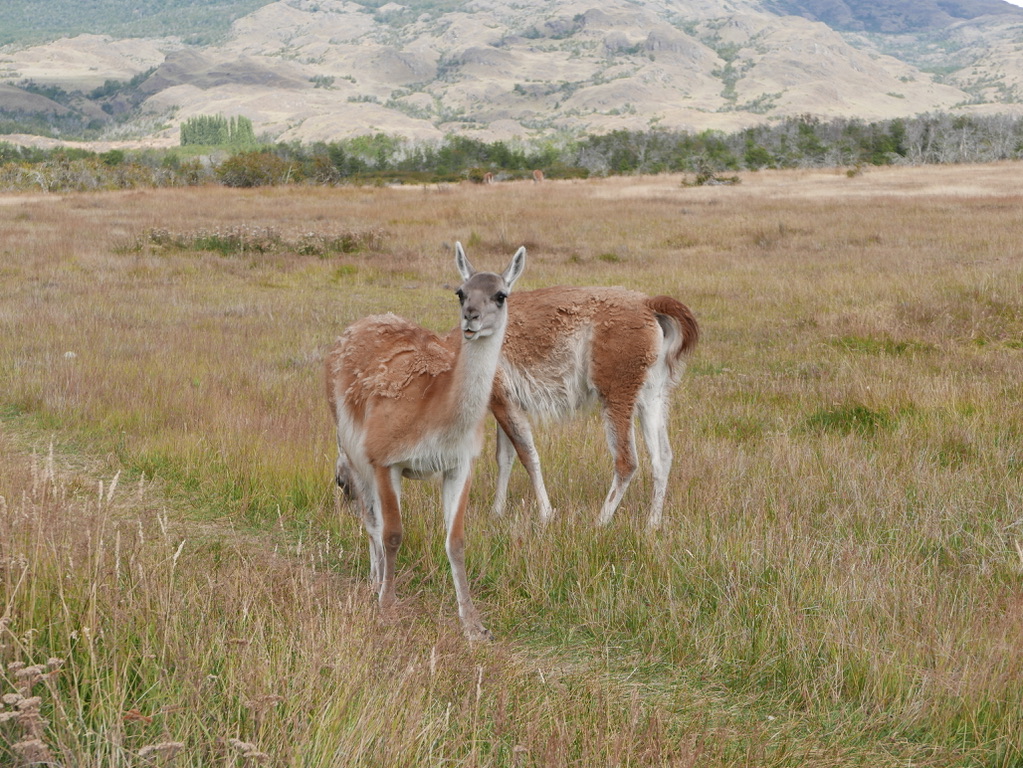
Although able to grab a surreptitious sandwich at the bar, we continued our walk along the valley floor back towards the campsite. Passing further herds of guanaco, the organic farm producing the food for the restaurant (another of the Tompkins campaigns) we also passed a cemetry, including the grave of Doug Tompkins who sadly died during a kayaking accident on Lago General Carrera. We later found out that the people we saw at the grave site was Kris Tompkins, the founder of the Tompkins trust and widow of Doug who spends part of the year still at the Park.
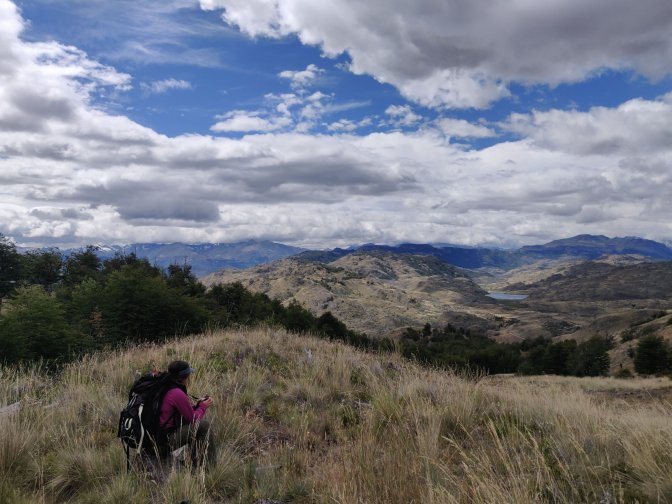
We were completely inspired by the work of the Tompkins Trust and at Park Patagonia. It showed, similar to Isabella Tree’s work at the Knepp estate in the UK, the importance of wilding. As this also conincided with Friends of the Earth’s legal victory in the Court of Appeal on Heathrow’s third runway it felt like a coinciding of rare environmental successes and garnered hope for the future. Something we all need, writing this a few weeks on from this visit.
This poem was found in the ladies loos (of all places). Written by Chilean poet, and Nobel Laureate, Pablo Neruda, it was something that I really liked, I hope you do too (obvs I read it in English but have also included the original spanish text.)
Yo Volveré
(Pablo Neruda)

Alguna vez, hombre o mujer, viajero.
despues, cuando no viva,
acquí buscard, buscadme
entre piedra y océano,
a la luz proceleria
de la espuma.
Aquí buscard, buscadme,
porque aquí volveré sin decir nada,
sin voz, sin boca, puro,
aquí volveré a ser el movimiento
del agua, de
su corazon salvaje,
aquí estaré perdido y encontrado;
aquí seré tal vez pefra y silencio.
I will come back

Some time, man or woman, traveller.
afterwards when I am not alive,
look here, look for me here
between the stones and the ocean,
in the light storming
in the foam.
Look here, look for me here,
for here is where I shall come, saying nothing,
no voice, no mouth, pure,
here I shall be again the movement
of the water, of
its wild heart,
here I shall be both lost and found-
here I shall be perhaps both stone and silence.

 Pedalling_Patagonia
Just beautiful: purple skies, Tompkins conservation project and the poem.
LikeLike