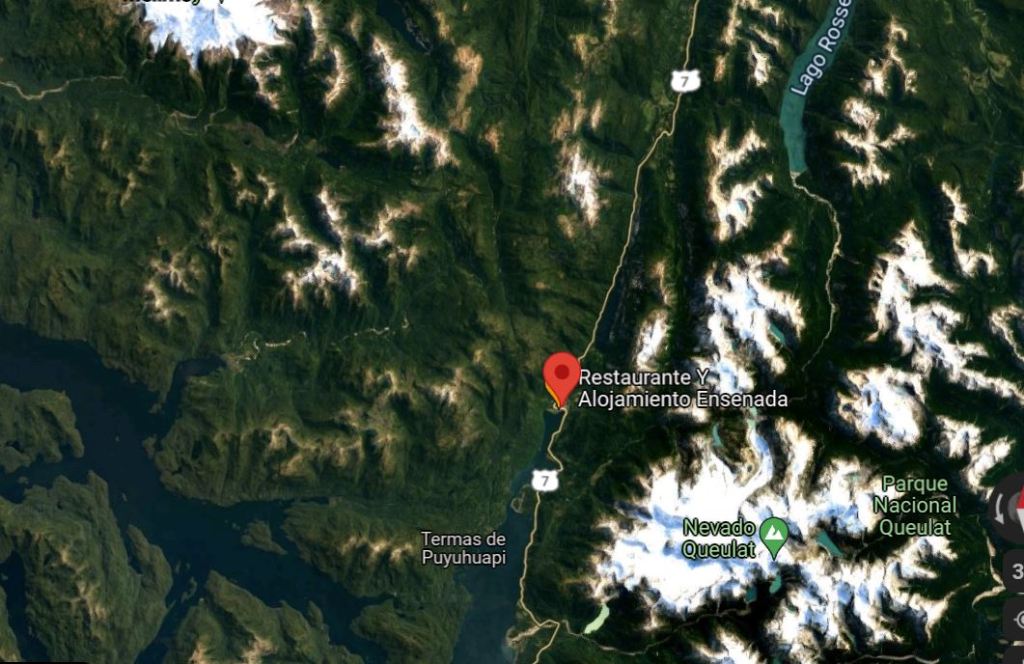
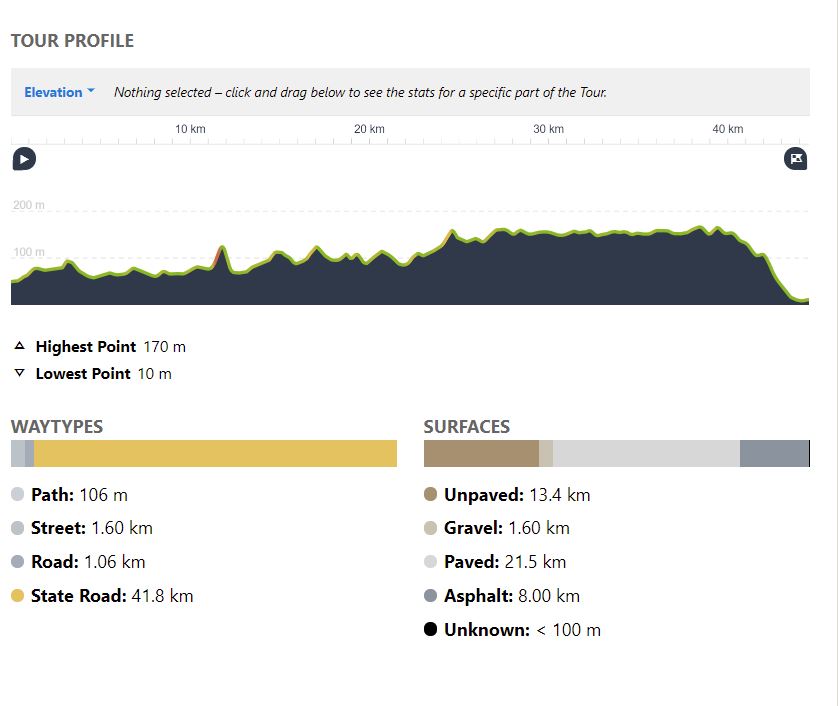
44.5 km Uphill 460 m; Downhill 500 m
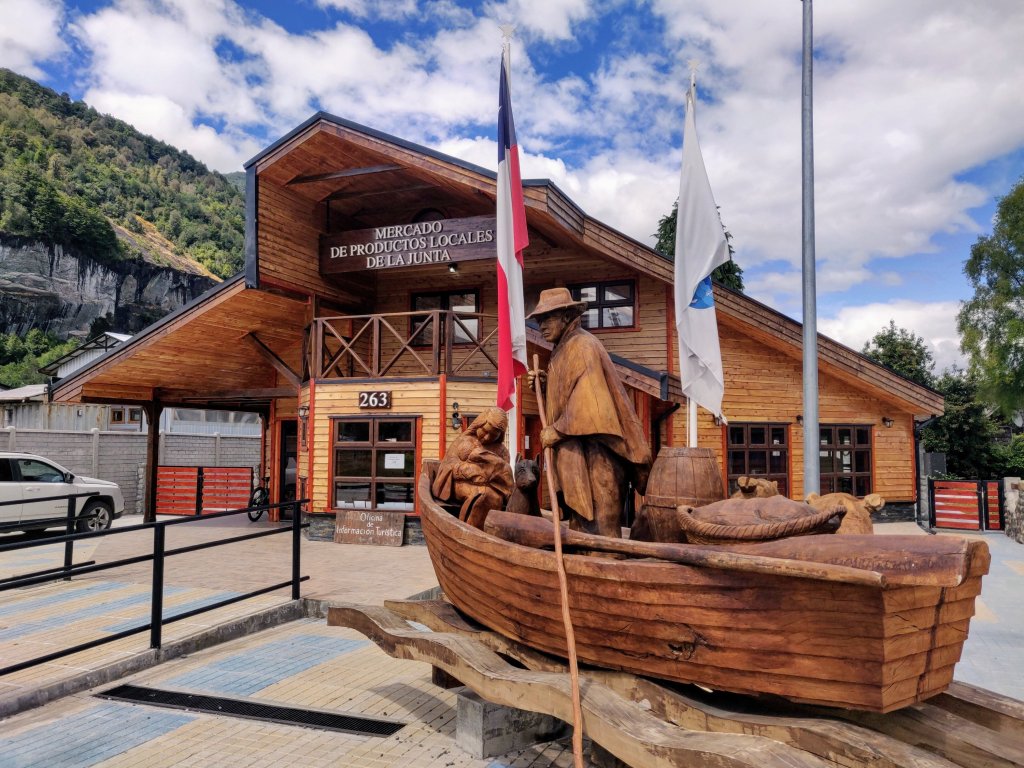
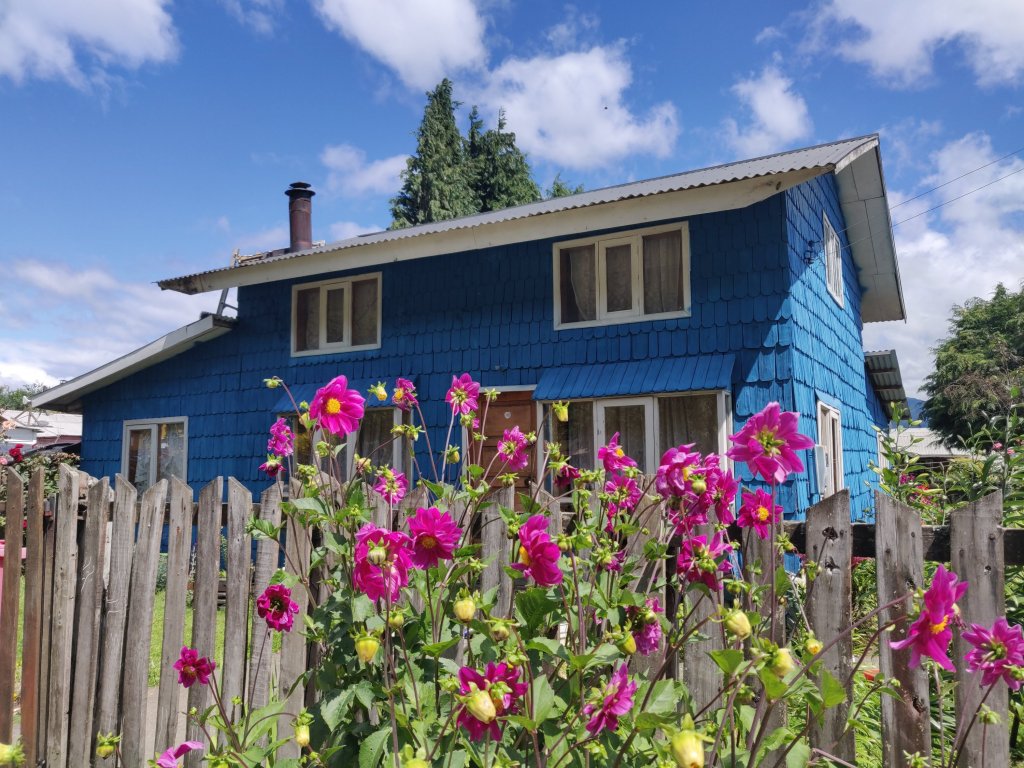
From Los Avellanos camping it was an easy 4 km to La Junta, a village adjacent to the Carretera, where we stopped for lunch supplies and a quick look around. One guidebook dismissed it as little more than a service station, which was very unfair. We saw lots of colourful wood shingle cottages with tidy front flower gardens, a library and local produce market building with carved wooden boat outside.
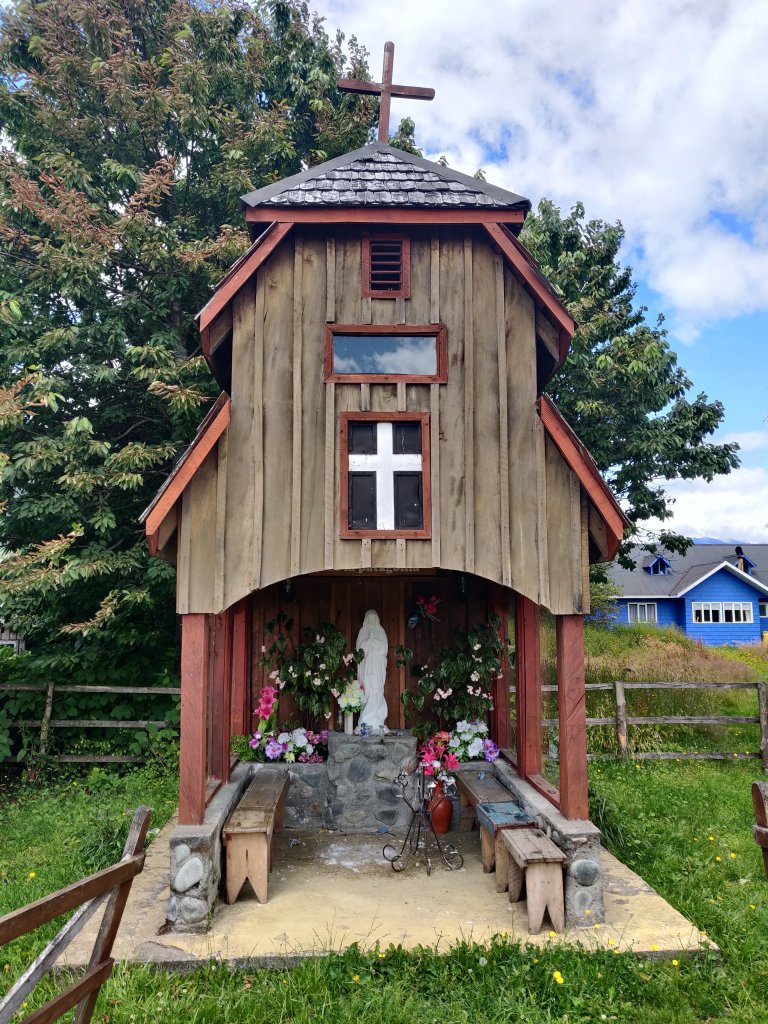
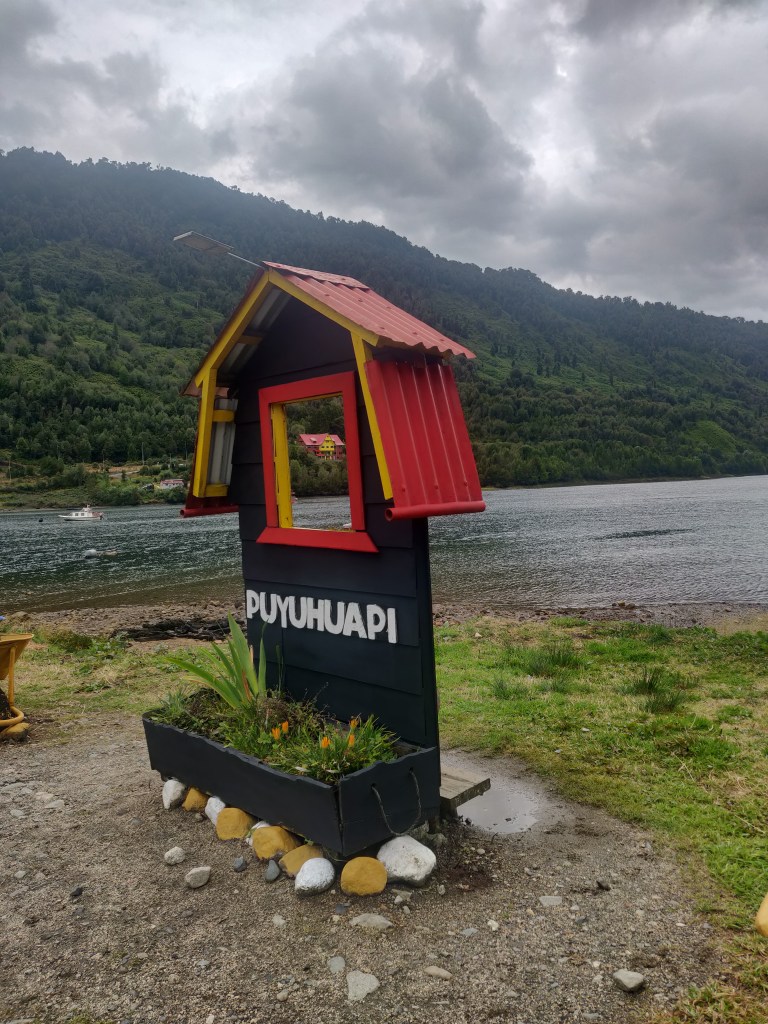
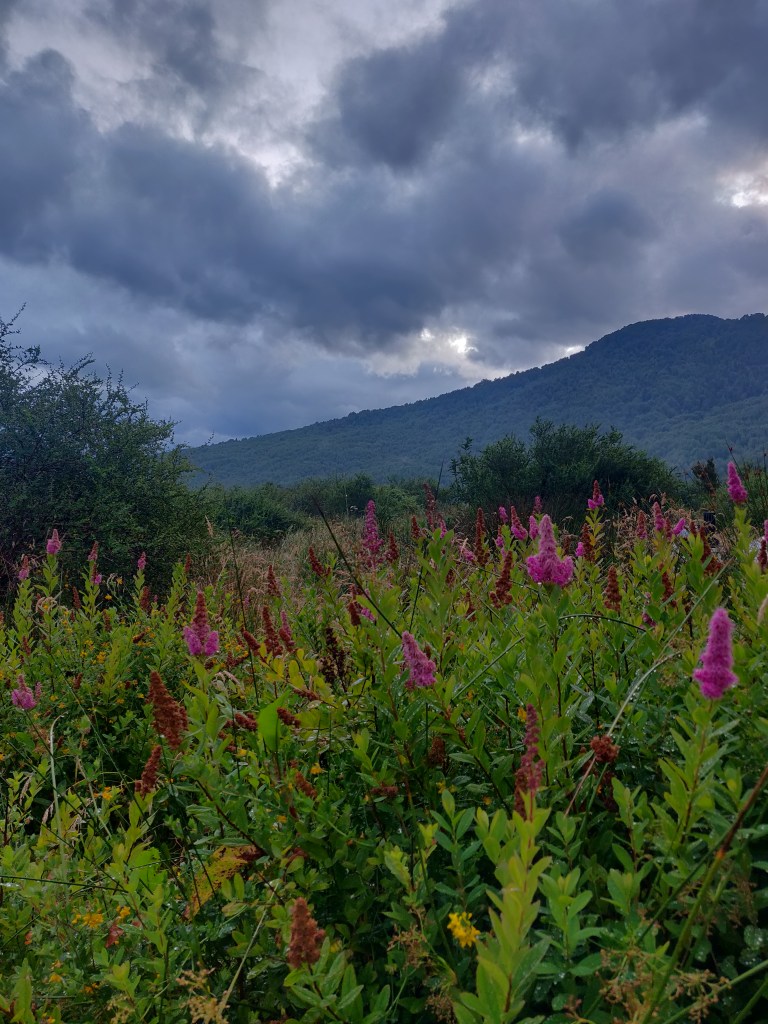
From la Junta, it was a cruisy 45km ride on some long straight stretches south-southwest towards Puyuhuapi. We passed fields of cows to the west, wild flower verges, and wooded slopes to the east, with the occasional waterfall for good measure. By 2.30 found a tidy campground who allowed us to use their picnic tables for lunch.
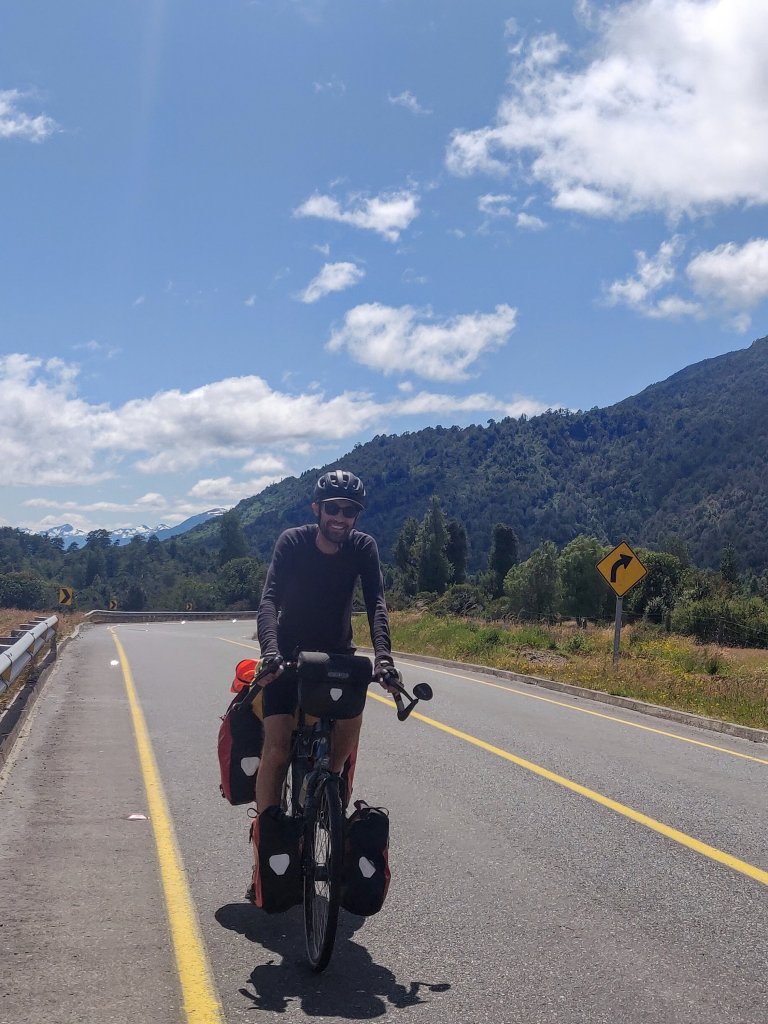
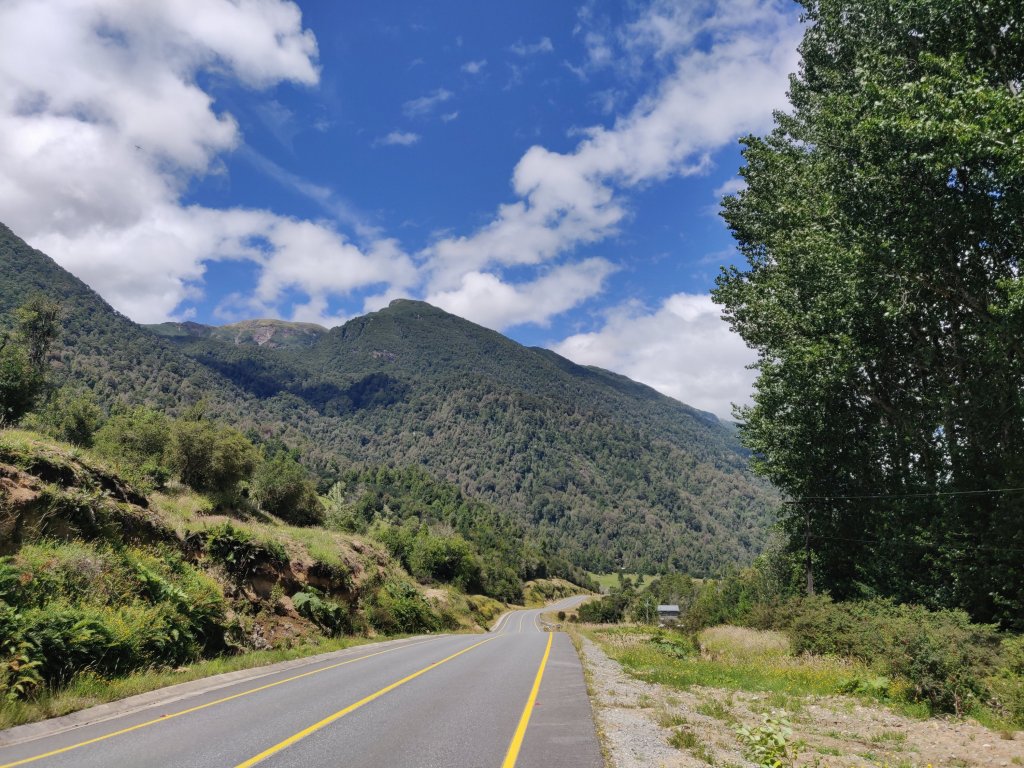
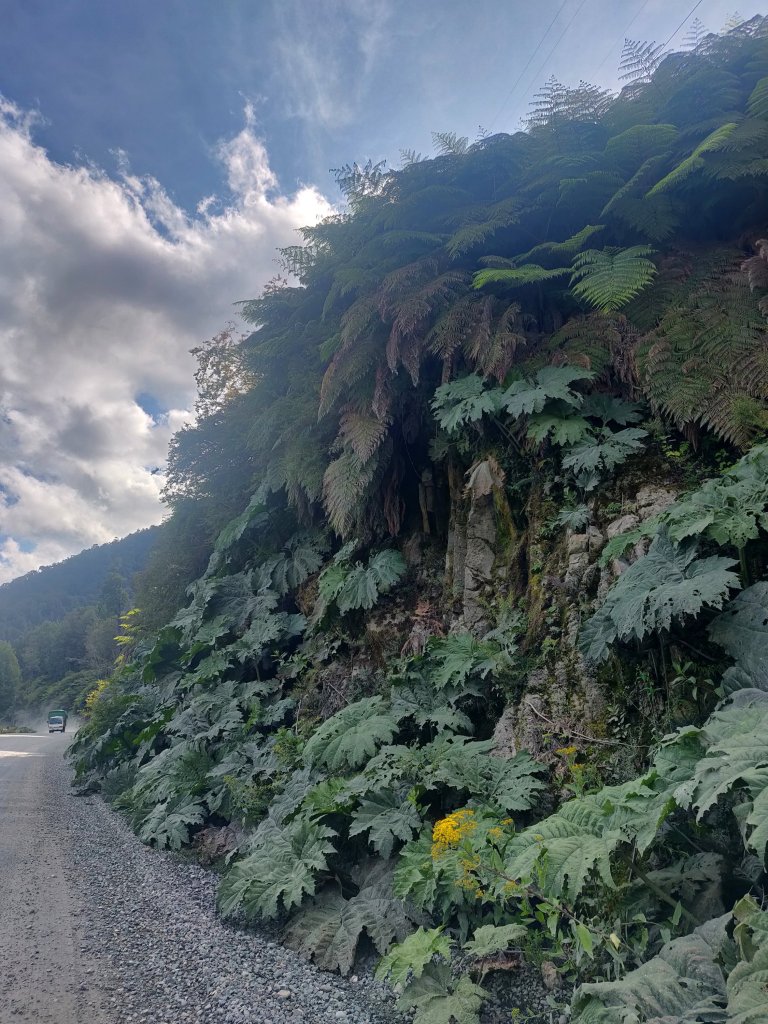
In the afternoon we began climbing along Rio Risopatron, the fields were replaced by woodland and cliffs adorned with giant rhubarb, with their ubiquitous frog songs. Numerous hairy caterpillars were feasting on the rhubarb, leaving bare stems in places, and then attempting to cross the road: dodging caterpillars made a nice distraction from the hill for a while.
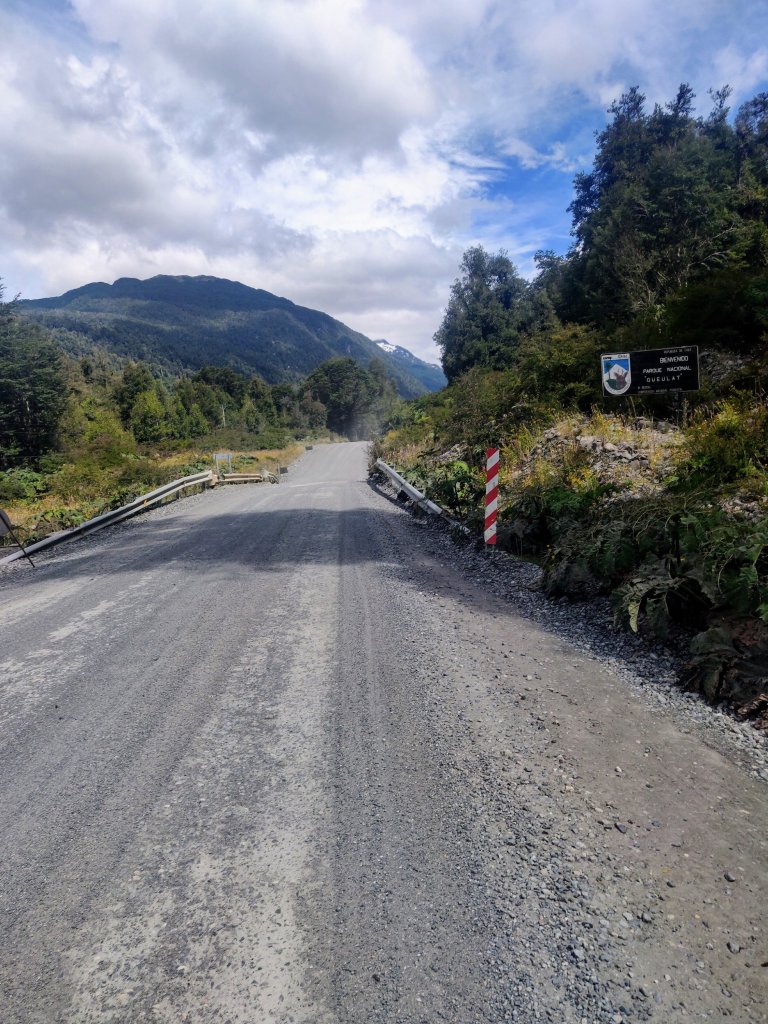
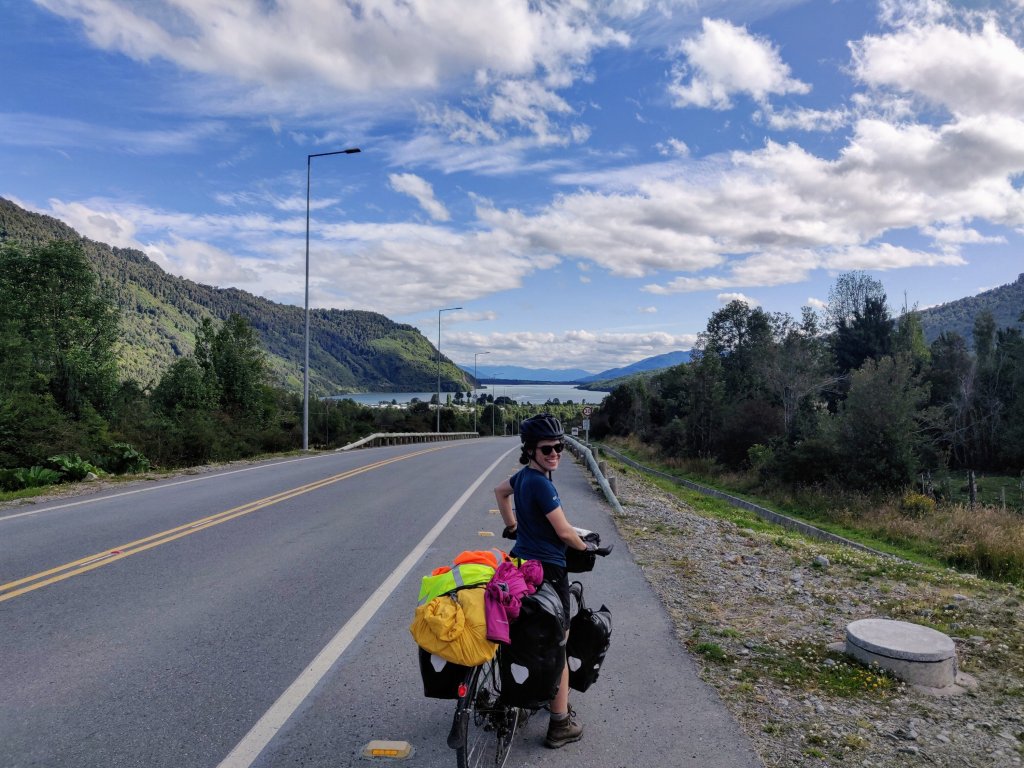
Soon we arrived at Lago Risopatron, and 10km of ripio gravel. We stopped to refill water from a stream and then battled continuous ups and downs, our legs still aching from yesterday. Finally we arrived at the end of the lake and what appeared to be the start of a long descent to Puyuhuapi. Unfortunately, Robbie pronounced as much just before a bend showed the steepest climb of the day. Hannah was not amused. Finally we did start rattling downhill, until the town appeared in the distance and our first view of the sea: a long inlet, the Puyuhuapi Canal, which eventually joined with the Pacific Ocean. After a quick photo and very excited, Robbie set off around Hannah and clipped rear panniers, sending Hannah’s saddle straight into the small of her back very painfully. It was a subdued ride down into town.
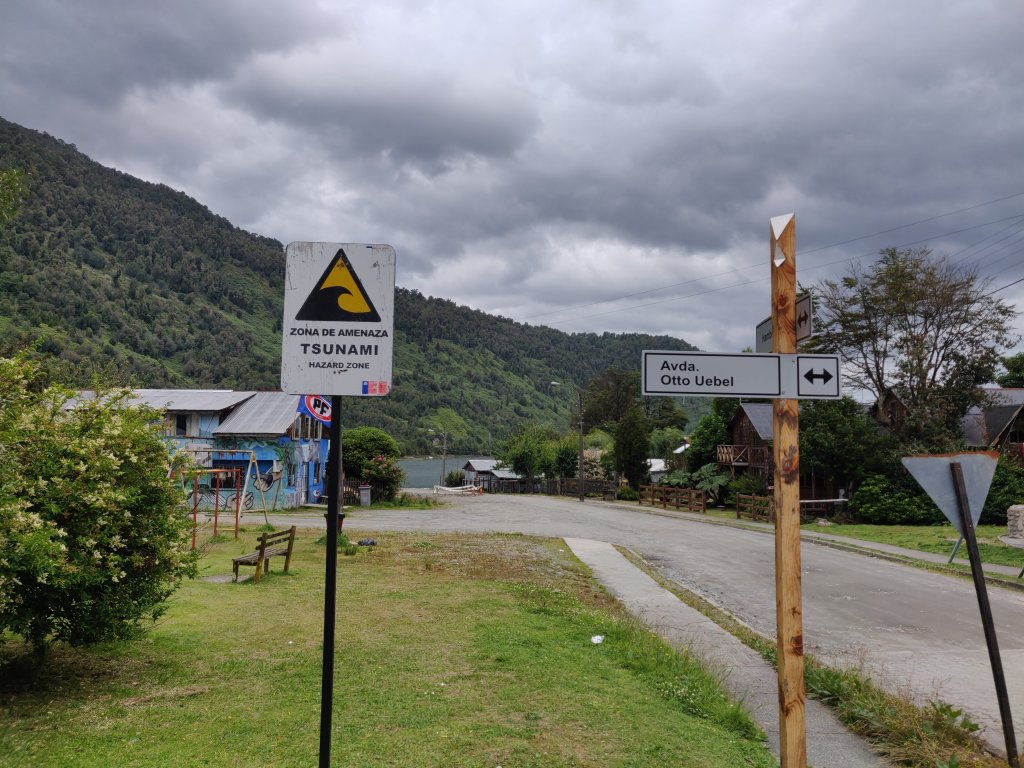
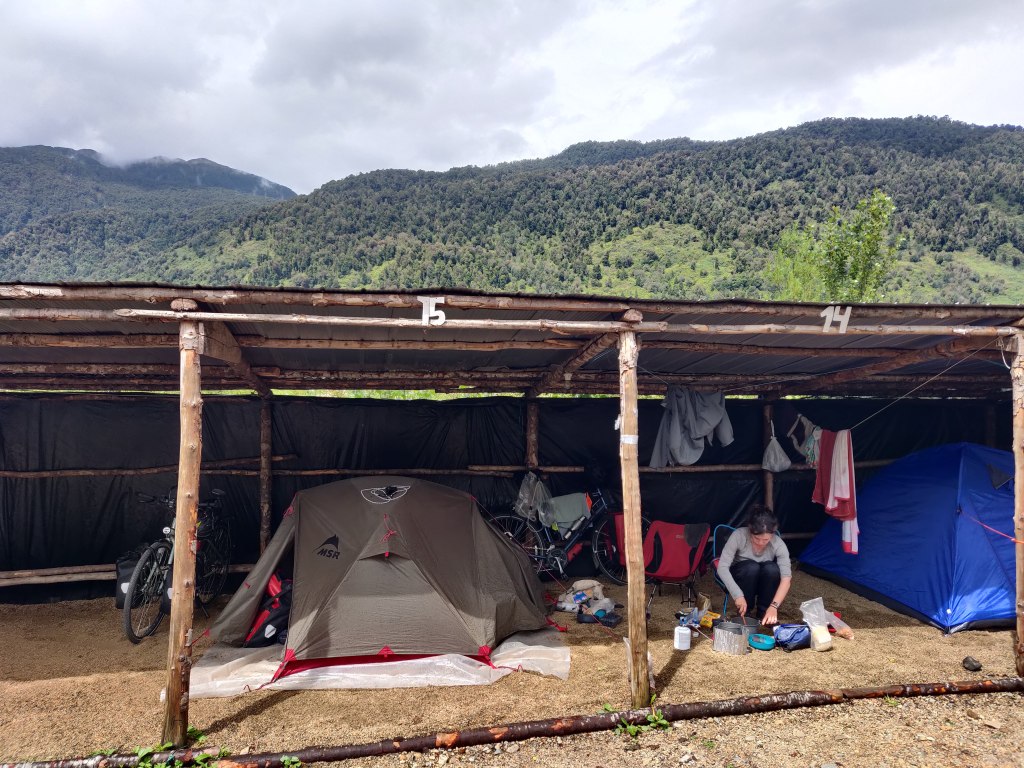
Arriving at the central square we were intrigued to see signs warning of tsunamis. Apparently earthquakes just offshore can generate waves that are then funnelled up the Canal and could devastate the buildings. We somewhat nervously browsed the camping options distributed along the water front and wondered if our tent would float. Knowing the weather was forecast to turn tomorrow, we compared shelters. Puyuhaipi being one of the wettest towns on the Carretera, all sites offered tent shelter of one sort or another, some fully indoors, some resembling car ports. We opted for Rio Mar at the west end of town, being the smartest, offering well reviewed fresh bread, and the closest to a hill in case a siren went off in the middle of the night.
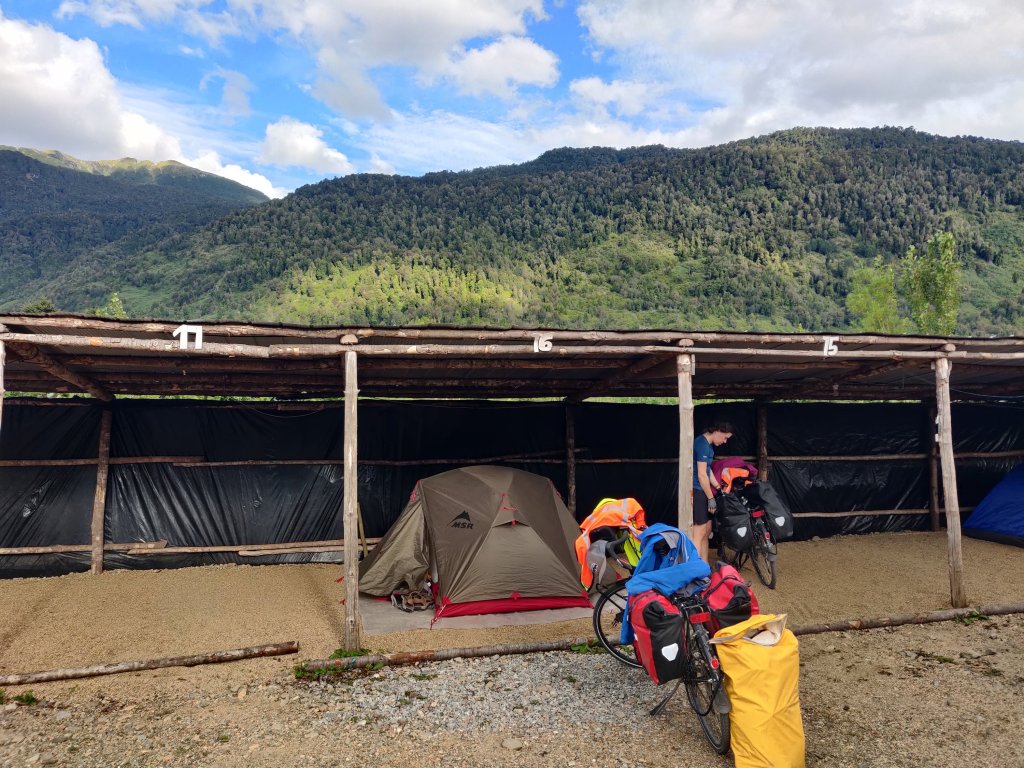
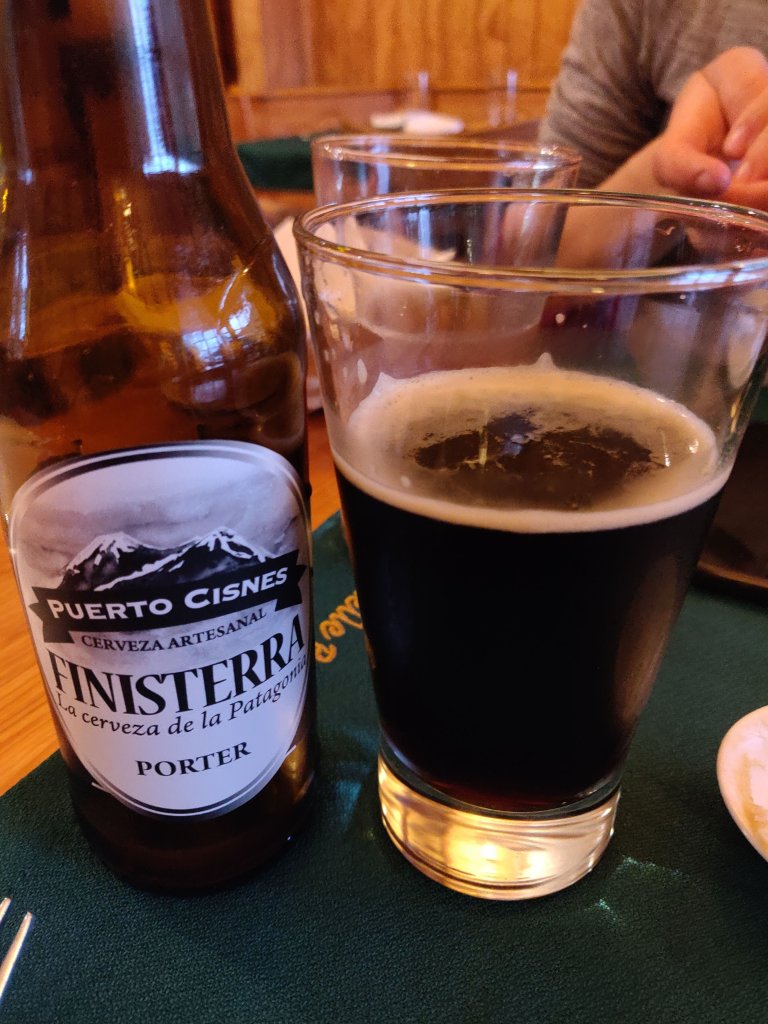
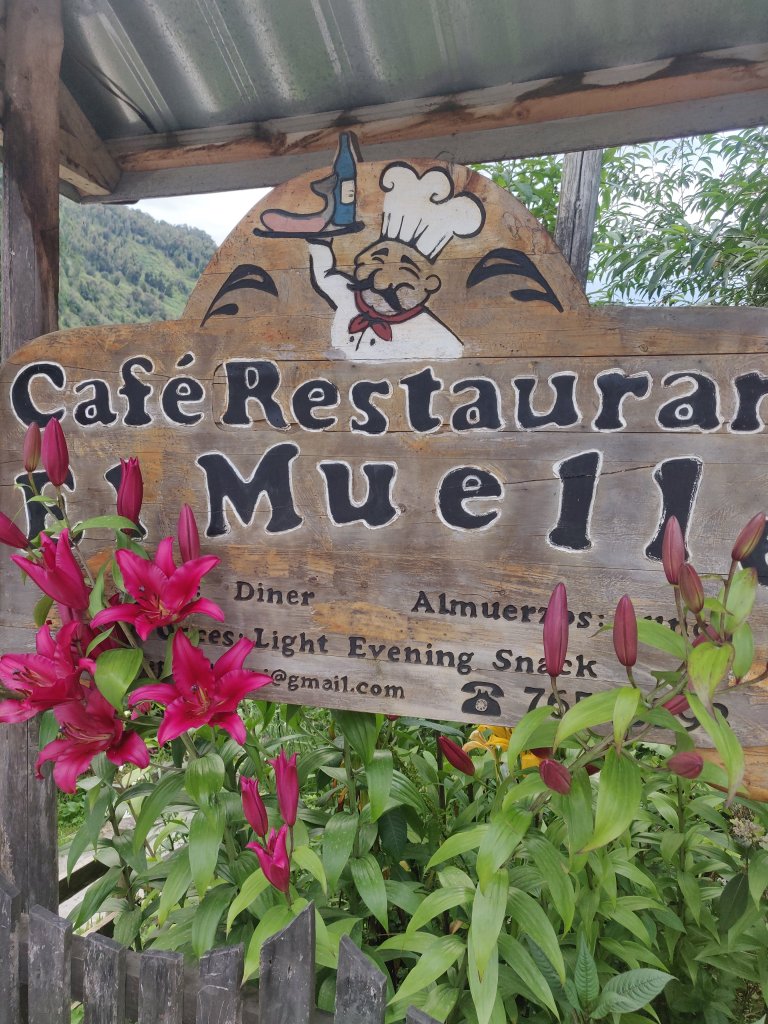
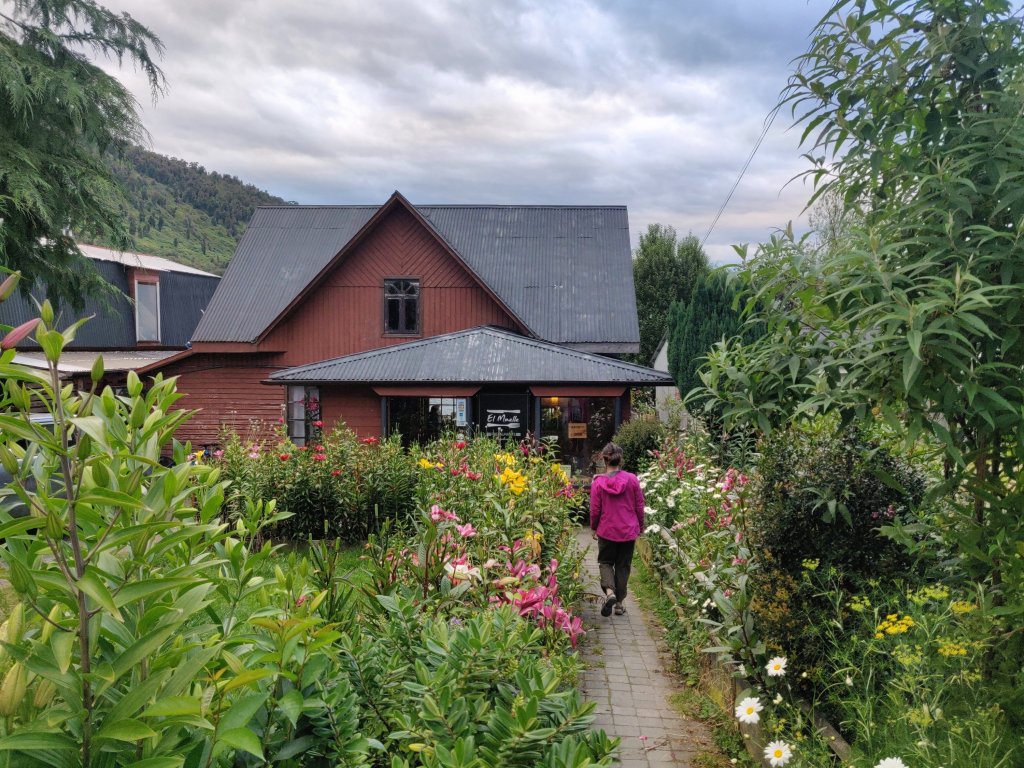
Tent pitched under the corrugated area, we went for a wander and for food. We’d heard good things about fish and came across el Muelle near the water front serving variations of salmon and meluza, a local white fish resembling hake. Ordering one of each, two enormous portions of delicious butter fried fish appeared with sautéed potatoes and stir fried veg, all washed down with some local craft beer.
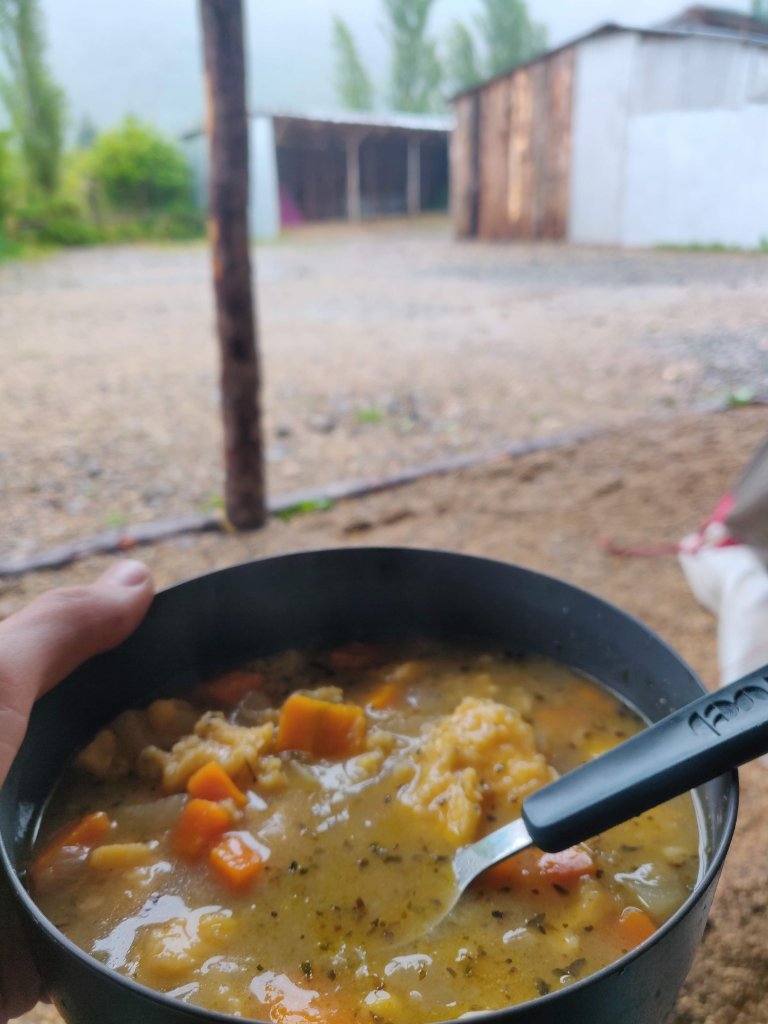
On Saturday, we knew to expect torrential rain from late morning and so had booked ourselves in to a guesthouse which we hoped would provide somewhere warm and dry in case we ended up soaked. In fact the car port was remarkably water tight and the monsoonal rain only lightly dusted our outer tent on one side. Hannah experimented with various dishes from the camping cuisine guide she had found online whilst Robbie wrote some blog entries. We had some delicious dumpling soup for lunch and oaty peanut balls as snacks.
We checked in at the guesthouse just as the rain was easing off and took advantage of the indoors to wash some clothes and hanging them up in the bathroom. We then went out to sample some more fish and beer at the only pub in town. Sunday morning dawned brighter, but the forecast was for more heavy rain on Monday and Tuesday so we decided to remain sheltered in Puyuhuapi for a couple more days. We wanted to try the hot springs nearby, and see the Ventisquero hanging glacier, and there was no more shelter before the 500m climb over Queulat pass on ripio, which was not something we wanted to do in the wet.
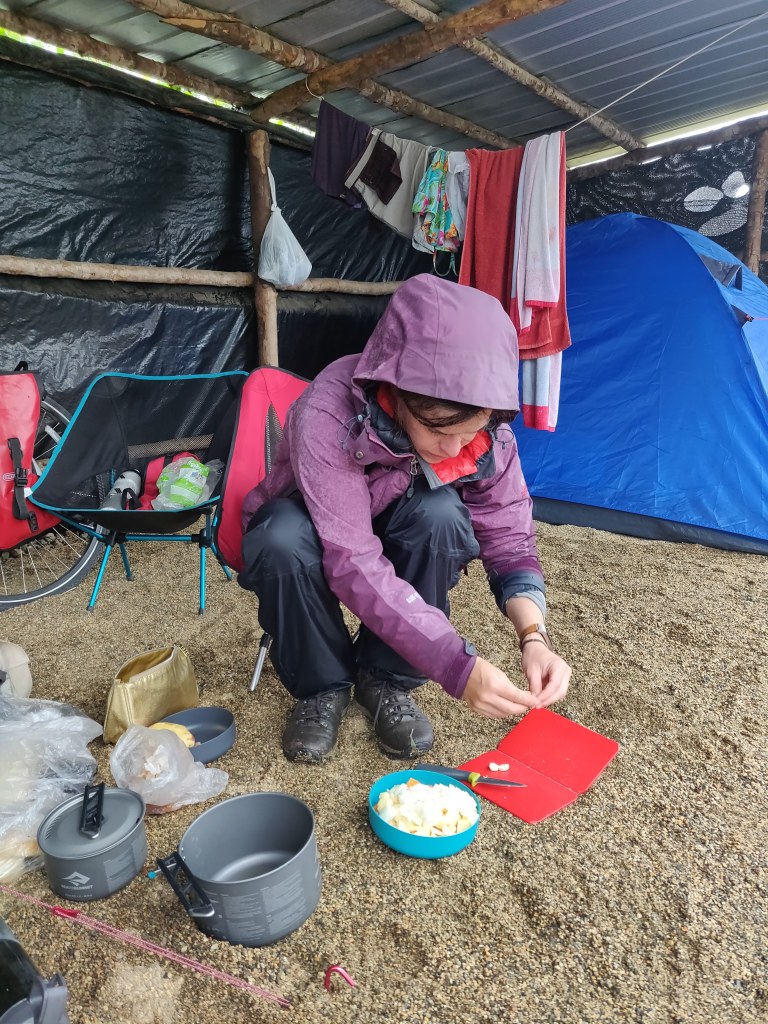
Getting up late, we found alas our clothes had not dried in the bathroom overnight. Moving them into the communal area, the hostess saw our clothes and, we thought, offered to dry them for us downstairs. Lost in translation, in fact she either must have offered to wash them, or saw our poor attempt at washing and so instead washed them again herself for free. We discovered this only when Robbie went to check on them 2 hours later and found our merino wool merrily tumbling round on full heat in a drier. Saving them whilst still damp we were greatly relieved to find they hadn’t shrunk to the size of children’s clothes, thanked the hostess very much and departed back to Rio Mar, to save money and enjoy a bit more independence.
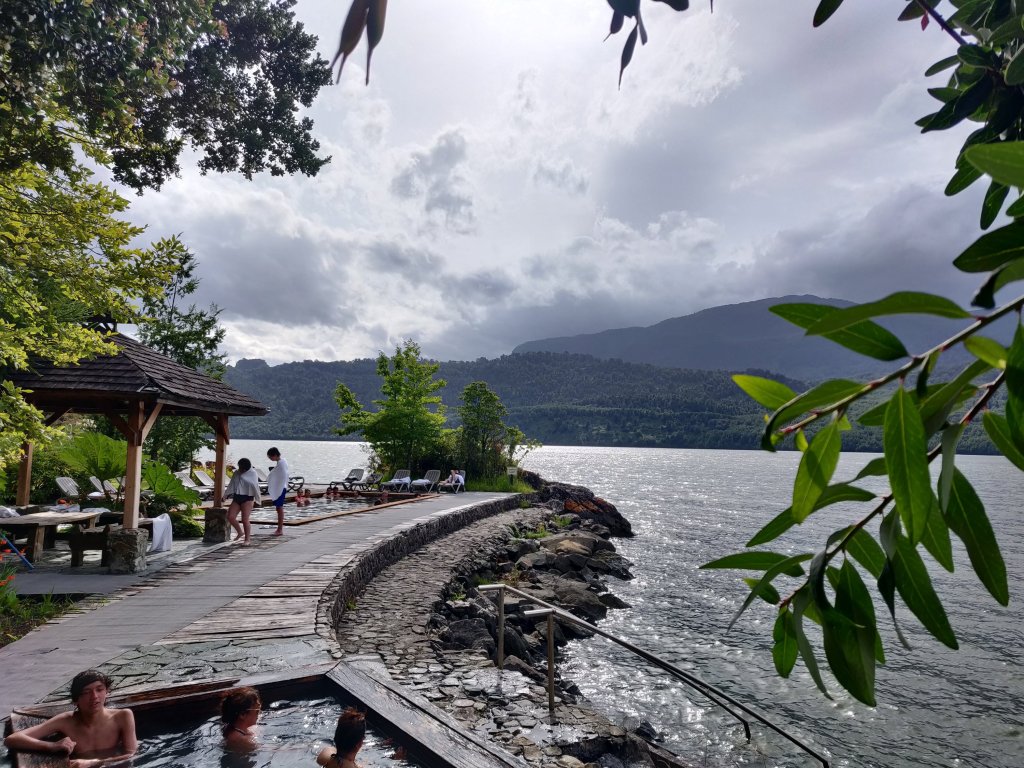
That afternoon we headed south 7km to sample the famous hot springs just off the Carretera. Our unloaded bikes feeling strangely light and skittish, we flew down the road, narrowly missing a few barky pet dogs defending their house very enthusiastically. The hot springs had been captured and turned into a small complex of pools of varying temperatures immediately next to the sea. We started in the largest and coolest and met a girl from New Zealand who overheard us comparing hot springs, and a pair of young teenagers from Concepción in Chile. The older of the two, a 15 year old boy, very confidently interrupted us and asked if he could ask us a few questions about the UK. He quizzed us on what England is like, what colloquial phrases we knew, Brexit and English history. In return we learnt plenty about Chilean education, politics and recent events. His English was amazingly good and largely self taught, he lived history and wanted to be an ambassador. We all moved on to a hotter pool, convinced we’d met a future president.
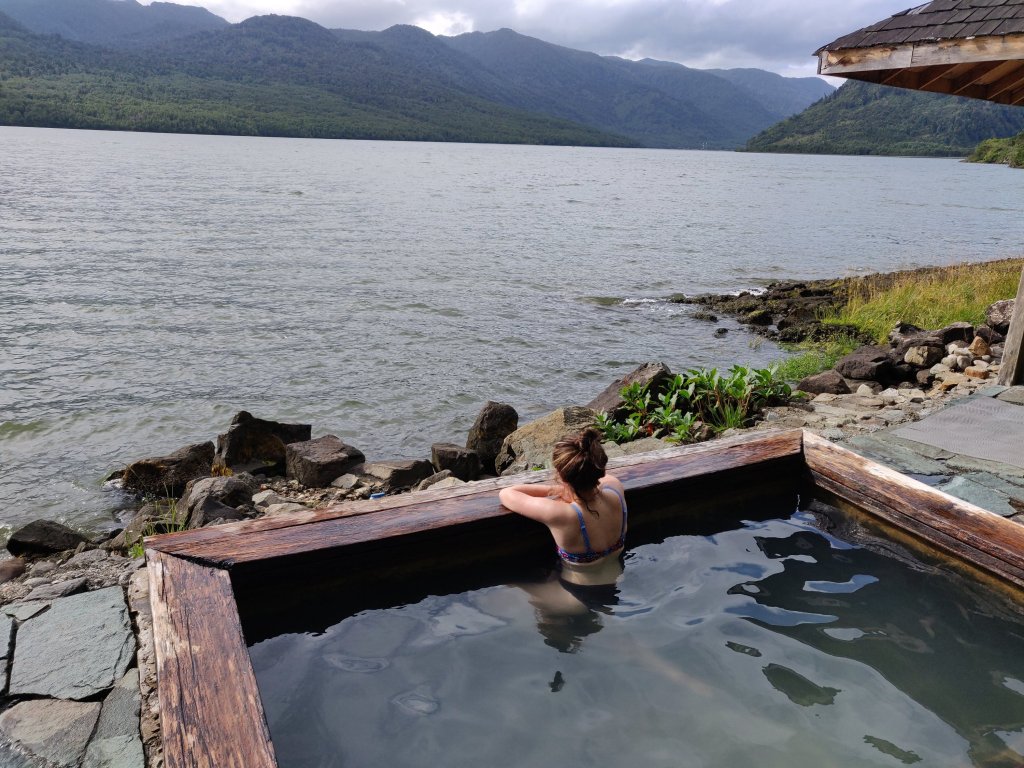
The other pools were considerably hotter with scalding hot water jetting in that we narrowly avoided. Sweating after five minutes we both went for a quick chill in the sea whilst the Chilean boy chatted to the New Zealander. Unfortunately, he spent a bit too long chatting and being skinny badly overheated, fainting on the side. Hannah soaked a towel in sea water and it was put on his head, which eventually did the trick and he was led to the showers by his relieved parents. We left soon after, feeling thoroughly relaxed, and cycled back to Puyuhaipi to cook some pasta dinner with local wine, and hunkered down for more rain overnight.
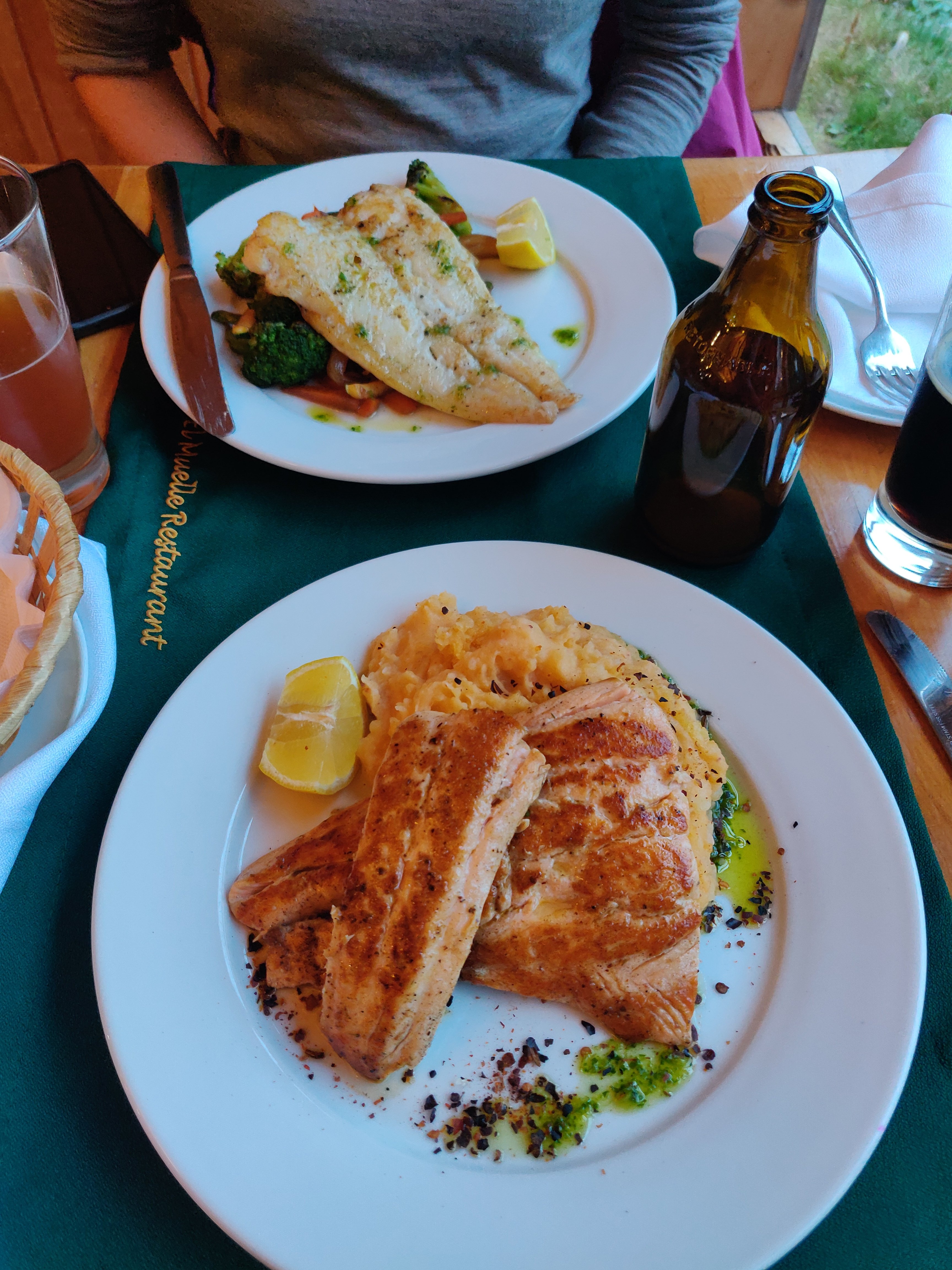
Monday was very wet as expected and we only left the campsite in the afternoon. We met an interesting couple from Northern California who had bought a pickup truck, converted it into an overlander and traveled south from Alaska. After an incredible 2 and a half years they were having to sell it and return home, as the cost of fuel and maintenance had exceeded their expectations. We gave them the lowdown on cycle touring, definitely a cheaper option, but with some notable downsides! In the evening we went back to El Muelle for more delicious fish and beer, hopeful that tomorrow would be dry enough to move on.
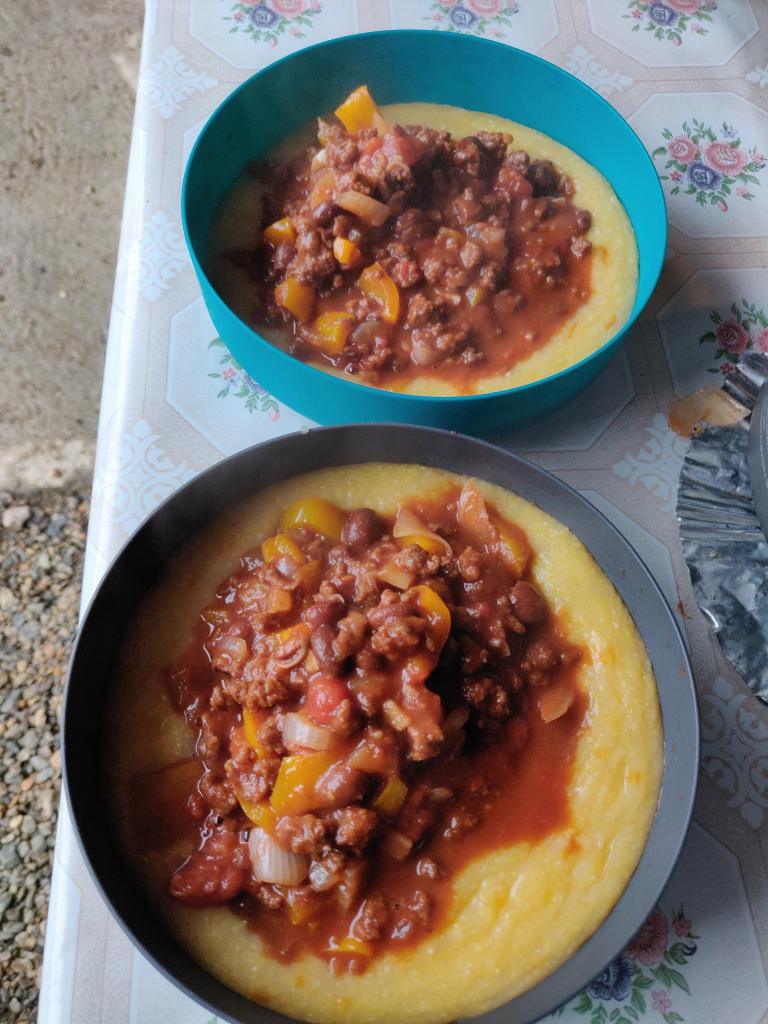
Alas Tuesday brought more downpours and we waited hopefully for a break long enough to make some progress but by 3pm it was clearly not possible to leave safely so we went for a browse of some local craft shops and a mid afternoon beer. Bored of pasta we gave polenta a go with some delicious chilli “con soy” and left over wine. Dried soy meat seemed quite easy to find and made a nice change from tuna. Determined to leave tomorrow, we showered and got to bed early, cabin fever not far away. Puyuhaipi is a lovely village in stunningly beautiful surroundings but I don’t think either of us could cope with the rain there for too long.

 Pedalling_Patagonia