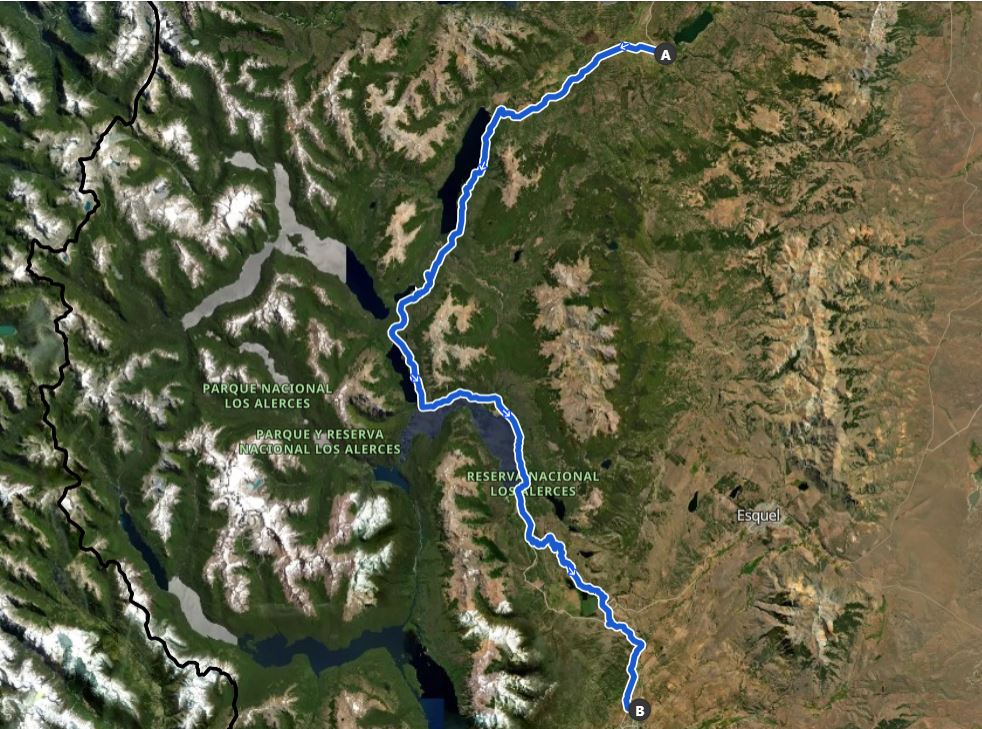
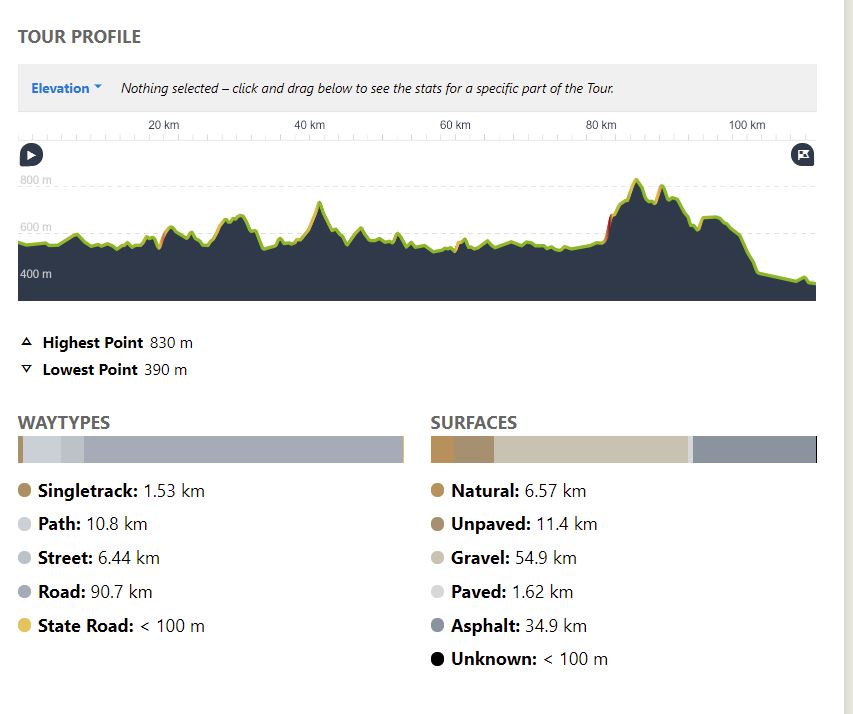
Uphill 1,470 m
Downhill 1,650 m
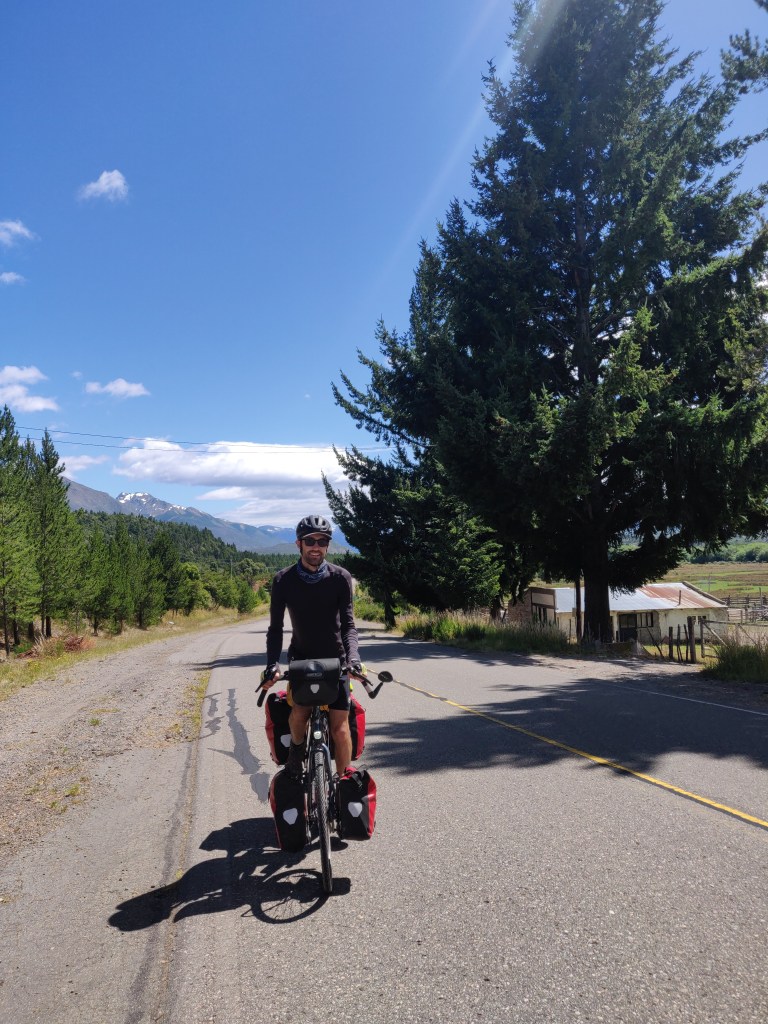
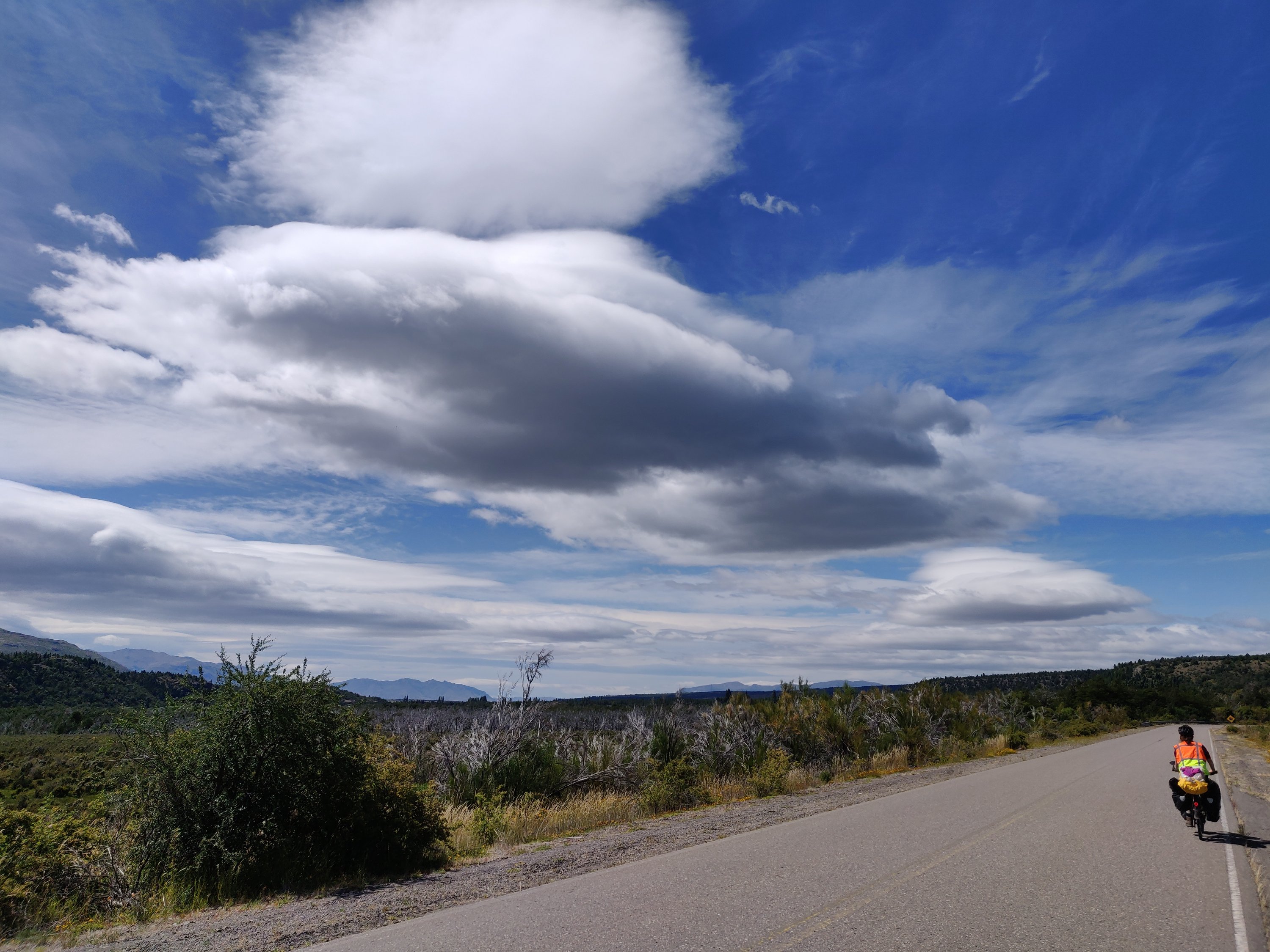
On Friday morning, thoroughly rested, we left camping Bahia Rosales and trundled south along the east shore of lago Futalaufken, soon back on smooth asphalt. Some strange cloud formations provided occasional shade and it was a fraction cooler than previous days, making the ride very enjoyable. We passed some acrobatic swifts by the lake and then, as the terrain opened out, hillsides covered in dead grey trees, presumably destroyed by fire. As we crossed the southern boundary of the national park, we looked back to see the forest fire risk marked severe, somewhat unsettling on a bike.
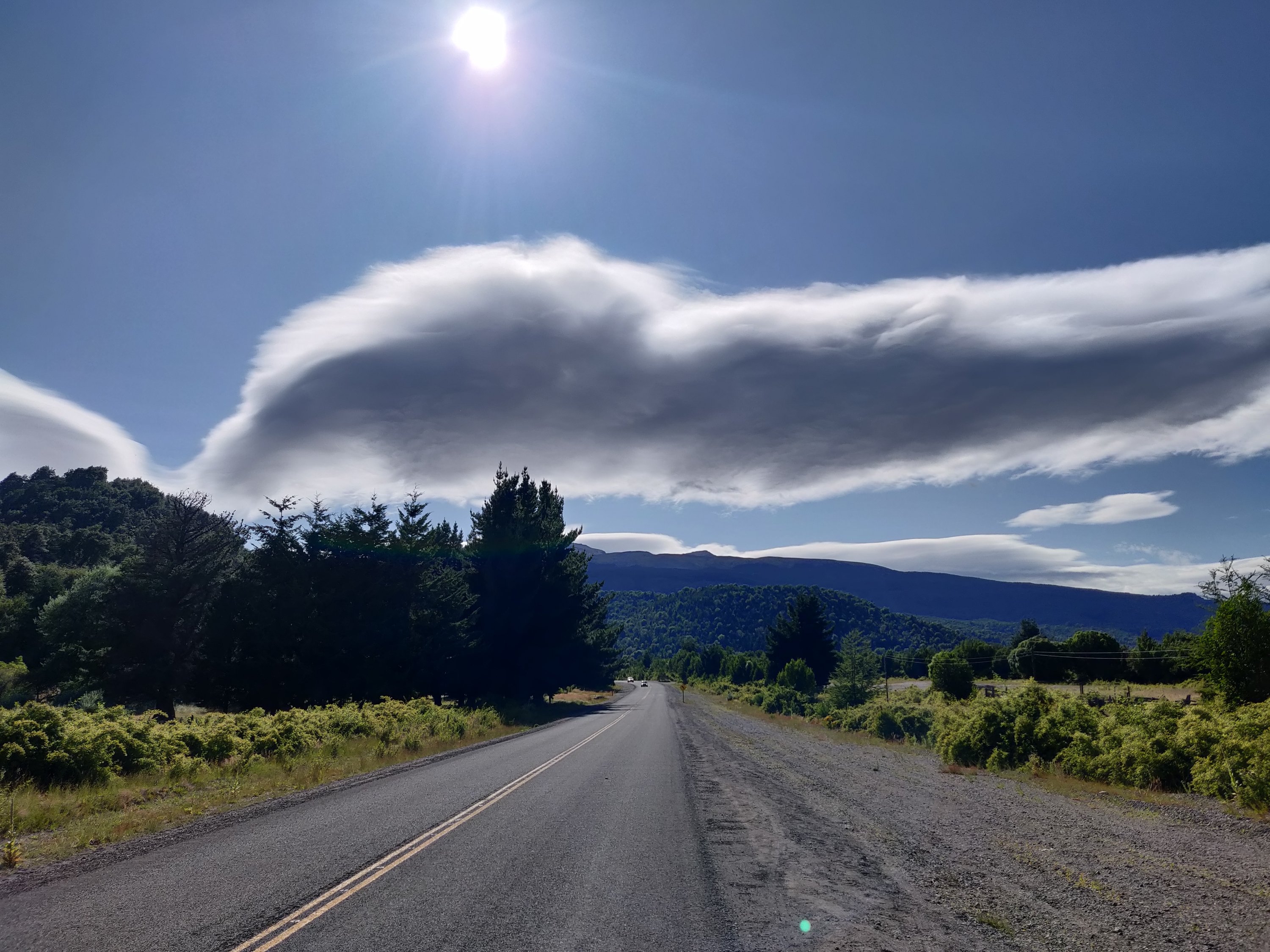
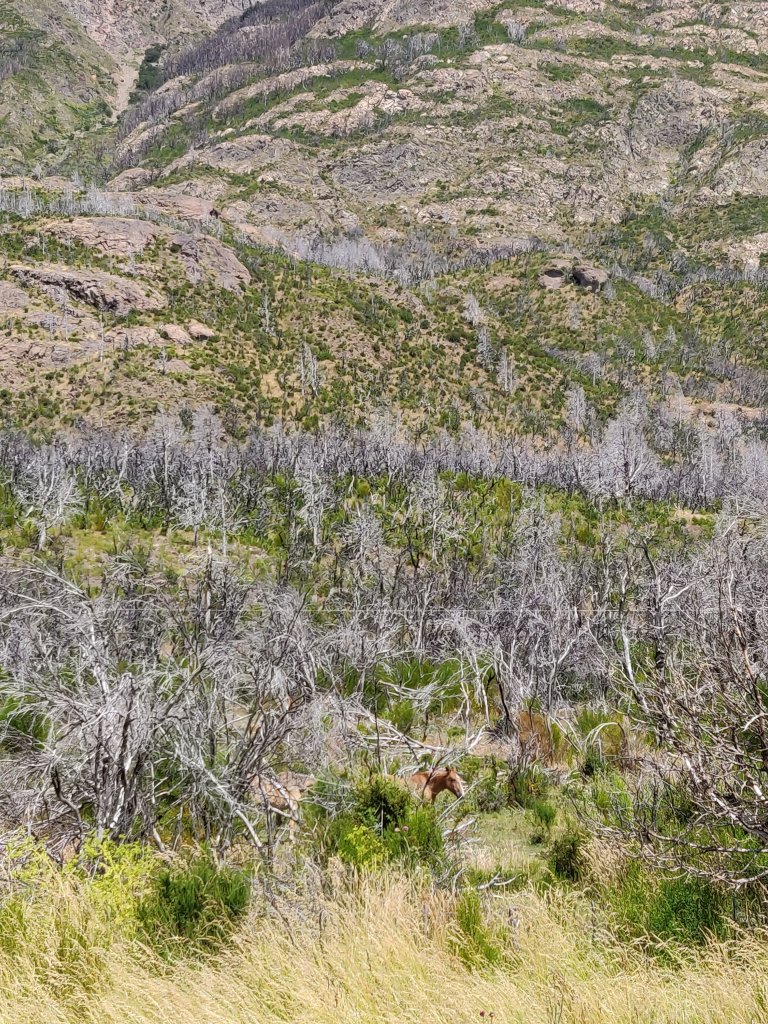
Further south, the landscape expanded even more and started to feel how we imagine Montana to be. Just before Laguna Terraplen, Robbie saw a large bird take off from some road kill, that looked quite different from the ubiquitous Chimangos. We checked Hannah’s laminated fauna flora guide and identified it as a Southern Crested Caracara. Soon we passed the turn off for Esquel (marked with an enormous sign board for all the wonders of Trevelin) and entered the valley of Rio Percy and the long descent to Trevelin.
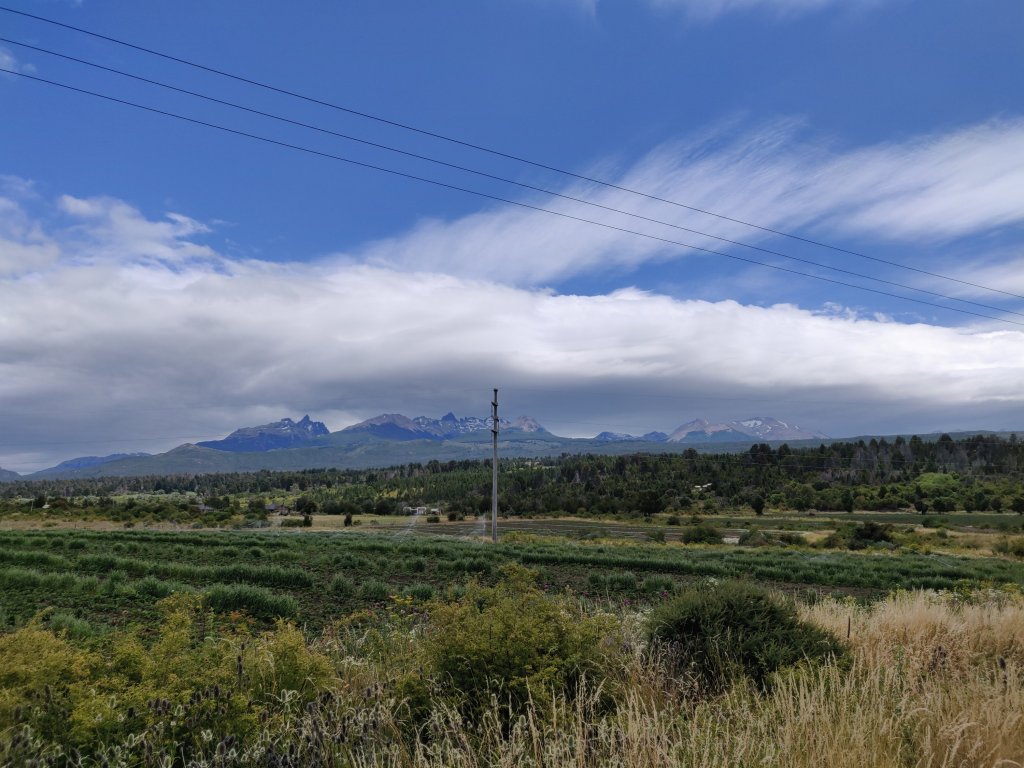
We stopped for lunch on a track entrance with a good view of the valley and tucked into some delicious Chubut cheese, which tasted like a cross between Feta and Halloumi, with added herbs. It was then a lovely cruise down to Trevelin, the valley feeling more and more Welsh as we progressed, passing arable fields and willow trees with rolling pasture hills behind, and some beautiful lodges advertising great skiing in winter (not quite so Welsh).
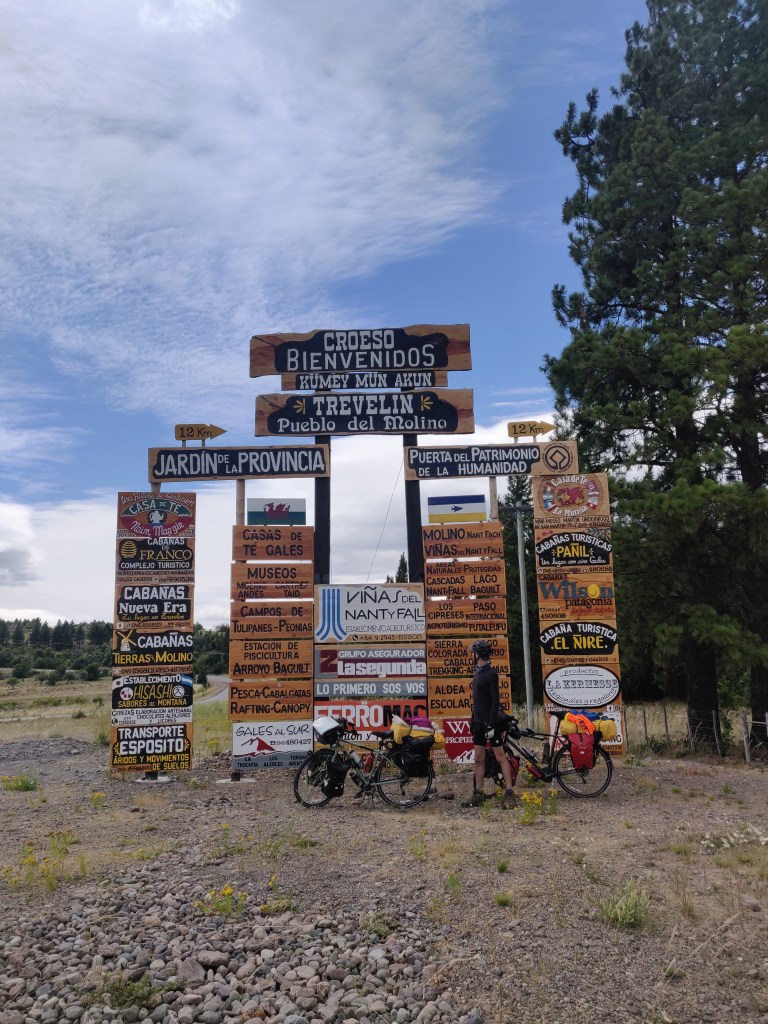
Trevelin itself was not quite the picture postcard town described in some travel guides, but looked to contain lots of interesting shops and the usual pleasant central circular lawn and pine trees. Arriving here we were greeted by a very angry dog leaping up snarling at a motorbike before slinking away, and we cautiously but promptly pedalled to camping El Chacay a few blocks south. Unpacking our tent in the orchard site, we were offered the table space of a Argentinian called Geronimo who was leaving shortly. He was shocked to discover we hadn’t yet tasted Mate tea and immediately showed us how to drink it from his gourd, made from a dried squash. Very confident, he assured us that the ripio of Los Alerces was nothing compared to the crossing route to Chile and Futaleufu, and that the horseflies similarly were mere midges compared to those of Chile. Somewhat dismayed but grateful for the tea we pitched camp.
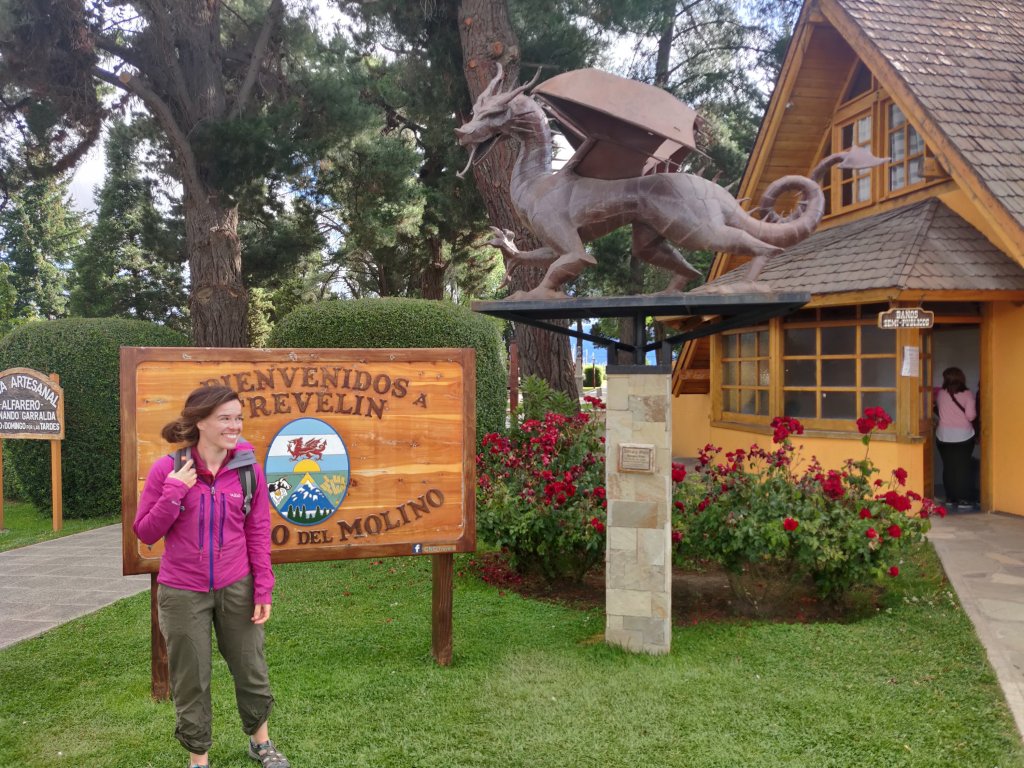
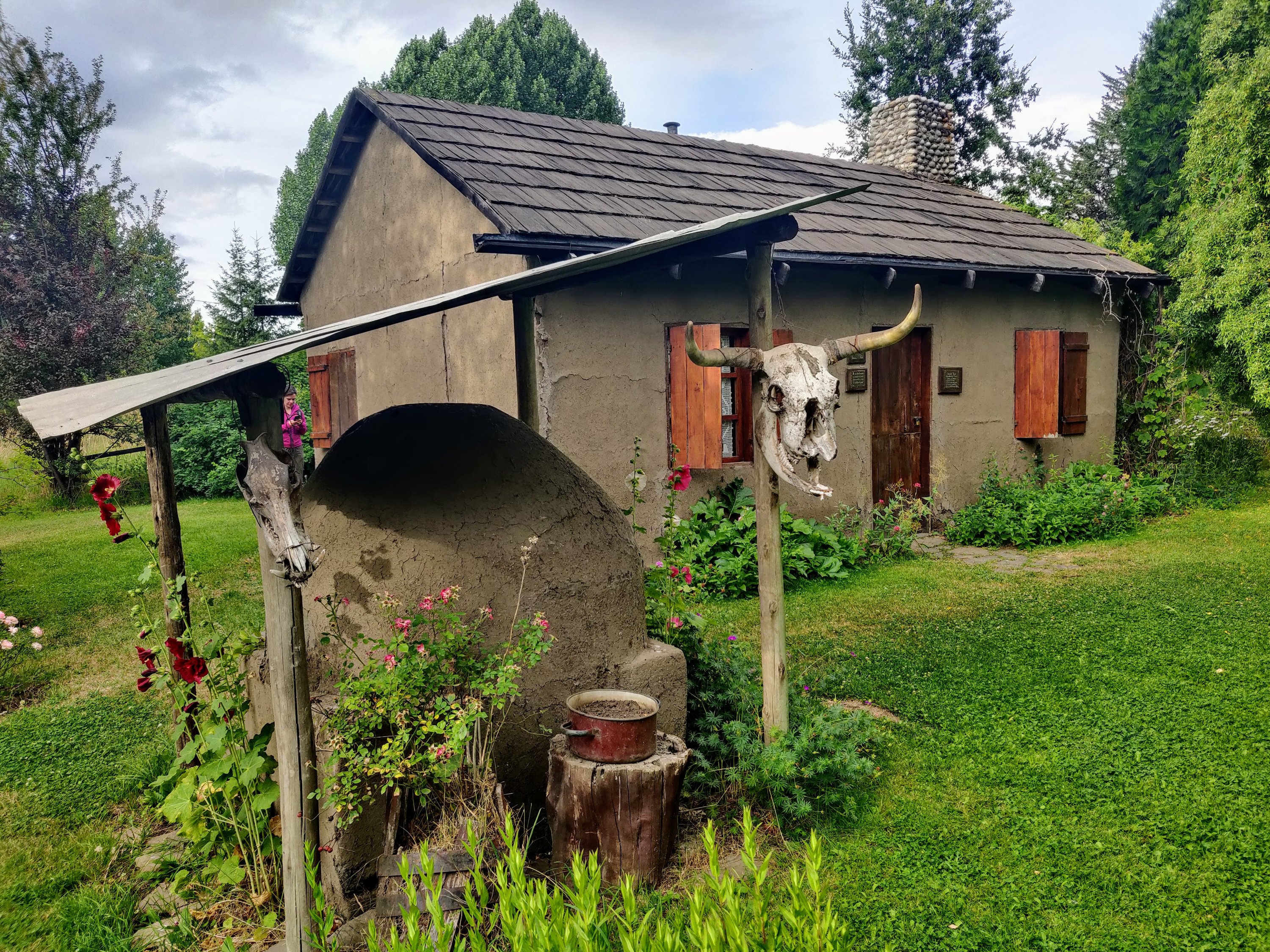
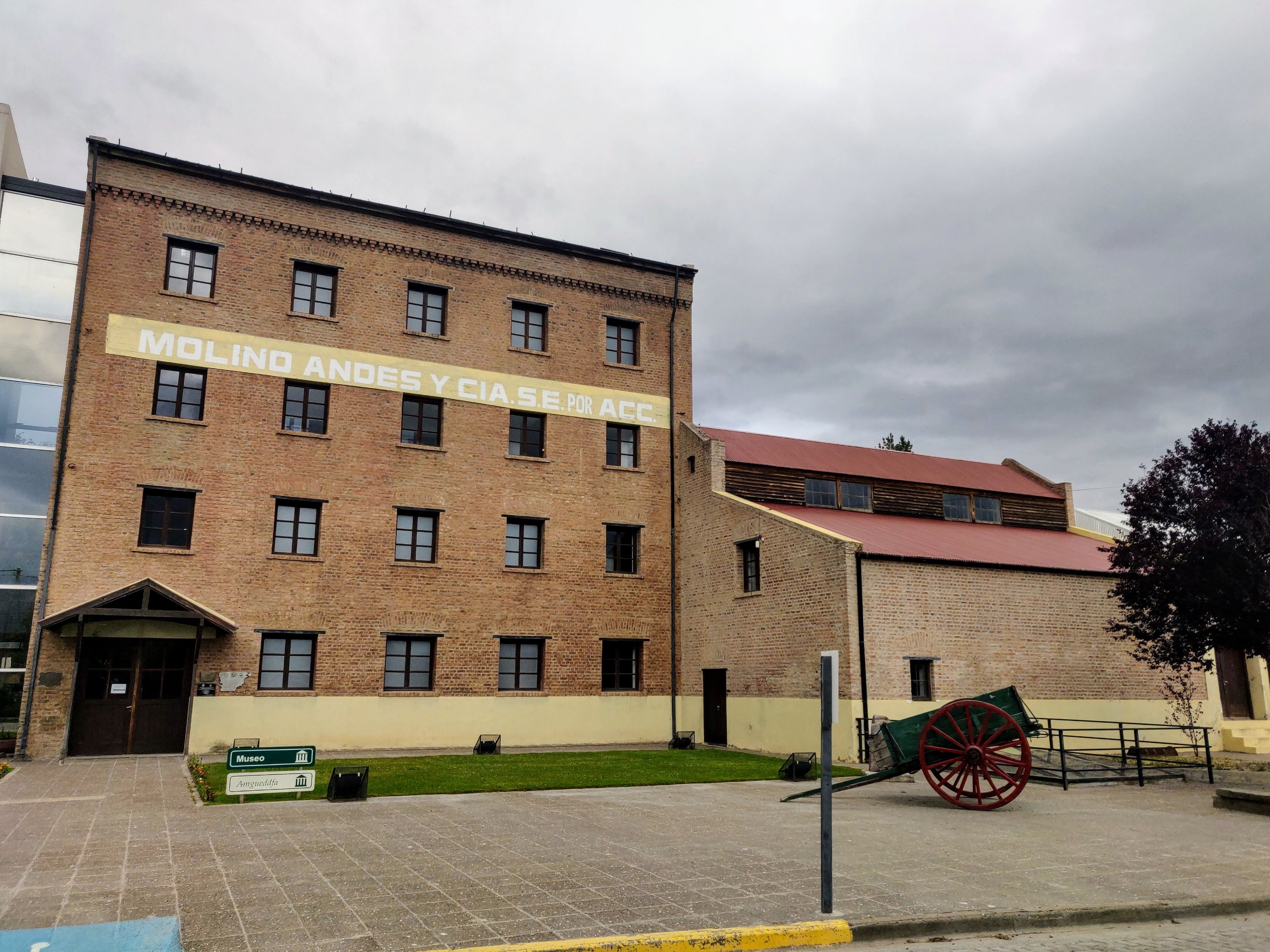
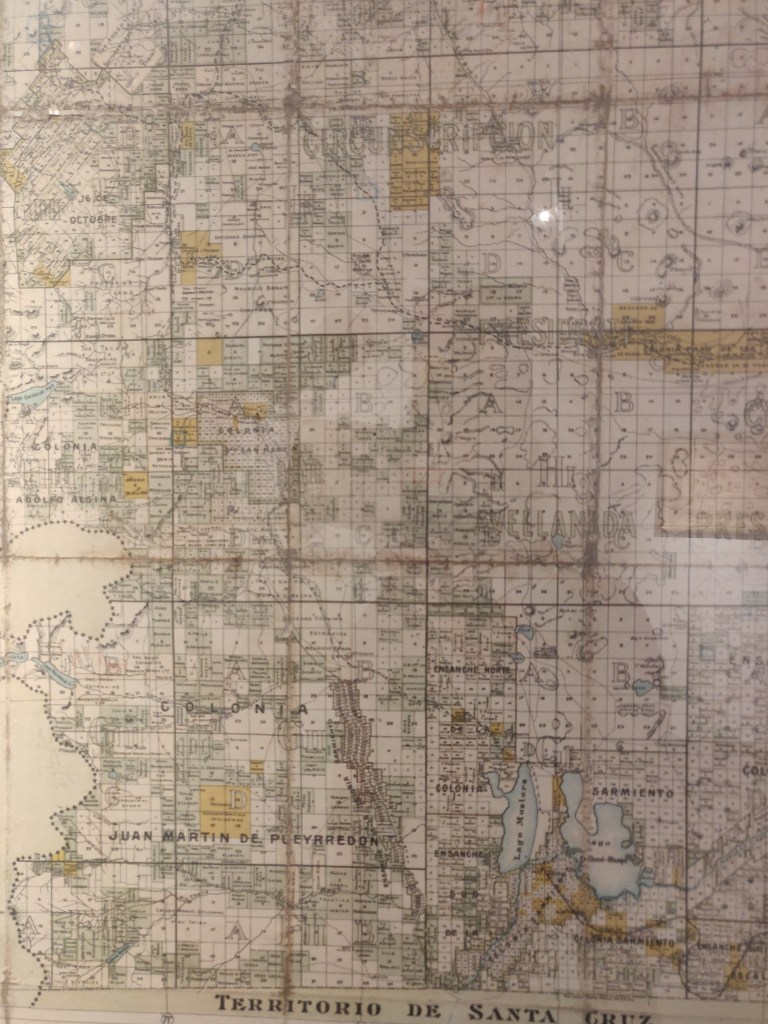
Moments later we looked up to see Brigite, Tristan and Brigite’s father, Dan, roll into the camp. We all chatted and compared our days, and Dan told us about a poster for what looked like a rodeo happening in town this weekend. Intrigued, we decided to check it out tomorrow whilst today we’d continue with our plan of exploring Trevelin’s Welsh origins. We started by heading to one of the tea shops recommended in Lonely Planet. The cakes looked good but it was a warm afternoon and the stuffy tea shop a bit too much of a wannabe version of those back home so we headed instead to check out some of the Welsh architecture and museums. The first of these was the preserved wattle and daub house of one of the first Welsh settlers, with garden, outdoor baño and outdoor oven. The second was the original mill used to grind flour, and as a wool and leather warehouse. This was fantastic, with lots of information, original land maps, steam engines and day to day artefacts.
Hot and tired by now we went in search of food and drink and found a small cerveceria set up a couple of years ago by some friends to brew beer. We sampled the stout and red ale accompanied by steak and country potatoes and tostadas with smoked fish etc. At meal end, Hannah spotted a large torta negra Welsh fruitcake made with stout from the brewery, and despite a hefty price tag we couldn’t resist buying it to take away.
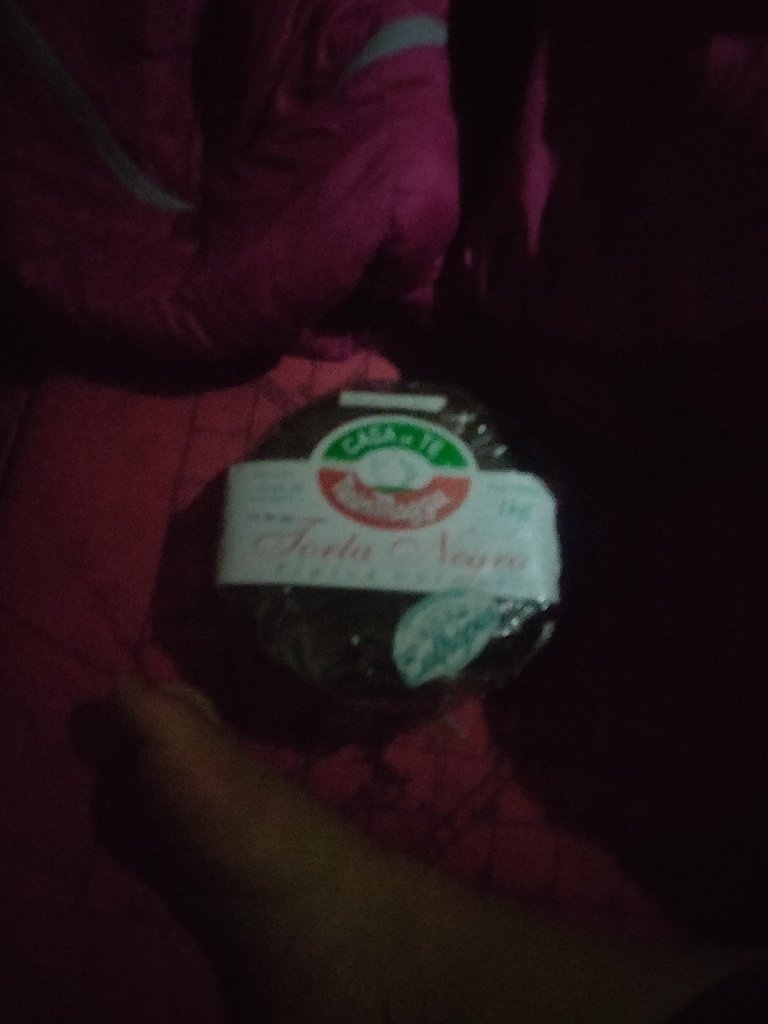
Picking up some more cake and bread from a panaceria on the walk back to the tent, and side stepping a few stray dogs, we bid Brigite and Tristan goodnight, and snuck into our tent to try the torta negra. With the greatest sadness, we discovered yellow mould hidden behind the label which had penetrated deep into the cake itself rendering it totally inedible. The bakery cake was stale and we fell asleep quite disappointed.
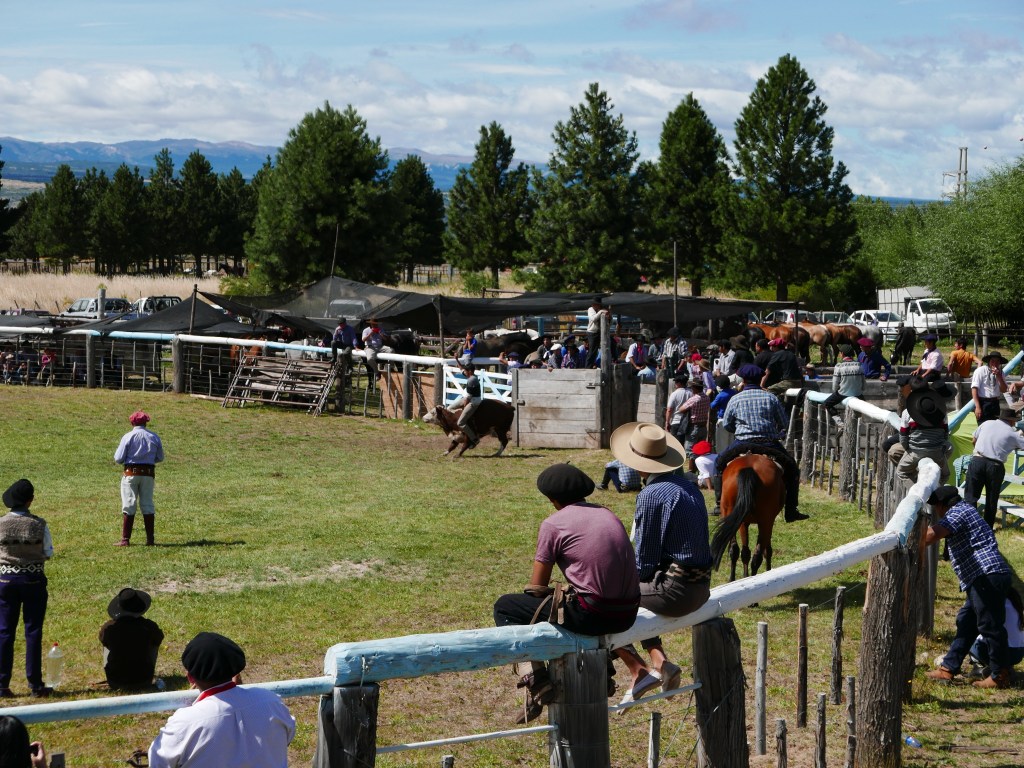
Saturday was a new day and we were excited to see what the Ternero Cordillerano was all about. After successfully swapping the torta negra for a fresh one, we headed out west of town to the outdoor arena consisting of a football pitch-sized area of grass surrounded by fencing, a couple of small stands and a pavilion hosting a live band playing Argentinian guitar music over a loudspeaker. Three children were trotting around the arena on horseback with a commentator making continuous announcements in Spanish. It was somewhat underwhelming, but then we noticed a pen full of bullocks at one end and wild looking horses at the other. Hundreds of people were wandering around in gaucho dress, quite a few on horseback too.
We picked a spot in the shade, locked our bikes together and waited for something to happen. Half an hour later, the guitar music suddenly upped in tempo, the commentator became very excited and a bullock shot out of a gate at one end of the arena, a teenager on its back whipping its hind legs. Seconds later the teenager was on the ground, limping away, and the steer tearing off to the other end of the arena, where it was coaxed behind some fencing by four gauchos on horseback.
Over the next hour we proceeded to watch the bucking young bulls throw off young men one by one, with the occasional chico making it a full 30 seconds on the back. It was an incredible sight of skill and daring, and only once did an ambulance drive onto the arena to help a boy after a particularly nasty trample. Robbie asked Hannah if she’d like to have a go, but we decided it might be a bit much in the heat.
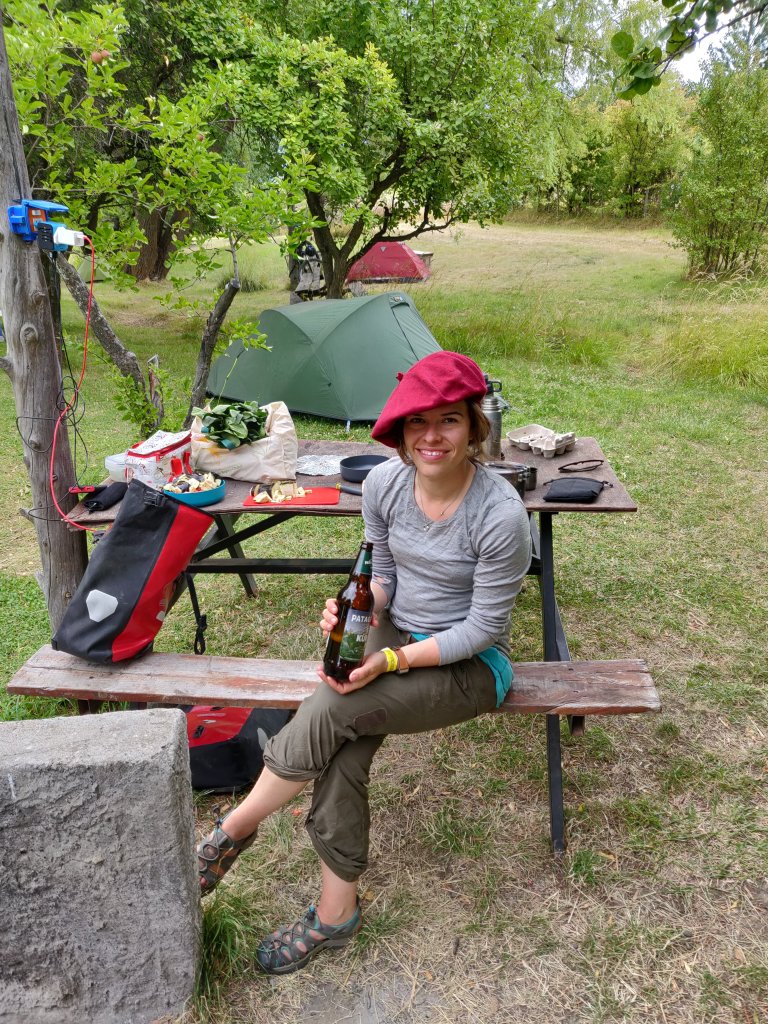
After the final rider had been bucked, we bought some chips and browsed the adjacent row of stalls selling gaucho clothing and saddles. Hannah bought a purple beret and dangerous looking knife, and Robbie a leather belt with green and red trim. We chatted to Dan in the sun before the next event: cattle corralling.
This was truly incredible to watch. A team of three family gauchos (brothers and sisters generally) on horses had to separate three identically numbered steers from a group of thirty, and corral them into a small fenced enclosure. It looked utterly impossible, but almost every family managed it, and one did so in just 40 seconds! Without doubt this should be an Olympic sport.
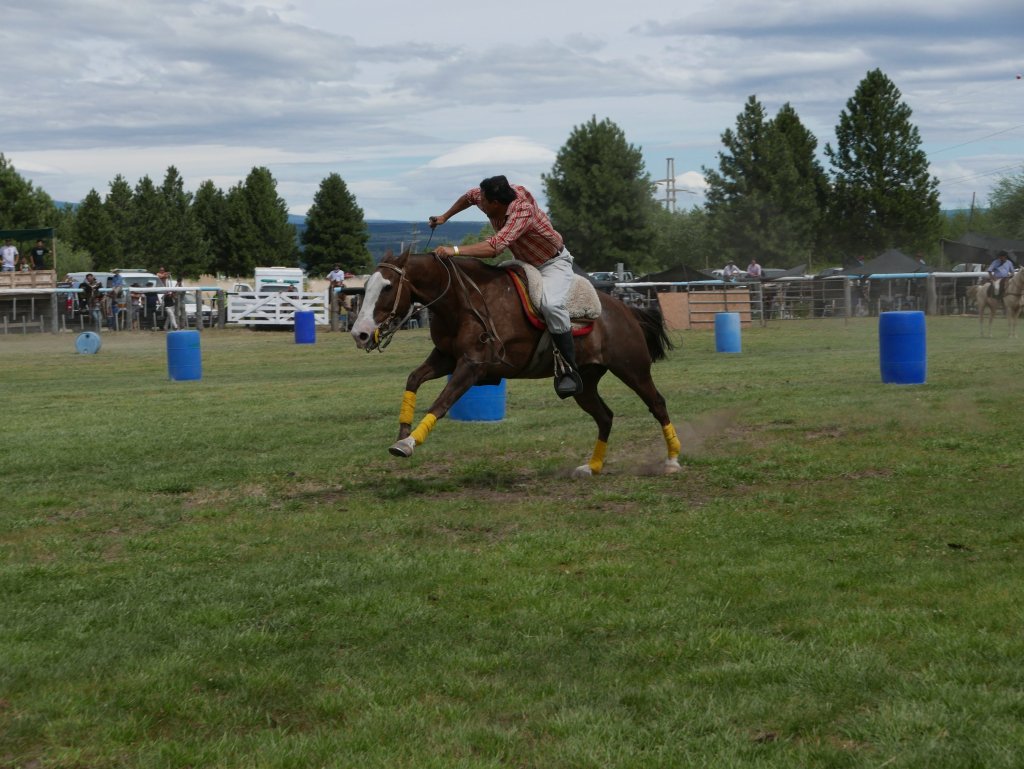
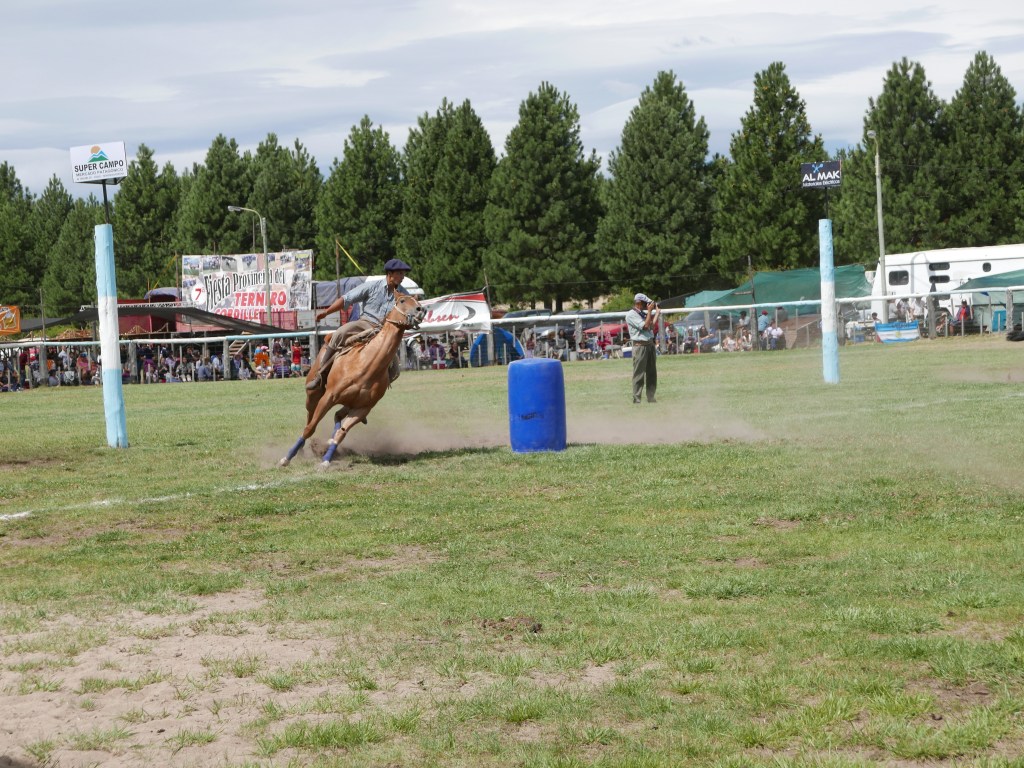
The final event we saw is best described as horse slalom racing. Three mounted horses went head to head around barrels up and down the arena before a final sprint to the finish. A barrel knocked over meant instant disqualification, and there were various heats today before the final tomorrow. The riders varied enormously in age and size and one of the most impressive was a young female rider who seemed to be one animal with her horse and easily made it through.
Having thoroughly practised camera shutter speeds, apertures and slow-mo shots, we were ready for some shade and headed back to the tent and to buy some groceries. We cooked up an early pasta dinner before returning to the Rodeo to see some dancing to a live band. Also very impressive, the aim often seemed to be to create as much dust as possible. We tried a few steps but it was harder than it looked and we decided to call it a night fairly early. We felt very lucky to have witnessed the annual Ternero Cordillerano of Trevelin, and fell asleep to the distant sound of gaucho music blowing in the wind.

 Pedalling_Patagonia