After the days, weeks (possibly months) of attempting to finish work, rent out our flat, say our goodbyes and plan, in the loosest sense possible, our trip whilst sandwiched between engagement and Christmas celebrations, it was with exhausted relief we squished ourselves (separately, seat choice was a luxury we decided to forego) on our flight to Buenos Aires. Fortunately, we had remembered to bring food with us (including much appreciated homemade mince pies courtesy of Robbie’s Mum!) for the 13 hour journey.
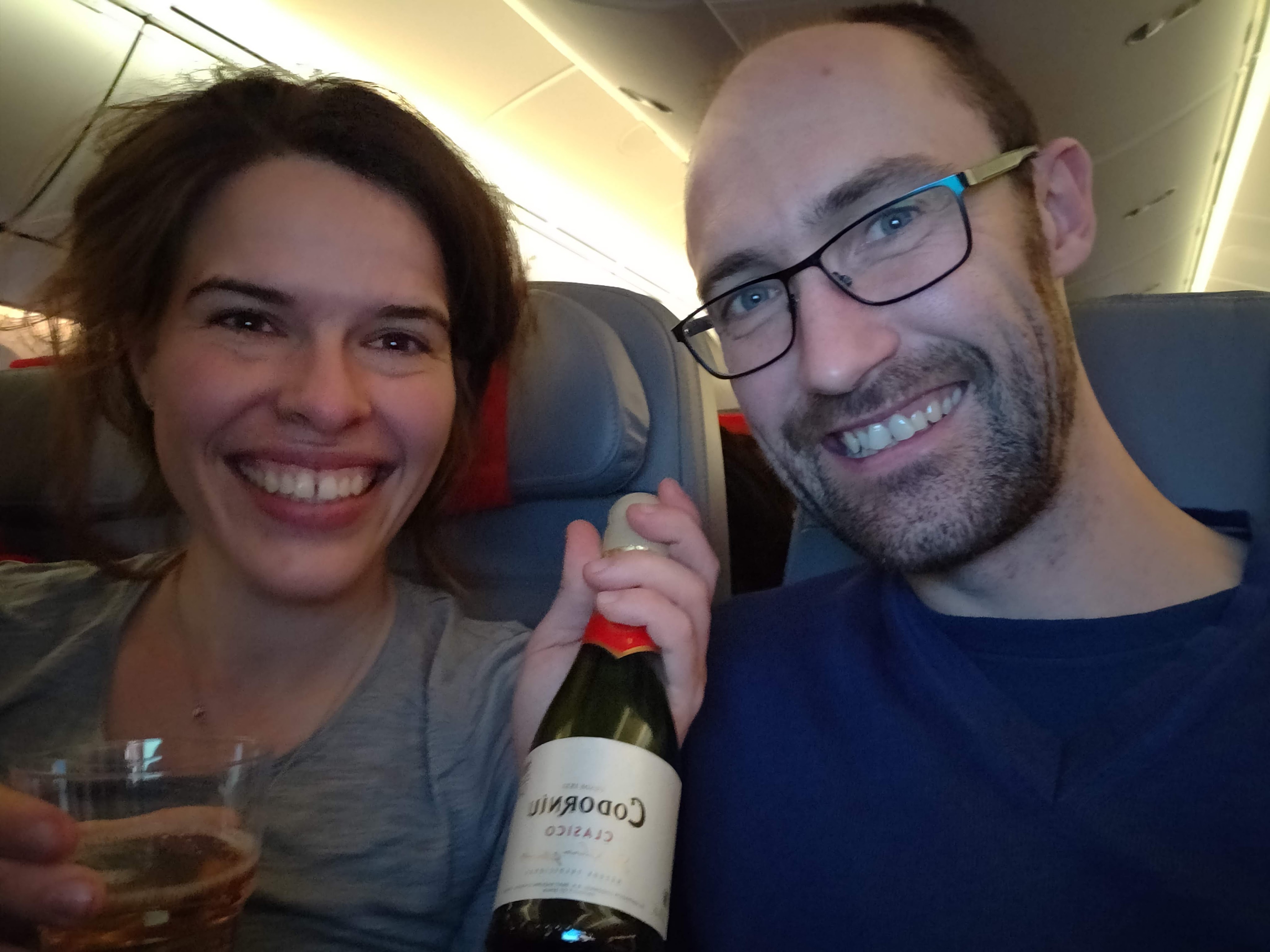
It turned out that I (Hannah) had been allocated the sabbatical area of the plane. Quickly identified before takeoff by single, slightly apprehensive looking, white men in their 20s-30s either cramming Spanish duolingo lessons or looking through large lonely planets. When you are seated with another five English people in their 20s-30s doing roughly the same trip, your adventures aren’t so unique after all. Alex, a 19 year old on his second gap year before uni had the best Spanish out of all of us, assisted by working as a Northampton dishwasher for the five months beforehand, there really wasn’t much to do. Alex had set his sights on a South American bus tour, having survived solo travelling in India as an 18 year old, he seemed pretty clued up. Less so was Darren, a 28 year old who had discovered that his post uni job as an office relocater was not suited to his international relations degree. His Spanish, and his grasp of International Relations, appeared to be the weakest of the group, as he insisted on calling all the places he was intending to visit (including major cities) in a non-decipherable way (either with an English or Spanish accent). Robbie was able to swap seats halfway through the flight to toast the start of our sabbatical with some sparkling wine, and for him less enthusiastically, to watch the Disney remake of the Lion King. He quickly decided that he needed more space to stretch out his legs…
As we prepared for landing, attention turned to the state of our bikes. Like self-diagnosing a cold via the internet (where the sniffles somehow becomes a smorgasbord of terminal illnesses) it is also a bad idea to read forums on bike travel by plane before you go for the first time; we therefore half expected to see an assortment of bent bicycle parts circulating forlornly on the luggage conveyer belt, if there at all. Therefore, the presence of two undented boxes, swiftly followed by our professional looking laundry bags of pannier bags resulted in (muted) whoops.
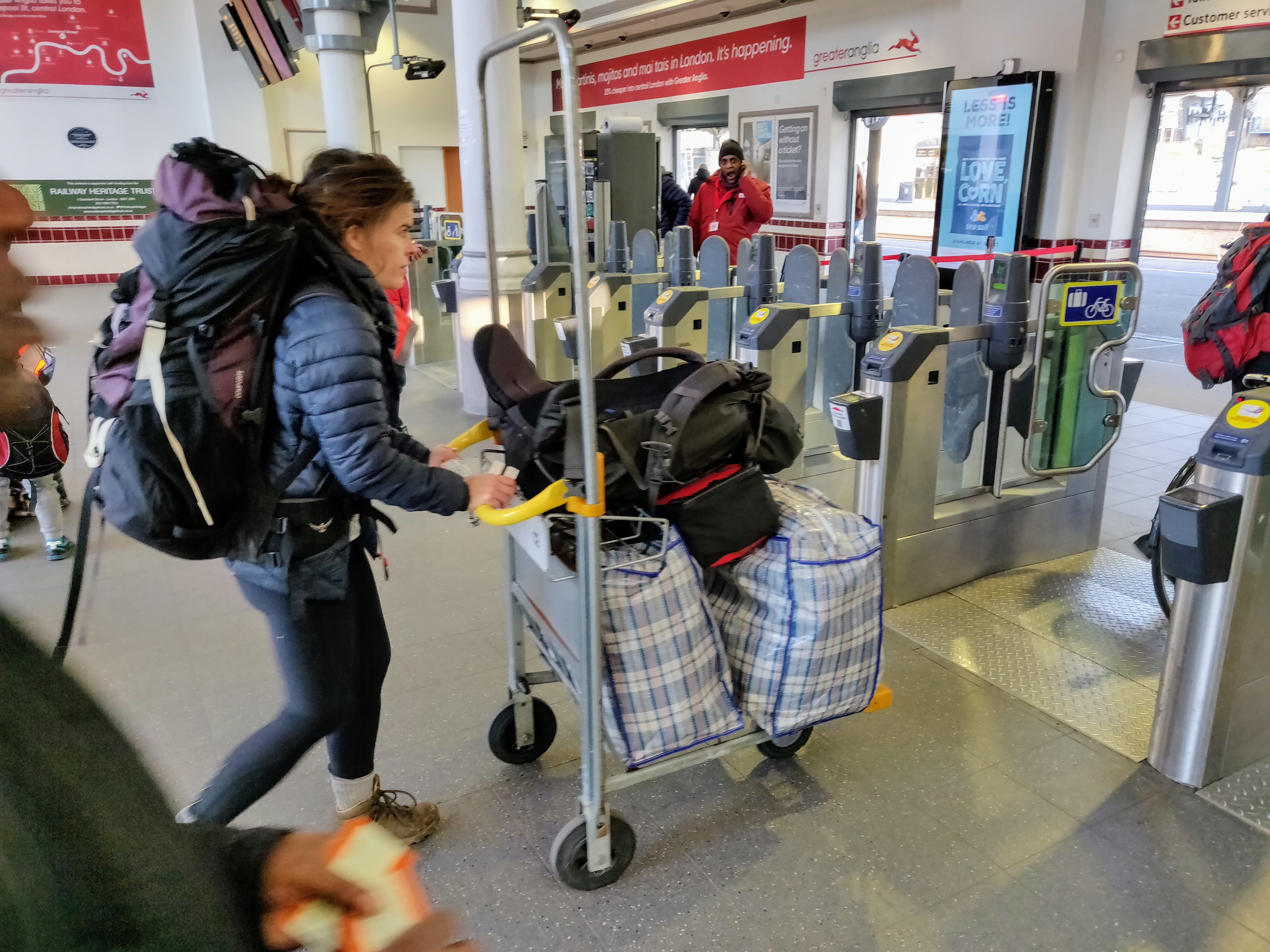
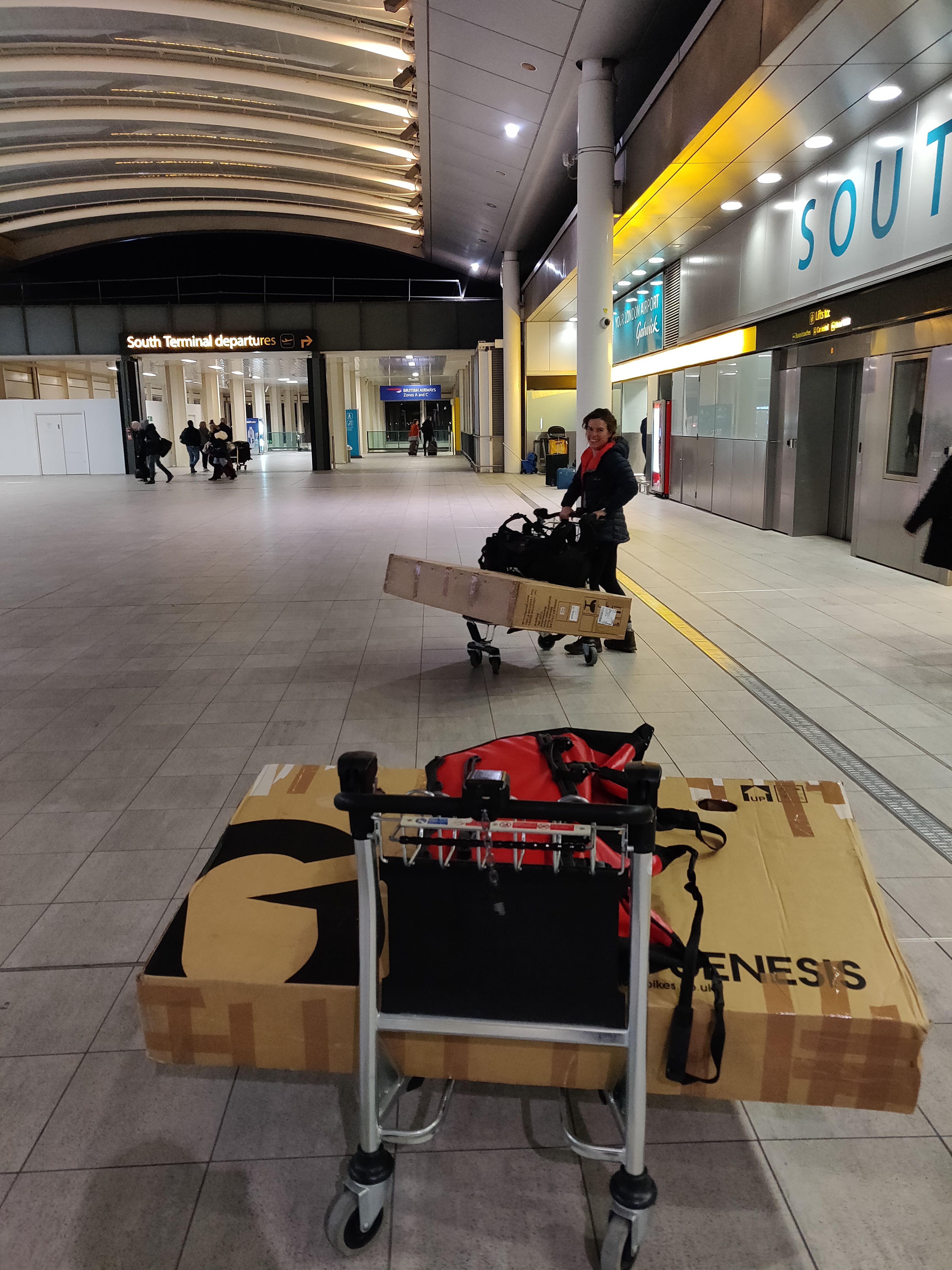
There were various reasons for our choice of cycling the length of Patagonia, the practical ones being cost (relatively little) and the freedom of being self-sufficient – travelling however far you wish to travel and pitching up by a stream. This works when your bike is not in a 6’x3’ cardboard box and you aren’t carrying around 30kg of luggage each in a flimsy looking laundry bag. In these circumstances, travelling by bike is like travelling as a family of five (plus or minus dog). This realisation first occurred in trying to get the bikes from Cambridge to Gatwick airport. As the local taxi company seemed to think the only way to get to the airport was by a convey of 3 taxis, costing slightly more than a single plane ticket to BA (Robbie’s parents came to the rescue!) we were concerned this response would be replicated in the Southern Hemisphere. Our first good Spanish conversation was whether any of the accommodations had ‘un camion de “pick up”’. Luckily these are much more common in Argentina than Cambridge!
Despite our luck on transport, we had decided that we wanted to be closer to the airport than in the centre, particularly as we had heard mixed reviews on Argentinian city driving. Our first home in Argentina was in Ezeiza, the same city district as the airport. The equivalent of Croydon to Gatwick (in more ways than one). It was therefore in this green suburbia that we tried to locate cash on a Saturday morning. As it is impossible to get Argentinian pesos outside of the country, we had followed our guidebook to the letter and obtained a range of cards from different banks and a good supply of USD. Having ignored the cambios at the air port (bad exchange rates..) we set off to find an ATM. The pressure of obtaining cash as quickly as possible had been slightly increased by our flat owner warning that no restaurant or supermarket in Ezeiza accepted card. The 2 leftover mincepies were therefore rationed.
It was not too difficult to spot the four banks that were located in Ezeiza, as down the street, and round the corner, snaked the queue of Argentinians waiting to use them ‘before the money ran out on Sunday’, an apparently common occurrence. The queue in the midday (30 degrees) sun was longer than usual, as the Argentinian government apparently had just paid out the Christmas bonus (or gilts) so everyone was trying to take out the cash before the exchange rate changed. Thinking that we would have better luck in the city centre, we left the queue for the ATM and joined the queue for the hour’s journey into town, presuming that for such a journey, and at a train station, cards (or USD) would be accepted, a foolish thought. Having reached the end of the queue, we promptly rejoined the ATM queue to get the 100 peso joint train fare (approximately 70p) to the city.
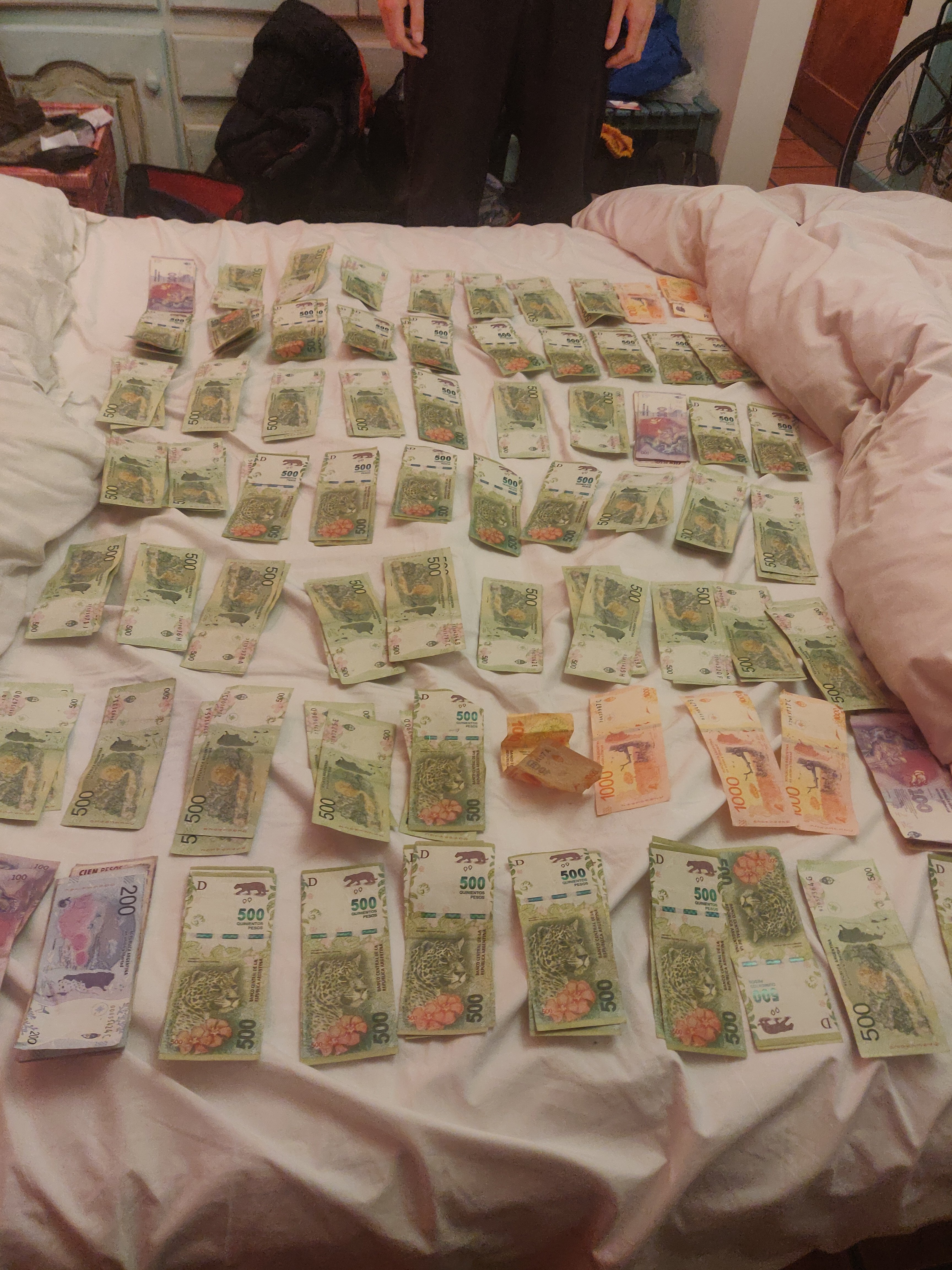
Although our ATM appeared not to have run out of money, given the previous users handful of notes, it did not like our cards. Although it proudly kept announcing the cost of the transaction (a ludicrous amount) it continued to spit out our carefully obtained array of cards from all banks, building societies and types, much to the quiet annoyance of the growing queue behind us (and our increasingly concerned attempts given with no cash we could not get eat or enter the city). A mince pie each for two days was a growing realisation.
Having given up, a lovely lady took pity on us/wanted to practice her English, and suggested that we might have more success at the local supermarket, where cash back was offered. Joining her family in the back of her car, we took a slightly longer than expected journey to the local (and biggest we have ever seen) supermarket, baguettes were bought, and money exchanged at the local cambio, we returned , after a 1 hour walk back to the train station, triumphantly each with our 35p train fare, just 3 hours (and a lot hungrier, dustier and hotter) after we started.
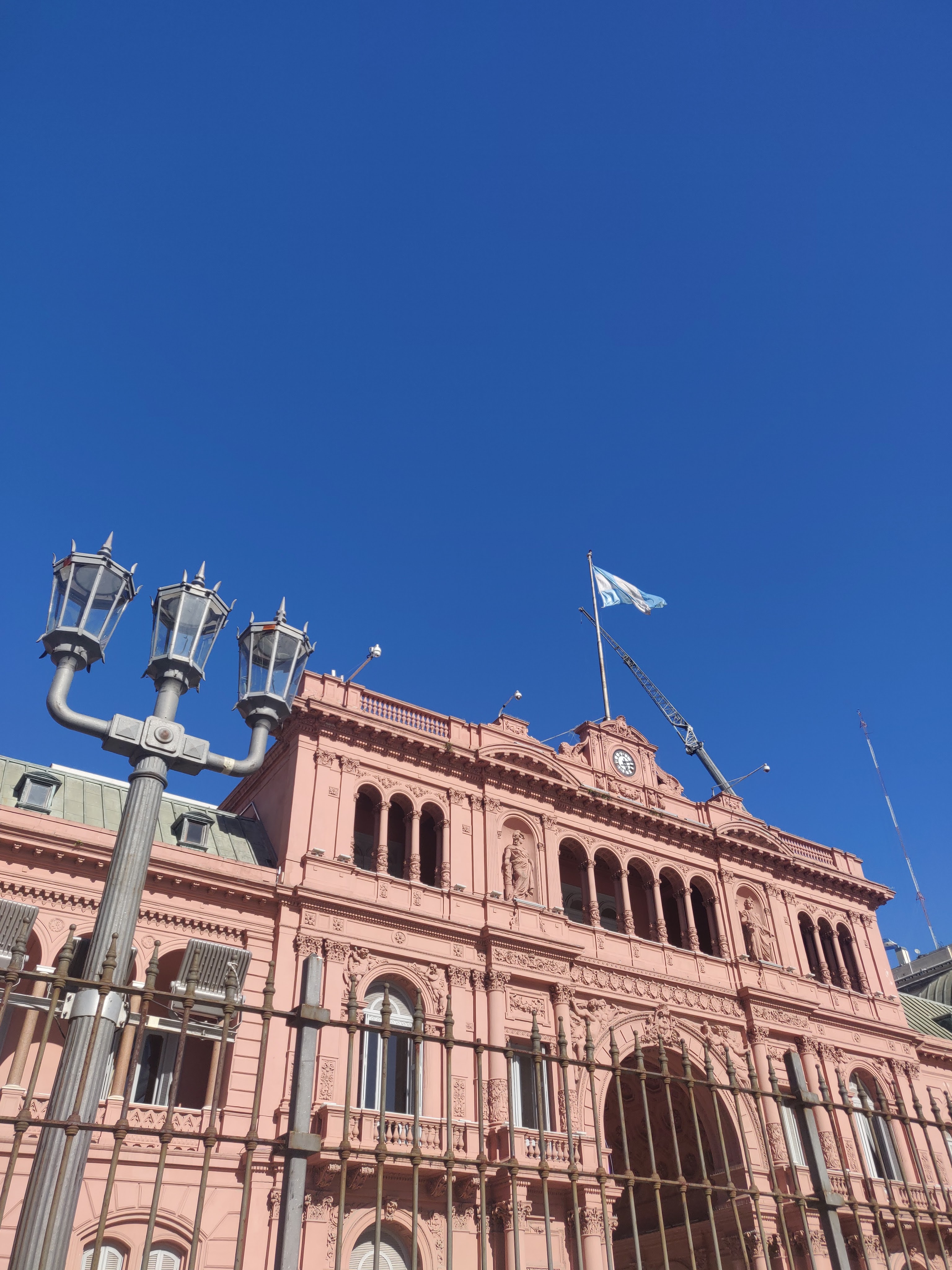
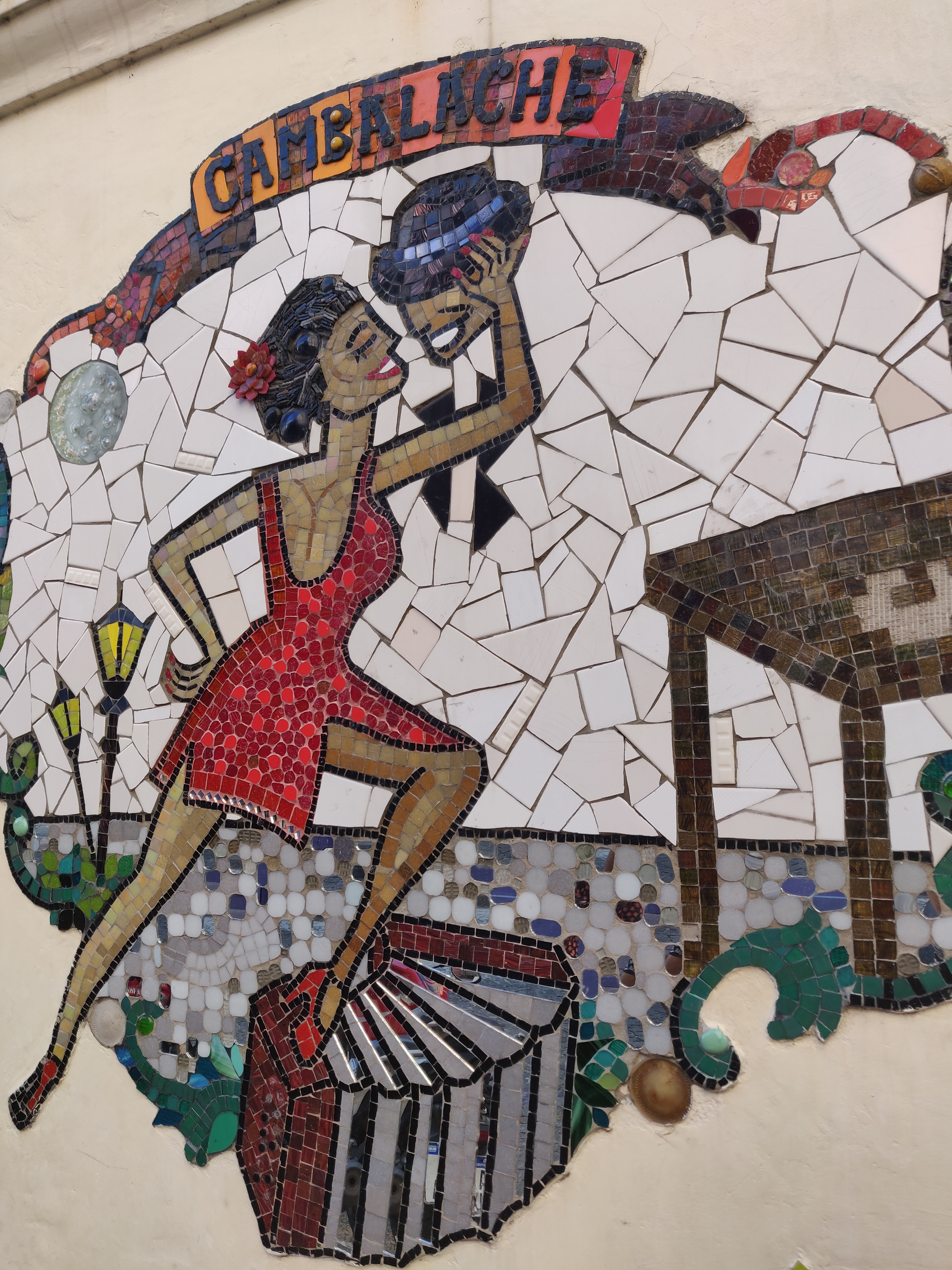
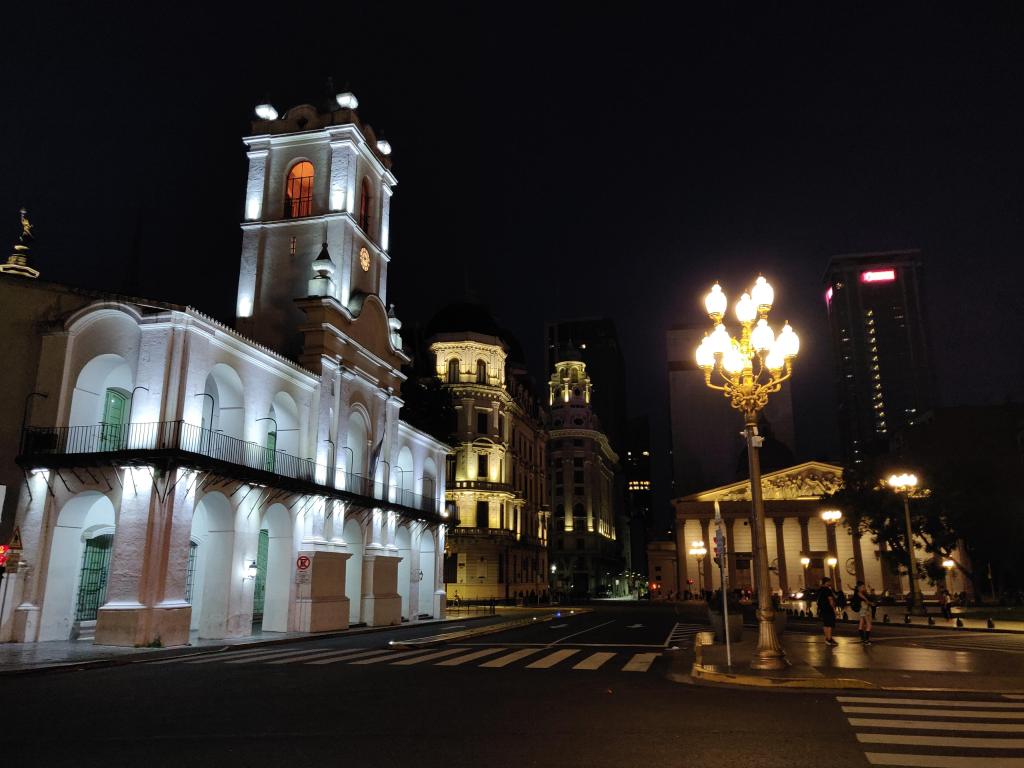
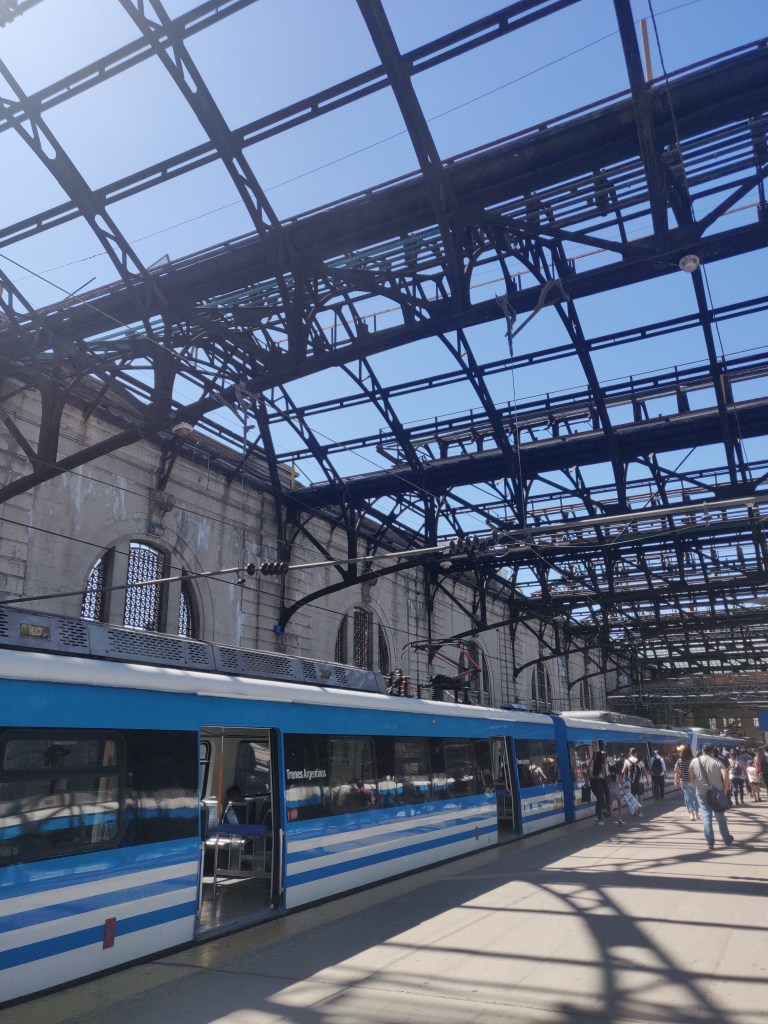
An hour’s ride in, where, as in any city, the houses got steadily taller, the green spaces less frequent and the noise increased (combatted by the hawkers selling anything from buns to packs of uno cards) we arrived in the beautiful central train station, strikingly similar to the central station in Milan, although the one in BA had a large Christmas tree in the centre, slightly disconcerting in 30 degrees and humidity. We focused on our first tourist spot as the Casa de Rosa, the pink building (rumour has it, it was painted in ox blood) where Eva Peron (Evita) conducted her famous speeches, and now still every Thursday the white head-scarved others of the missing from the succeeding military dictatorship still quietly protest over 30 years on.
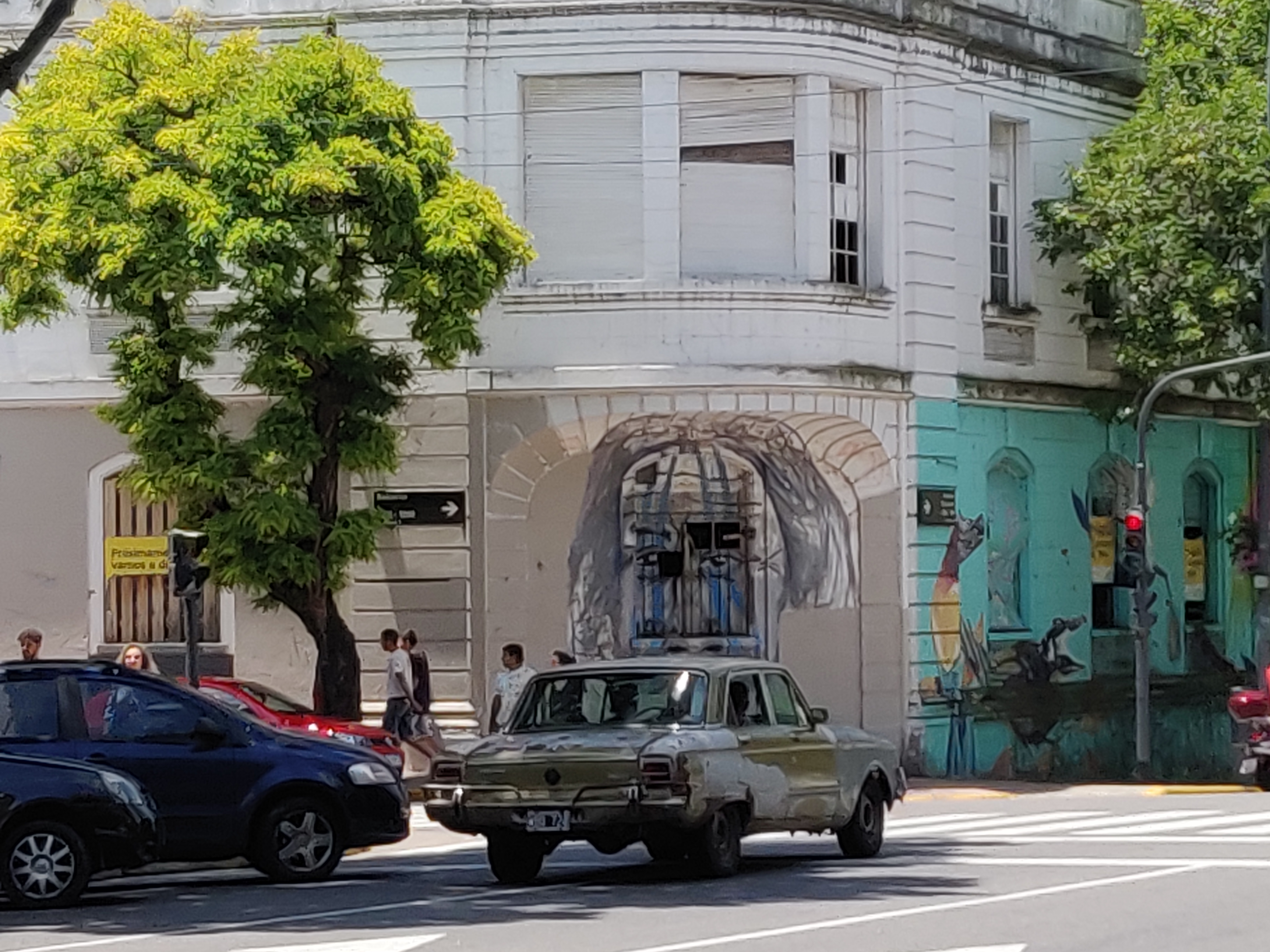
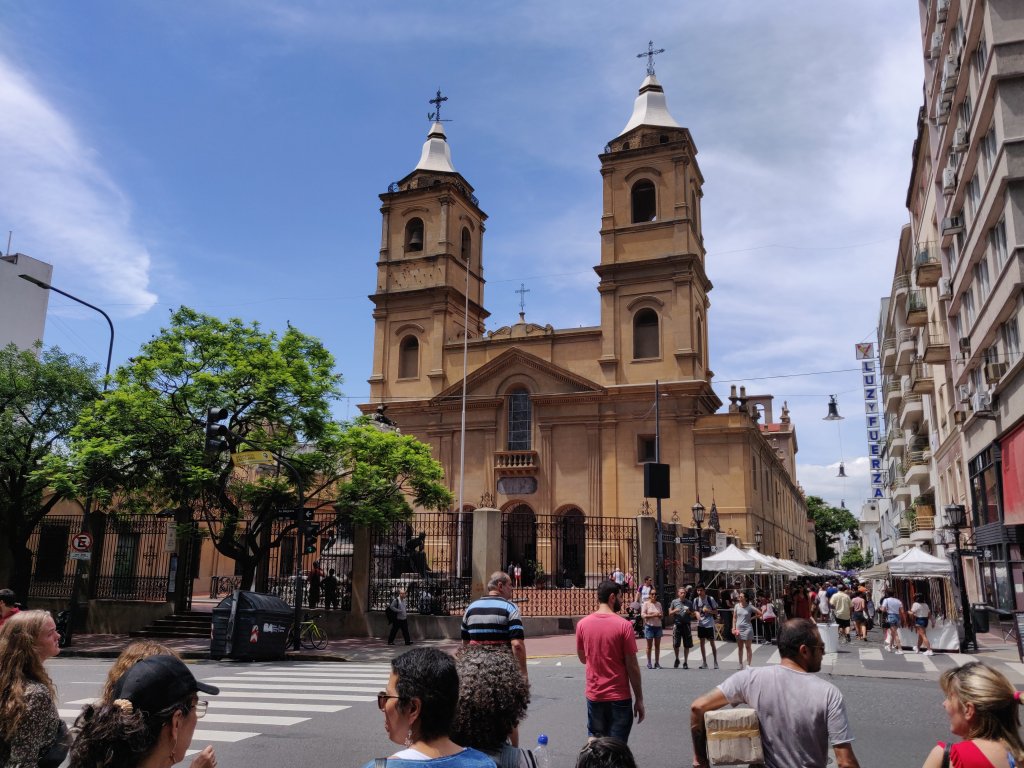

It was also on these tree lined boulevards we hunted for an atm that meant we could withdraw some cash. Lonely Planet having failed us, we wifi café hopped (and forum devoured) until we got to a relatively recent one that explained half of the atms wouldn’t take our cash, and there was a daily limit (not 5,000 or 10,000 as you might reasonably expect) but 7,900 pesos (~£70) armed with this information, we finally were able to get some cash out. Our trip (largely dependant on cash) had not ended before it had even begun! Rejoicing in our new fortune, we spent the next few days in BA exploring a local market, eating in quaint vegetarian cafes, and to compensate, Robbie finding the biggest steak he’s ever seen. It was soon time to repack our bags onto the pickup for our next flight to Bariloche, and the official start to our trip.

 Pedalling_Patagonia